
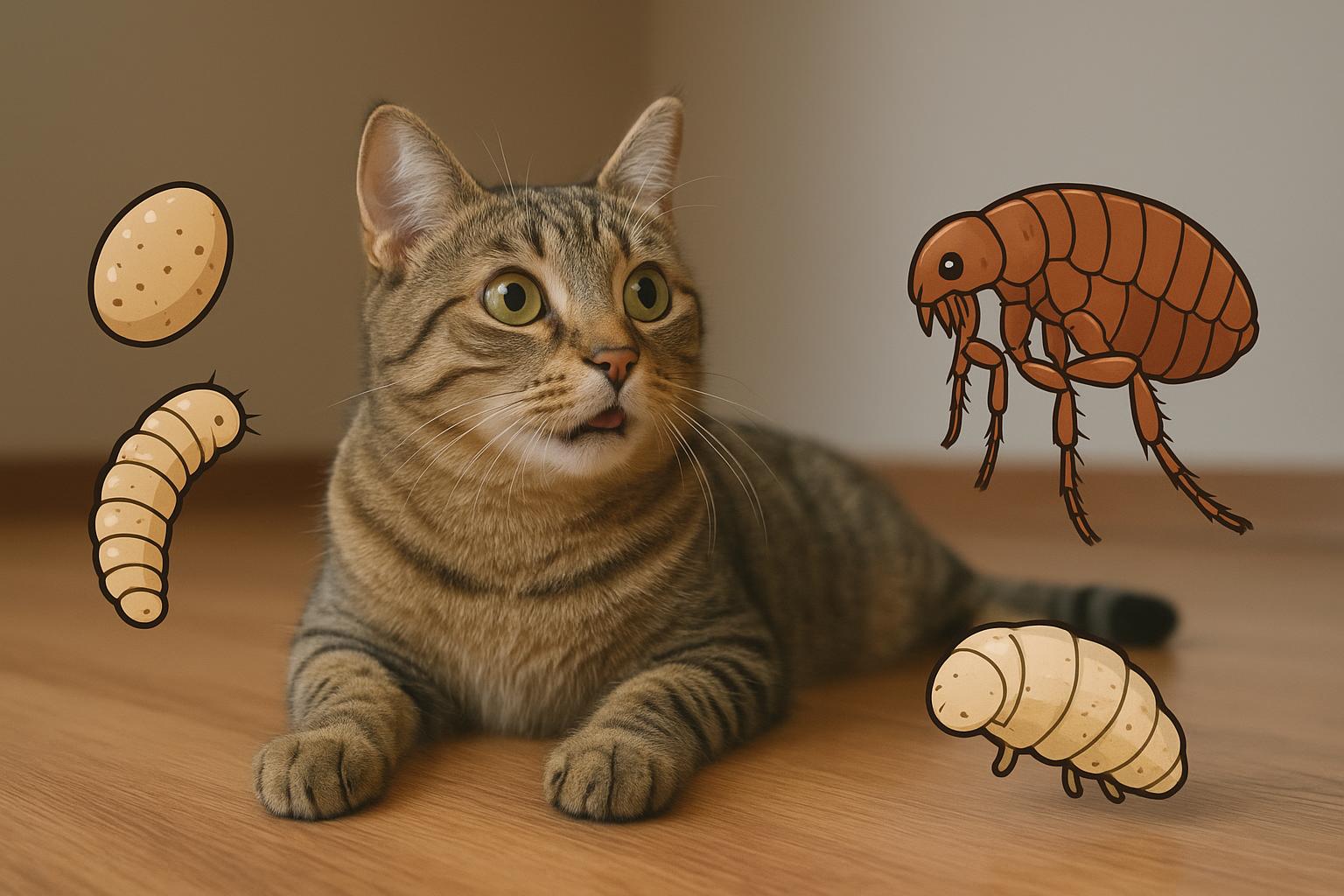
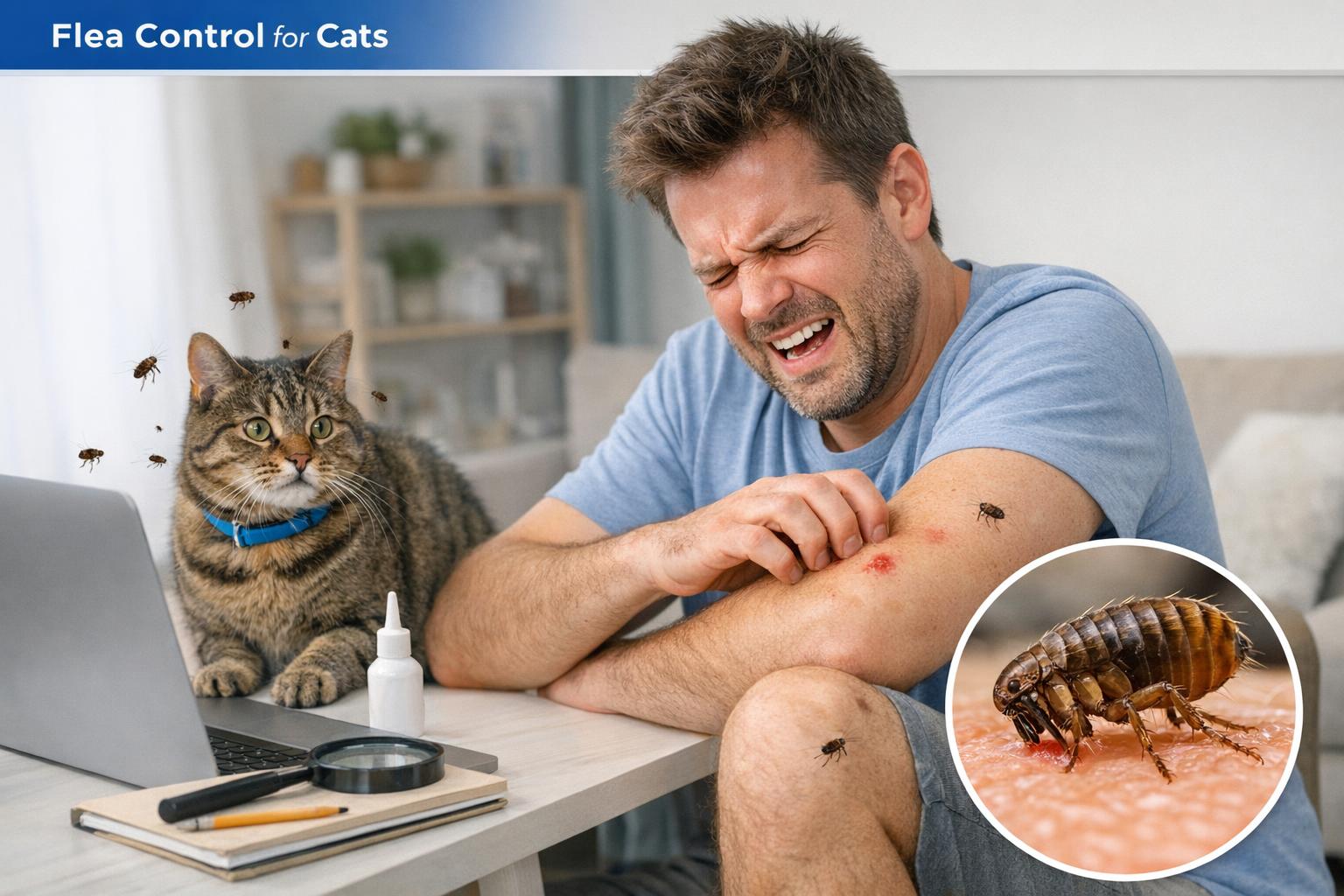
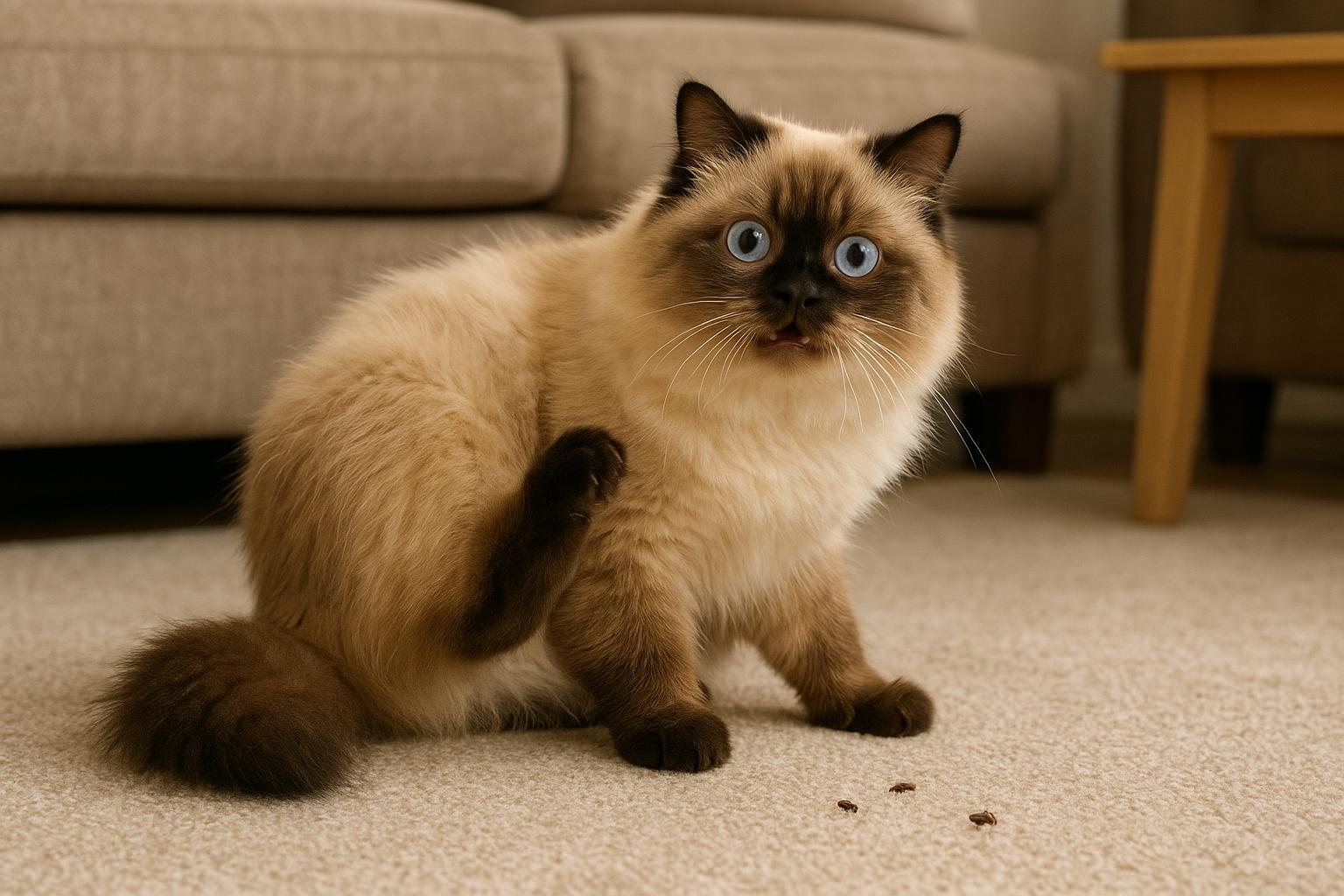
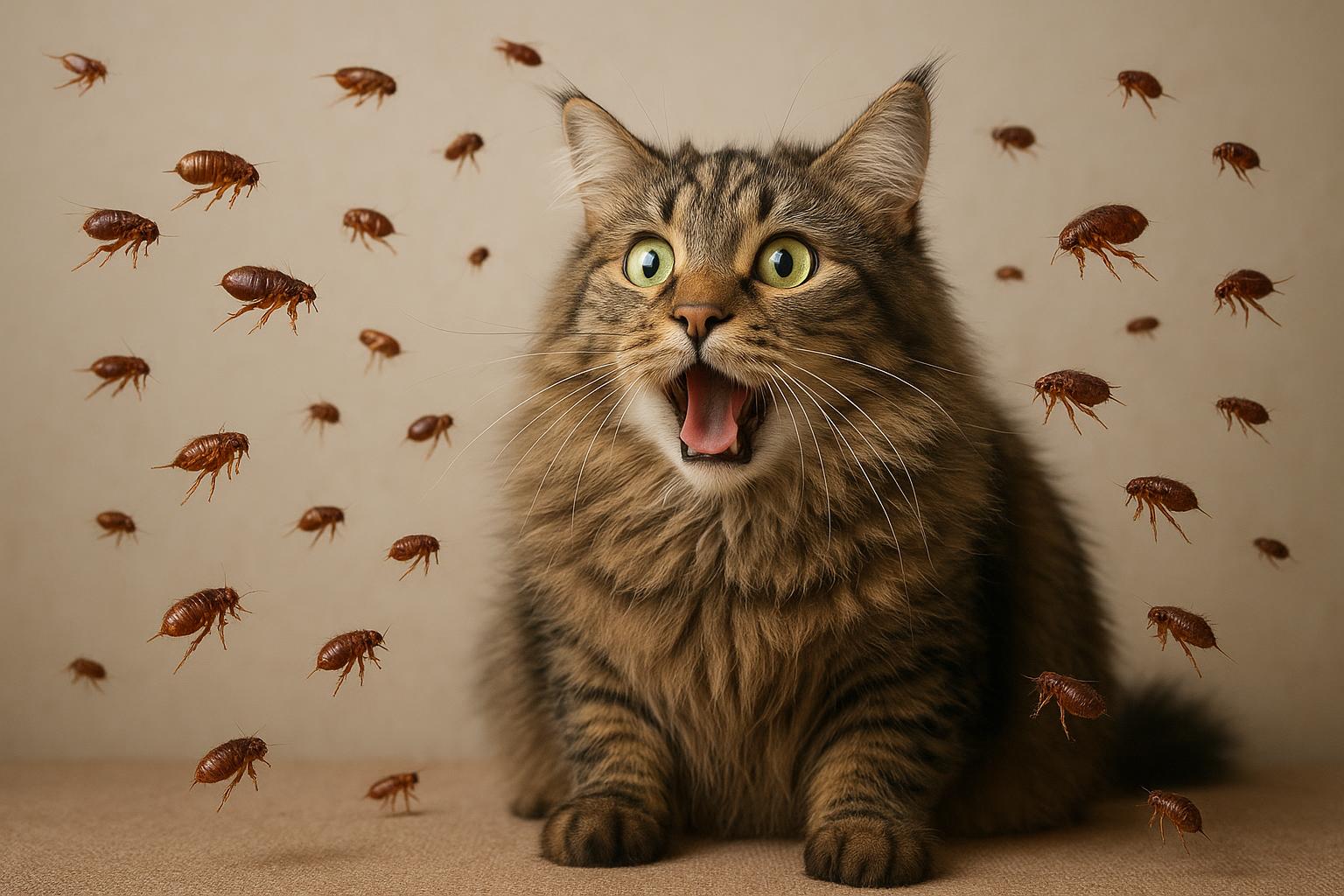
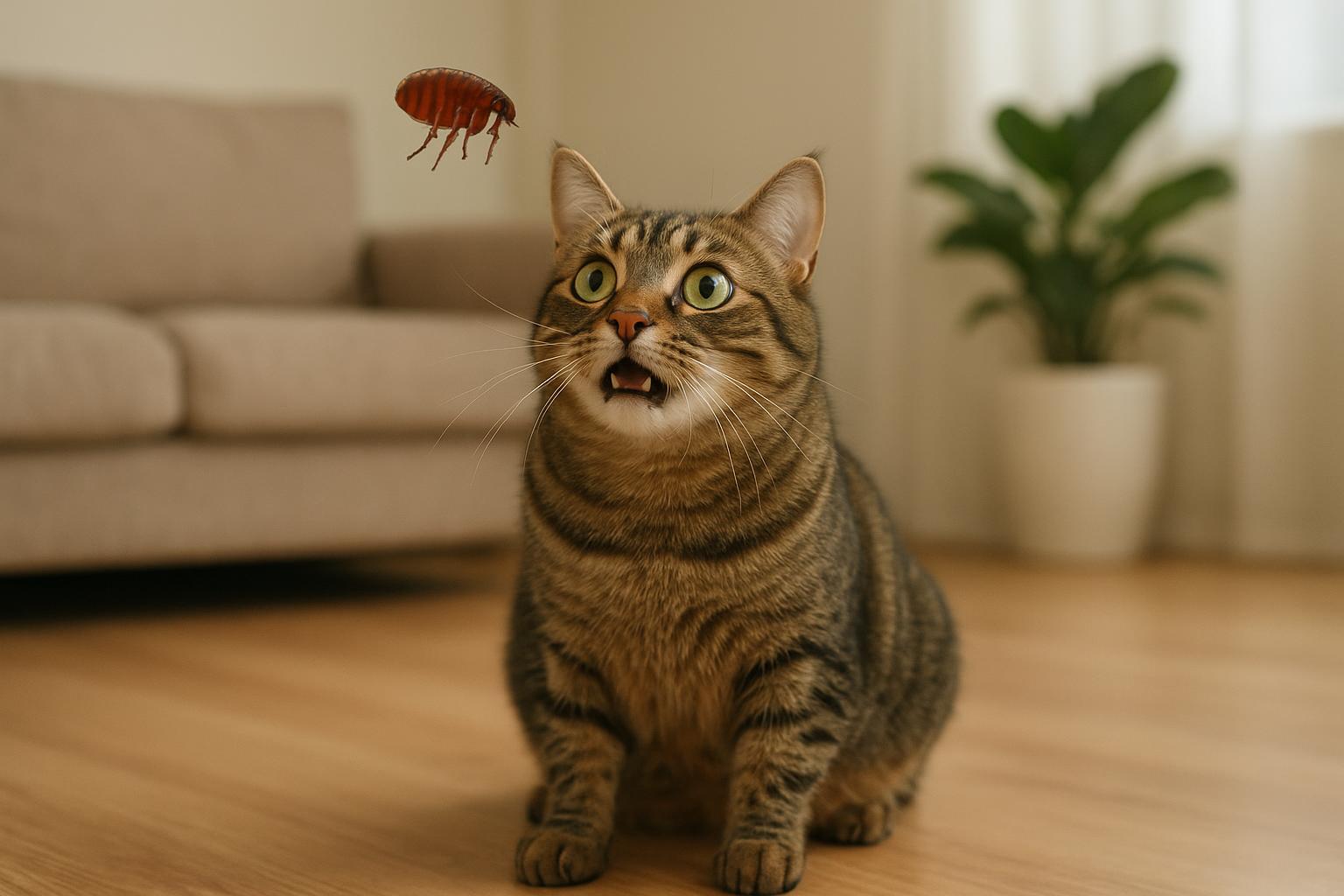
If you’ve ever watched your cat suddenly go from regal sofa monarch to full-on acrobatic contortionist, you might have been witnessing a tiny culprit: fleas. Understanding flea life stages helps you hit the problem where it hurts — the lifecycle — instead of playing whack-a-mole with itchy outbreaks.
## Recognizing Flea Life Stages On Your Cat And In The Home
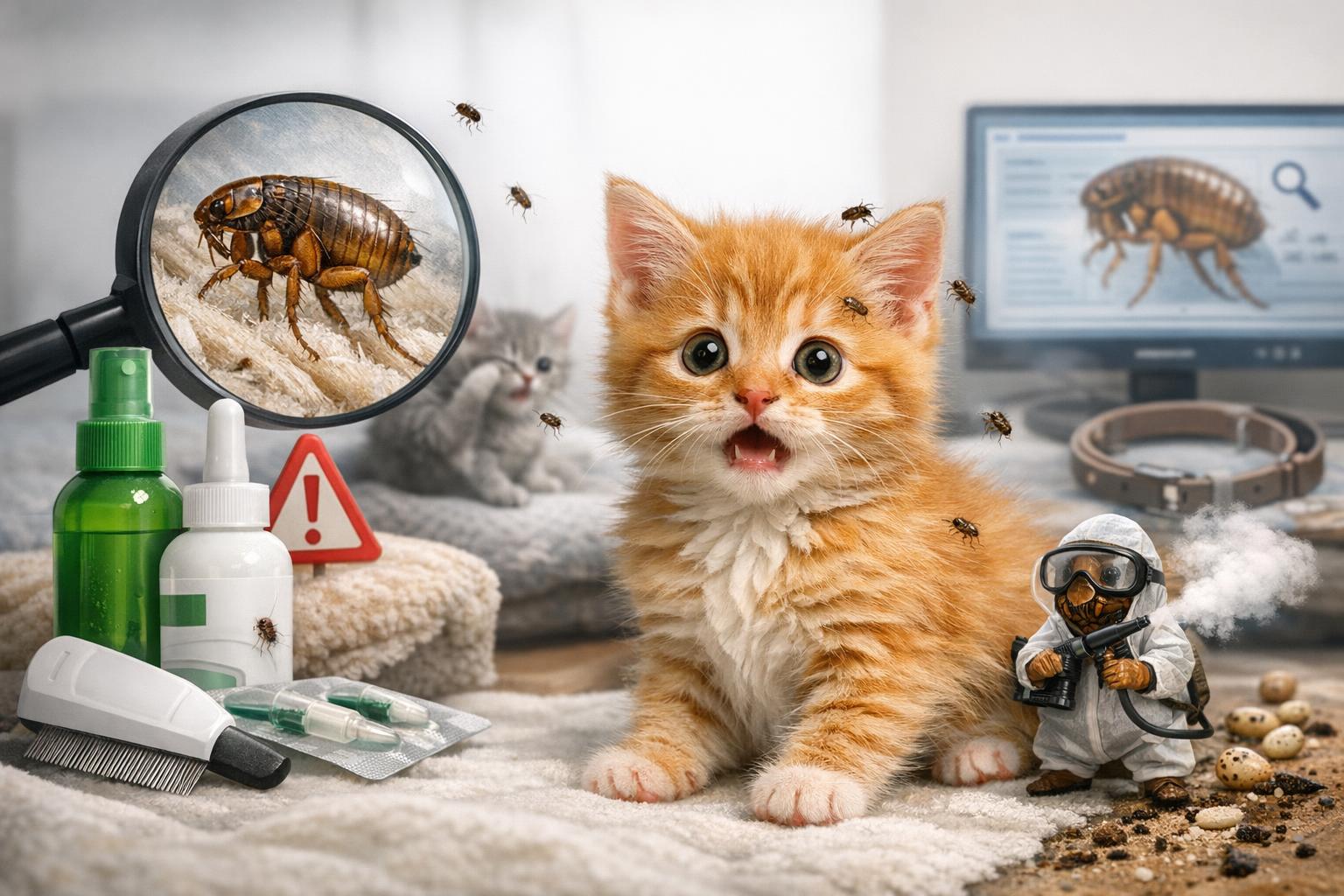
Fleas go through four main flea life stages: egg, larva, pupa, and adult. Each stage behaves differently and lives in different parts of your cat’s world. That’s why a smart control plan treats both the pet and the environment.
### Egg Stage
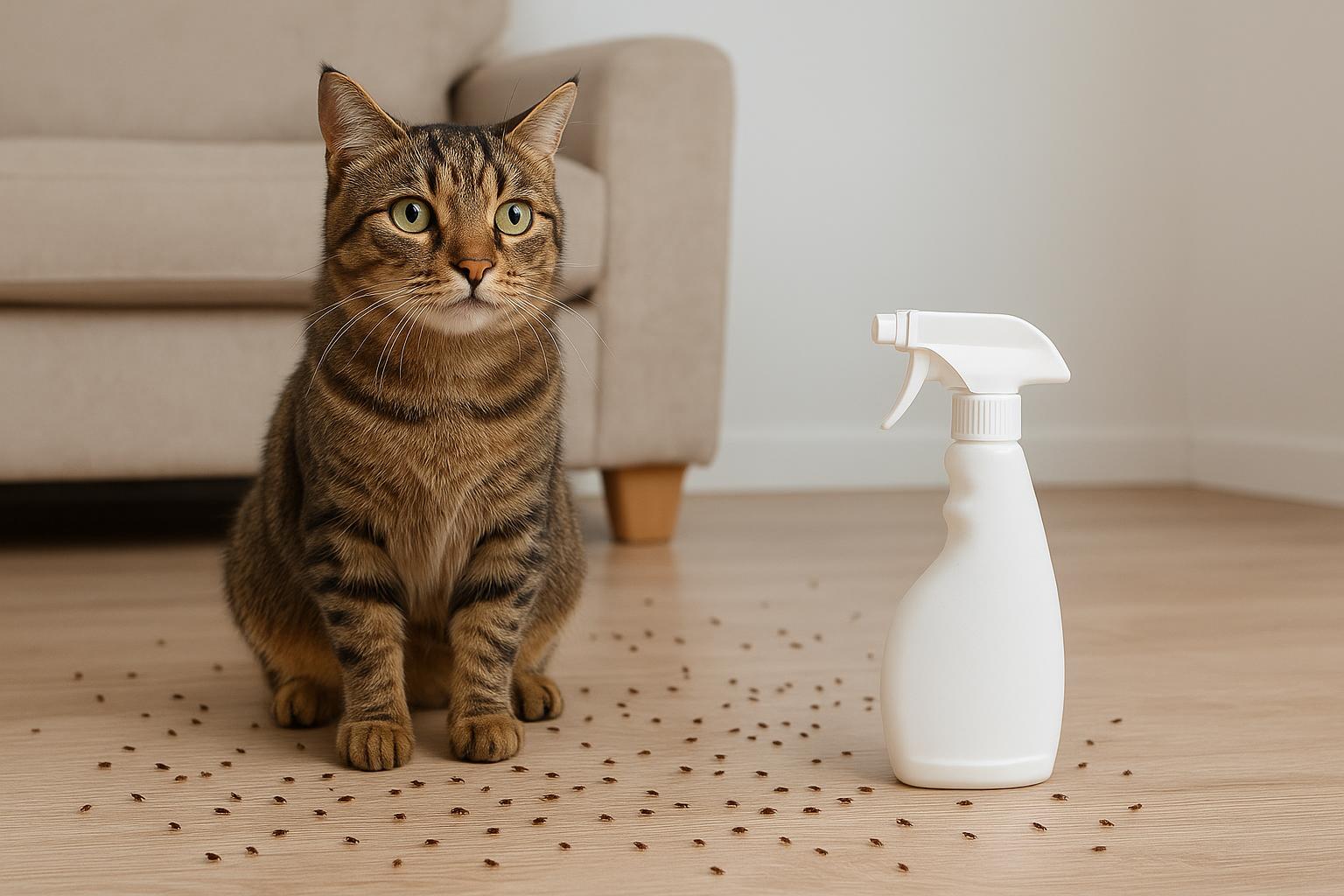
Flea eggs are tiny, pearly white, and about the size of a grain of salt. An adult female can lay dozens of eggs per day, and she flicks many of them off the fur — onto bedding, carpets, sofas, and cracks in the floor. Eggs typically hatch in 2–14 days depending on temperature and humidity, though in cool conditions they can take longer.
#### Quick Facts About Eggs
– Not sticky; they fall off the host easily.
– Prefer warm, humid environments.
– Invisible to the naked eye in carpets until present in large numbers.
### Larva Stage
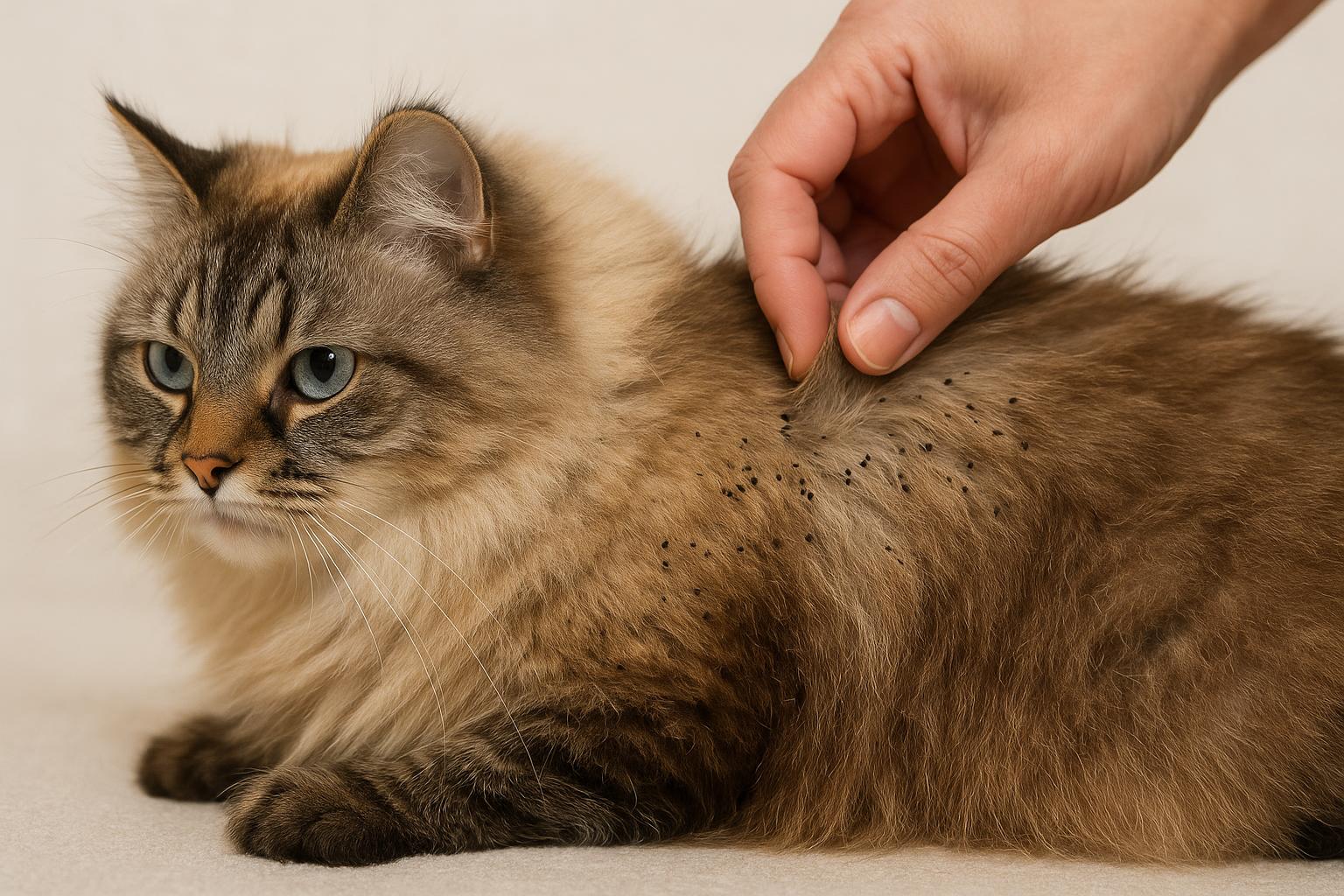
Larvae are slender, wormlike, and avoid light — so they burrow into carpet fibers, bedding, and crevices. They feed on organic debris, including the dried blood-rich flea feces (sometimes called “flea dirt”) left by adults. This stage lasts roughly 5–20 days under favorable conditions, during which larvae molt several times before spinning cocoons.
### Pupa Stage
The pupa is wrapped in a sticky, silk-like cocoon that can collect dust and debris, camouflaging it in your home environment. In this stage, the flea is a teeny-teeny factory waiting to hatch. Pupae are tough: they can remain dormant for weeks to months, and they’re triggered to emerge by vibrations, increased carbon dioxide, or warmth — exactly what a paw on the rug provides. This resilience is why infestations can reappear after you think you’ve solved the problem.
### Adult Stage
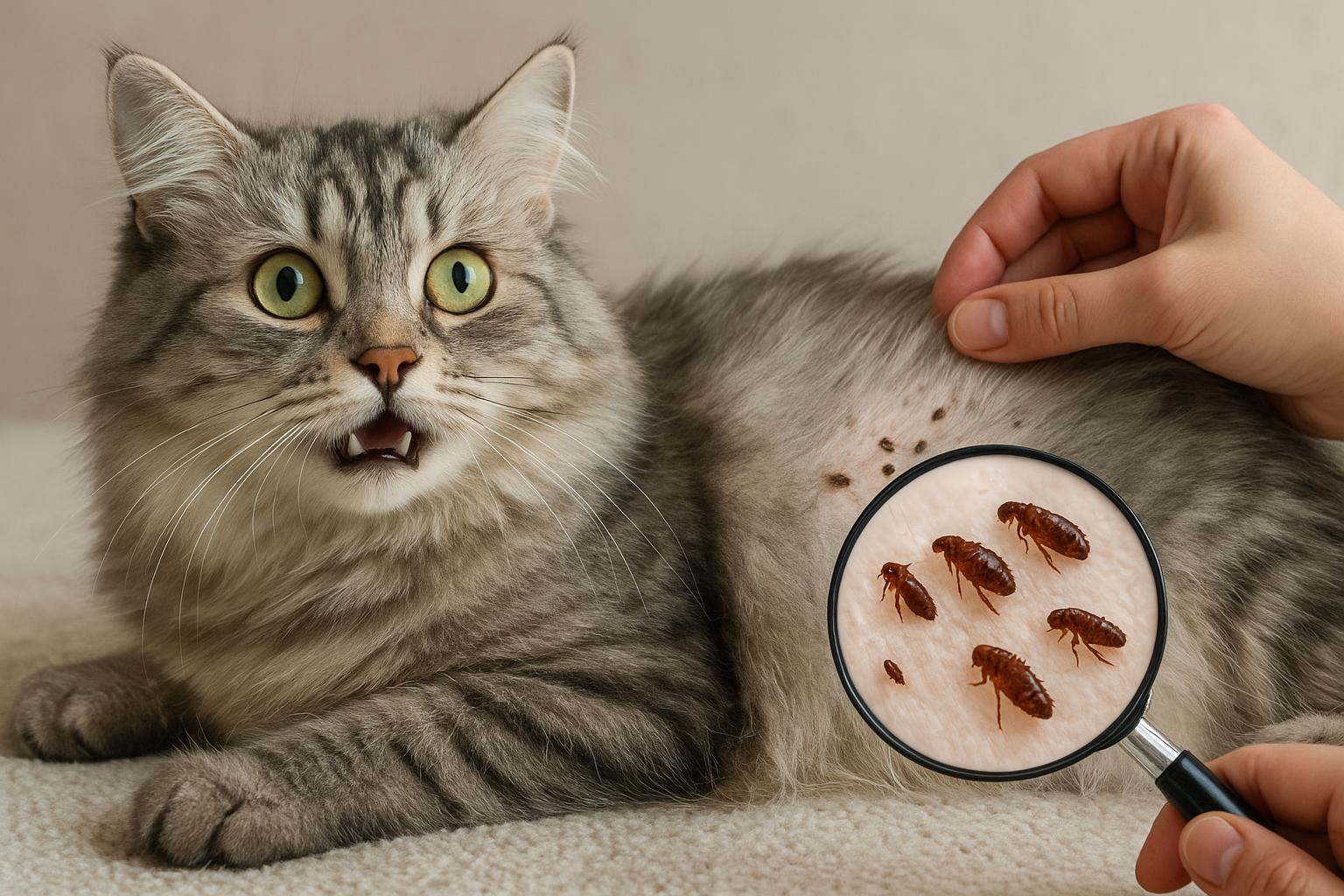
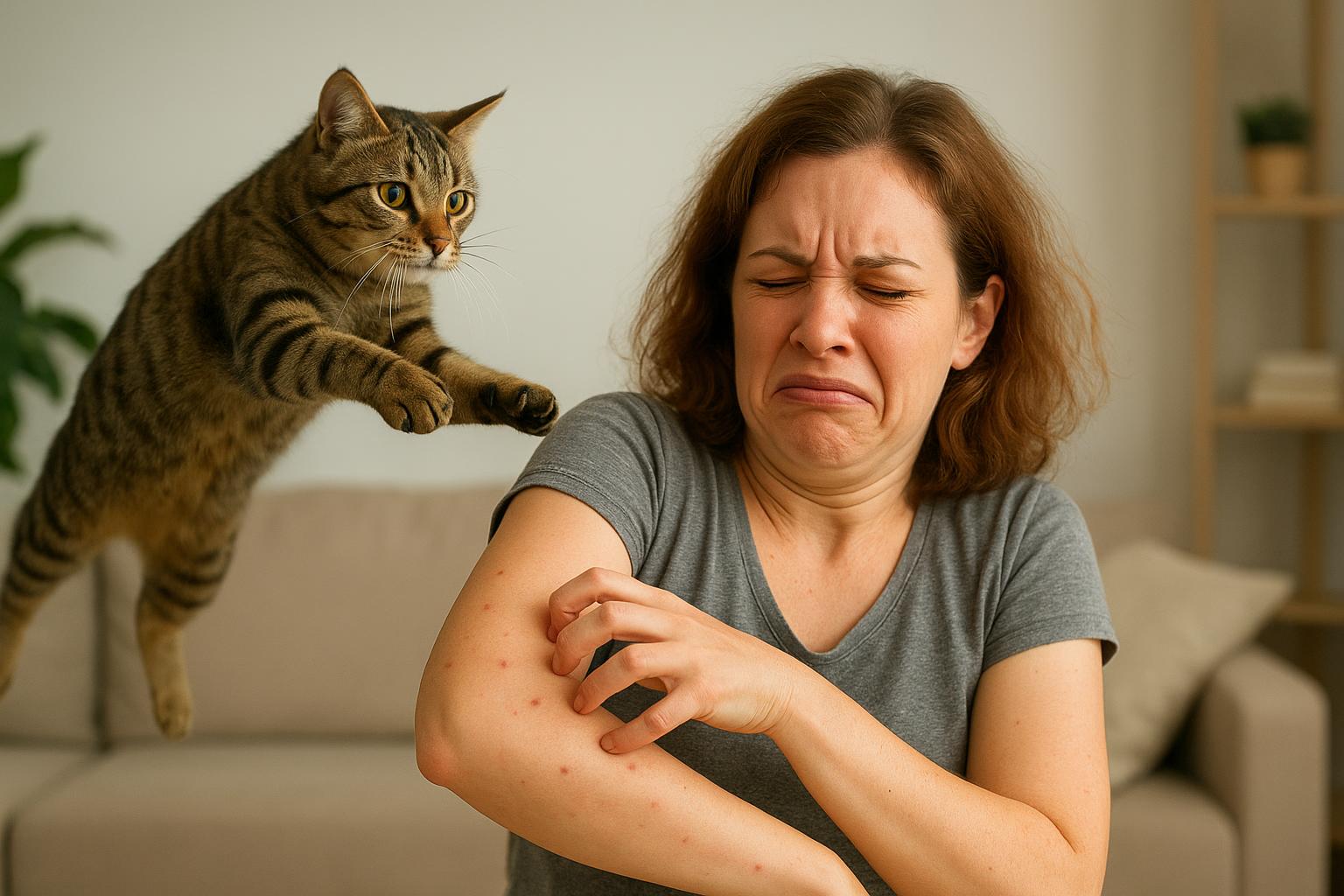
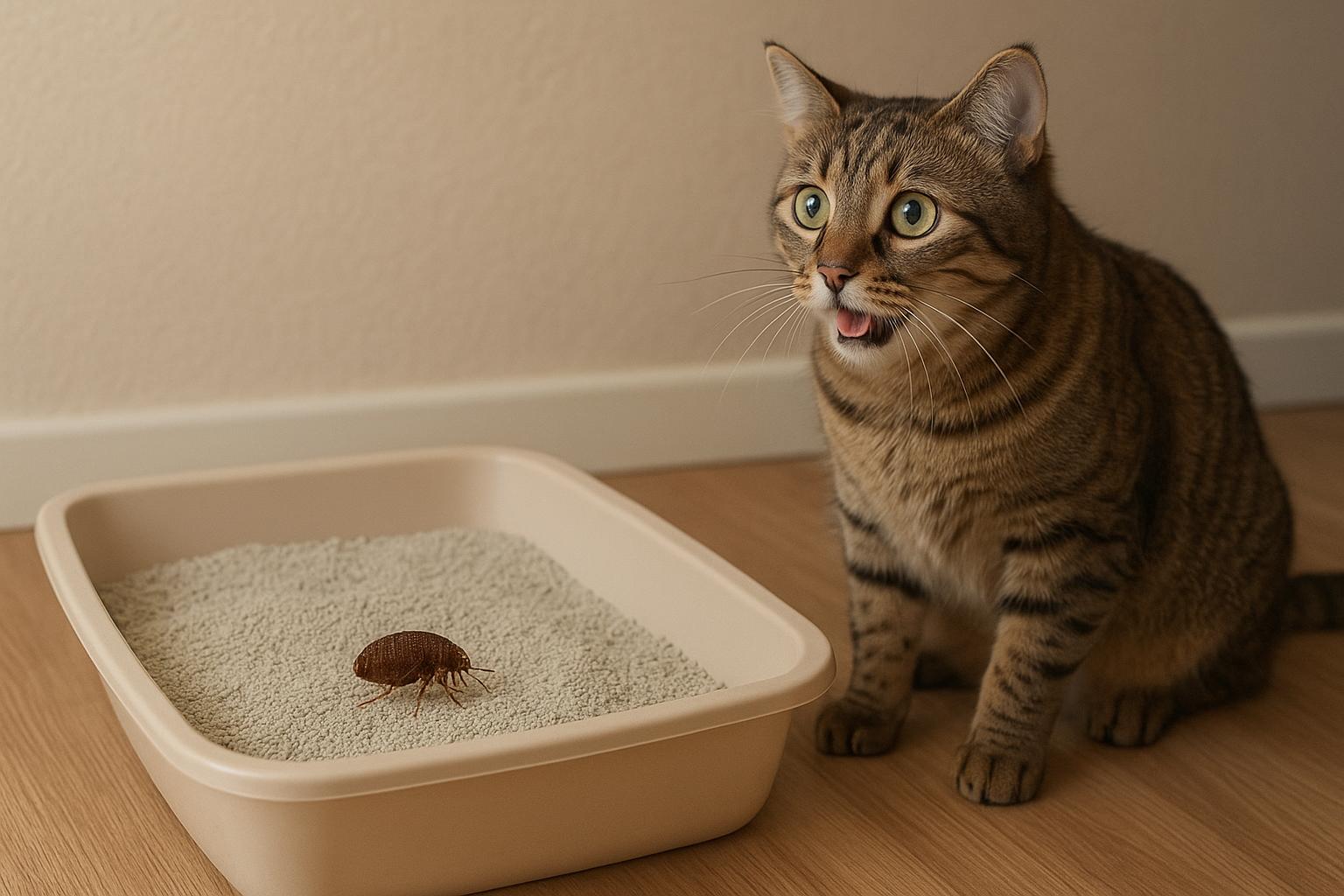
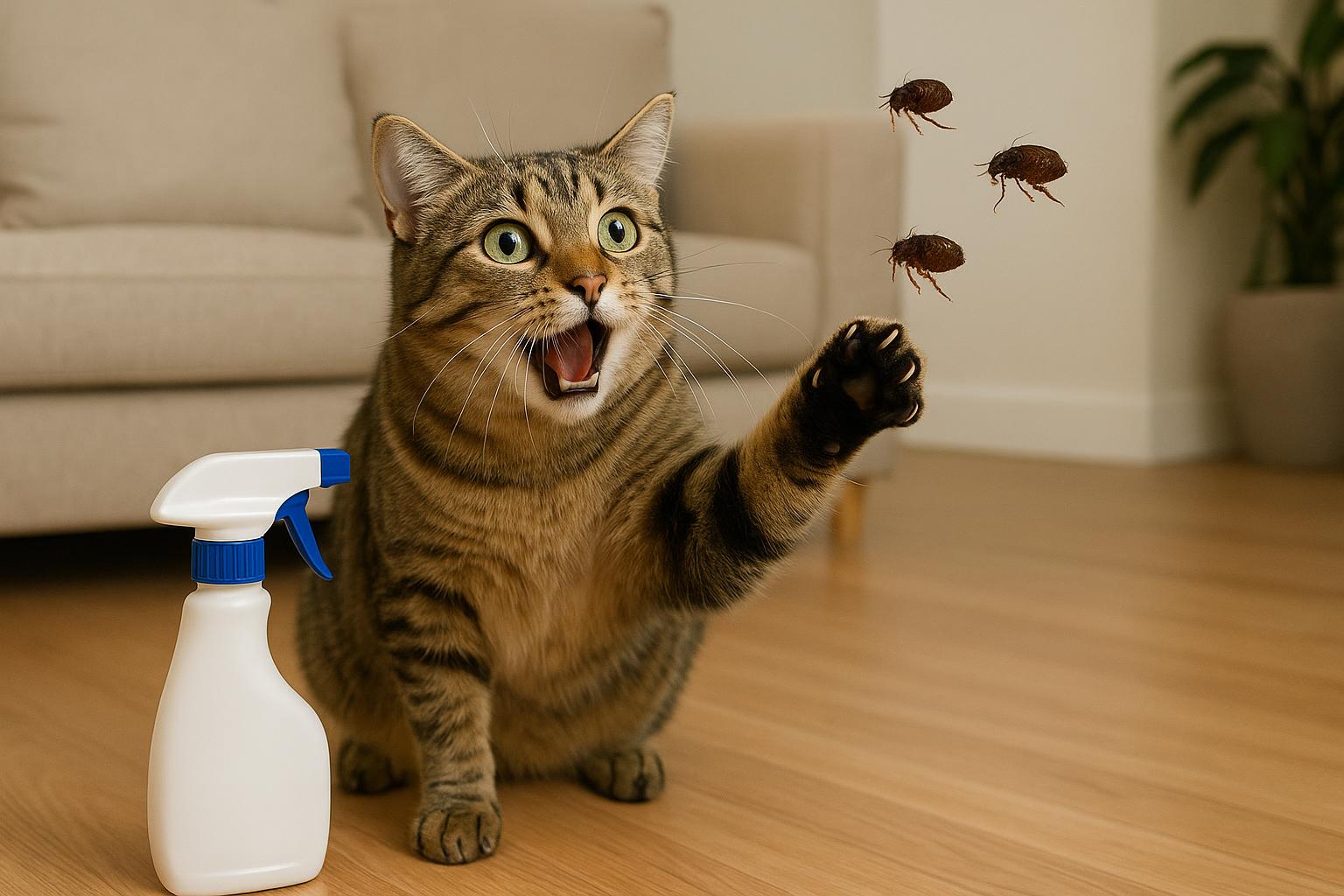
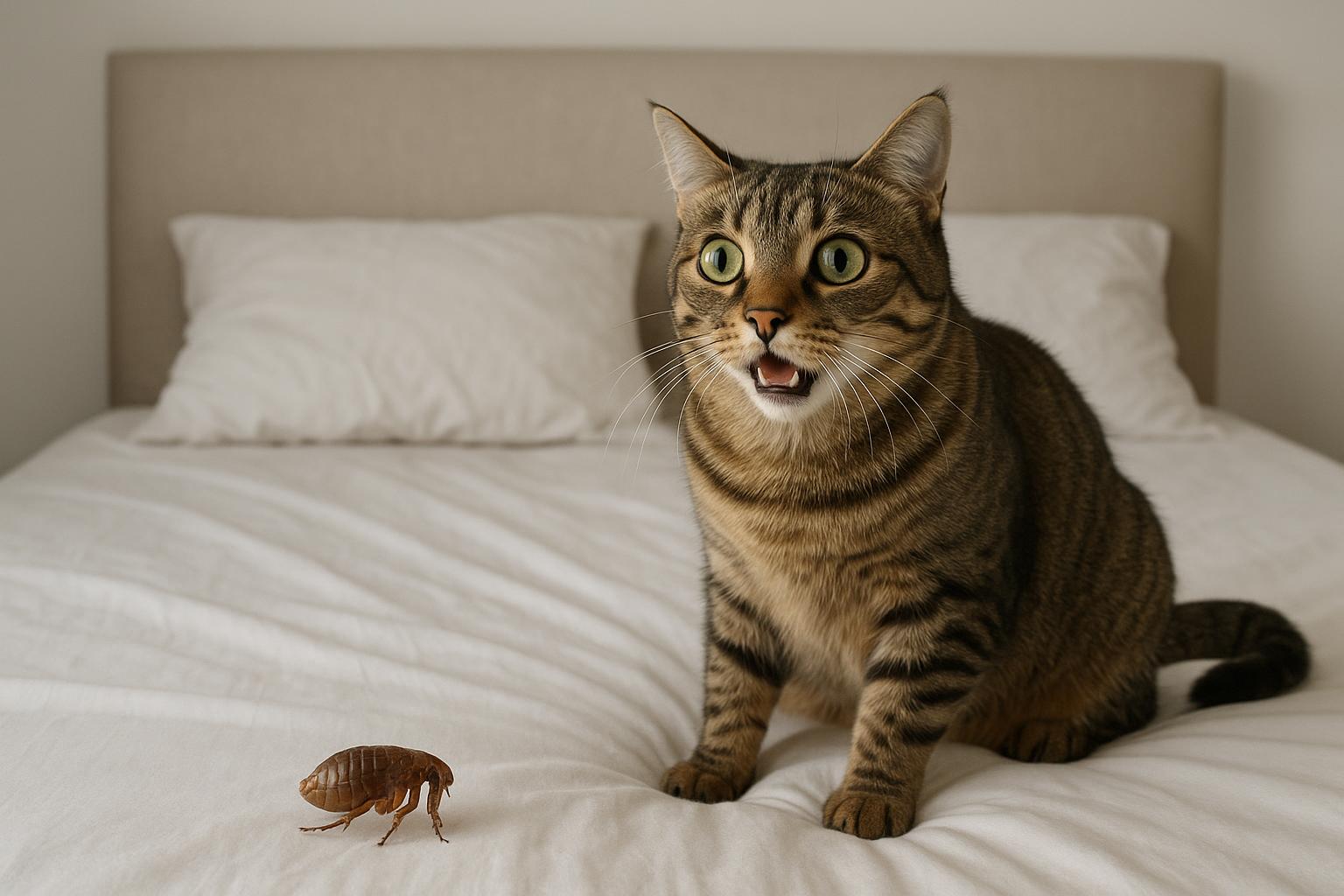
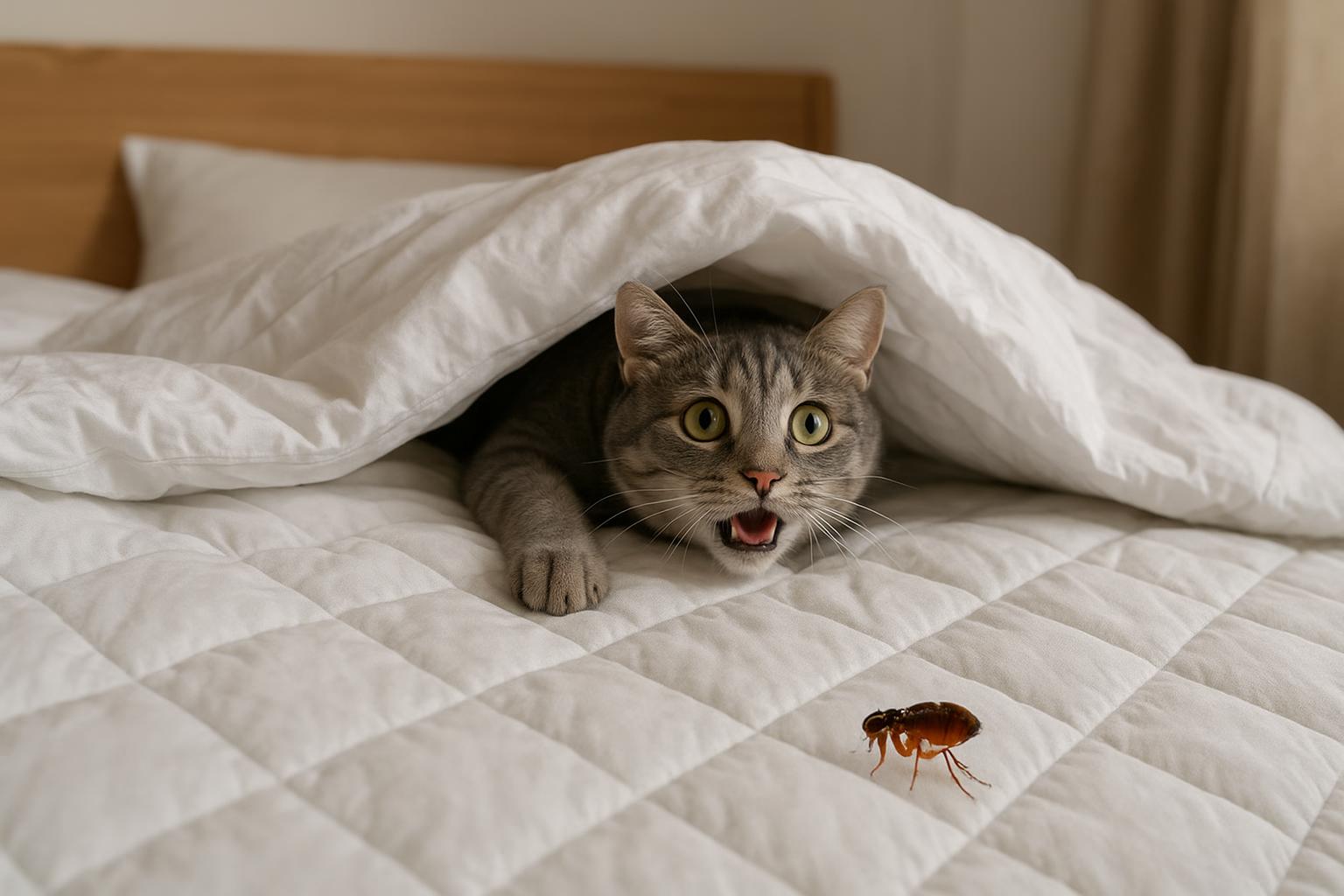
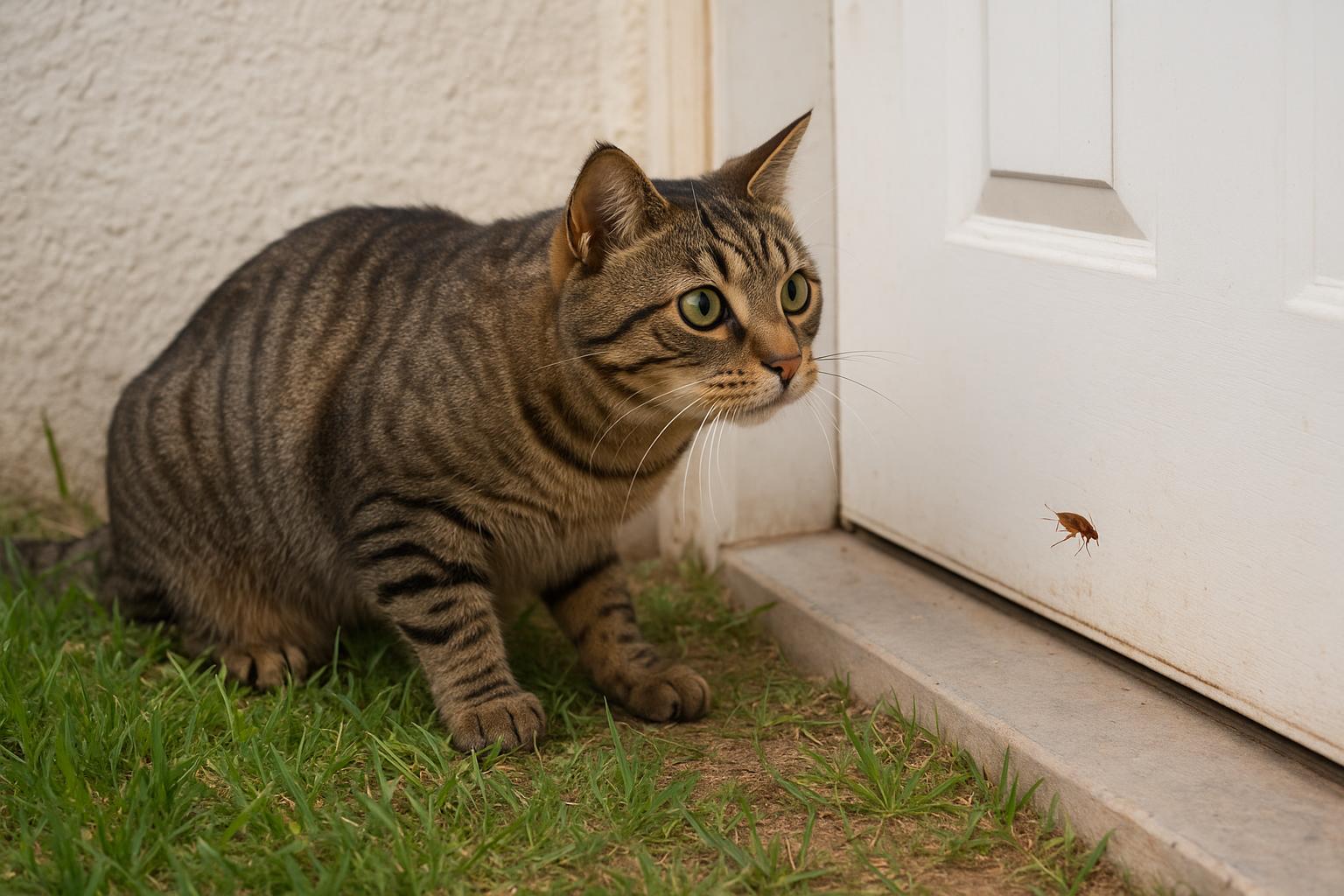
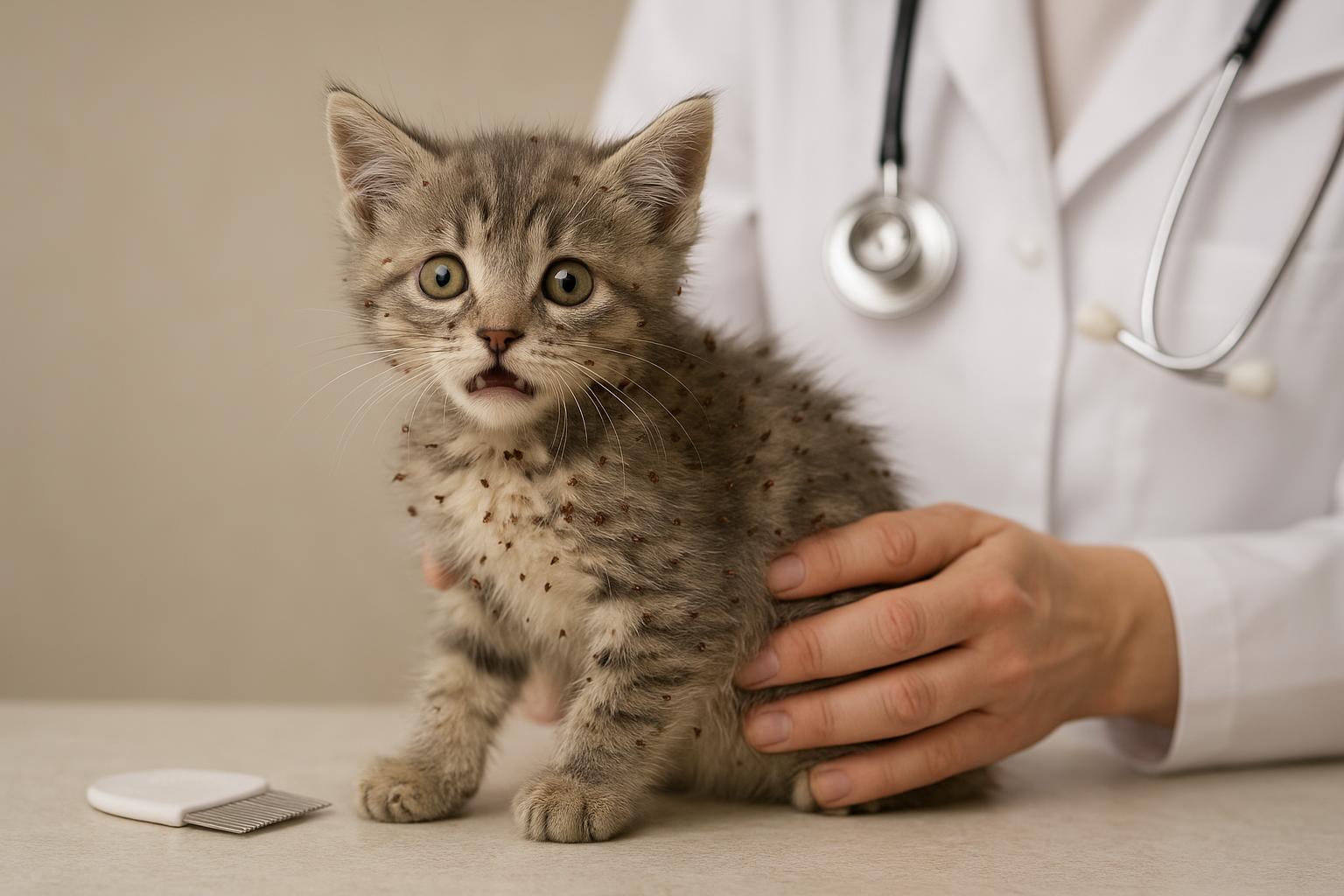
Adults are the visible, biting stage that causes the itching and transmits tapeworm and, rarely, other pathogens. Once they find a host (like your cat) they can begin feeding within minutes and start reproducing within 24–48 hours. Adult fleas live on the host and are the stage most directly targeted by topical and oral treatments.
## Why Understanding Flea Life Stages Matters
Controlling fleas successfully means interrupting the cycle at multiple points. Treating only the adult fleas on your cat will reduce bites fast, but eggs and pupae in the environment will keep emerging for weeks. If you ignore the environment — the carpets, bedding, and under furniture — you’ll be playing catch-up each week.
### Timing Treatments To Match Biology
Because eggs and pupae can be resistant to ordinary cleaning efforts, repeated treatments and consistent environmental management are essential. Most effective plans run for at least 8–12 weeks to outlast pupal emergence and break the cycle.
## 1. Veterinary-Recommended Treatment For Flea Control
This remedy focuses on safe, effective options for your cat and should be followed with professional guidance.
Materials And Ingredients
– Veterinary consultation (required)
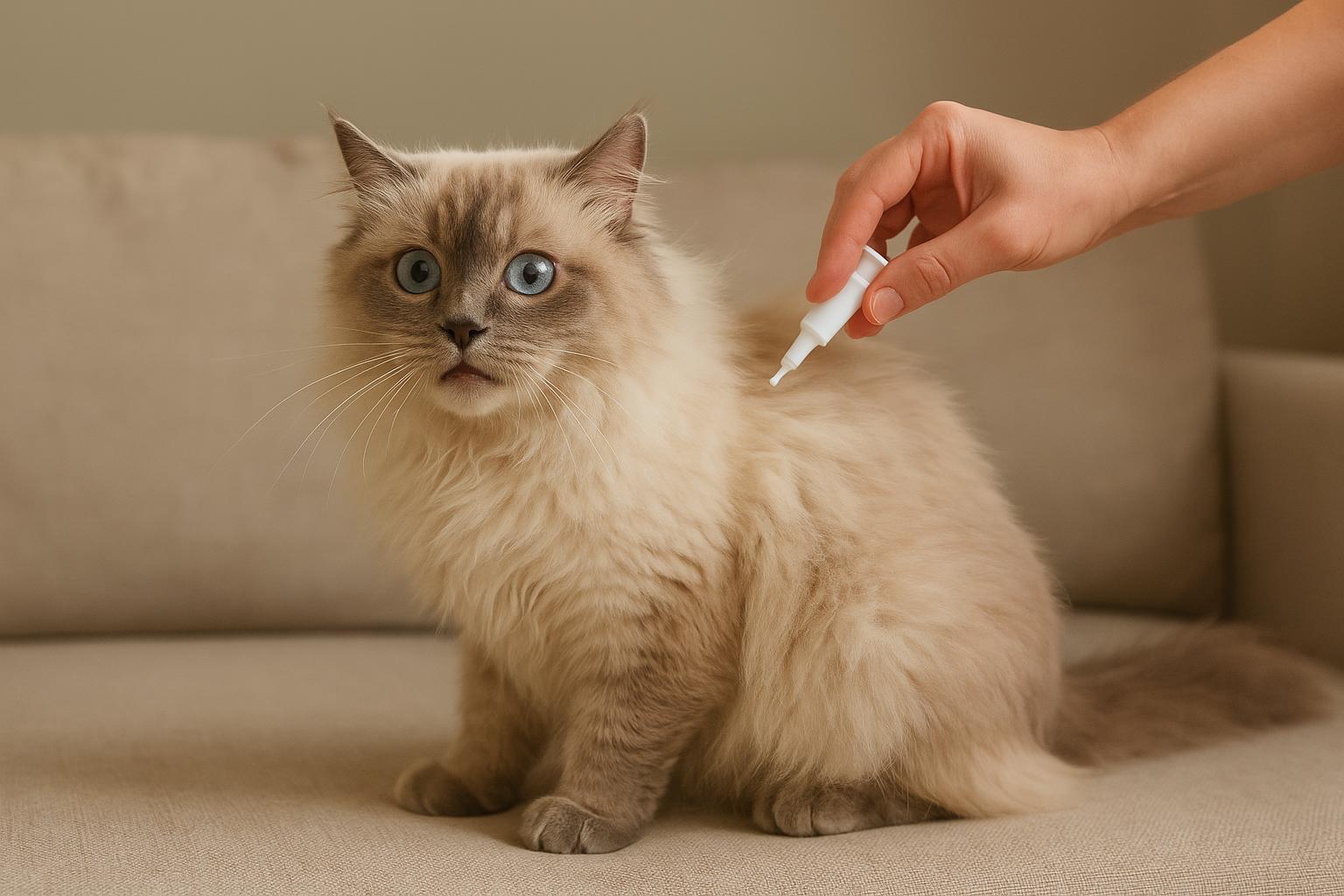
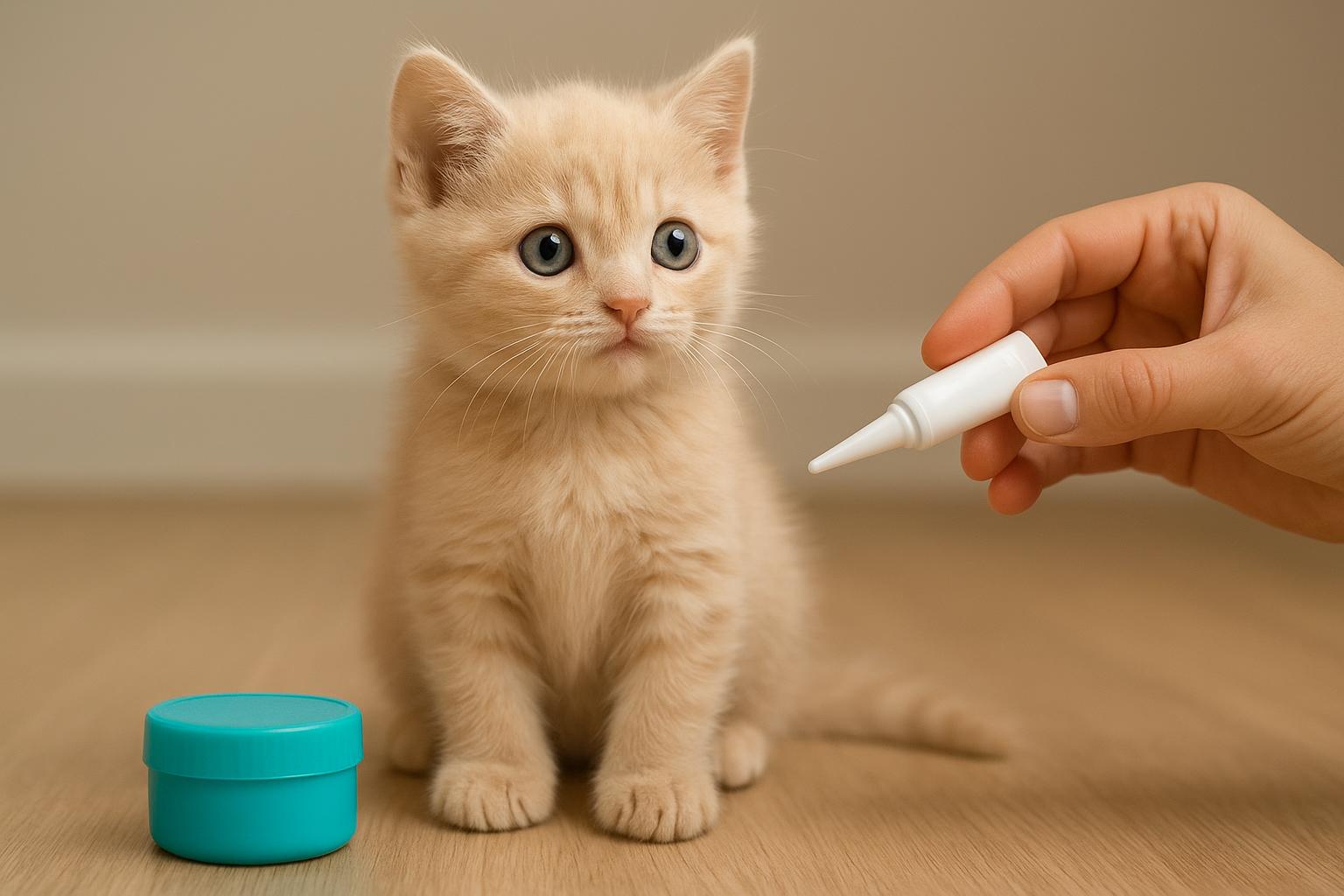
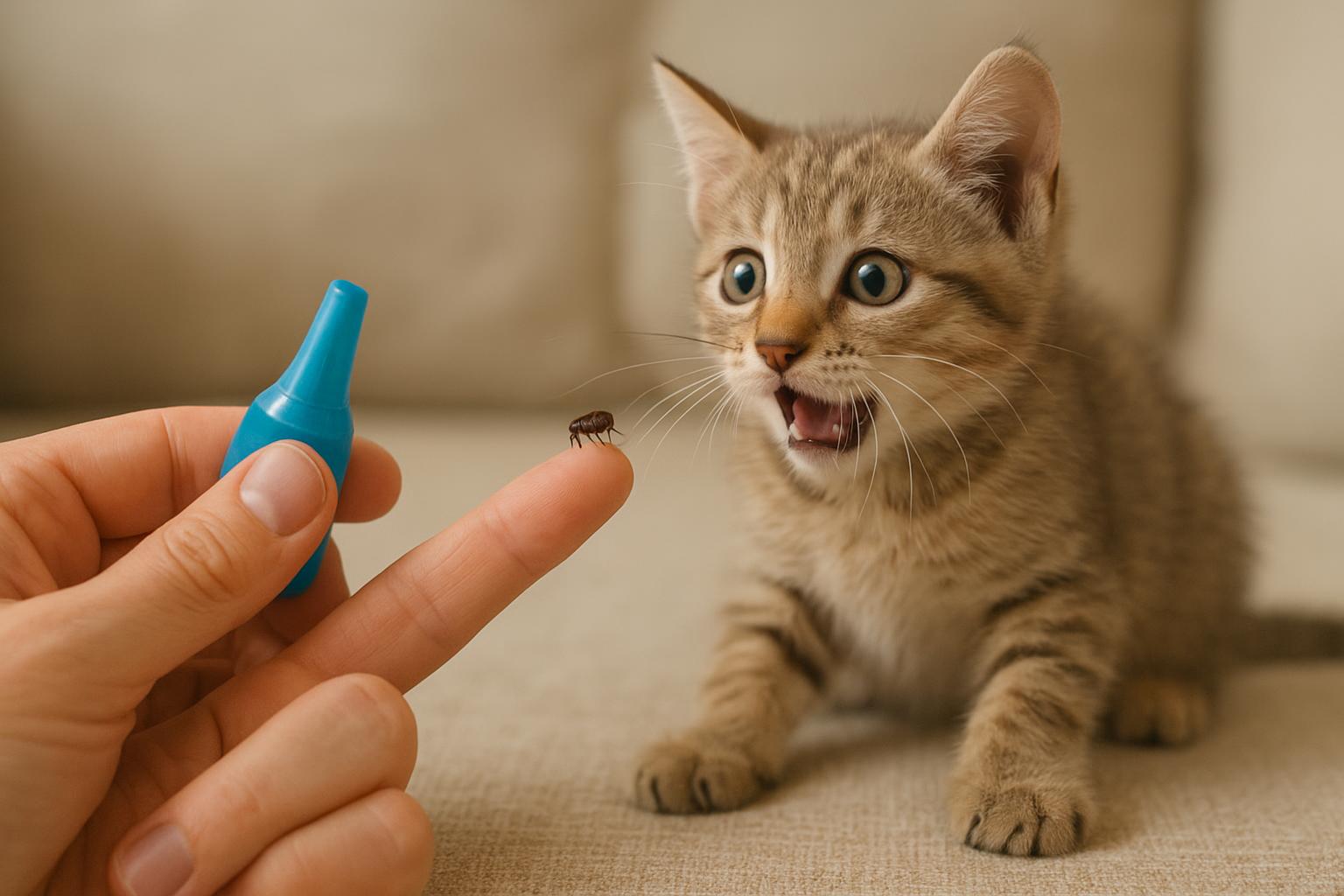
– Approved topical spot-on flea product for cats (contains adulticide ± insect growth regulator)
– Short-acting oral flea adulticide for immediate relief (veterinarian-prescribed)
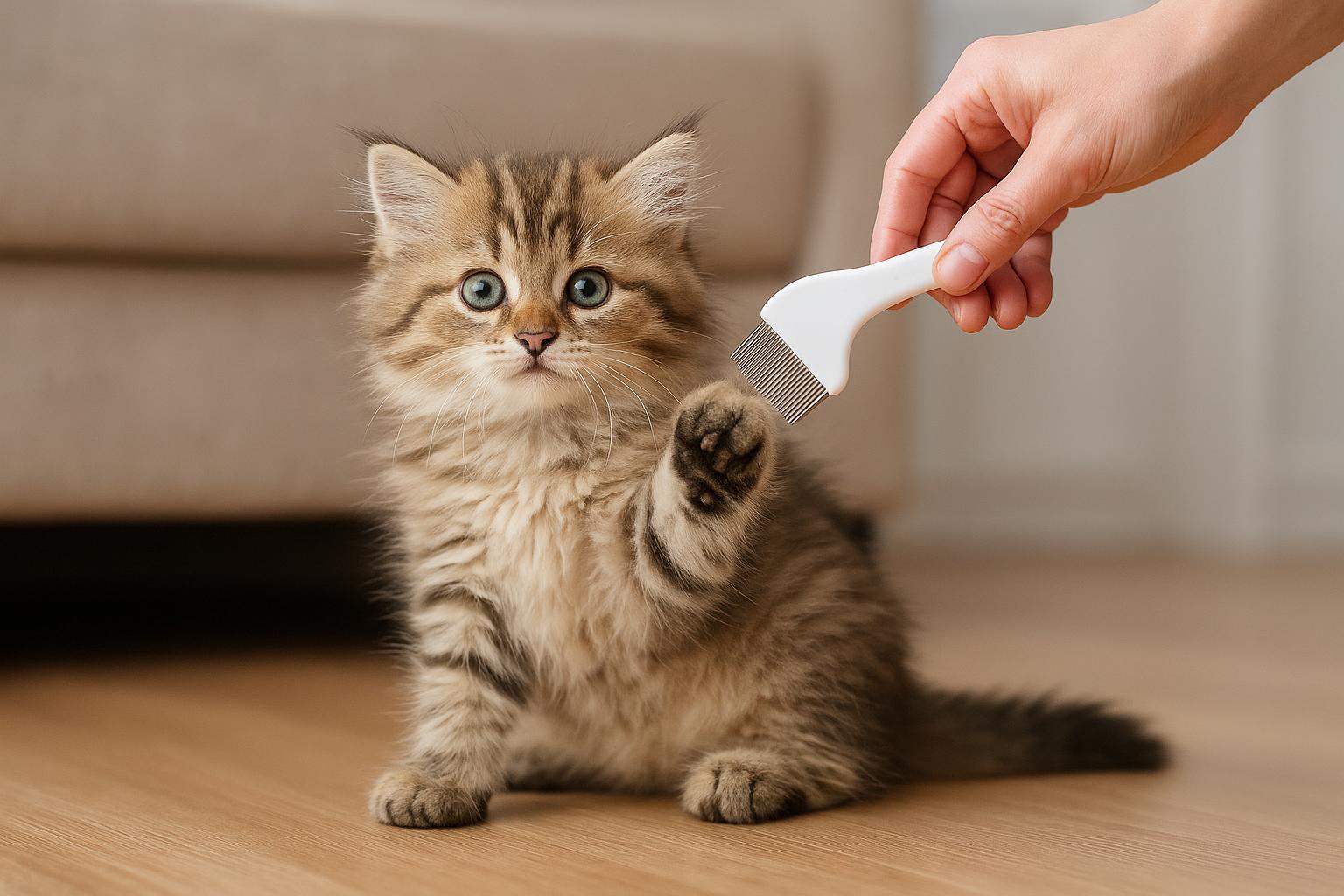
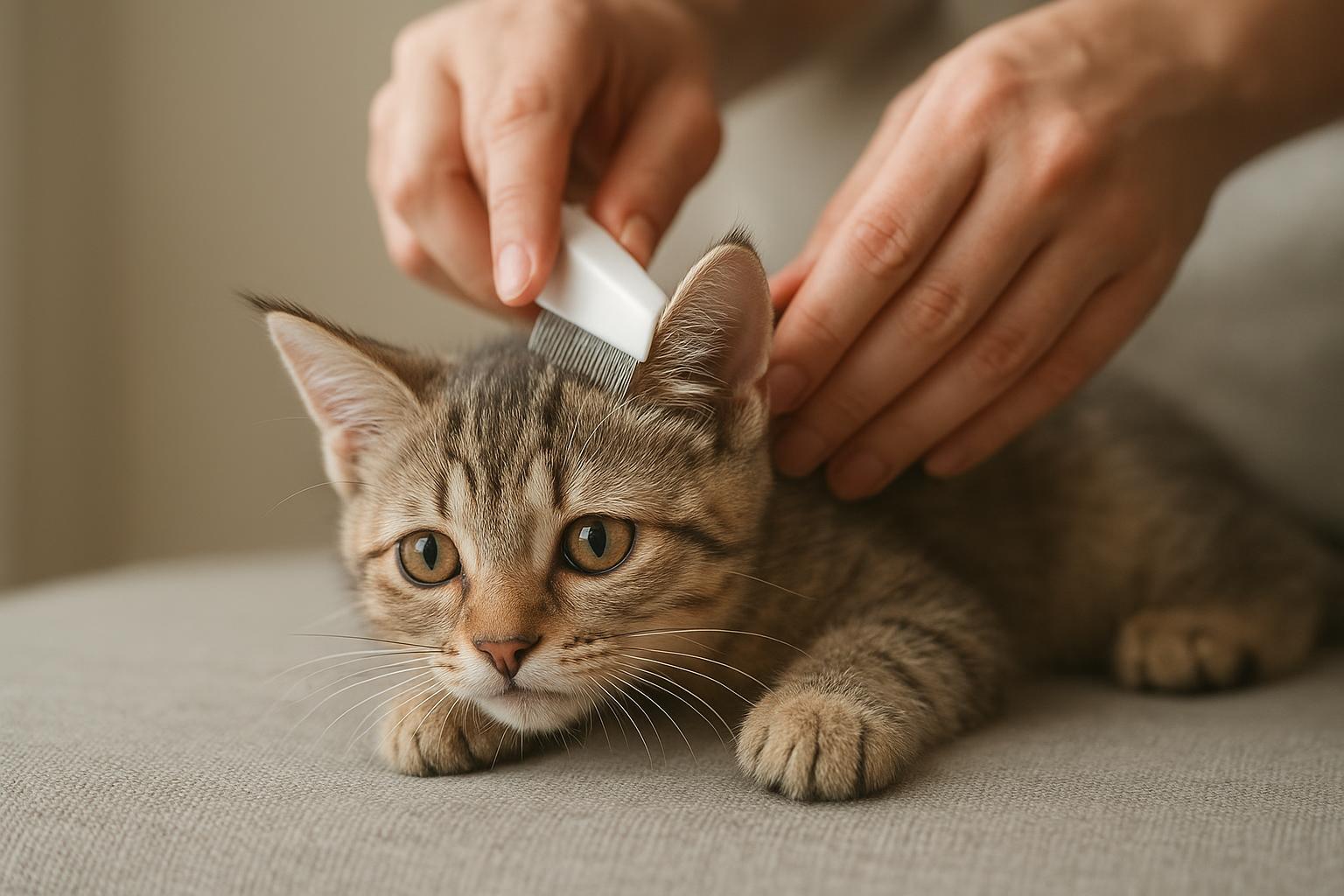
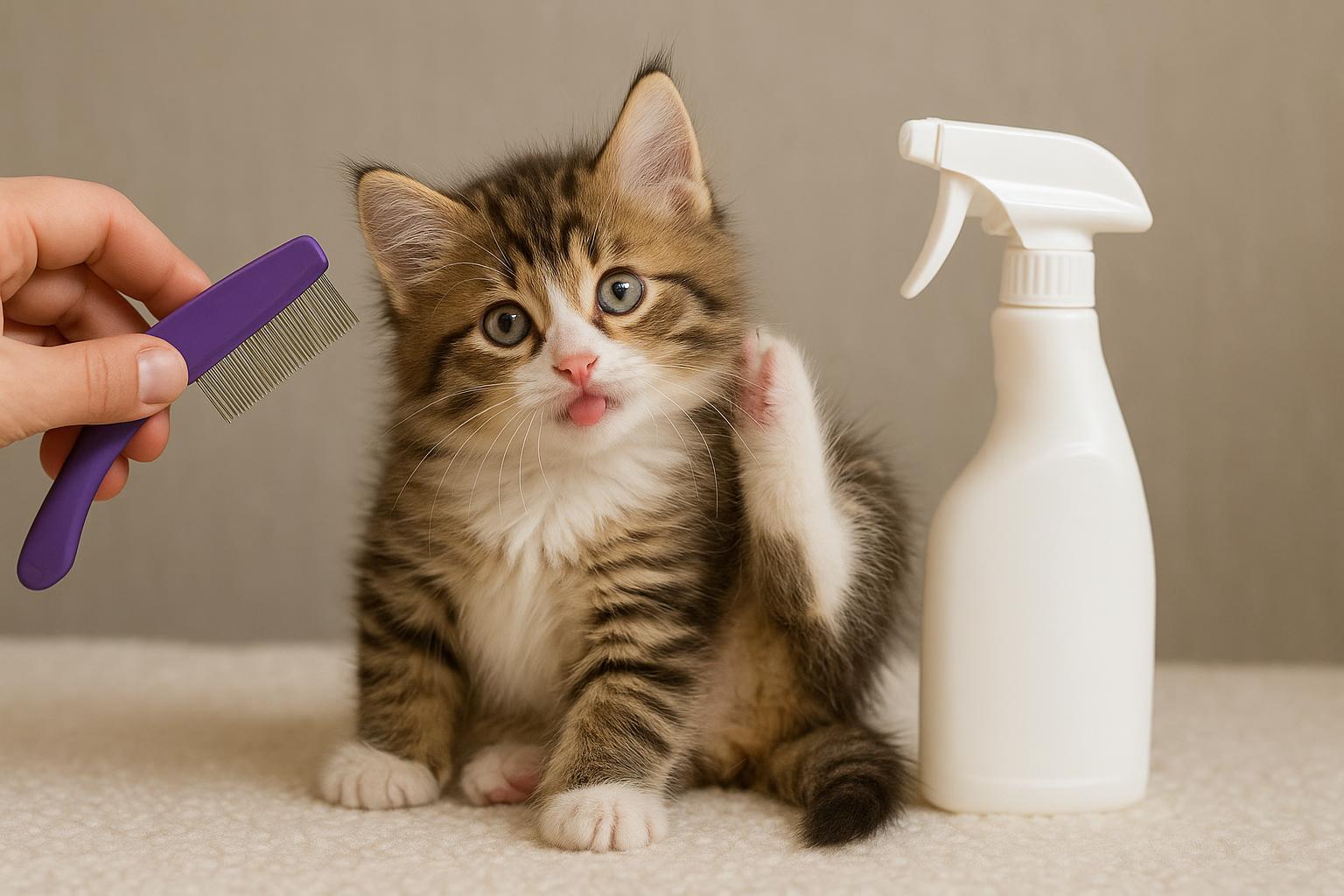
– Flea comb (fine-toothed) and disposable paper towels
– Towels and gloves
– Records to track dates of application and follow-ups
Step-By-Step Application (Formal Instructions)
1. Consult Your Veterinarian: Schedule an appointment. Provide details about your cat’s age, weight, health history, indoor/outdoor status, and any other pets. Do not use dog flea products on cats.
2. Obtain Recommended Products: The veterinarian will prescribe or recommend appropriate, label-approved products for your cat. Follow the specific product label and veterinary directions regarding dose, frequency, and safety.
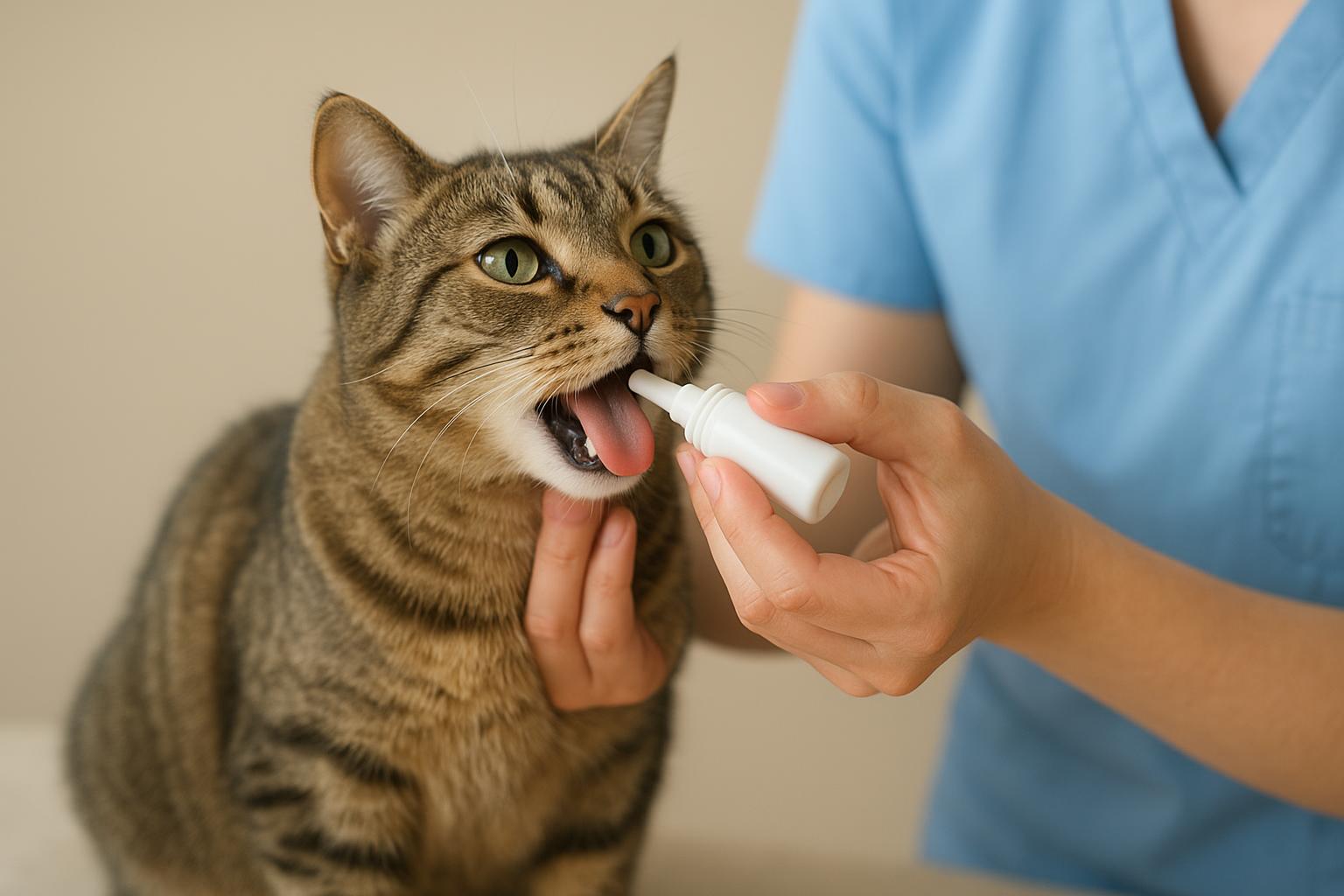
3. Immediate Relief (If Needed): If there is significant flea activity, your vet may give a fast-acting oral adulticide to quickly reduce biting fleas. Administer exactly as directed.
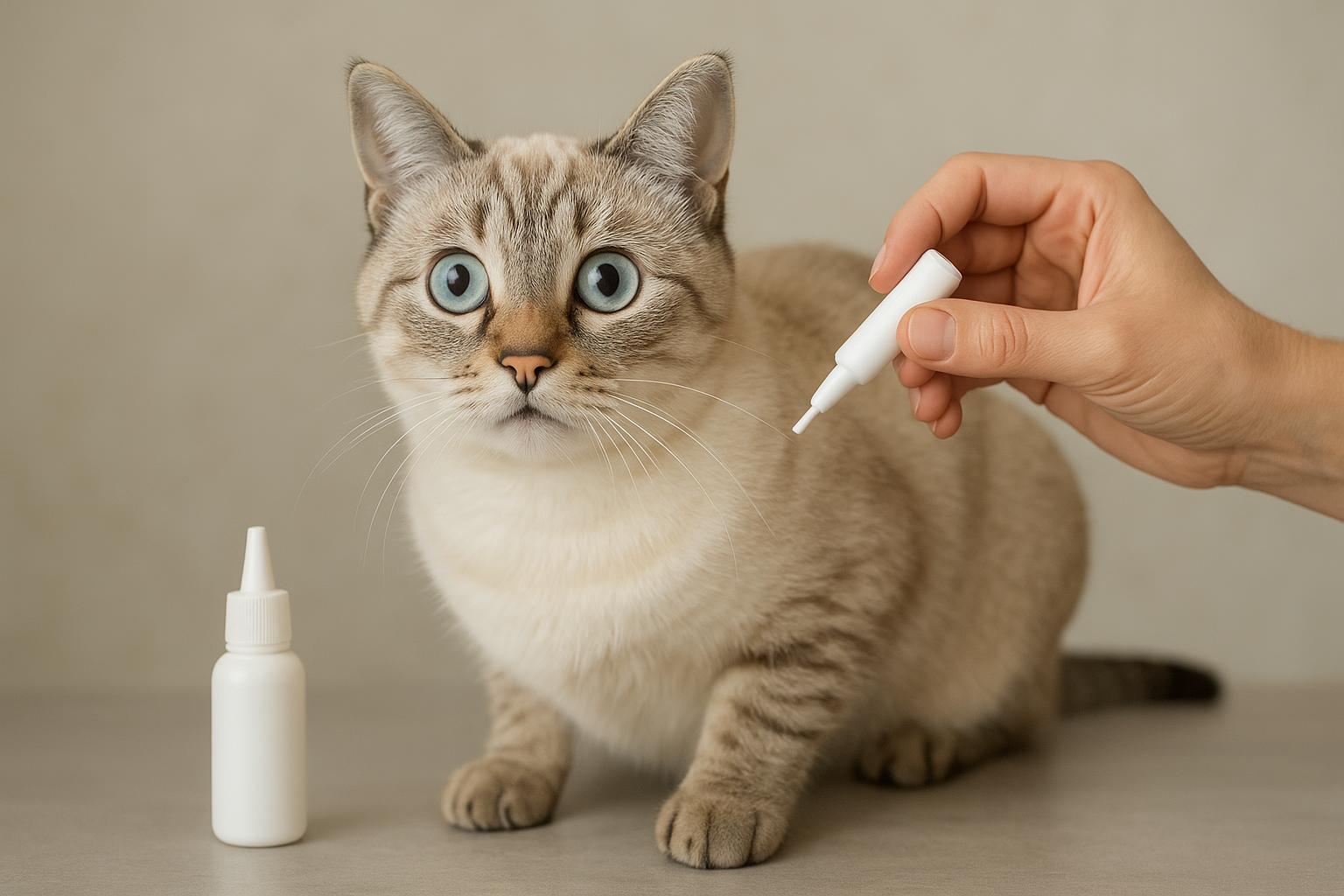
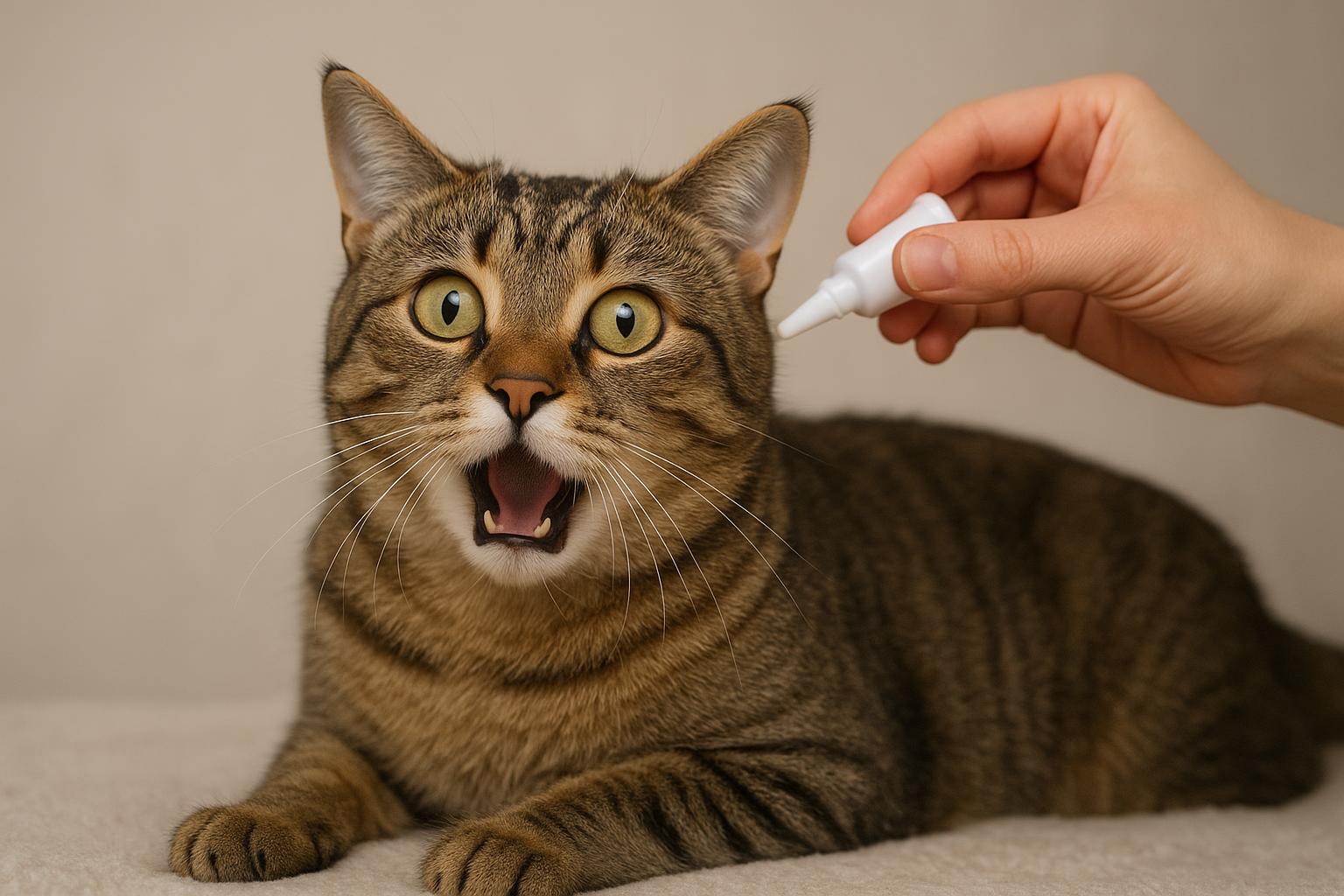
4. Apply Long-Term Prevention: Use the prescribed topical or other long-acting product. Separate application areas between multiple pets to avoid cross-contamination. Do not bathe the cat immediately before or after application unless product instructions permit.
5. Treat All Pets: Ensure every pet in the household receives appropriate treatment; untreated pets will re-seed the infestation.
6. Monitor And Document: Record treatment dates. Re-check with the veterinarian at recommended intervals or if adverse reactions occur.
7. Follow Label Directions For Re-Entry And Handling: Some products specify time windows before bathing, letting pets interact, or allowing children to close contact.
Notes On Safety And Efficacy
– Always use products specifically labeled for cats.
– Avoid essential oils and folk remedies that are toxic to cats.
– If you notice excessive salivation, vomiting, tremors, or other signs of toxicity after treatment, contact your veterinarian or an emergency clinic immediately.
## 2. Environmental Control: Remove Eggs, Larvae, And Pupae
This remedy treats the home ecosystem. It requires thoroughness and patience; environmental measures must be repeated to catch newly emerged adults.
Materials And Ingredients
– Vacuum with a strong suction and brush attachment
– Hot-water-capable washing machine and dryer
– Steam cleaner (optional but effective)
– Insect Growth Regulator (IGR) product labeled for residential use (e.g., pyriproxyfen, methoprene)
– Home-use adulticide spray labeled for carpets and pet areas (if recommended)
– Seam-sealed trash bags
– Flea traps (lamp, shallow bowl with water and dish soap)
– Protective gloves and mask (when applying sprays)
Step-By-Step Application (Formal Instructions)
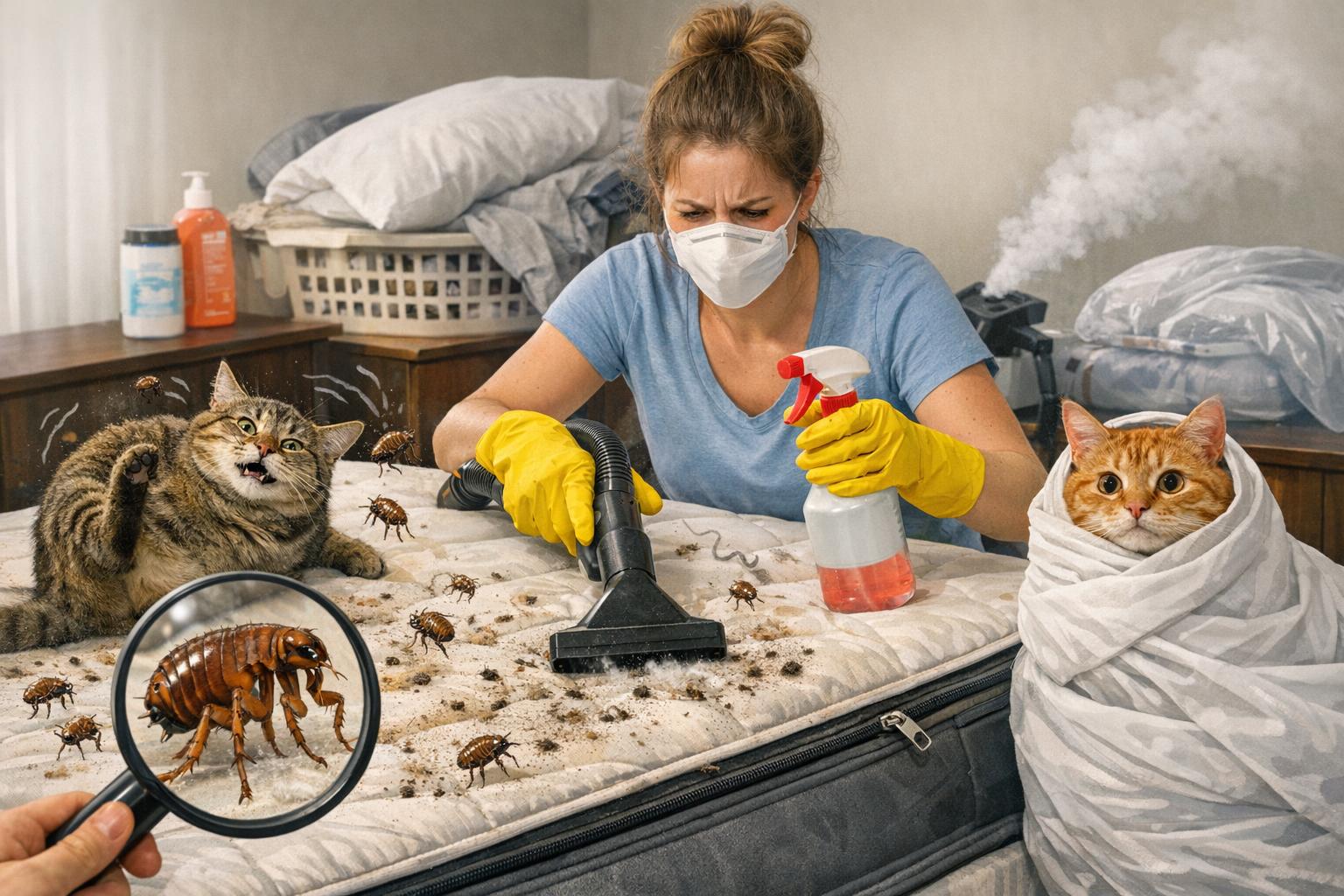
1. Declutter And Isolate: Remove items from floors, especially textiles. Contain or isolate the cat in a treated and safe room if practical to prevent re-exposure during treatment.
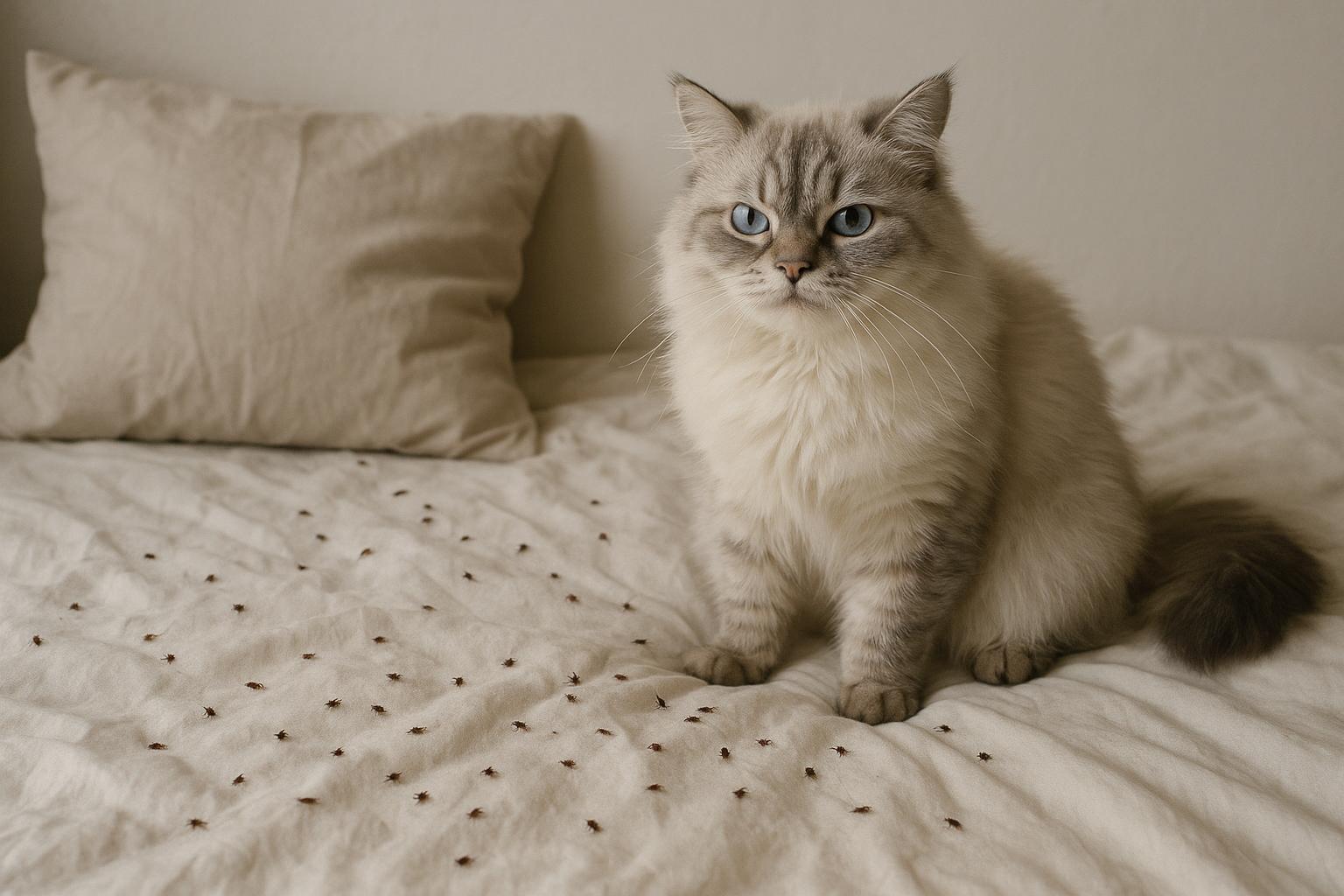
2. Wash Bedding And Fabrics: Wash all pet bedding, blankets, and any removable cushion covers in hot water (≥130°F/54°C if fabric allows) and dry on high heat. Repeat weekly for at least two months.
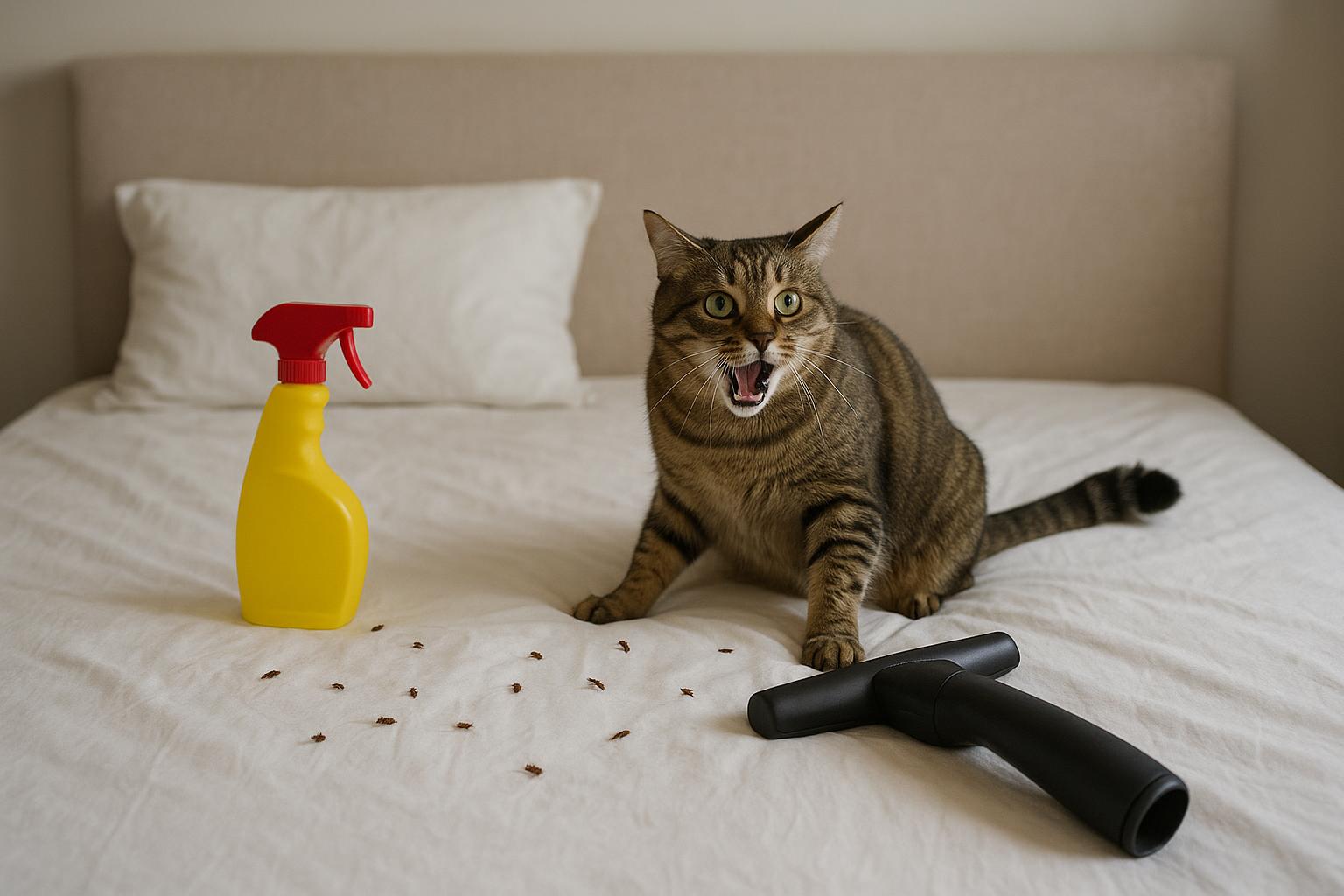
3. Vacuum Thoroughly: Vacuum carpets, rugs, upholstery seams, under furniture, and baseboards every 2–3 days for the first 2–3 weeks, then weekly. Empty vacuum canisters or dispose of vacuum bags in sealed trash bags immediately outside the home.
4. Apply IGRs: Use an IGR product per label instructions to prevent eggs and larvae from maturing. Focus on high-traffic pet areas, under furniture, and along baseboards. Wear gloves and a mask when applying.
5. Use Carpet/Surface Treatments If Needed: If infestation is heavy, apply a labeled adulticide for immediate knockdown to carpets and furniture, following label and safety guidelines. Keep pets and people out of treated areas until safe per the product label.
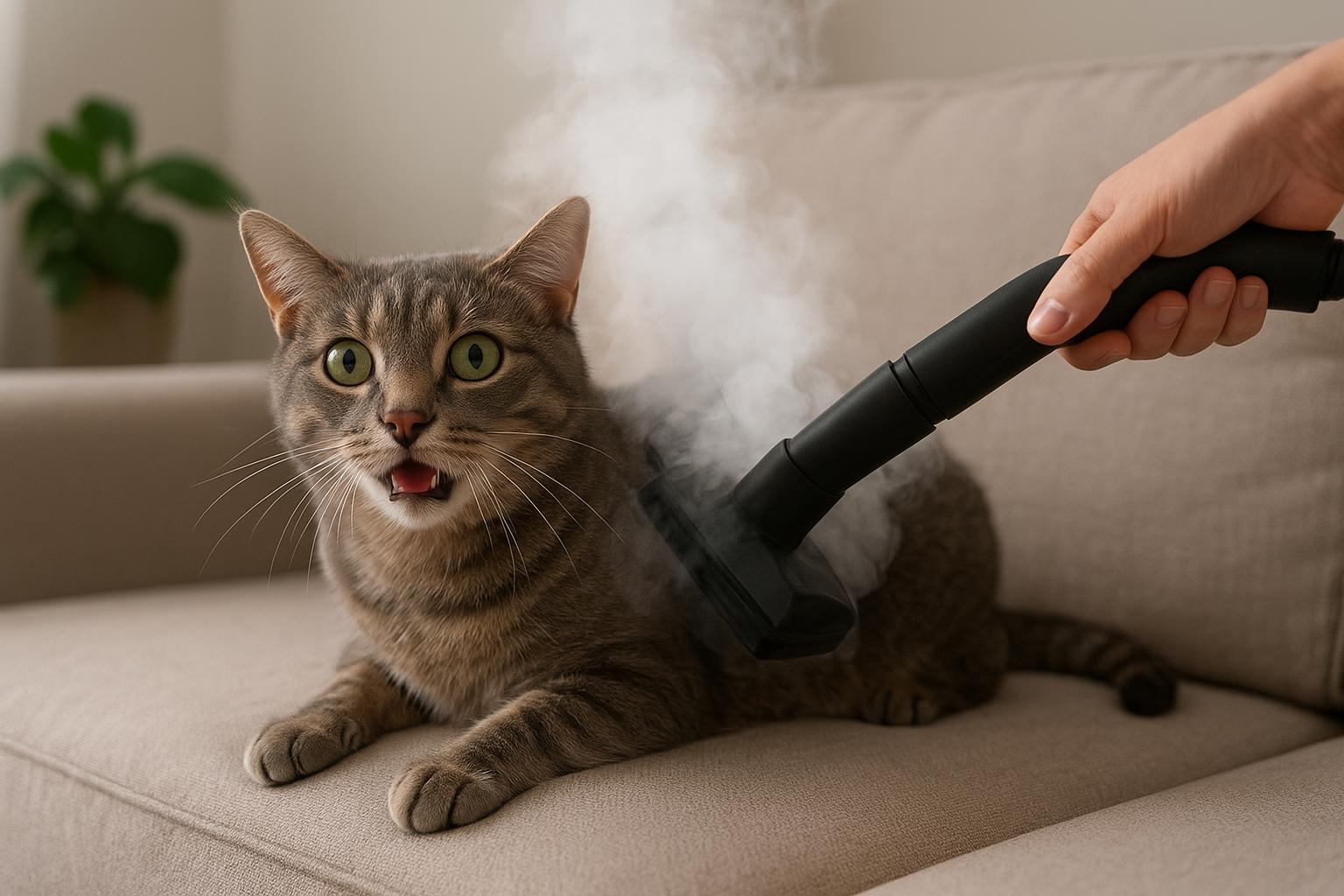
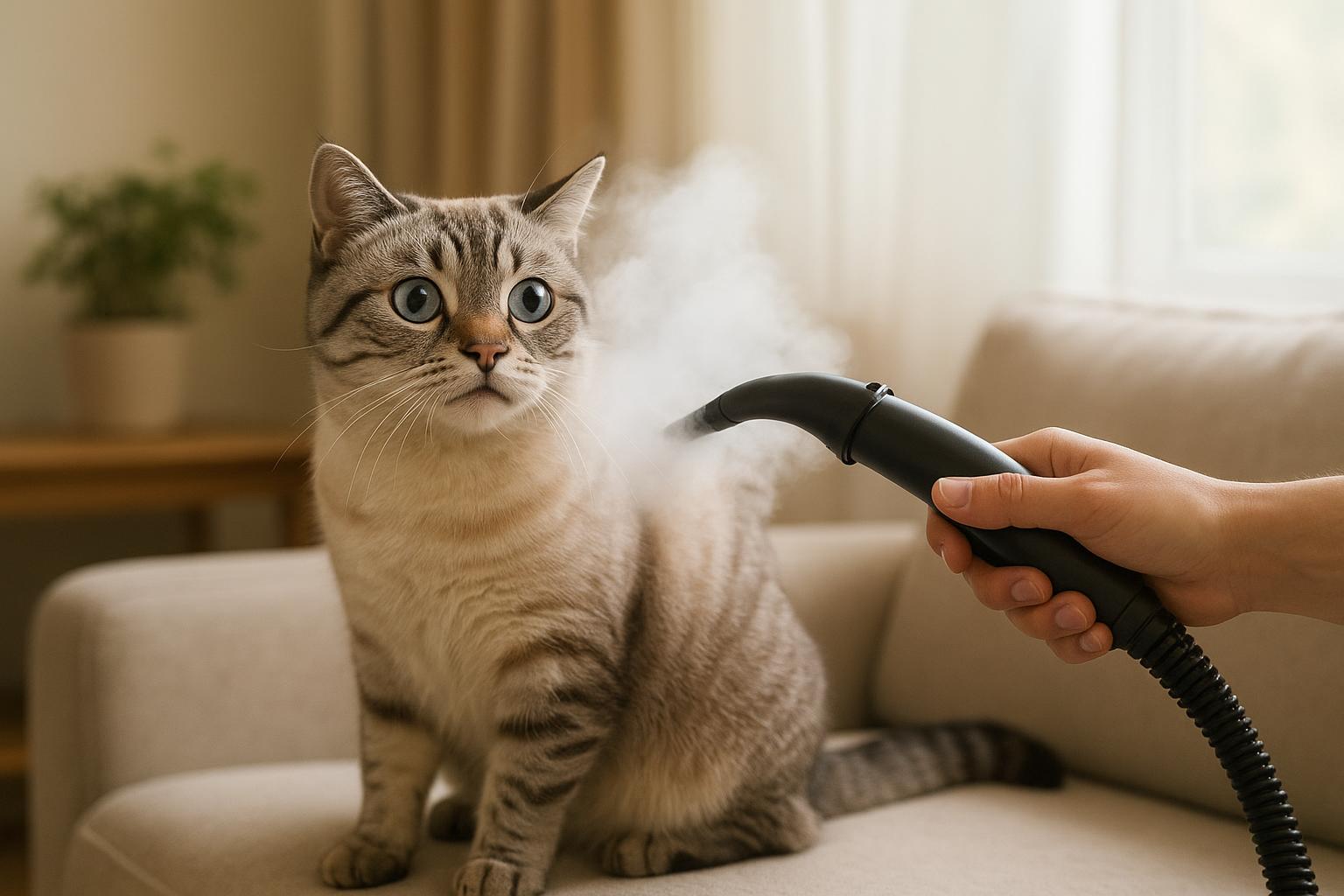
6. Steam Clean Carpets And Furniture: Steam cleaning kills larvae and adults in contact areas and can help physically remove eggs and dirt. Use where fabric permits.
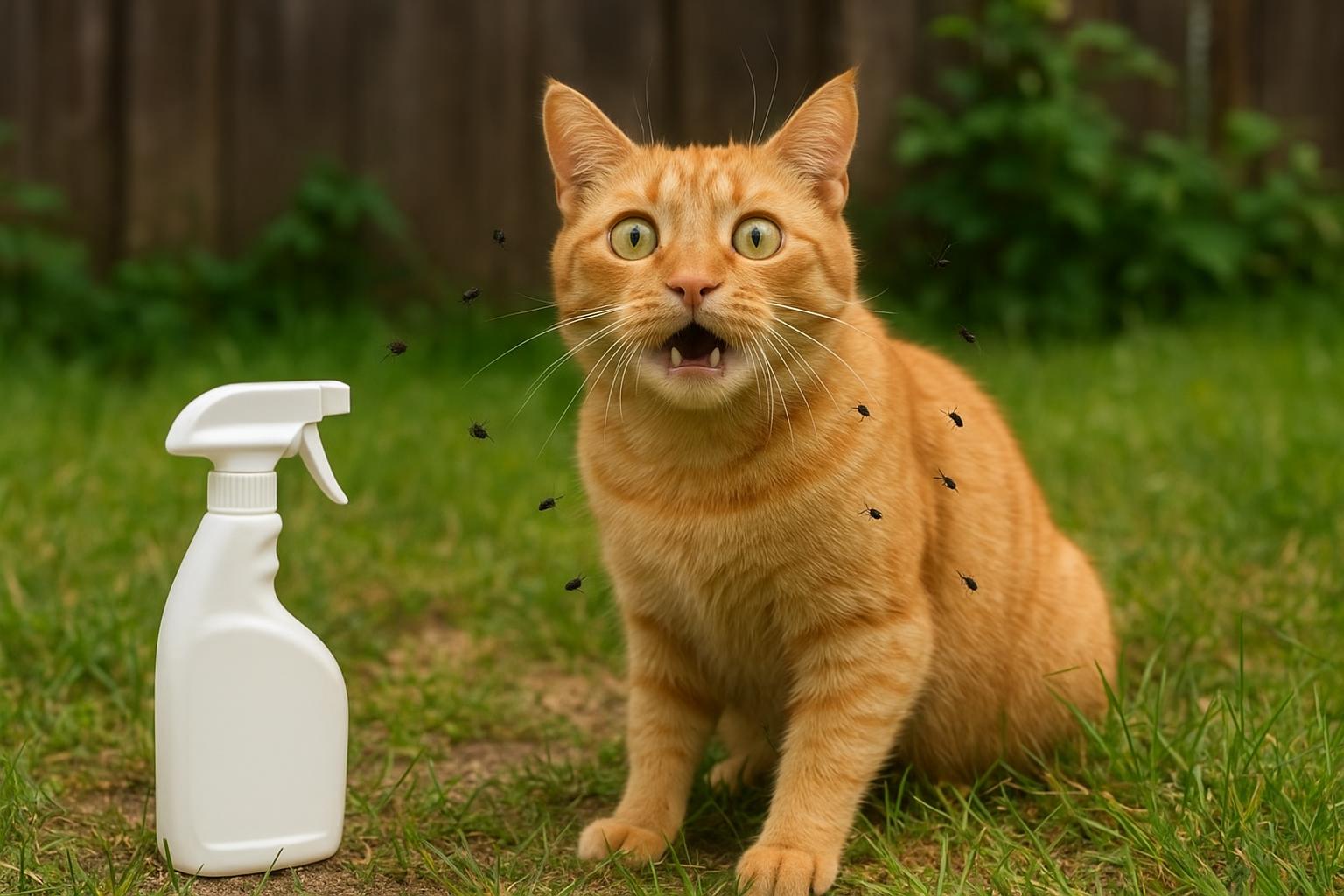
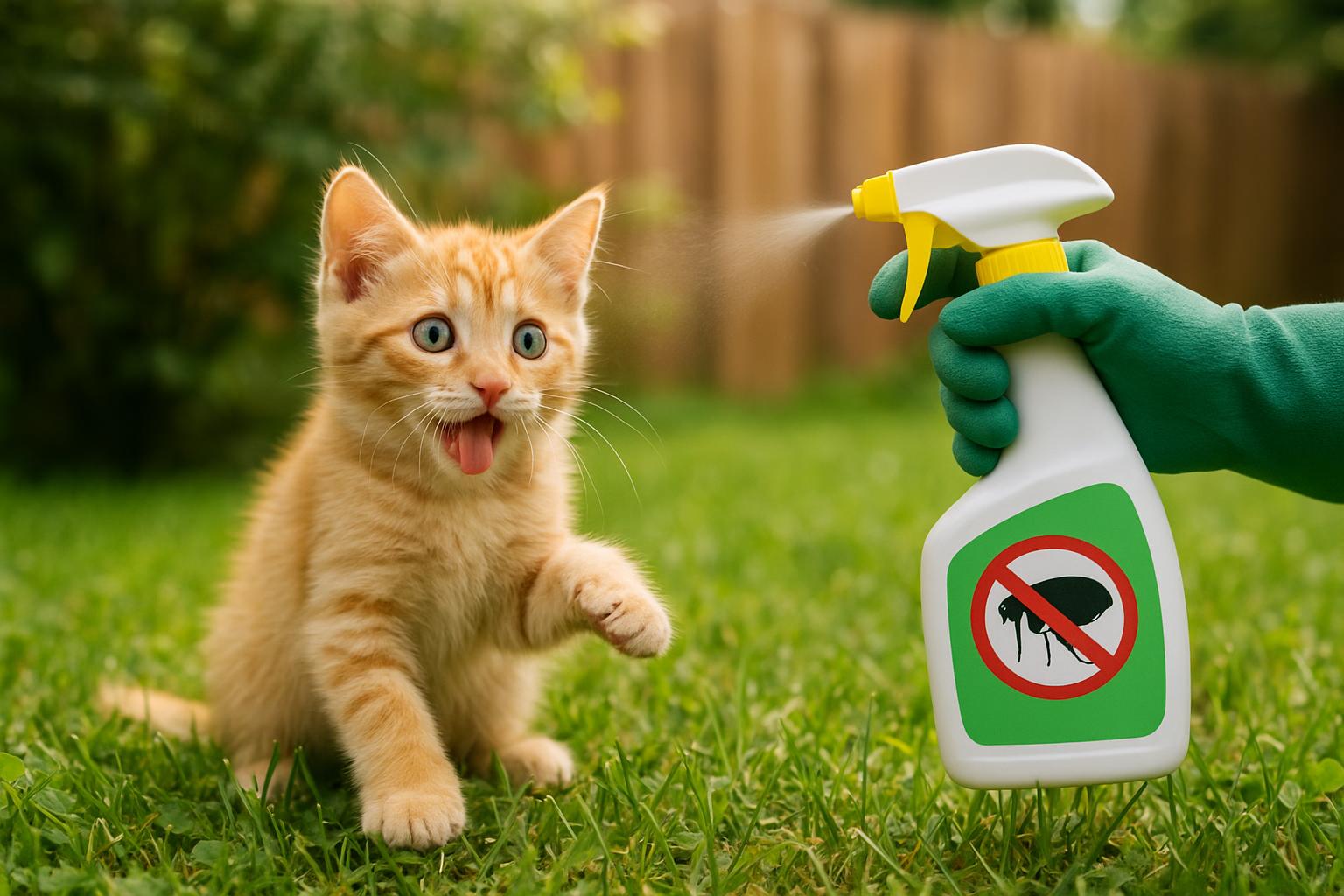
7. Treat Outdoor Areas If Applicable: For outdoor cats or yards with heavy infestation, treat shaded, frequented areas (where bedding or resting occurs) with appropriate outdoor products following product labels and local regulations.
8. Maintain Preventive Measures: Continue veterinary-approved pet treatments and environmental steps until you’ve observed no sign of fleas for several weeks beyond the expected pupal emergence window (often 8–12 weeks).
### Natural And Low-Toxicity Options (Use With Caution)
If you prefer low-chemical approaches, some supportive measures can reduce flea numbers but are rarely sufficient alone for moderate to heavy infestations.
Materials And Ingredients
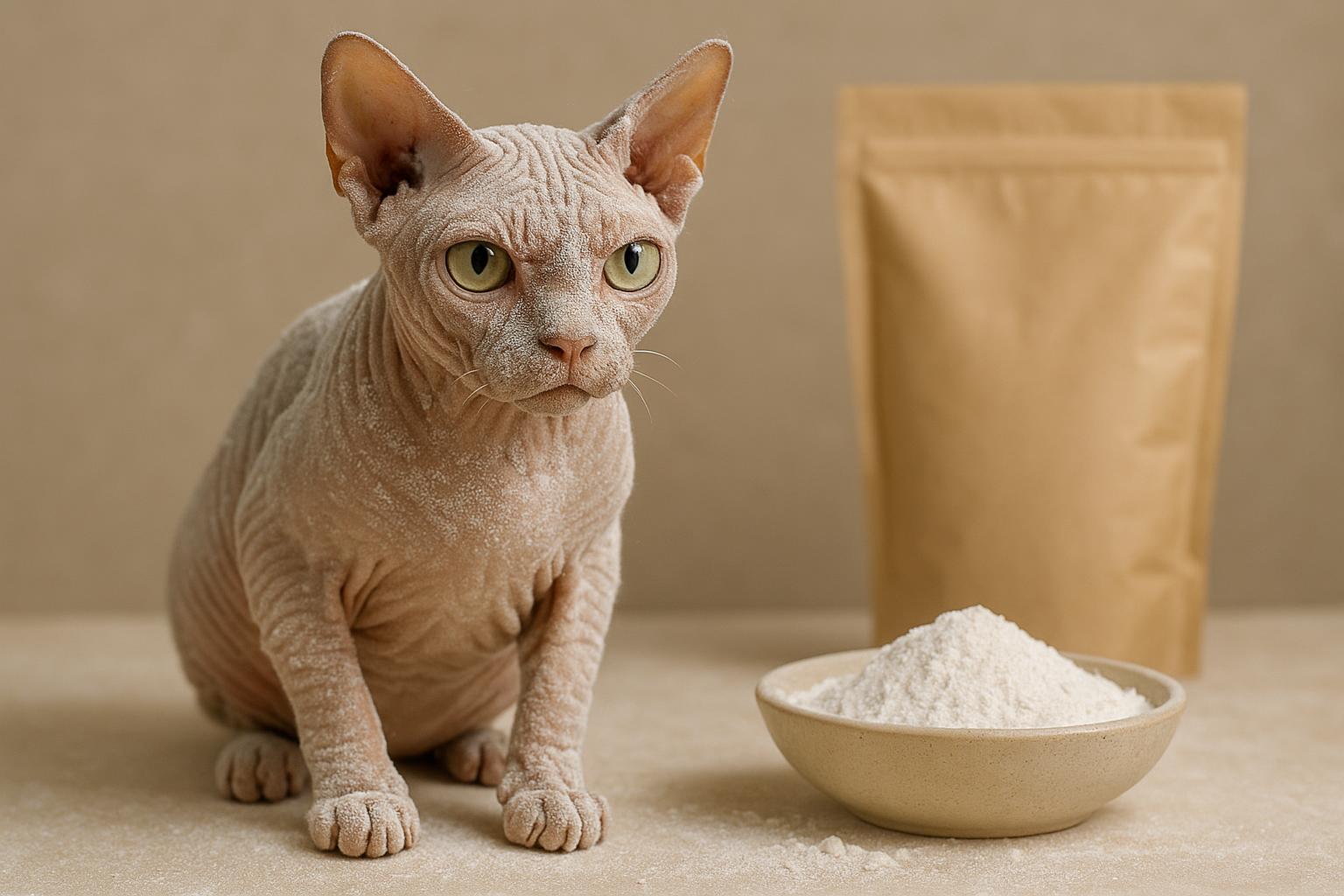
– Food-grade diatomaceous earth (duster)
– Flea comb and dish soap for a simple trap
– Warm lamp and shallow bowl or pie plate
– Towels for handling
Step-By-Step Creation And Application (Formal Guidance)
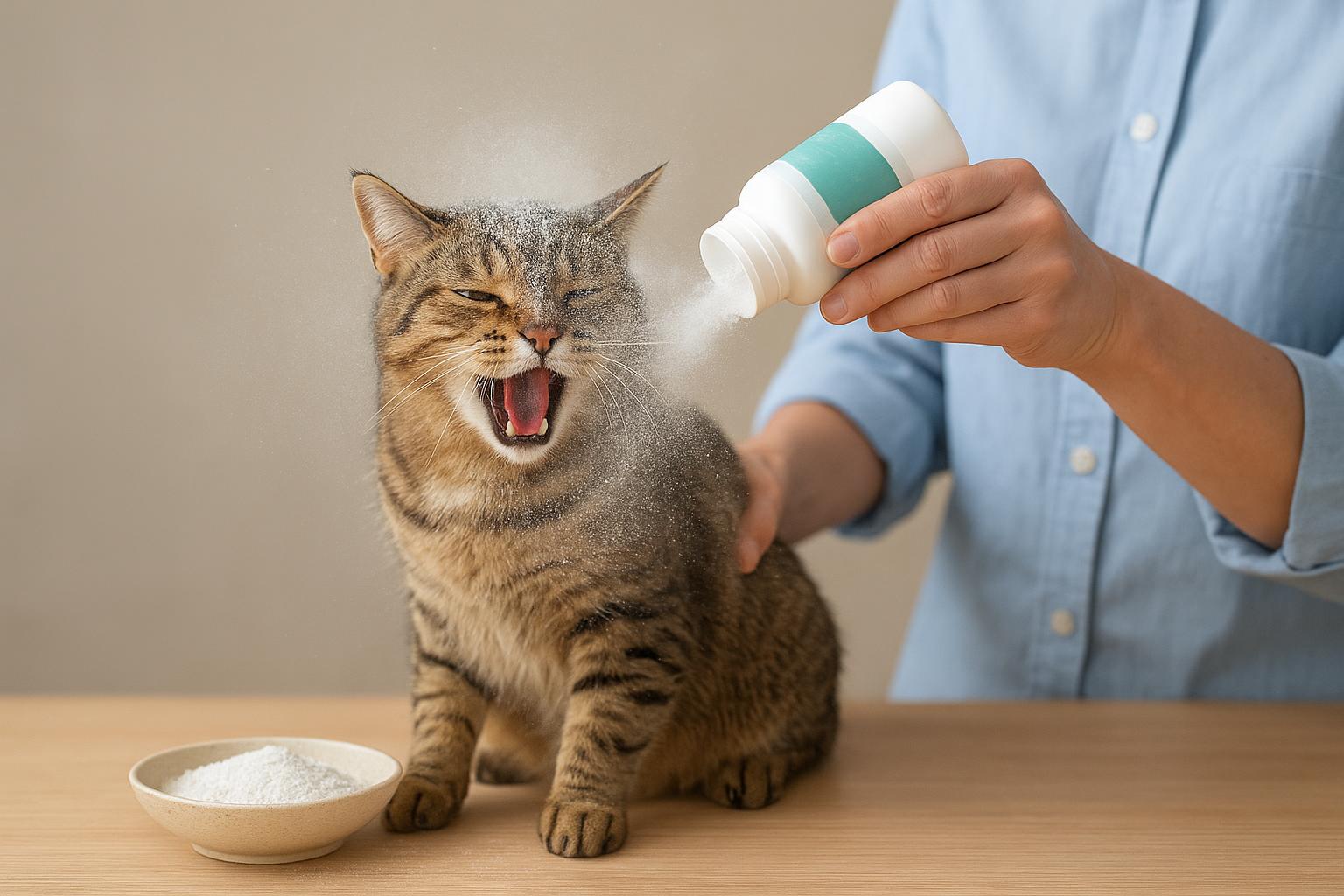
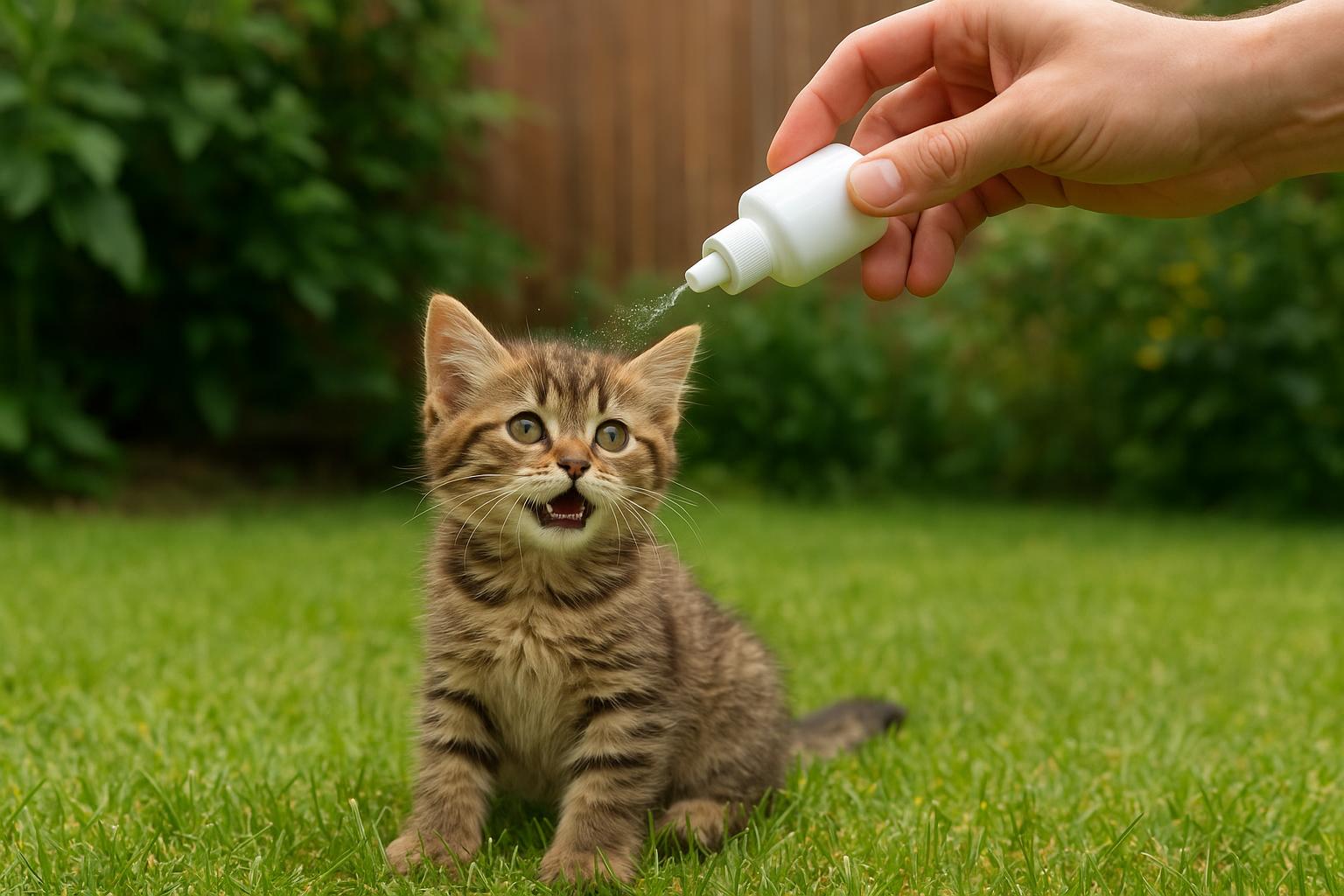
1. Diatomaceous Earth Application: Lightly dust carpet edges and pet sleeping areas with food-grade diatomaceous earth, not pool-grade silica. Leave for 24–48 hours then vacuum thoroughly. Repeat weekly. Note: Use with caution around pets; avoid inhalation; do not use near animals with respiratory disease.
2. DIY Flea Trap: Fill a shallow bowl with warm water and a few drops of dish soap. Place under a night lamp on the floor near the pet’s resting area at night. The light attracts fleas; soapy water traps them. Empty and clean trap daily.
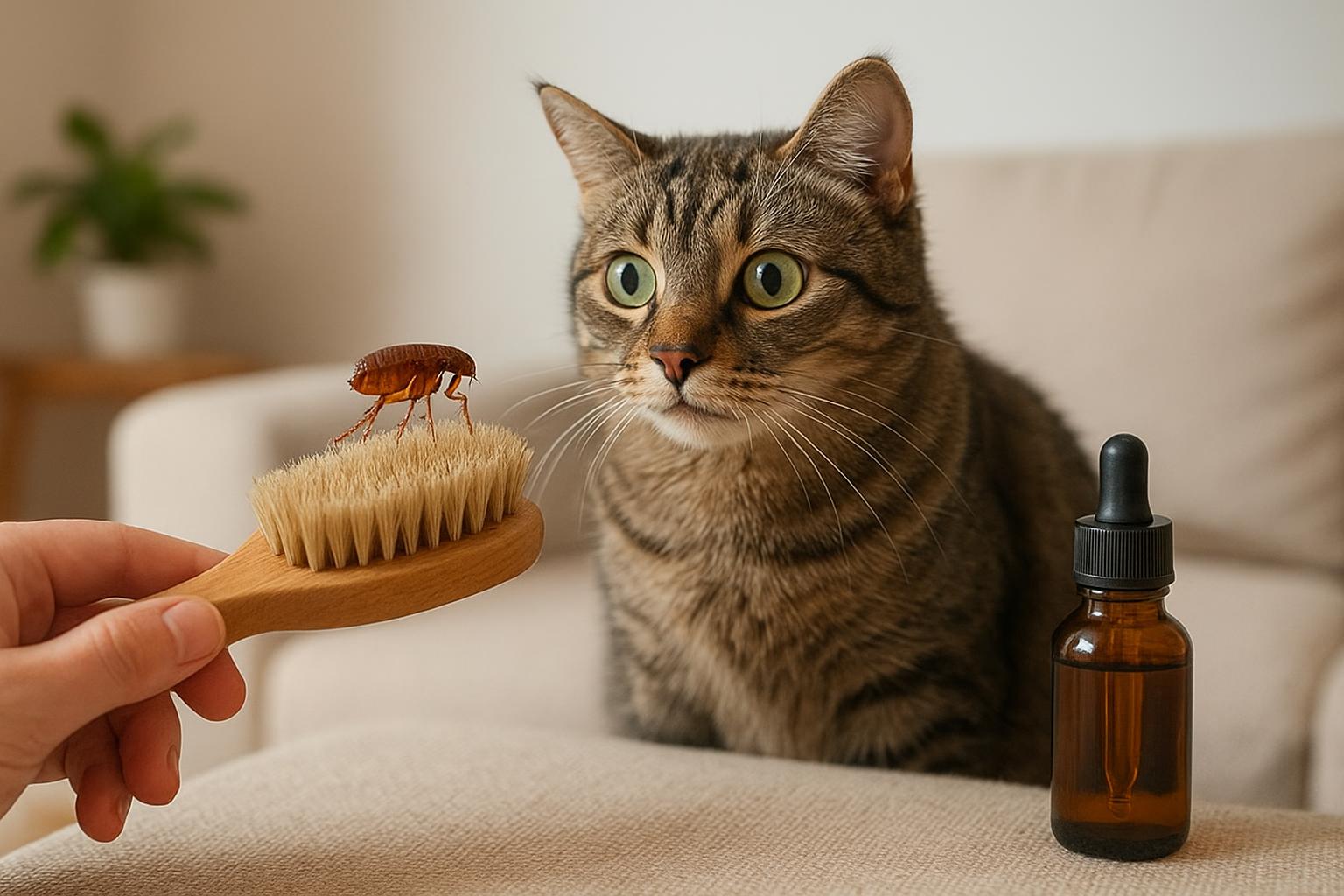
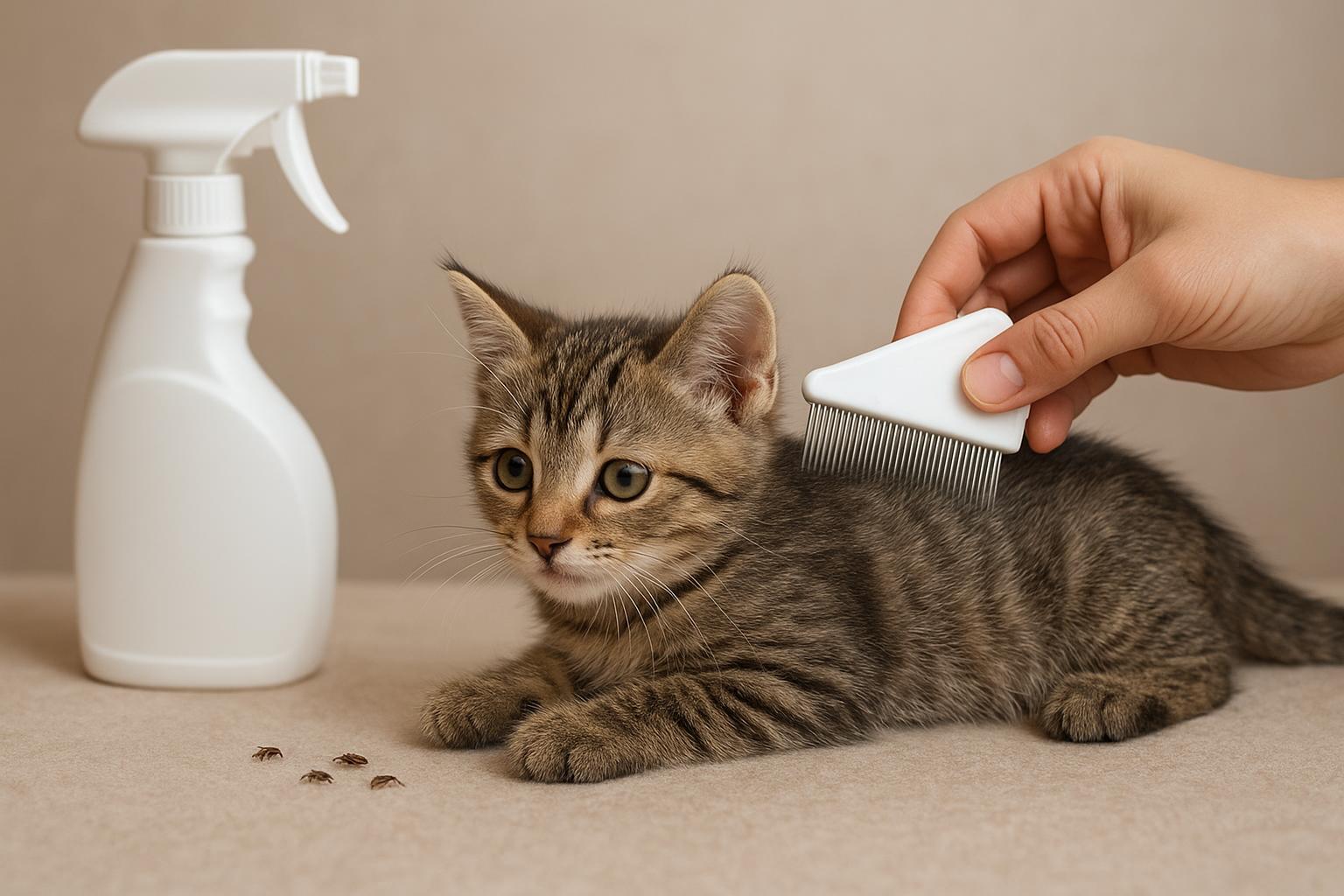
3. Flea Comb Baths: Use a fine-toothed flea comb over a towel. Dip comb into pet-safe soapy water between passes to kill captured fleas. This provides immediate relief and helps monitor numbers.
Warning About Natural Remedies
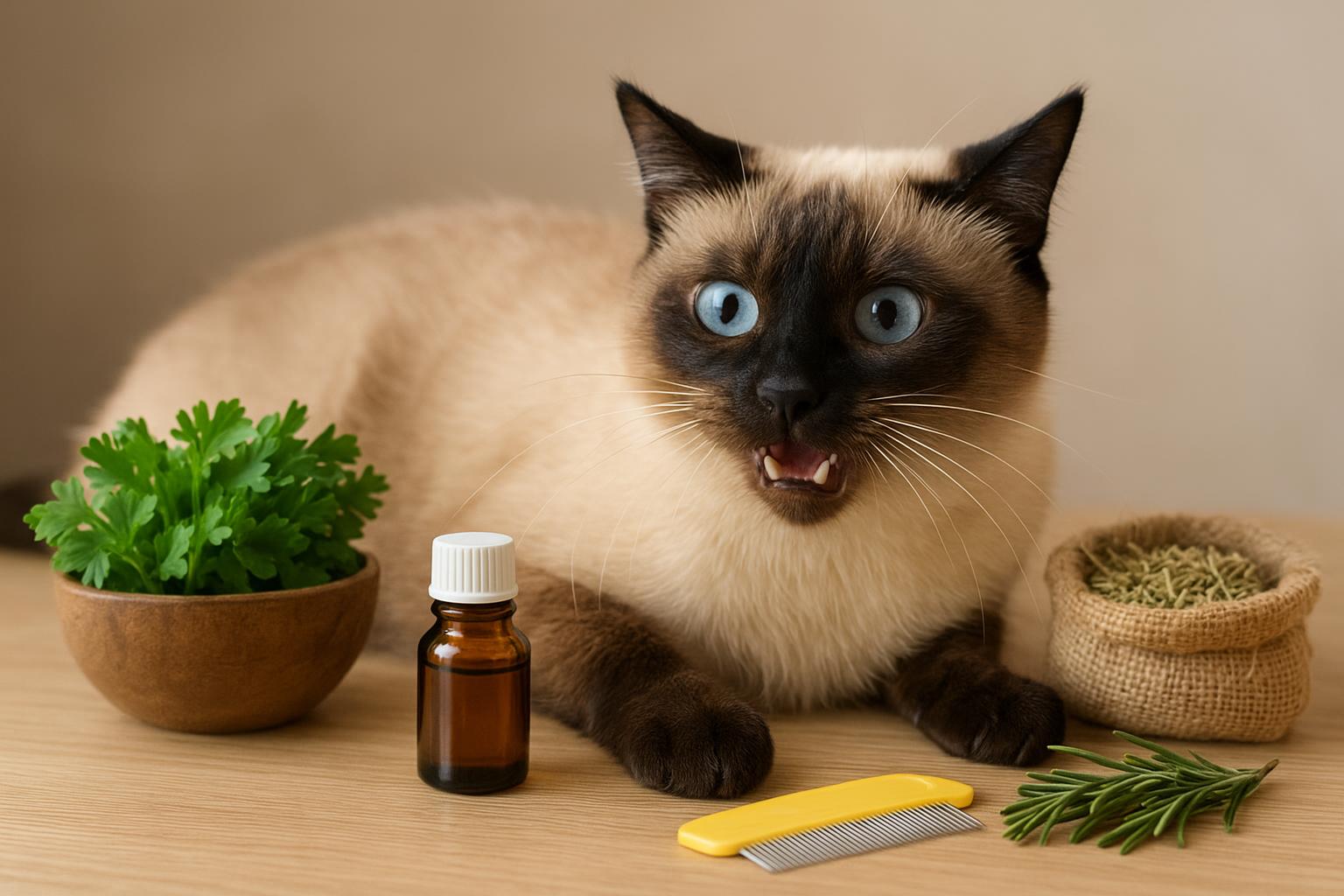
– Never use essential oils or citrus concentrates on cats; many are highly toxic.
– Home remedies are adjunctive — not replacements — for veterinary-approved anti-flea medications in most infestations.
## Managing Expectations And Long-Term Prevention
Fleas are persistent. Because pupae can lie dormant and hatch later, expect to be vigilant for several weeks after initial control. Regular year-round prevention for indoor and outdoor cats is often the most cost-effective and least stressful approach over time. Keep records, work with your veterinarian, and treat the environment as part of an integrated plan that targets all flea life stages.



Leave a Reply