
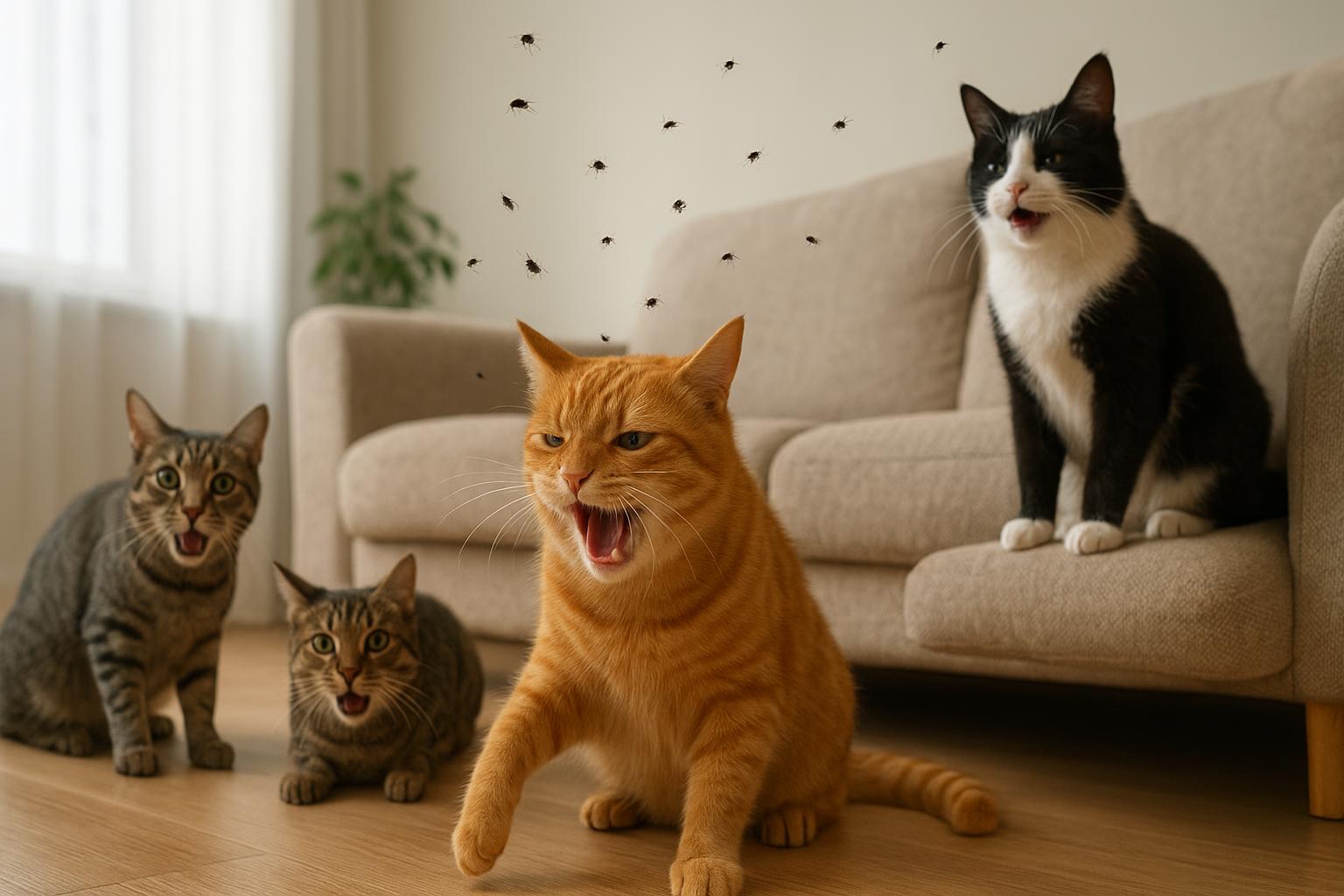
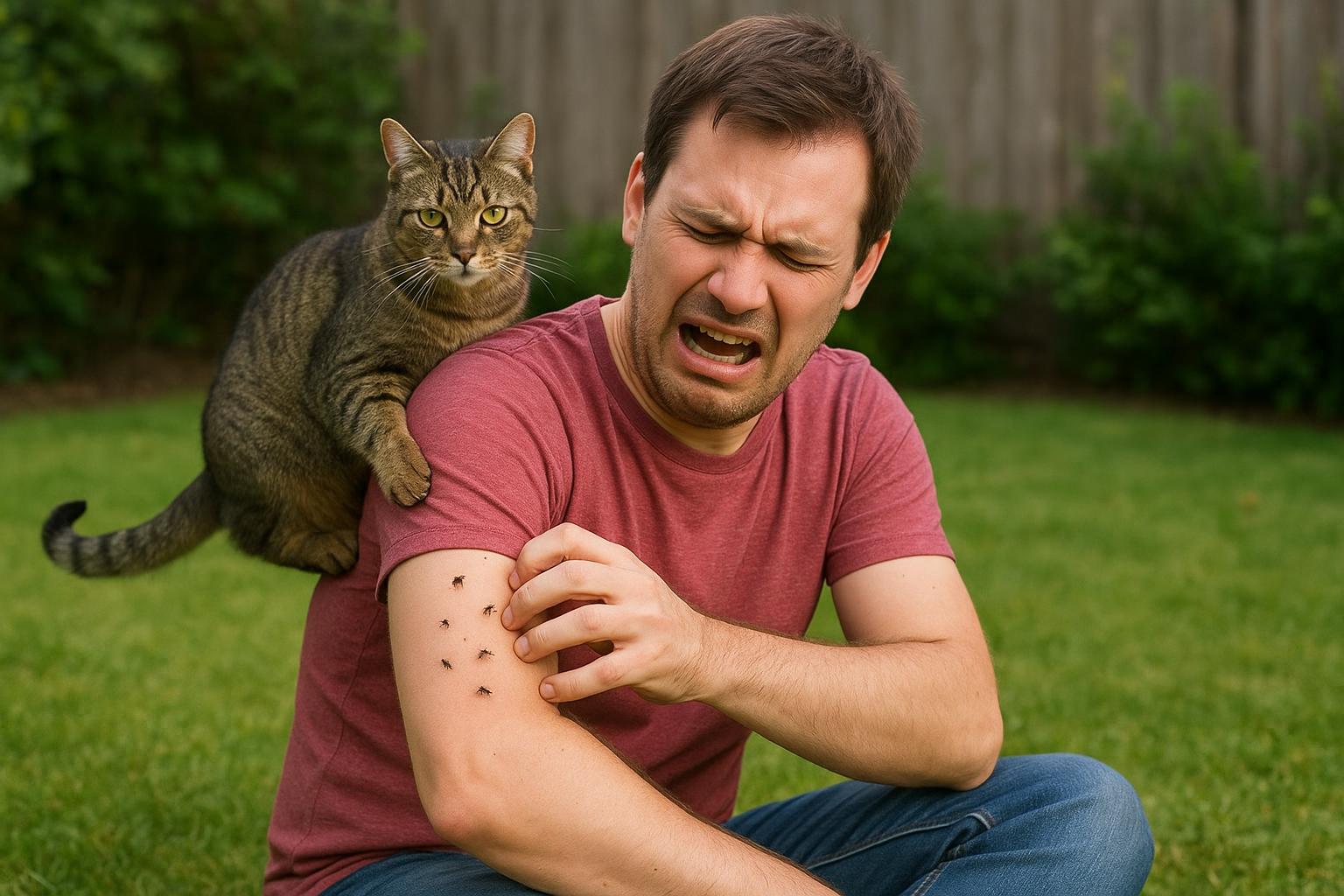
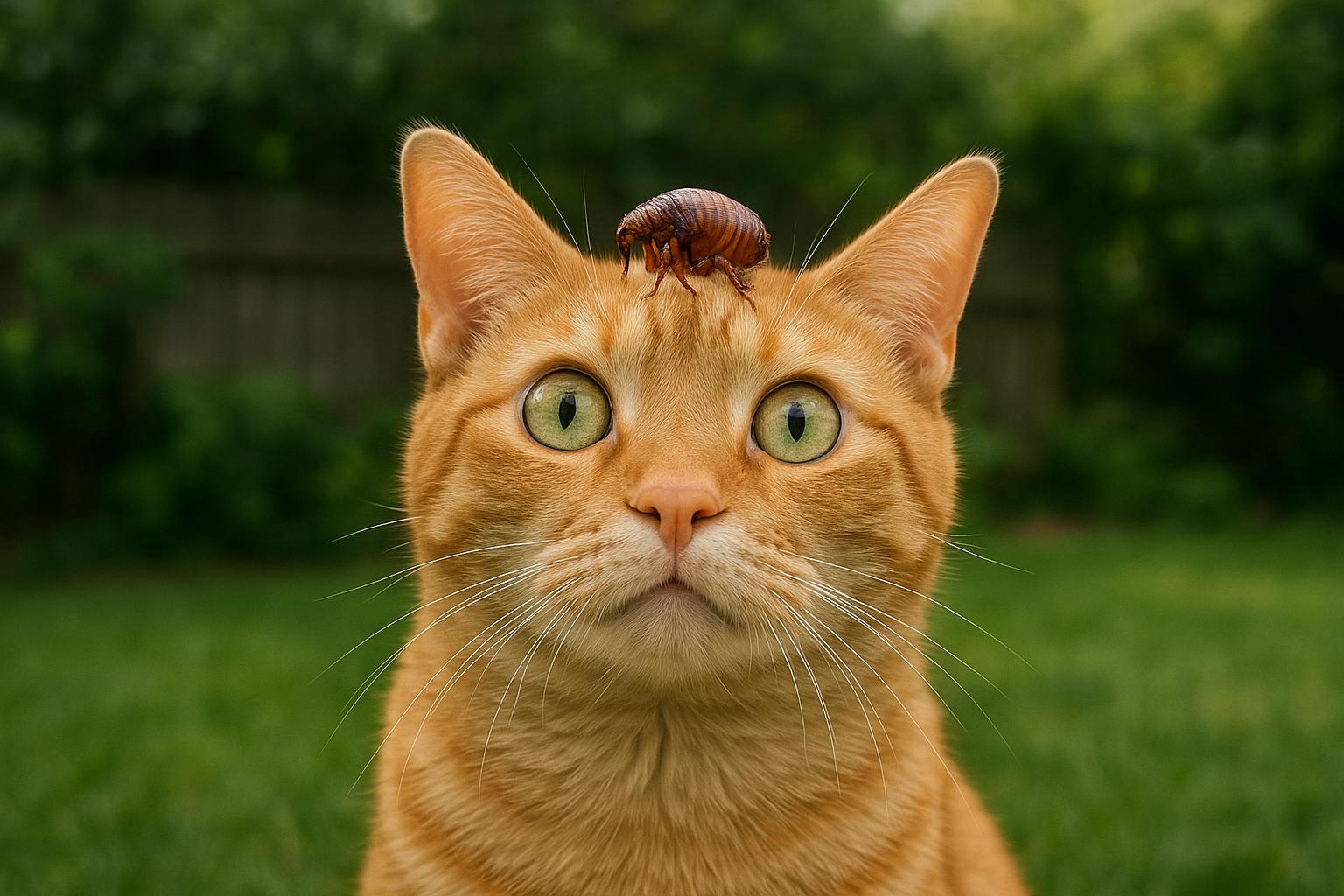
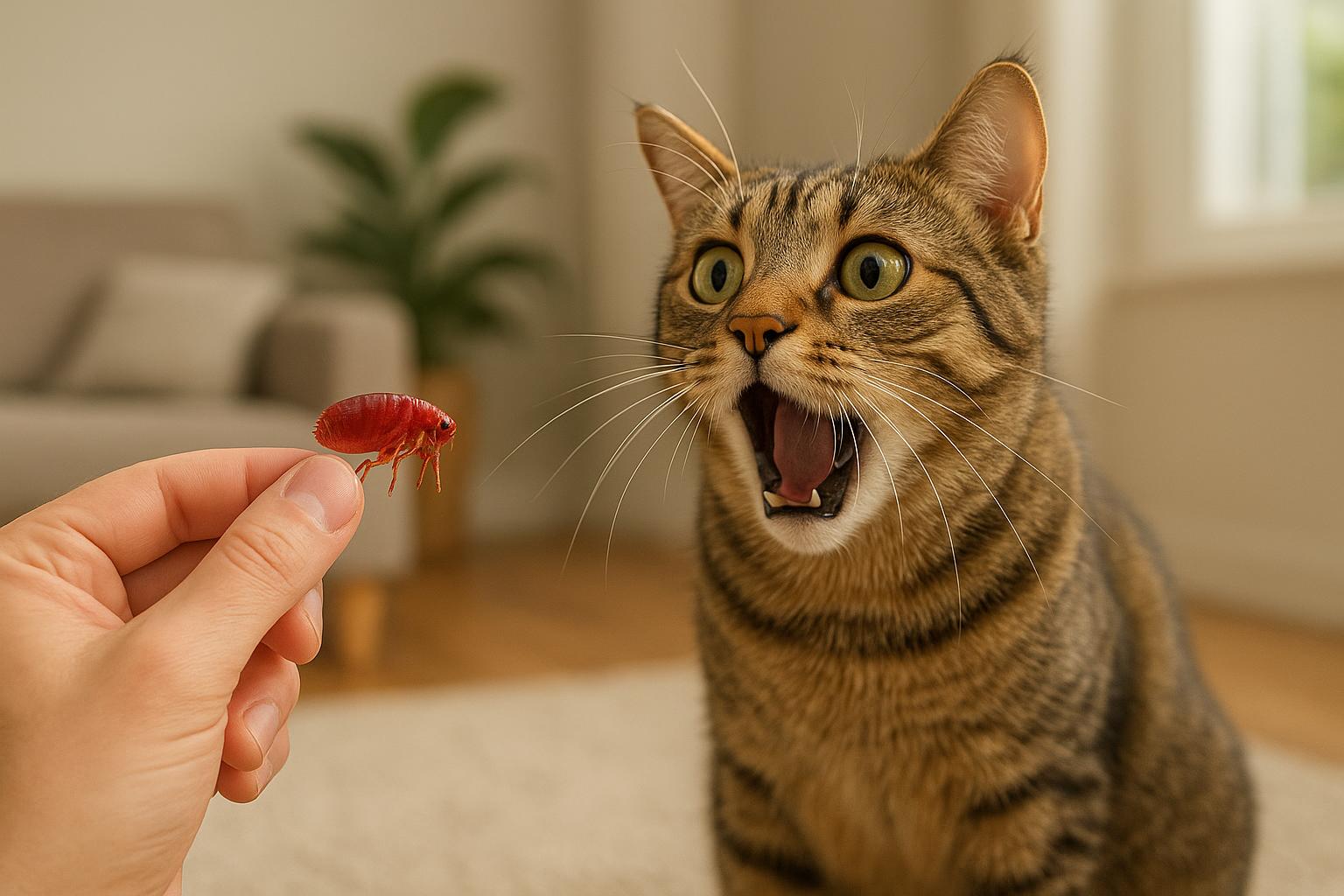
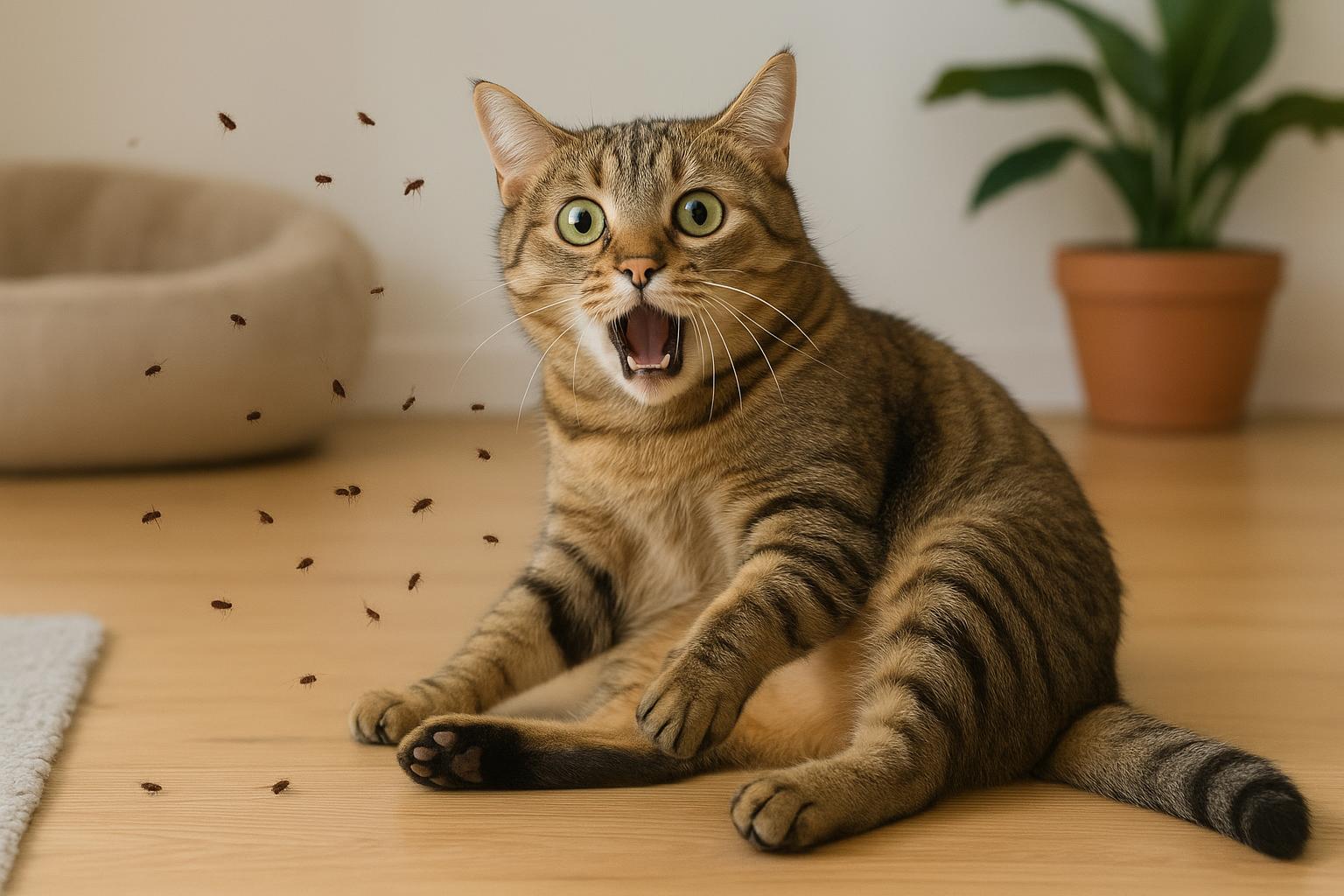
You bring your cat in from a sunny window perch, give them a chin scratch, and notice a twitch you didn’t expect: tiny black specks, frantic scratching, or even flea dirt. When cats get fleas indoors it’s a signal that something in the house is hospitable to the flea life cycle — and that the problem isn’t limited to one itchy kitty. Relax: this is common, solvable, and you don’t have to become a full-time pest detective (though you’ll be doing a little sleuthing).
## What It Means When Cats Get Fleas Indoors
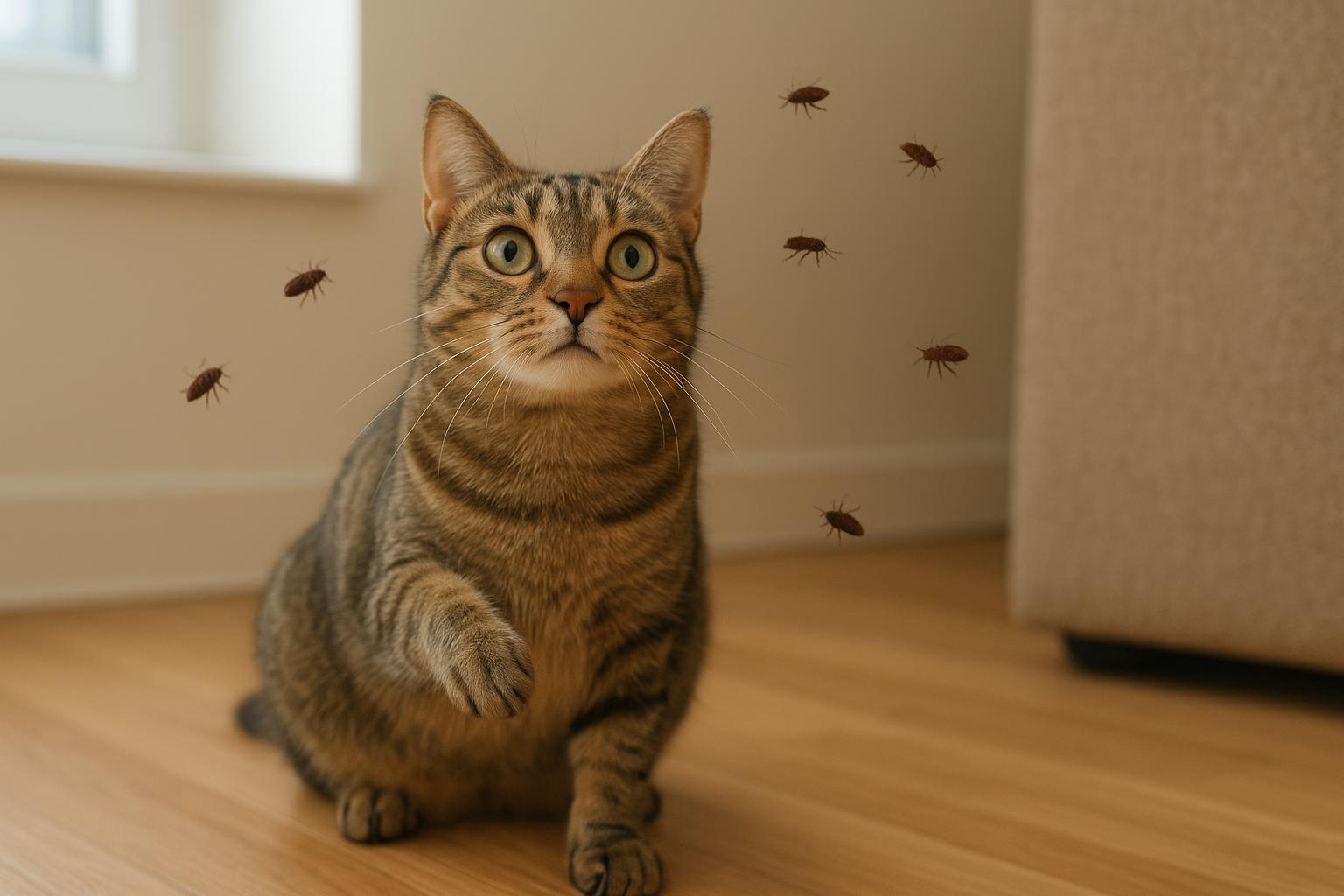
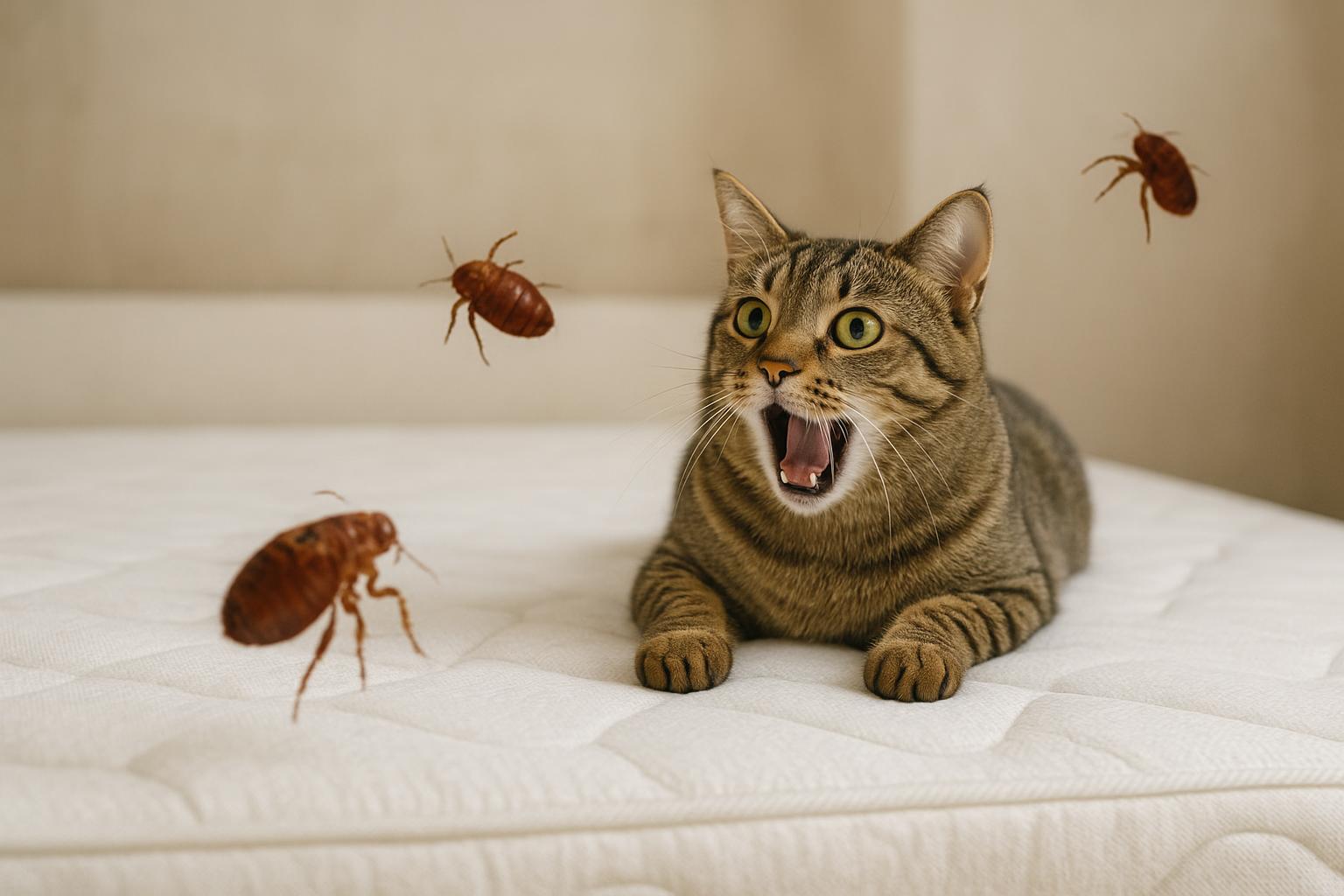
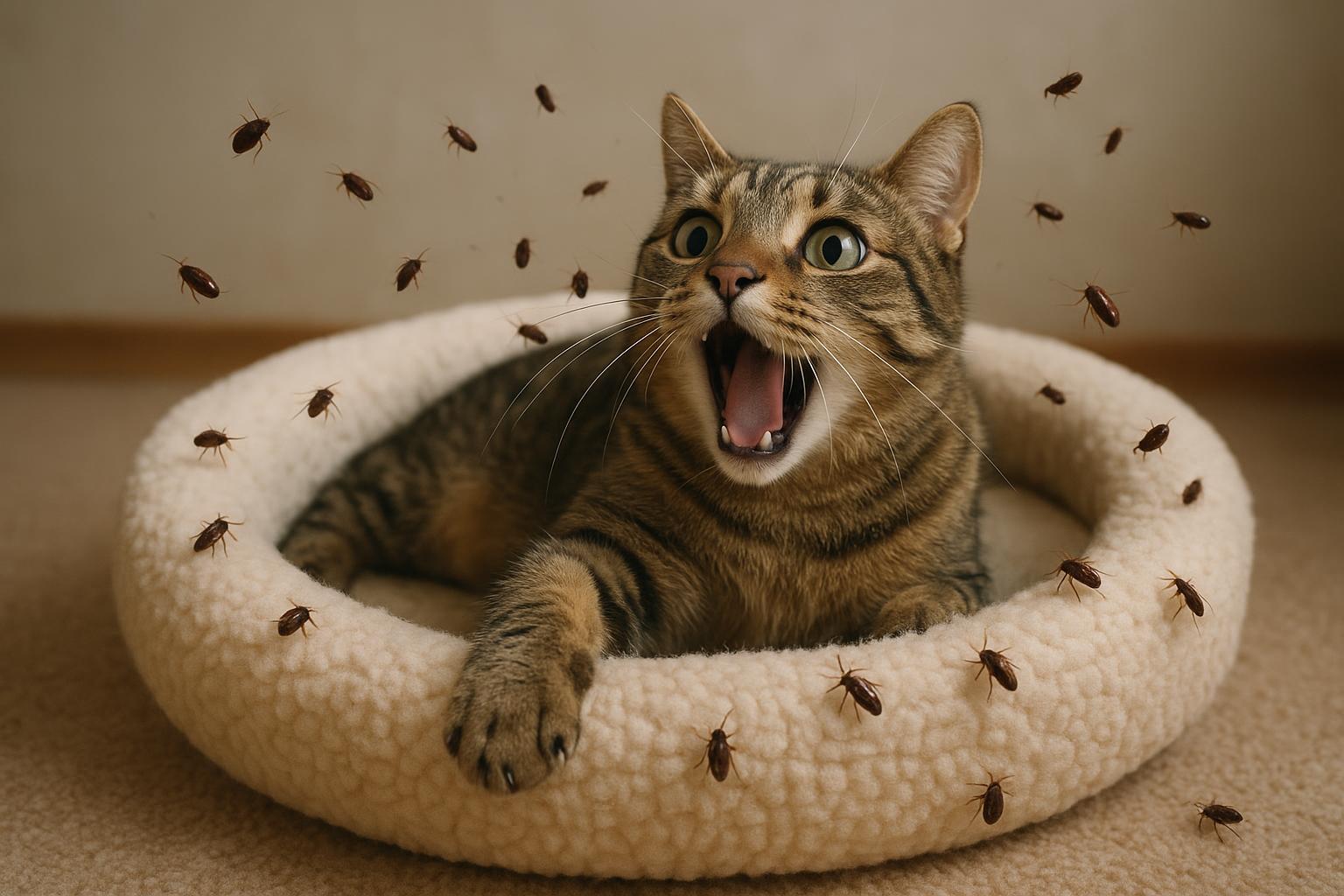
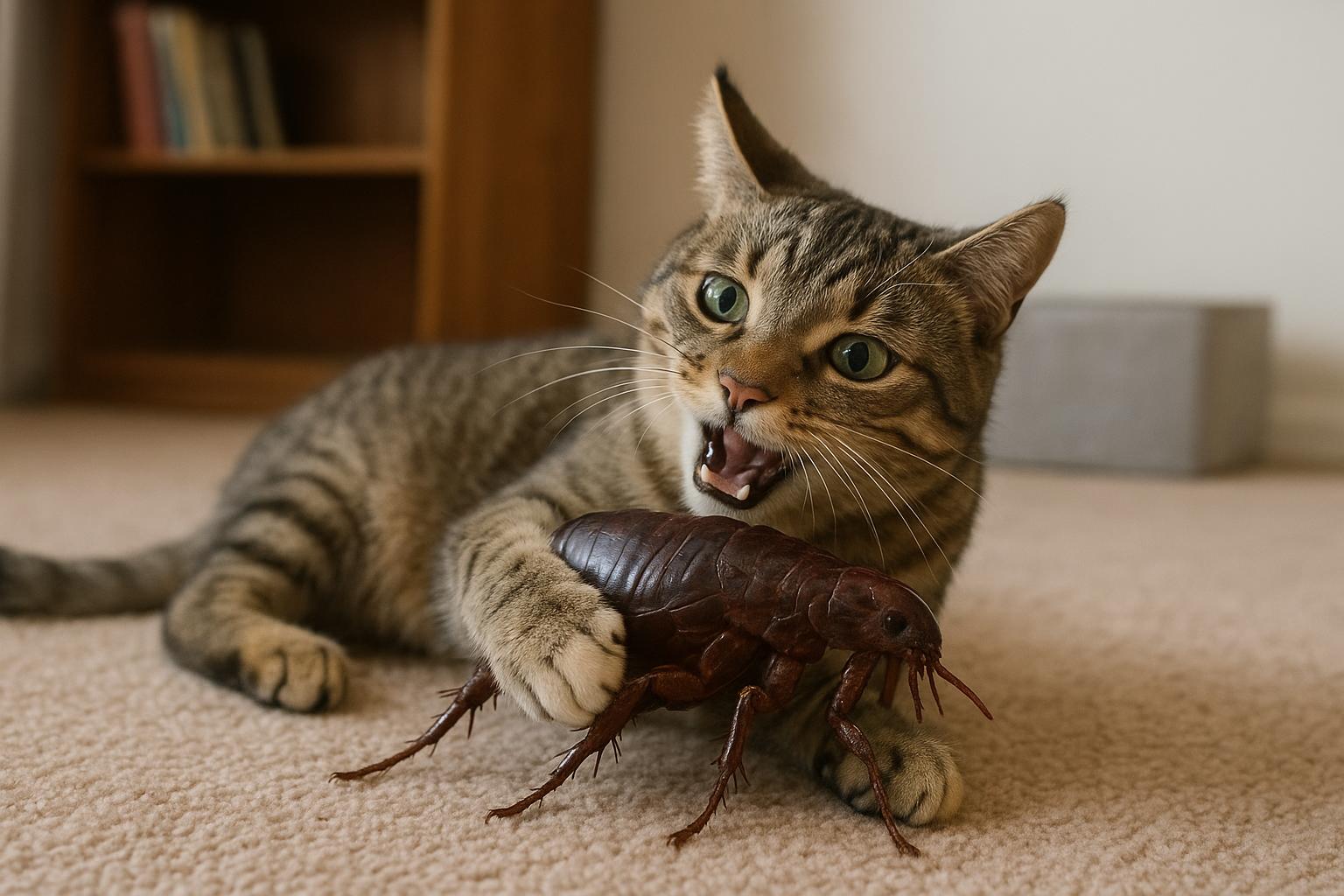
Seeing fleas on an indoor cat is less about blame and more about ecology. Fleas are survivors: a few adults on a host can lay hundreds of eggs, which fall off into carpets, bedding, and cracks. Those eggs hatch into larvae that love dark, humid microhabitats, and then pupate — sometimes waiting months for the right trigger (like the vibration of a warm mammal) to emerge. So when cats get fleas inside, you’re usually looking at an established indoor population, not a one-off hitchhiker.
### How Fleas End Up Inside
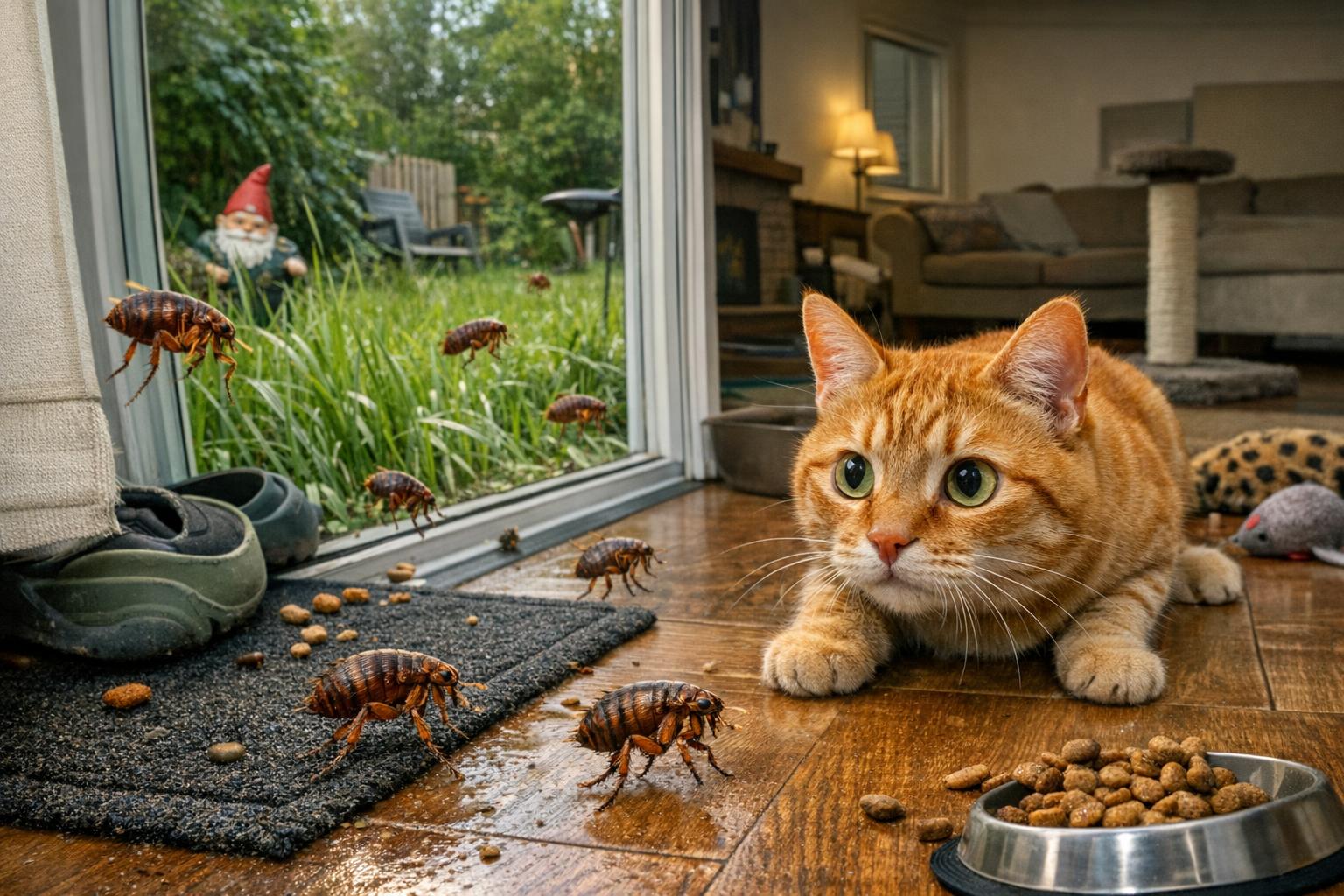
Fleas come inside in several ways:
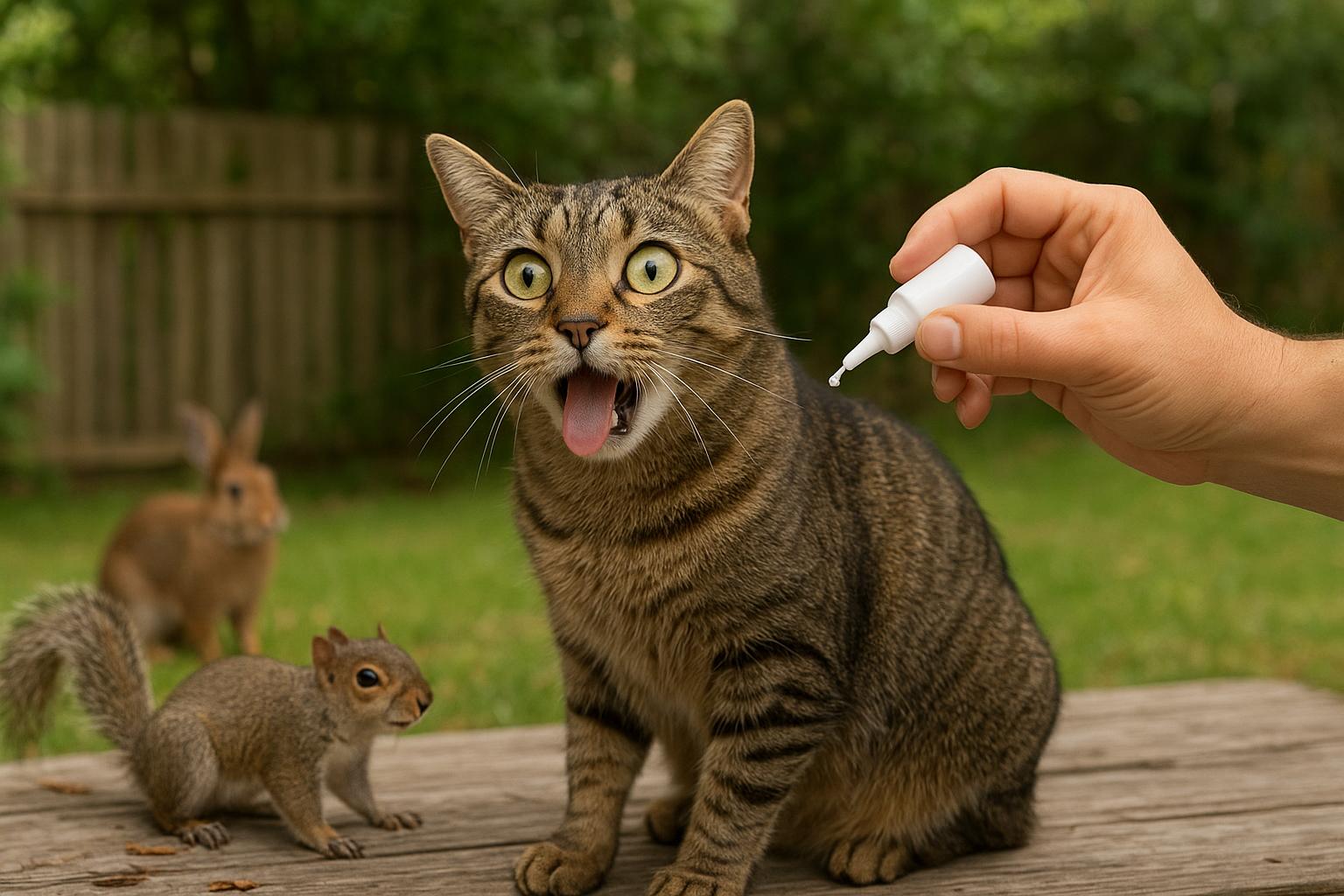
– On another animal (a dog, squirrel, stray cat, or even a visiting pet).
– On humans via clothing or bags after being outdoors.
– Hitchhiking on secondhand furniture, rugs, or bedding.
– Emerging from pupae already in your home that finally sensed a host.
### Signs To Watch For
Not every cat with fleas will be dramatically itchy at first. Look for:
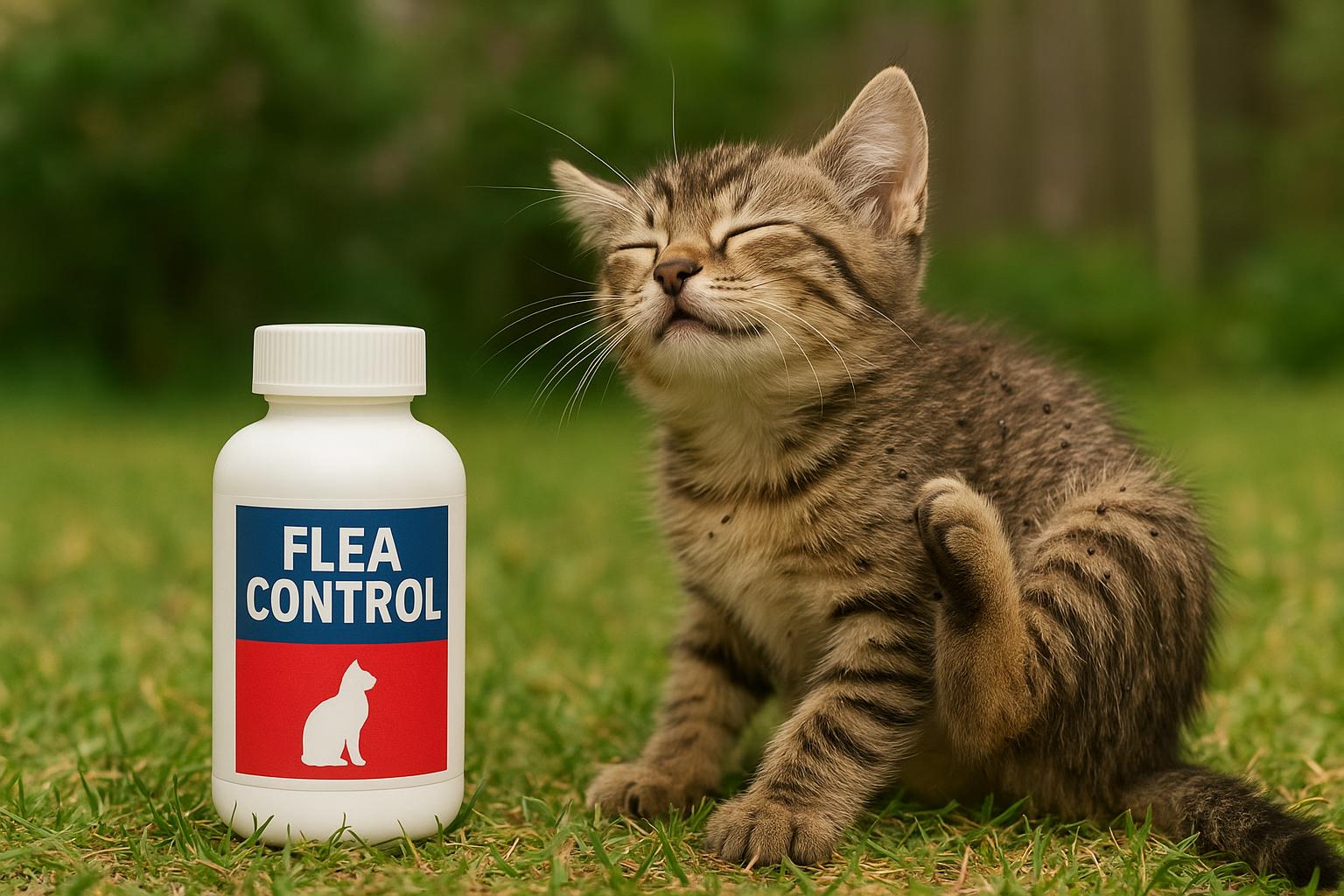
– Persistent scratching, over-grooming, or hair loss patches.
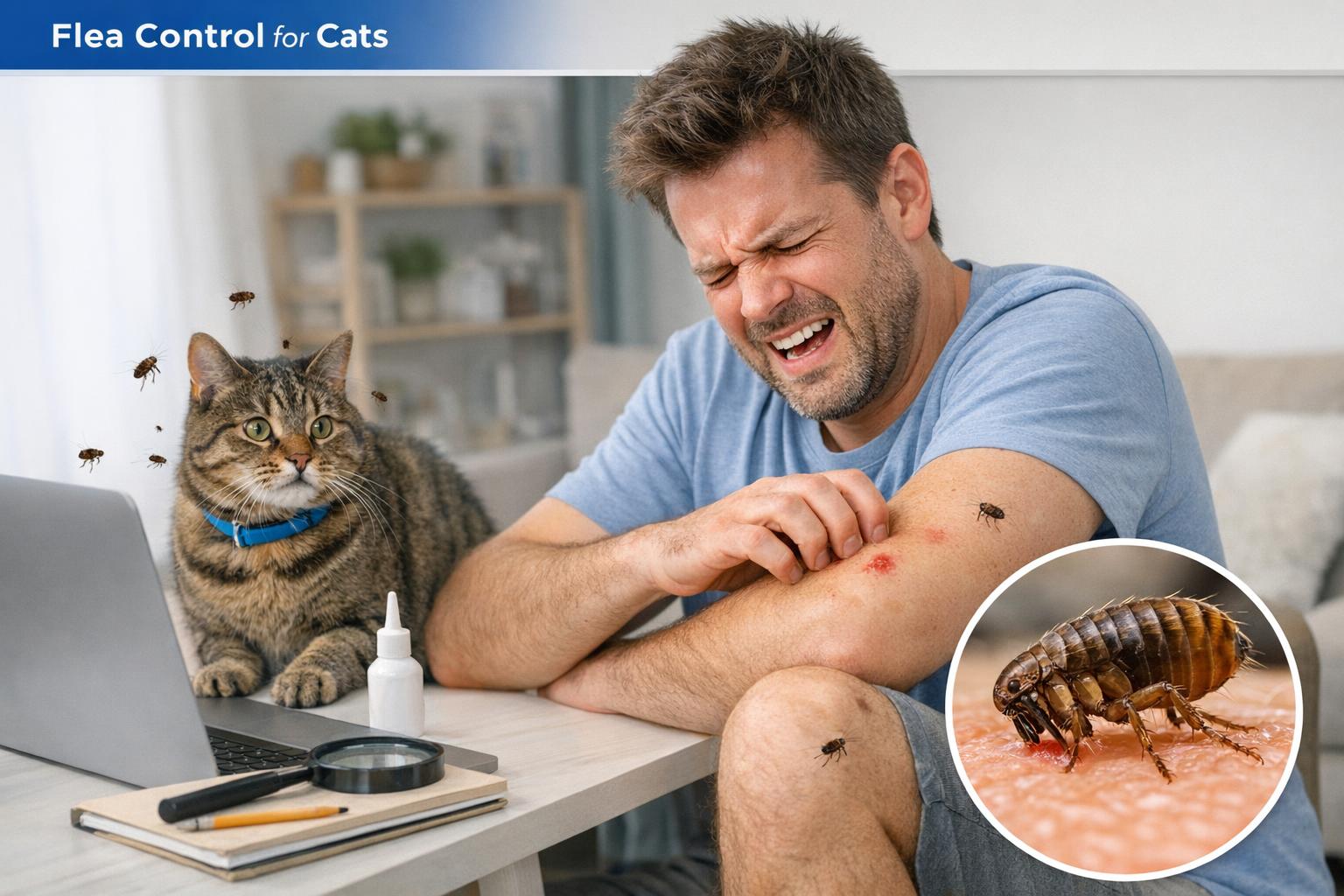
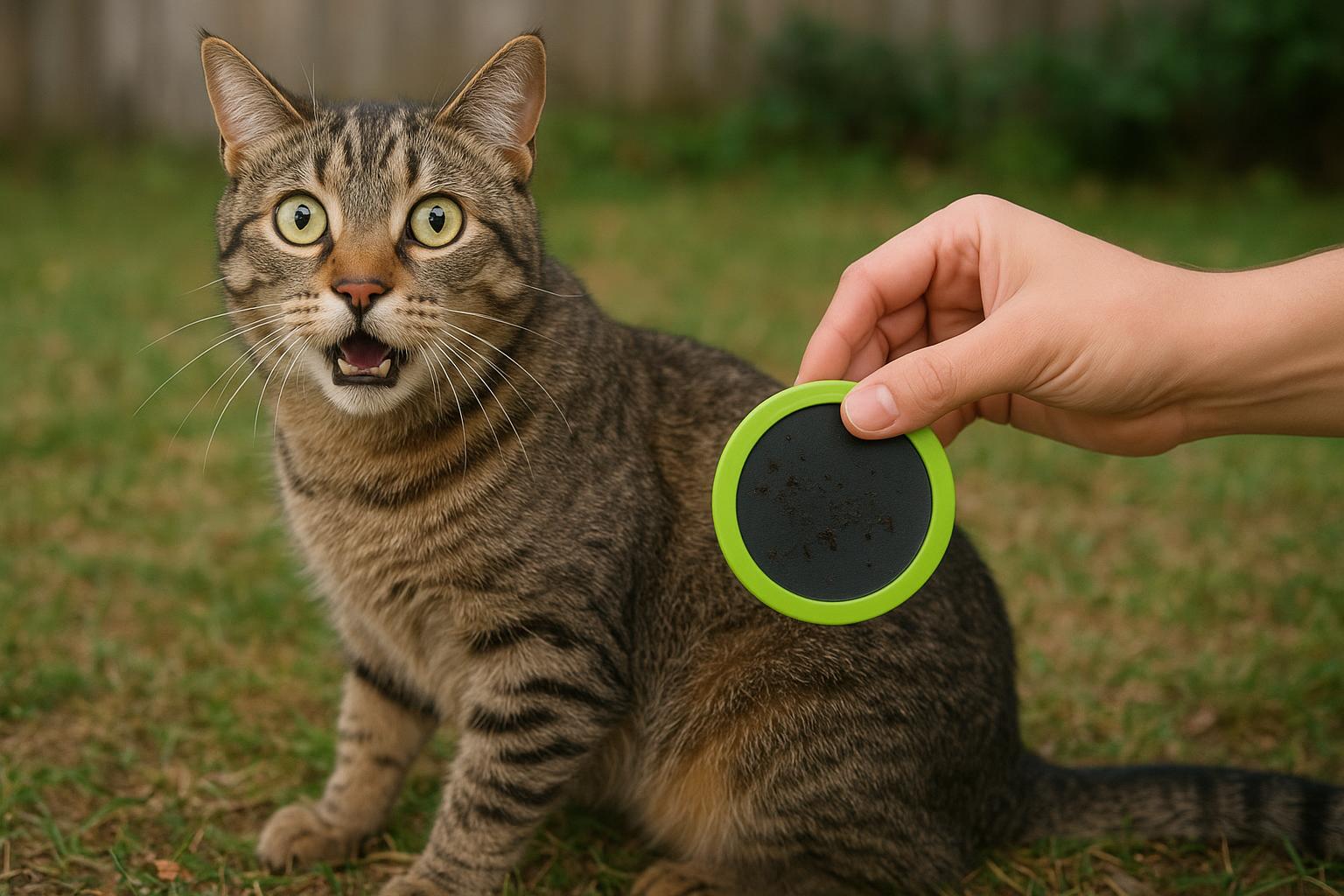
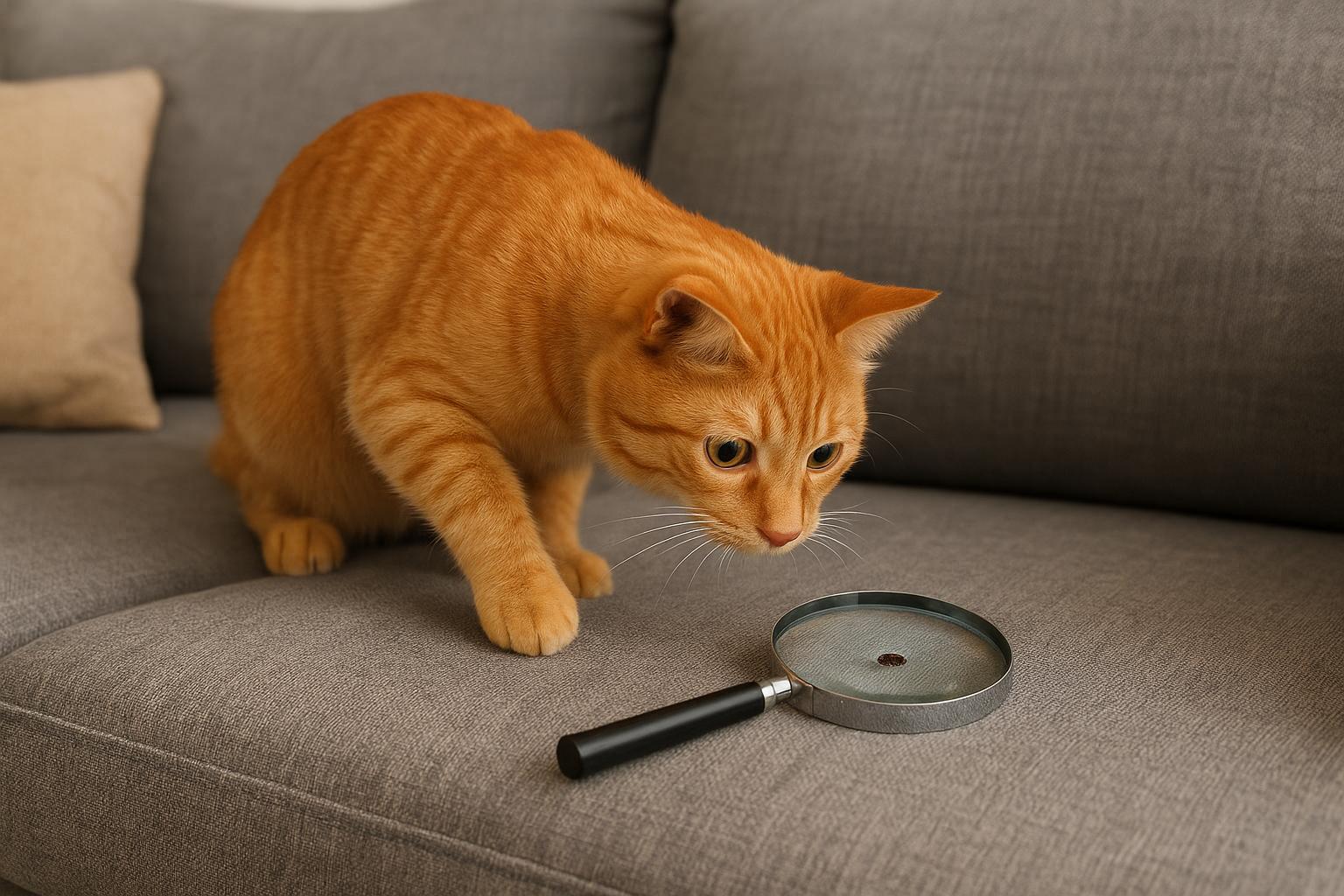
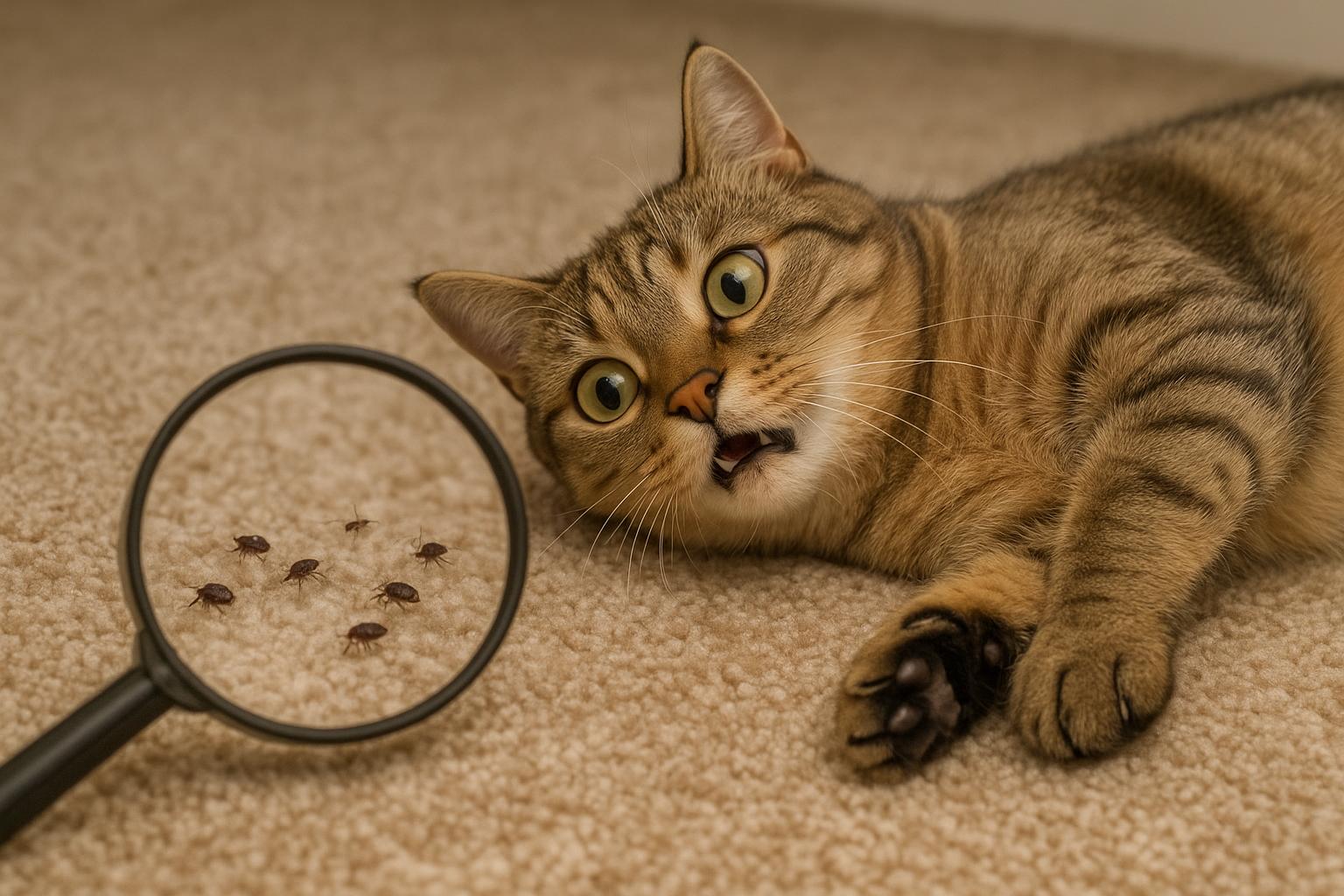
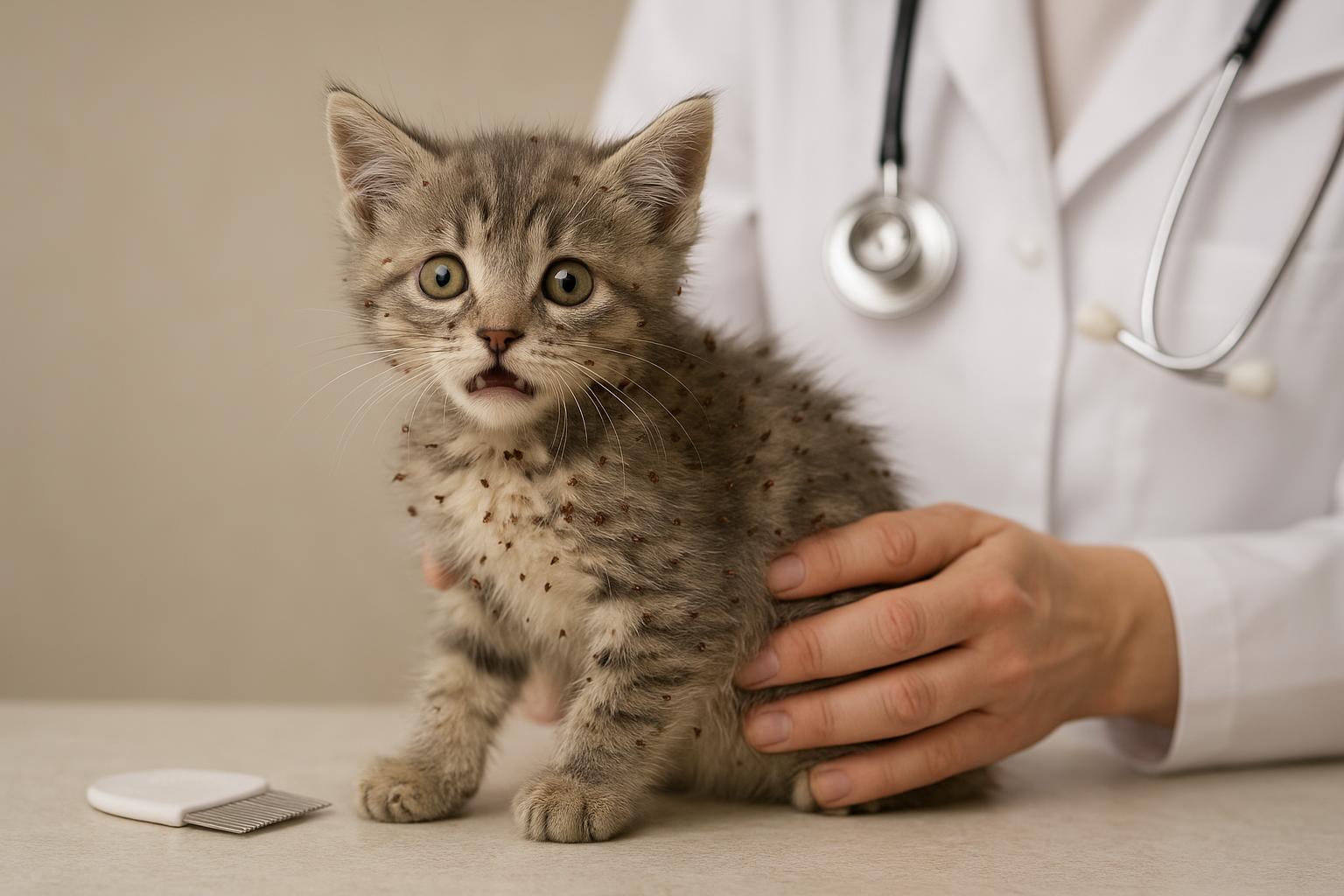
– Tiny black specks (flea dirt) on the skin or bedding; wet it on a paper towel and it’ll turn brownish-red (digested blood).
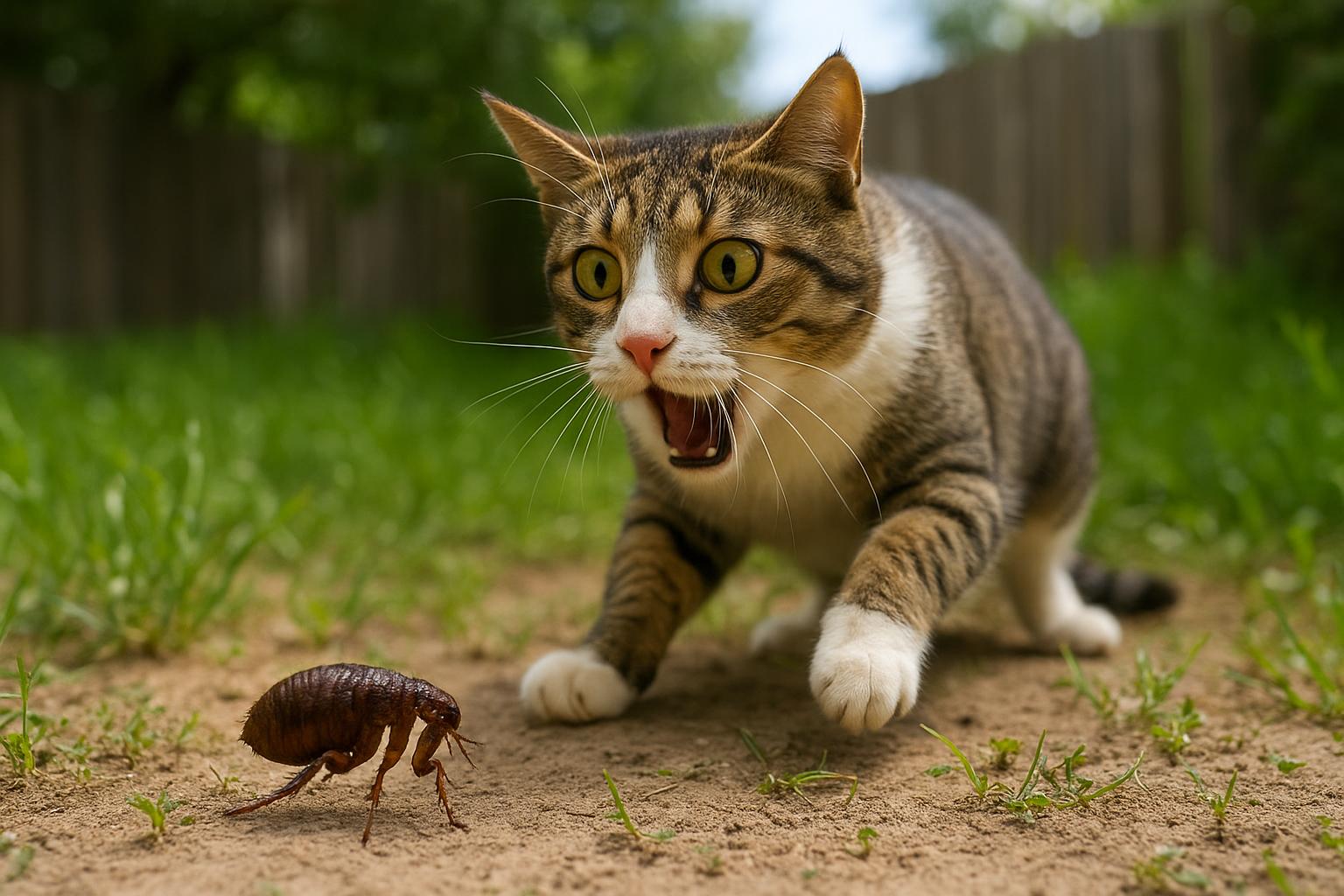
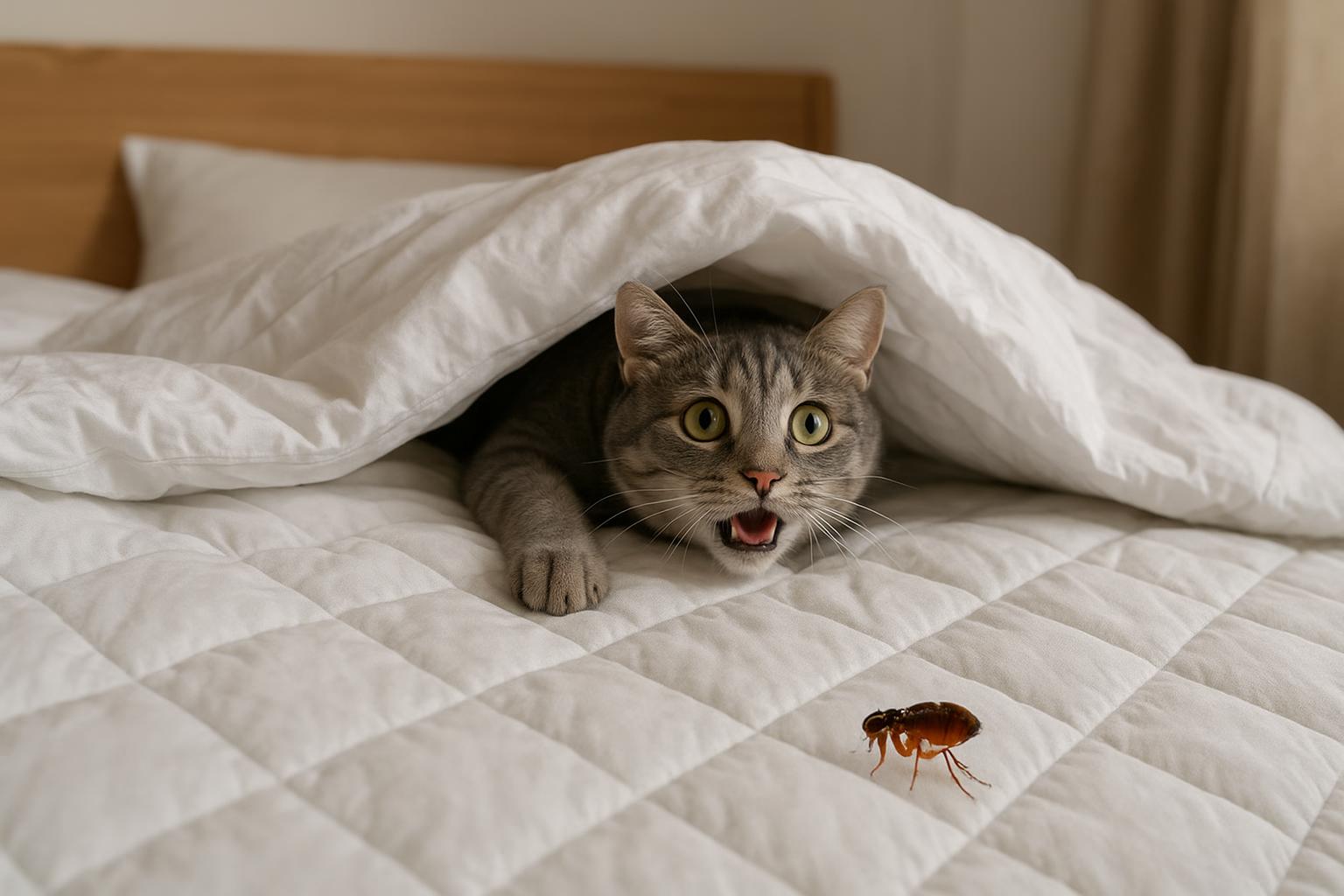
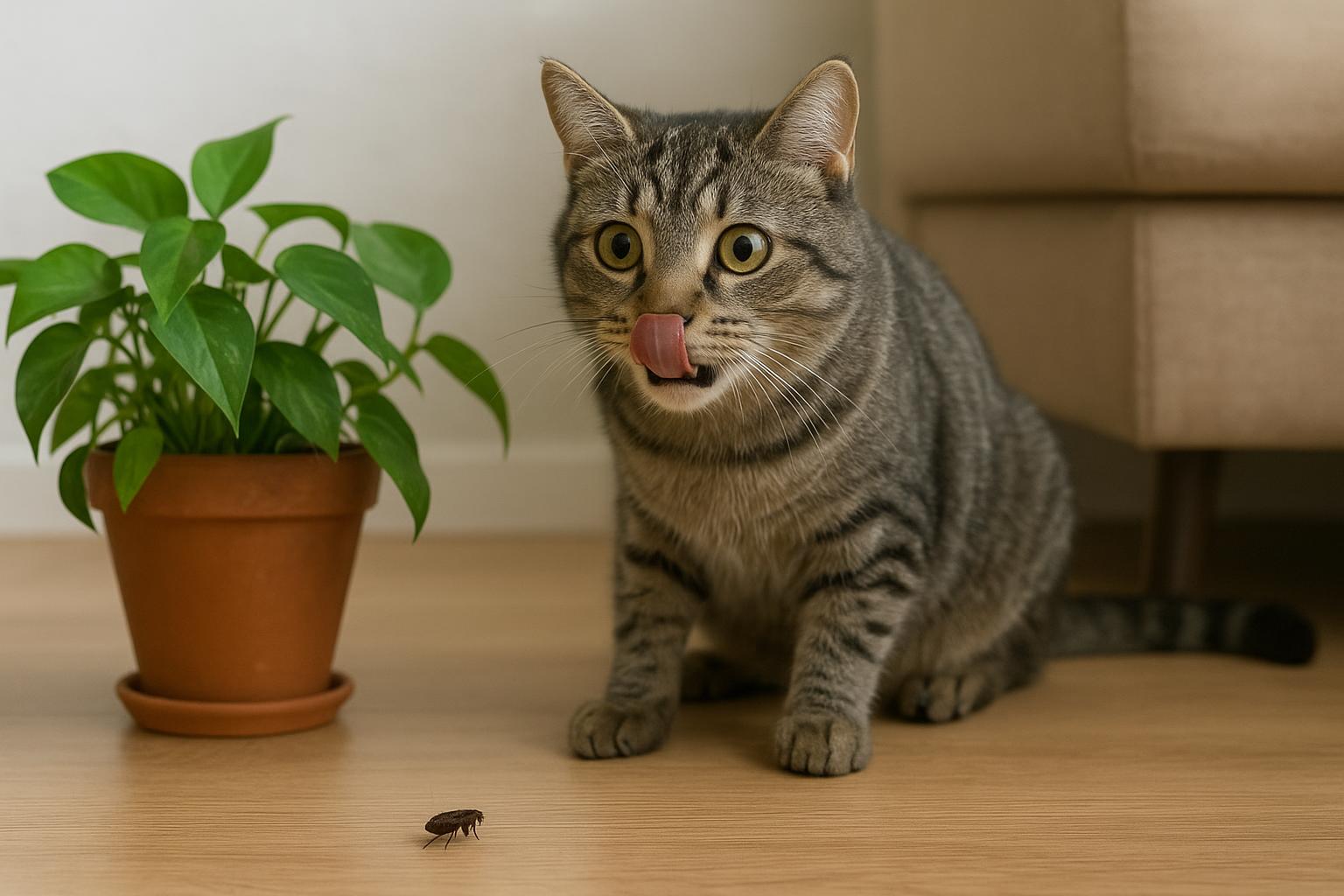
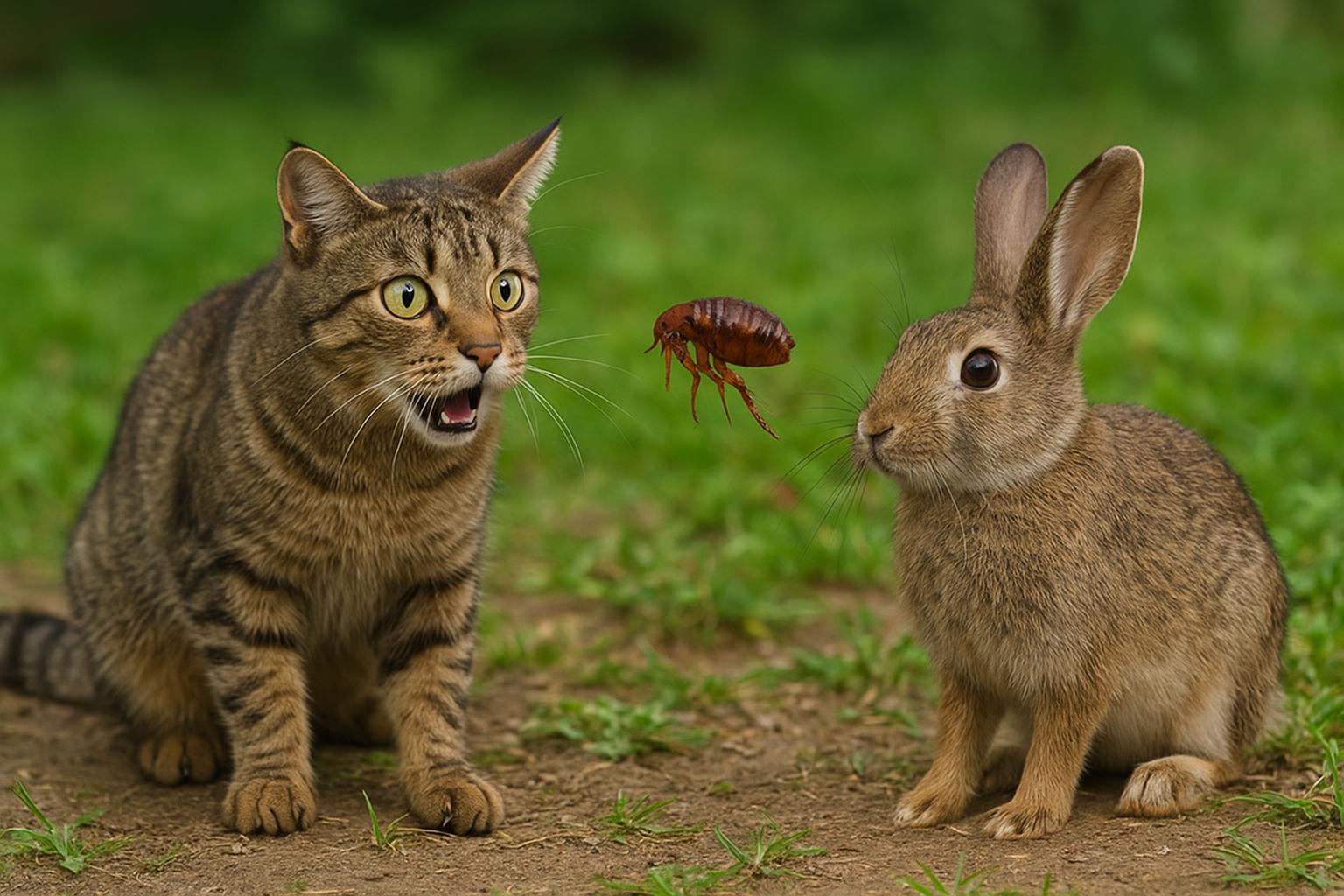
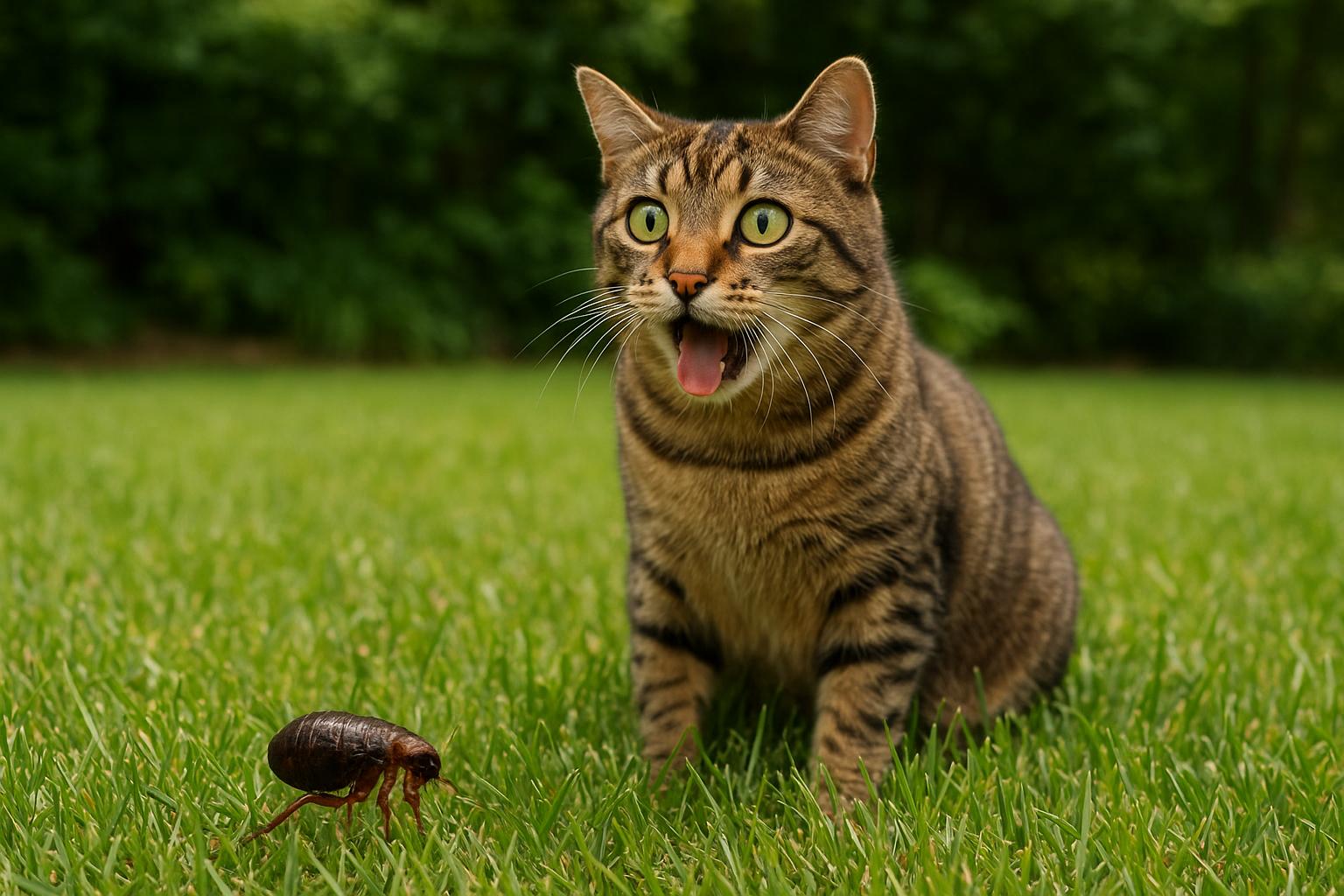
– Visible jumping insects the size of a pinhead.
– Pale gums (in severe infestations or in kittens with anemia).
## Why Indoor Flea Problems Need A Full-Home Response
Because most of a flea population lives off the host, treating only the cat is often insufficient. If you only treat the animal but leave eggs, larvae, and pupae in carpets, the problem will resurface. This is why integrated control — treating pets, the environment, and preventing reintroduction — gives the best results.
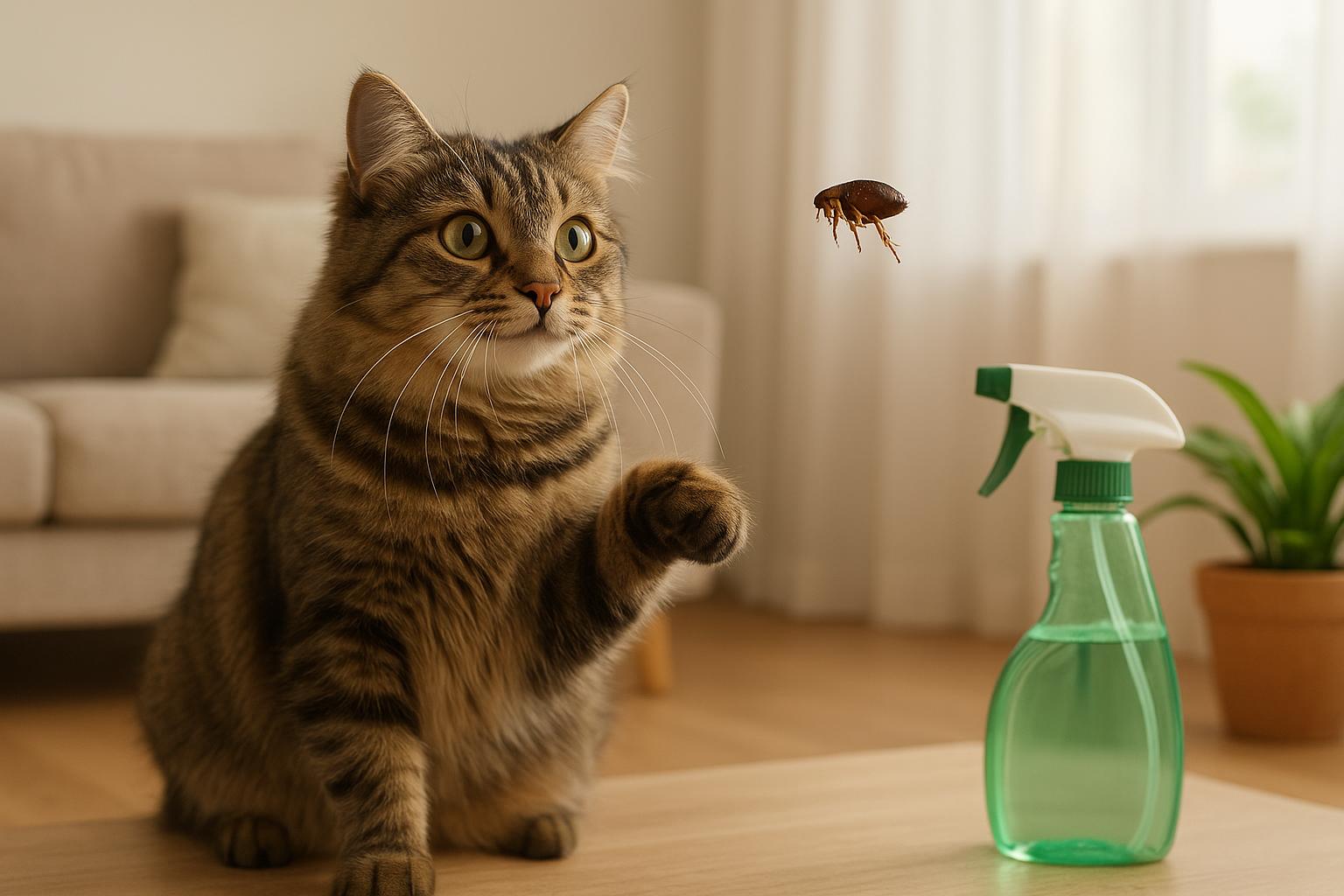
## Remedy 1: Environmental Control And Cleaning
This is the foundational step. It’s methodical, not glamorous, but it’s crucial.
### Required Materials
– High-efficiency vacuum (with a bag or sealed canister)
– Steam cleaner (optional but effective)
– Hot-water washer/dryer for bedding
– Enzyme cleaners for upholstery (if needed)
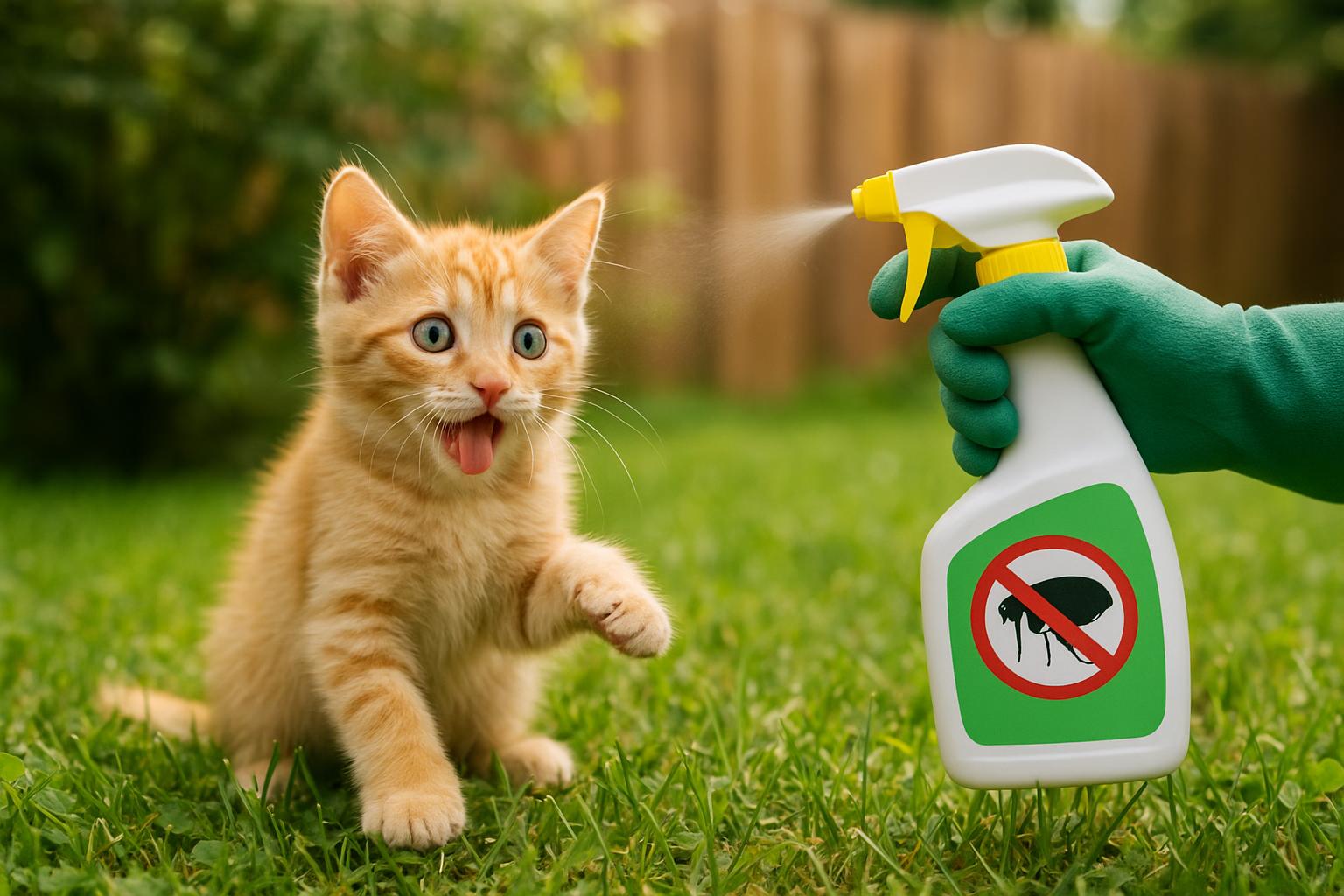
– Flea-targeted insect growth regulator (IGR) spray or fogger (methoprene or pyriproxyfen) — optional and follow label
– Gloves and mask when using pesticides
#### Step-By-Step Application
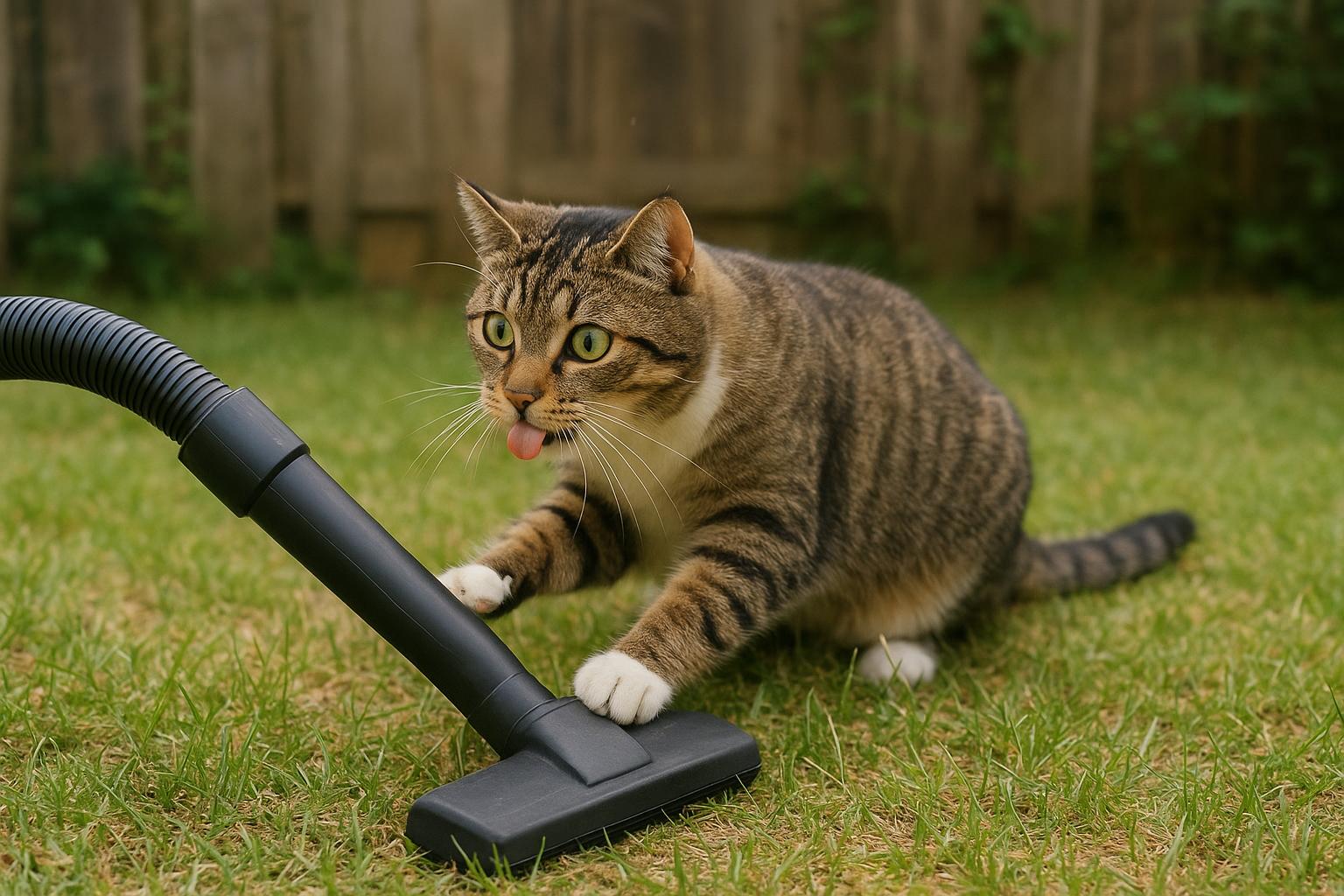
1. Vacuum thoroughly: carpets, rugs, upholstered furniture, crevices, baseboards, and under furniture. Focus on pet favorite spots. Immediately dispose of vacuum bag or empty sealed canister outside.
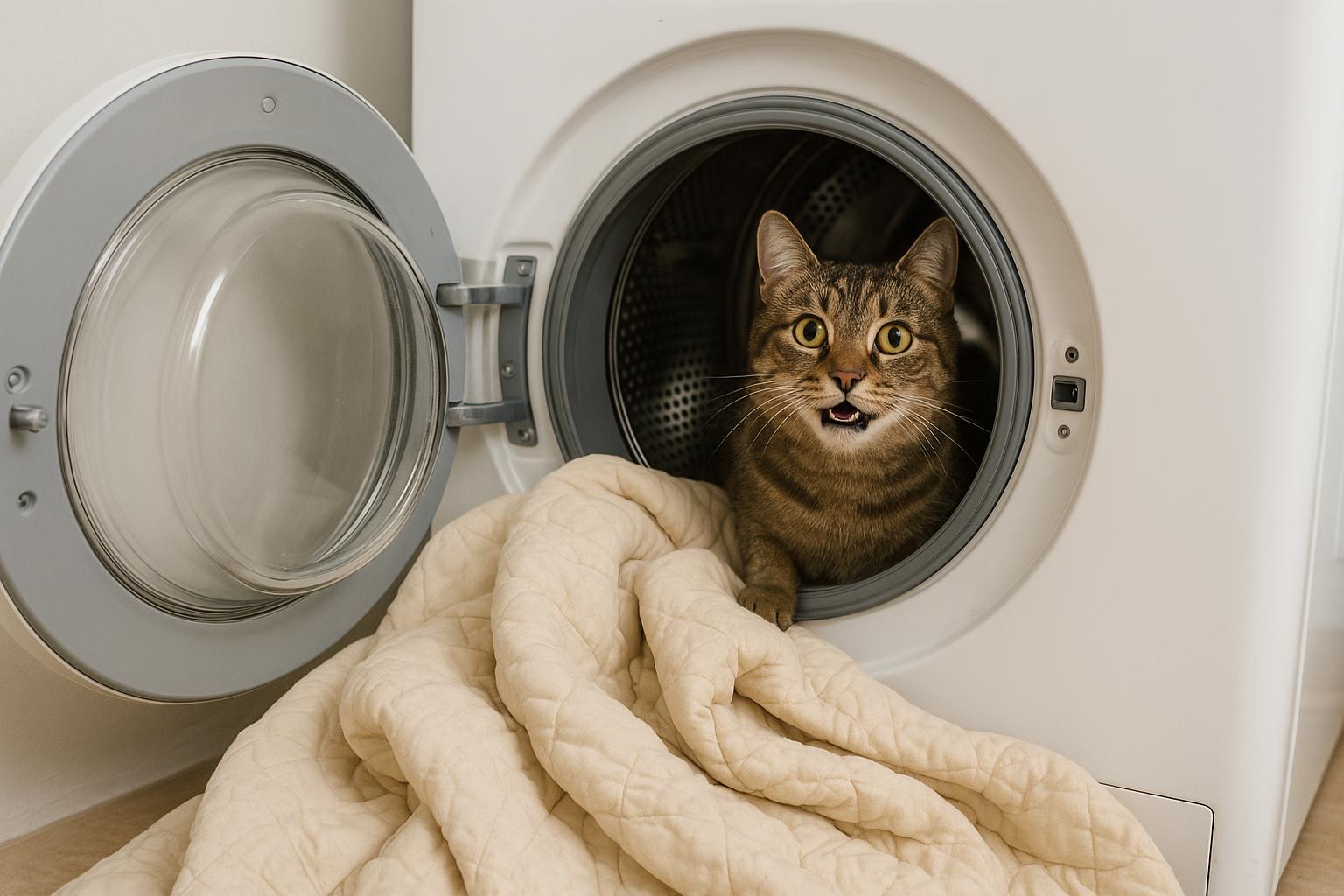
2. Wash all pet bedding, blankets, and any removable couch covers in hot water and dry on high heat for at least 30 minutes.
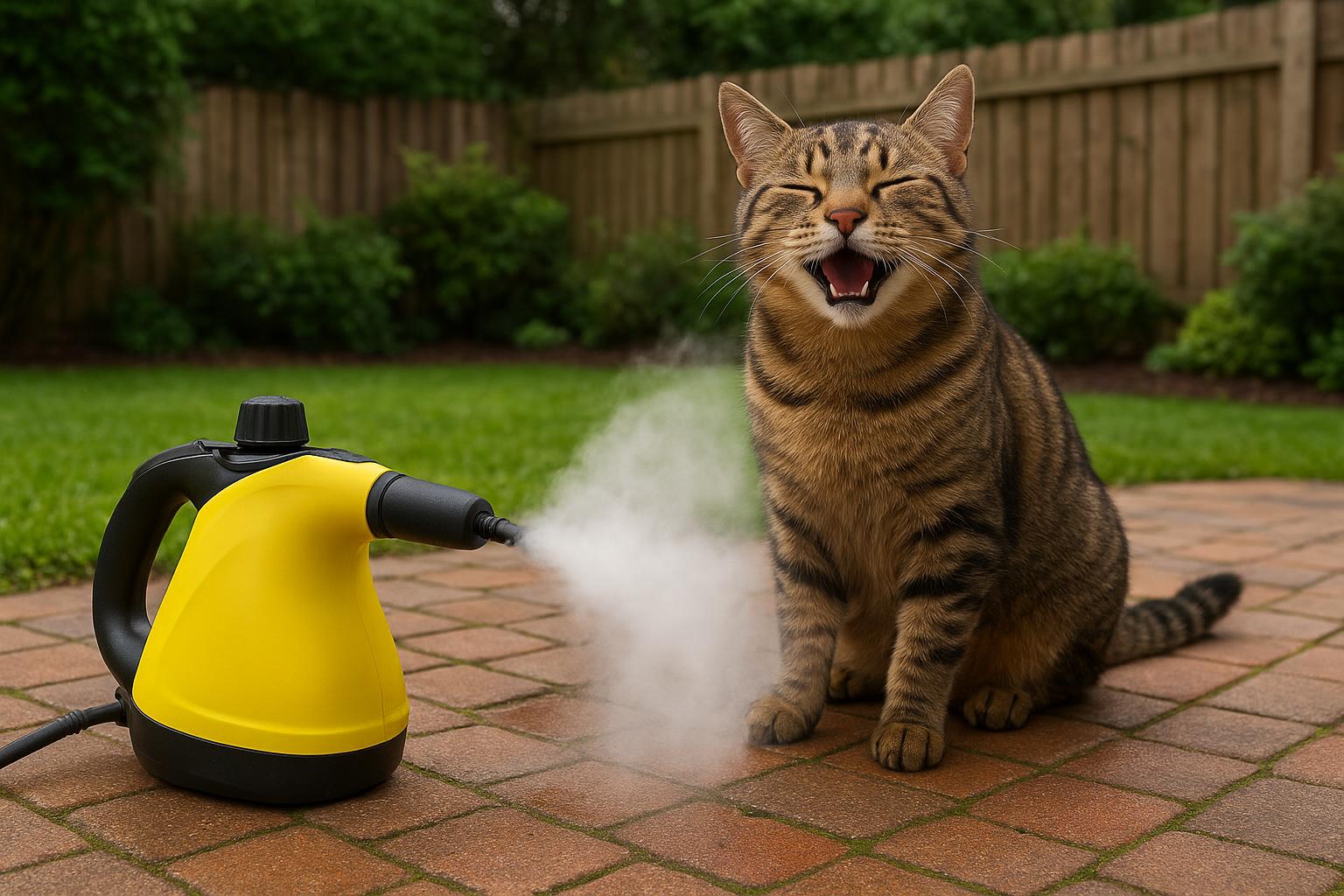
3. Steam clean carpets and upholstery where feasible; heat will kill many stages of fleas and improve removal of debris.
4. Apply an IGR product per label instructions to carpets and baseboards if the infestation is moderate to heavy. IGRs prevent eggs and larvae from maturing; they don’t immediately kill adults, so pair with pet treatment.
5. Repeat vacuuming every 2–3 days for at least 3–4 weeks to catch newly emerging adults before they can lay more eggs.
## Remedy 2: Treating Your Cat (Veterinary Options)
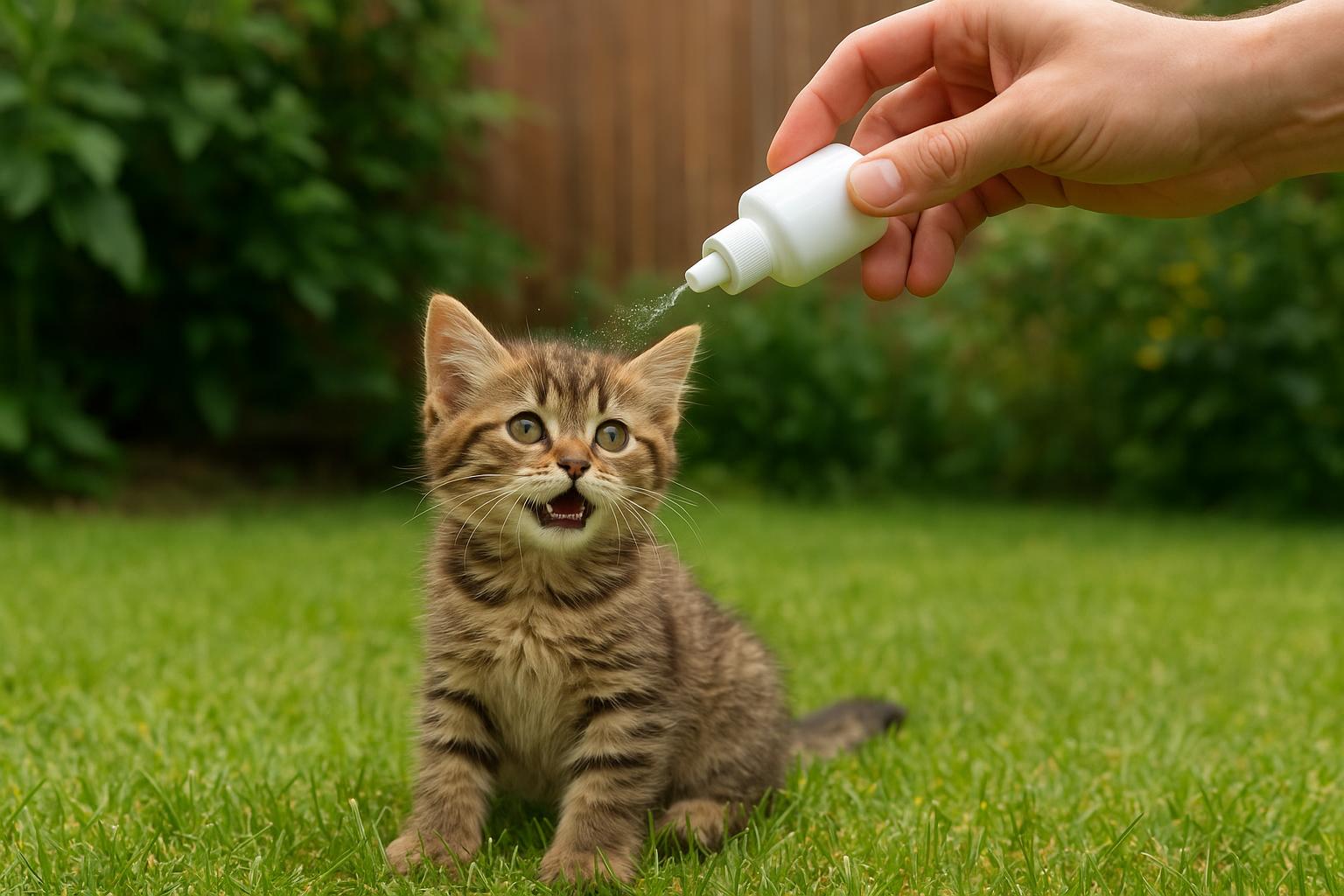
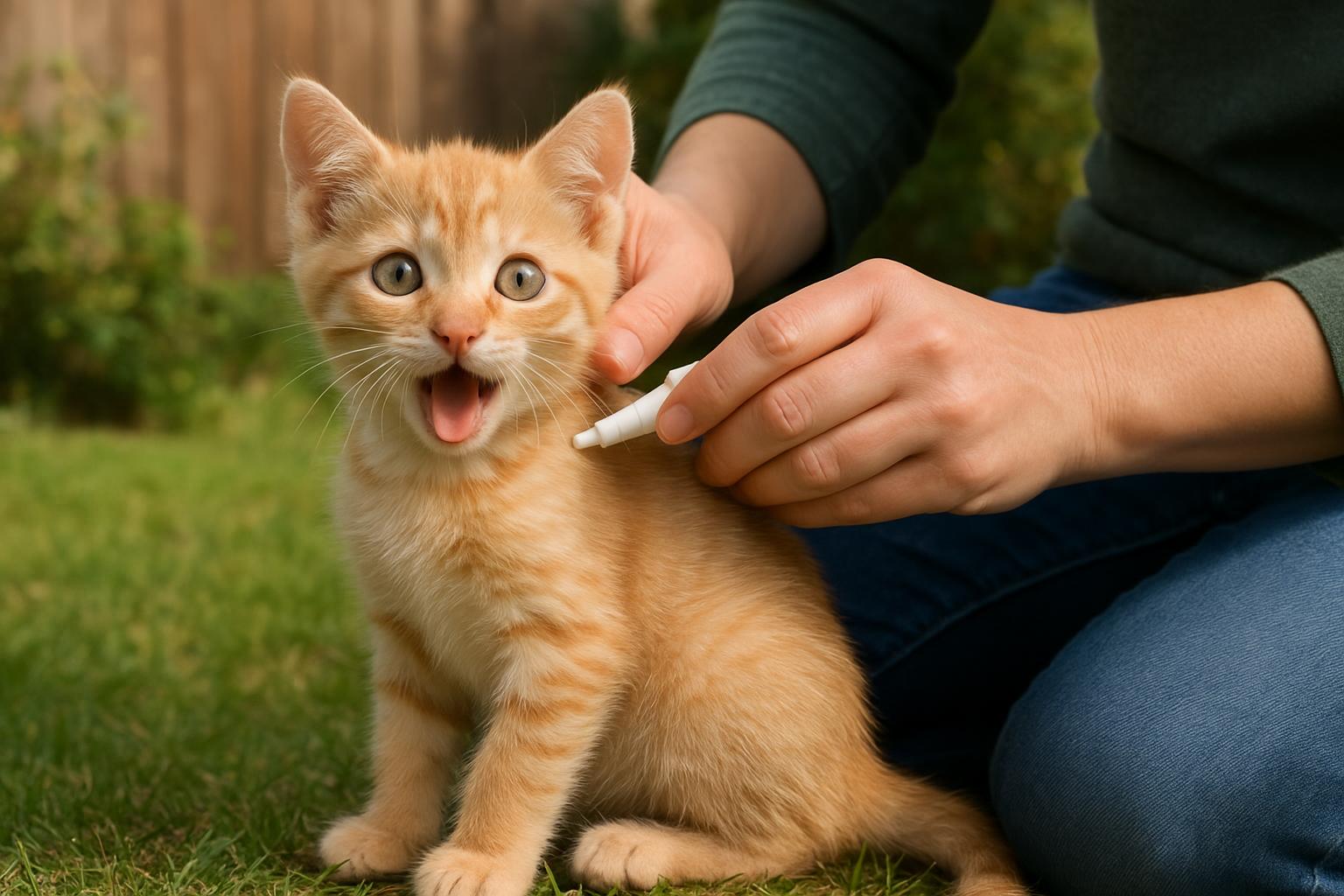
When cats get fleas, professional-grade pet treatment is often the fastest, safest route. Follow your veterinarian’s guidance; using the wrong product (especially dog products on cats) can be dangerous.
### Required Materials
– Prescription or veterinary-recommended flea topical or oral medication
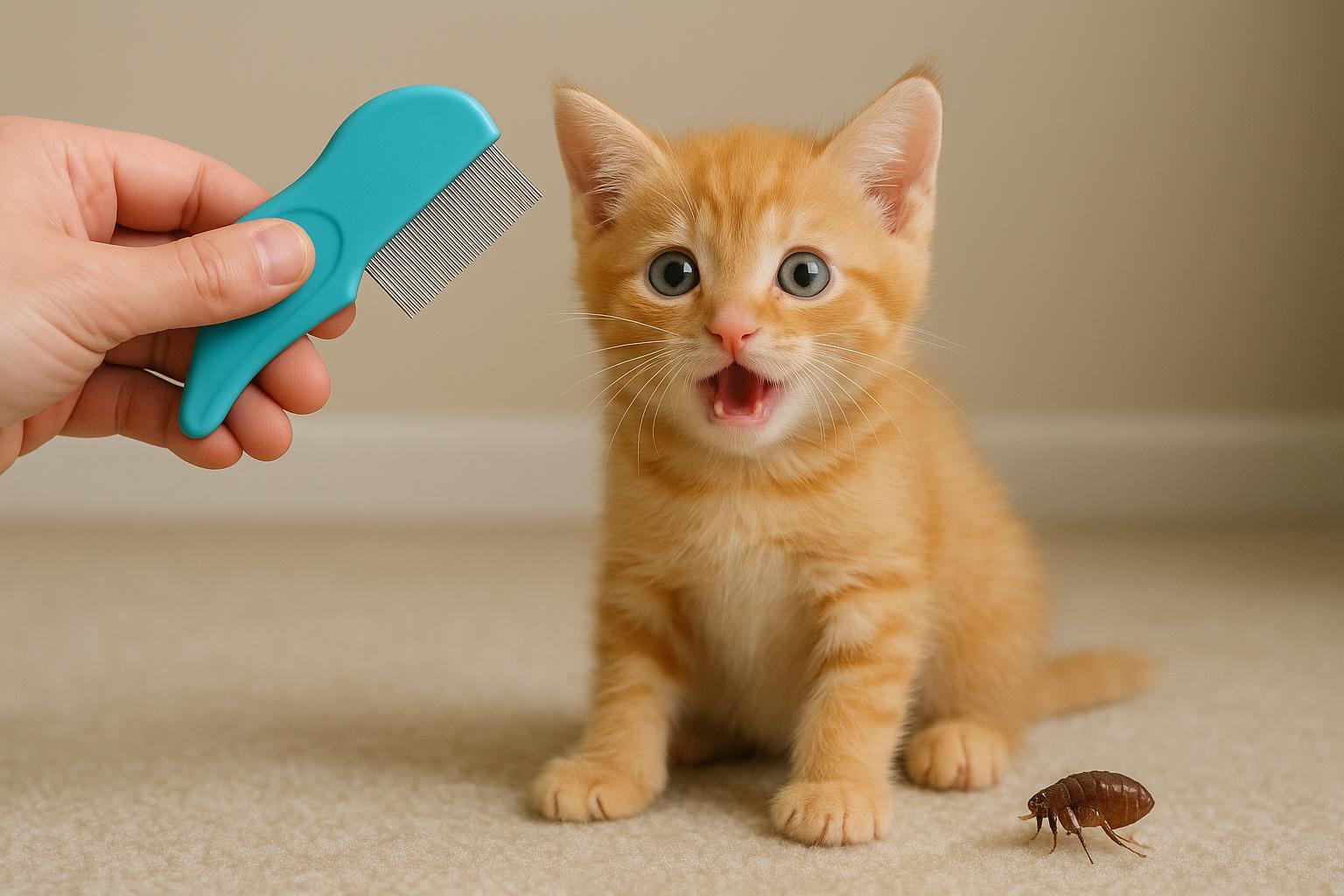
– Flea comb (fine-toothed)
– Flea shampoo (only if recommended by your vet)
– Gloves for application (optional)
#### Step-By-Step Application
1. Schedule a vet visit: confirm fleas, assess health (especially in kittens, elderly, or sick pets), and discuss the best medication based on weight, health status, and household situation.
2. Obtain and follow a veterinarian-prescribed treatment plan. Options include:
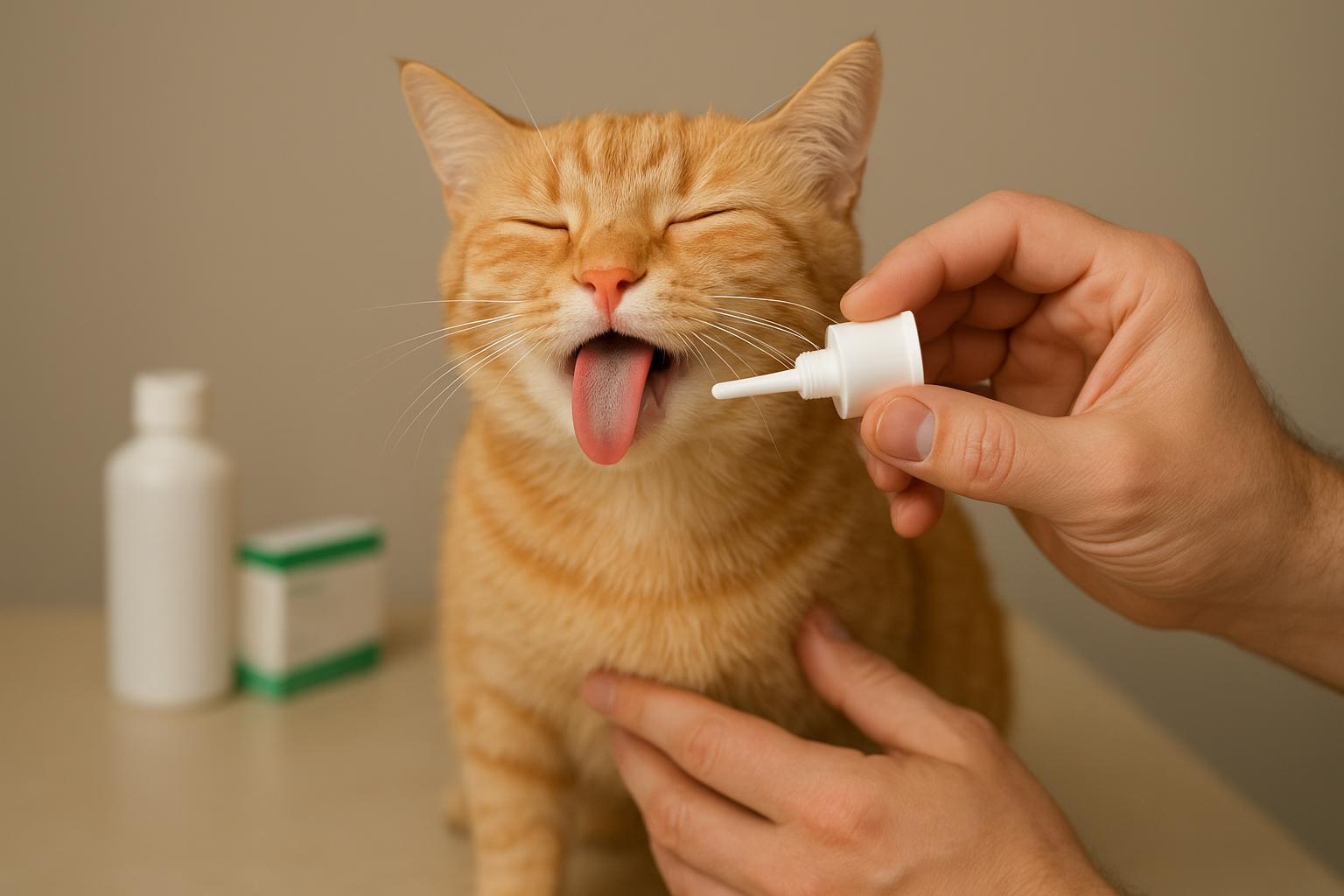
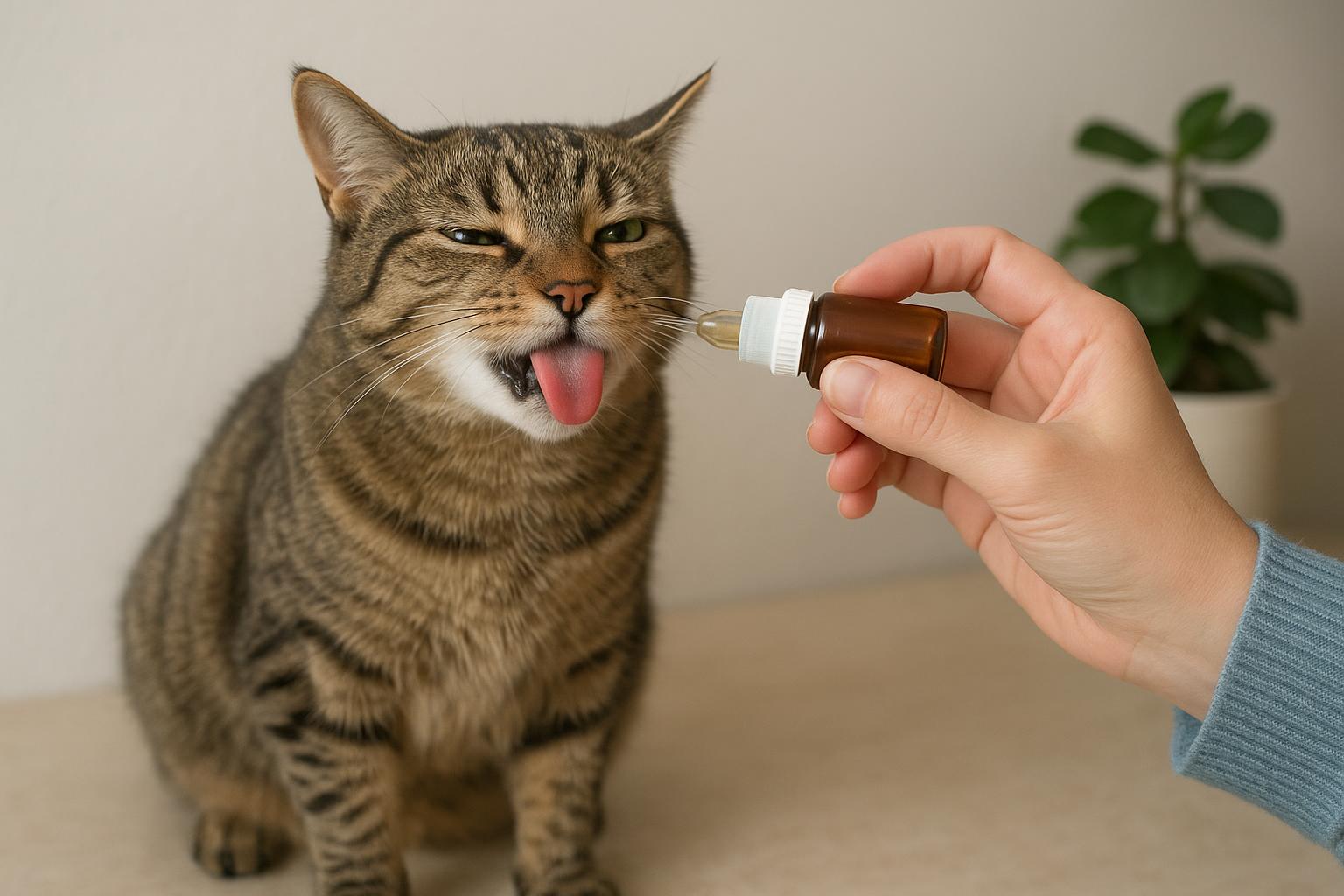
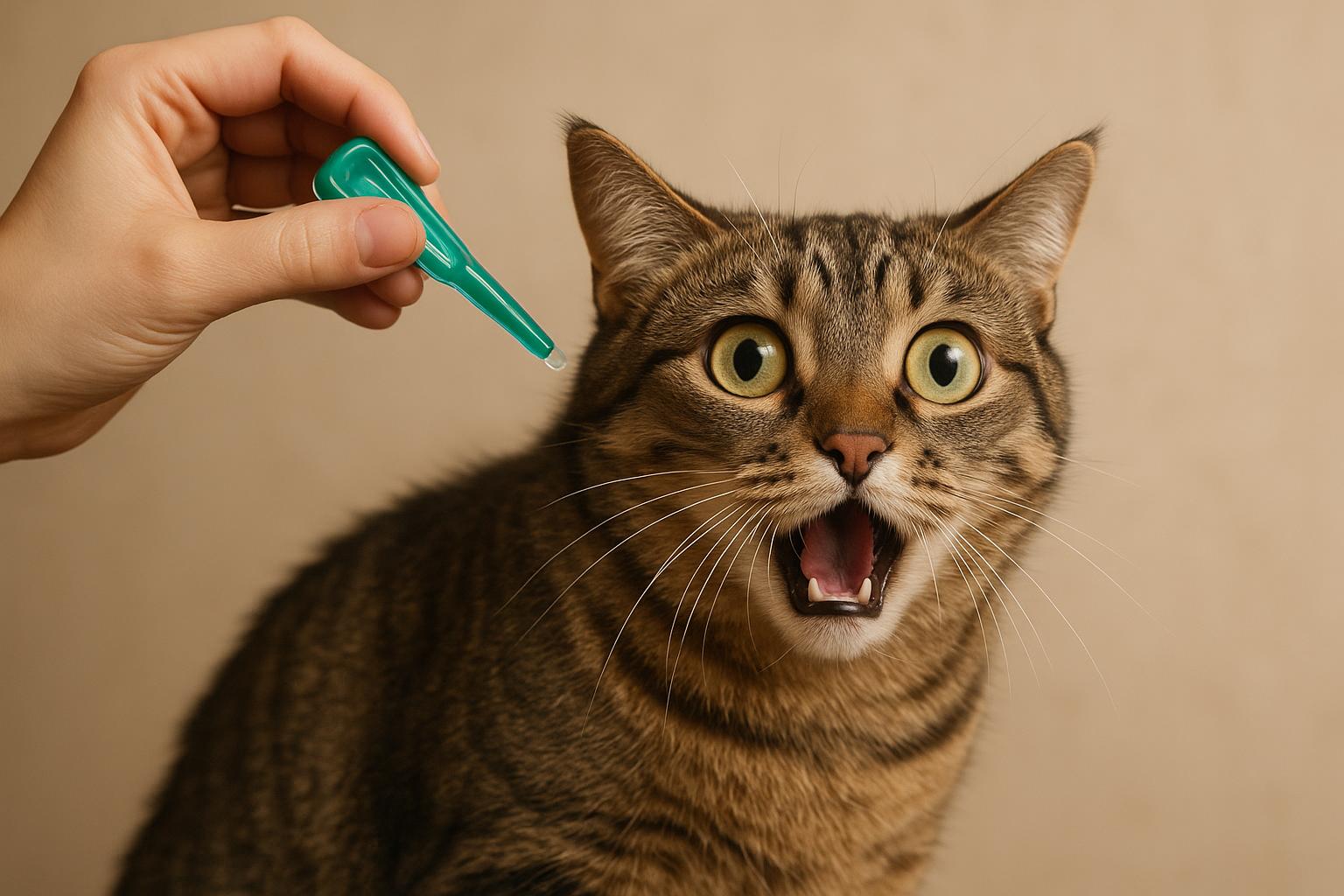
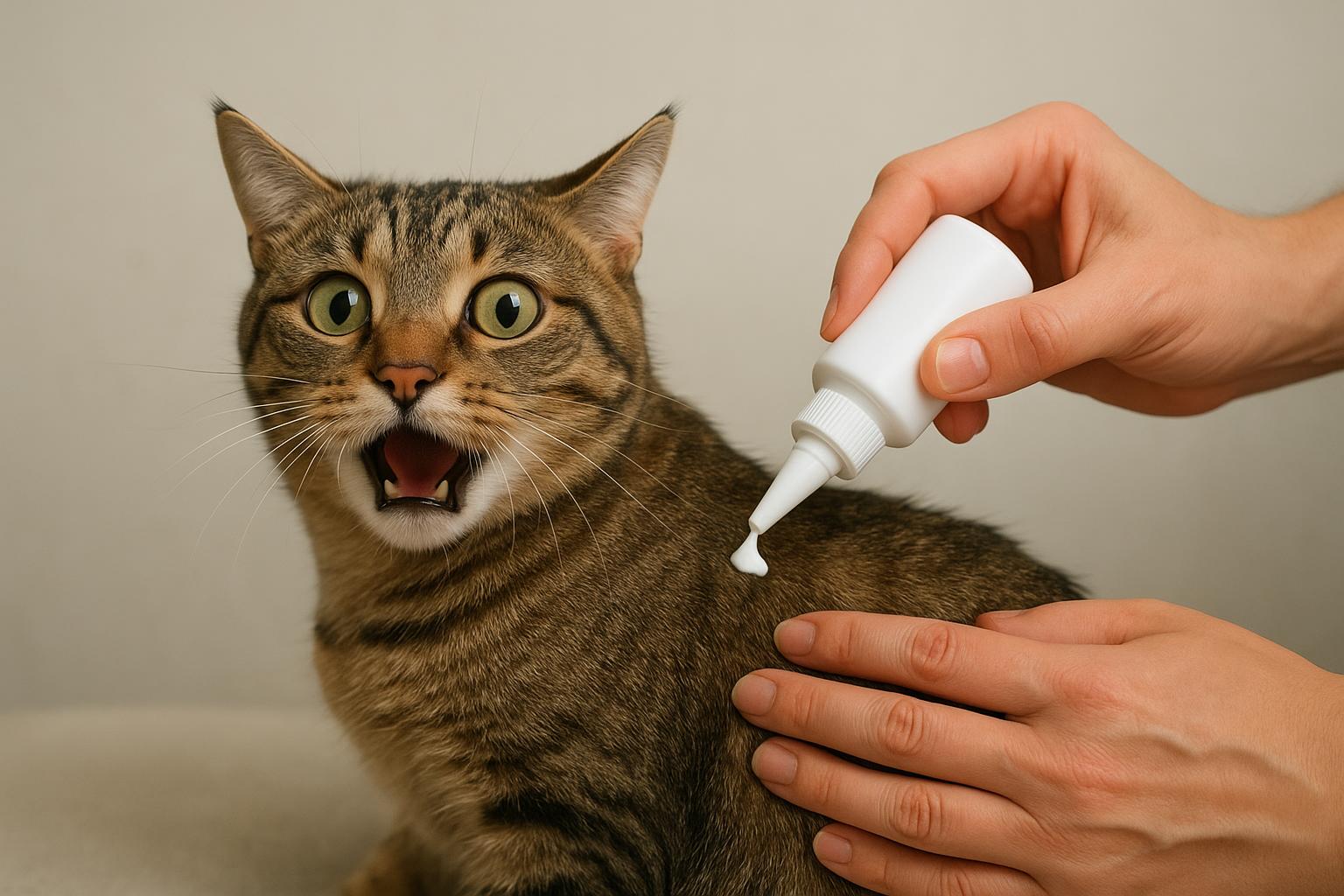
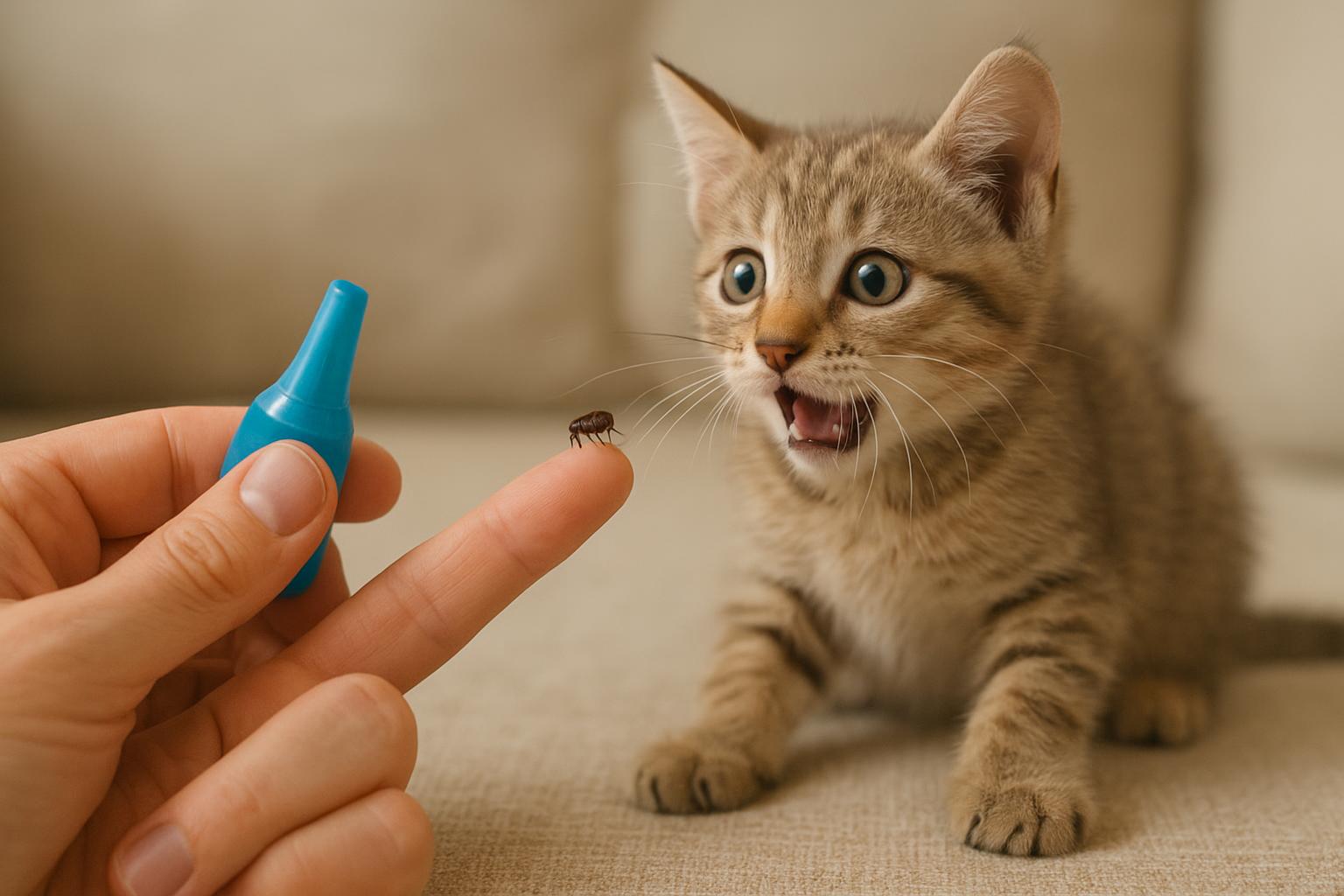
– Monthly topical adulticides that kill adult fleas and often have residual activity.
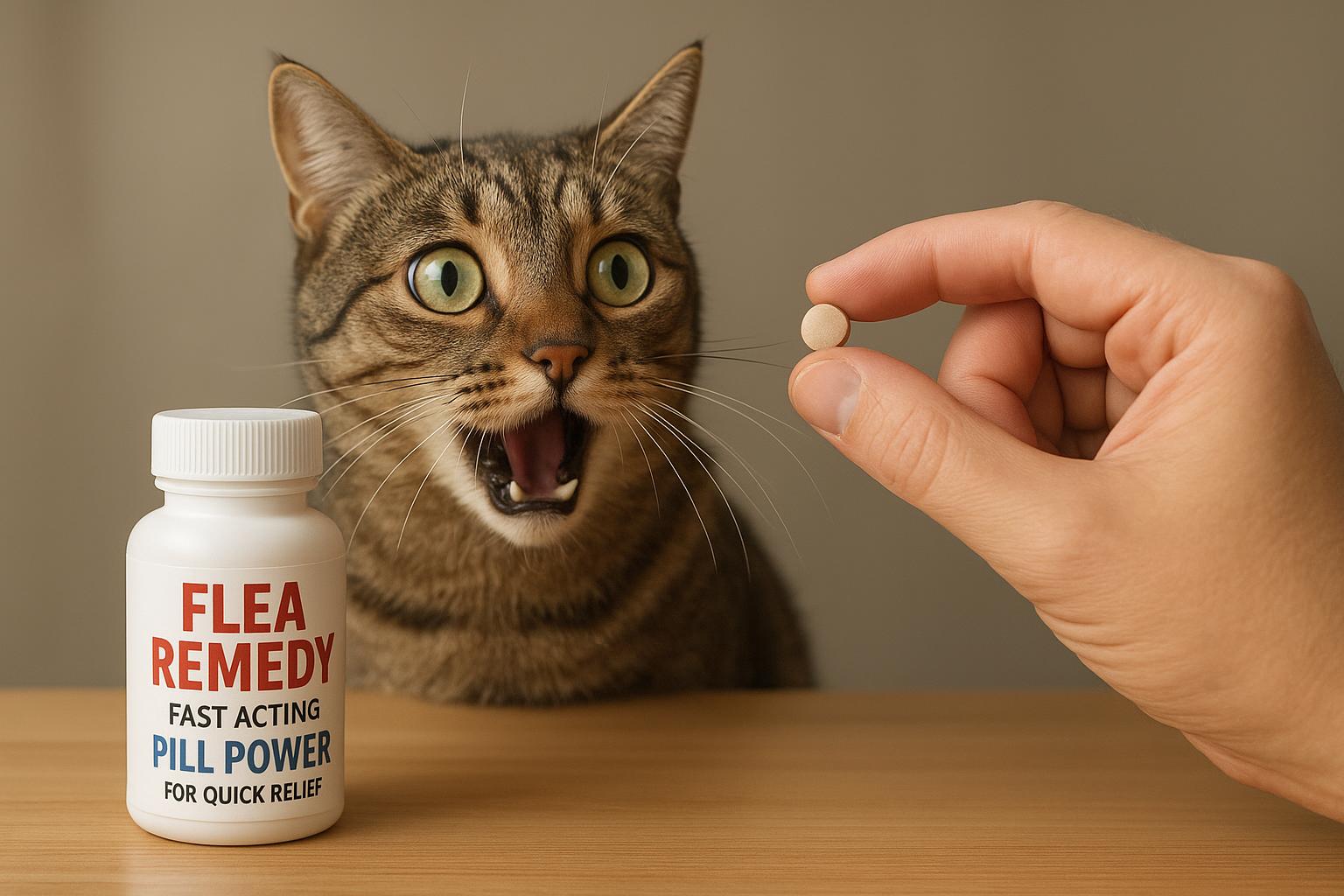
– Single-dose oral products that rapidly kill fleas (some act within hours).
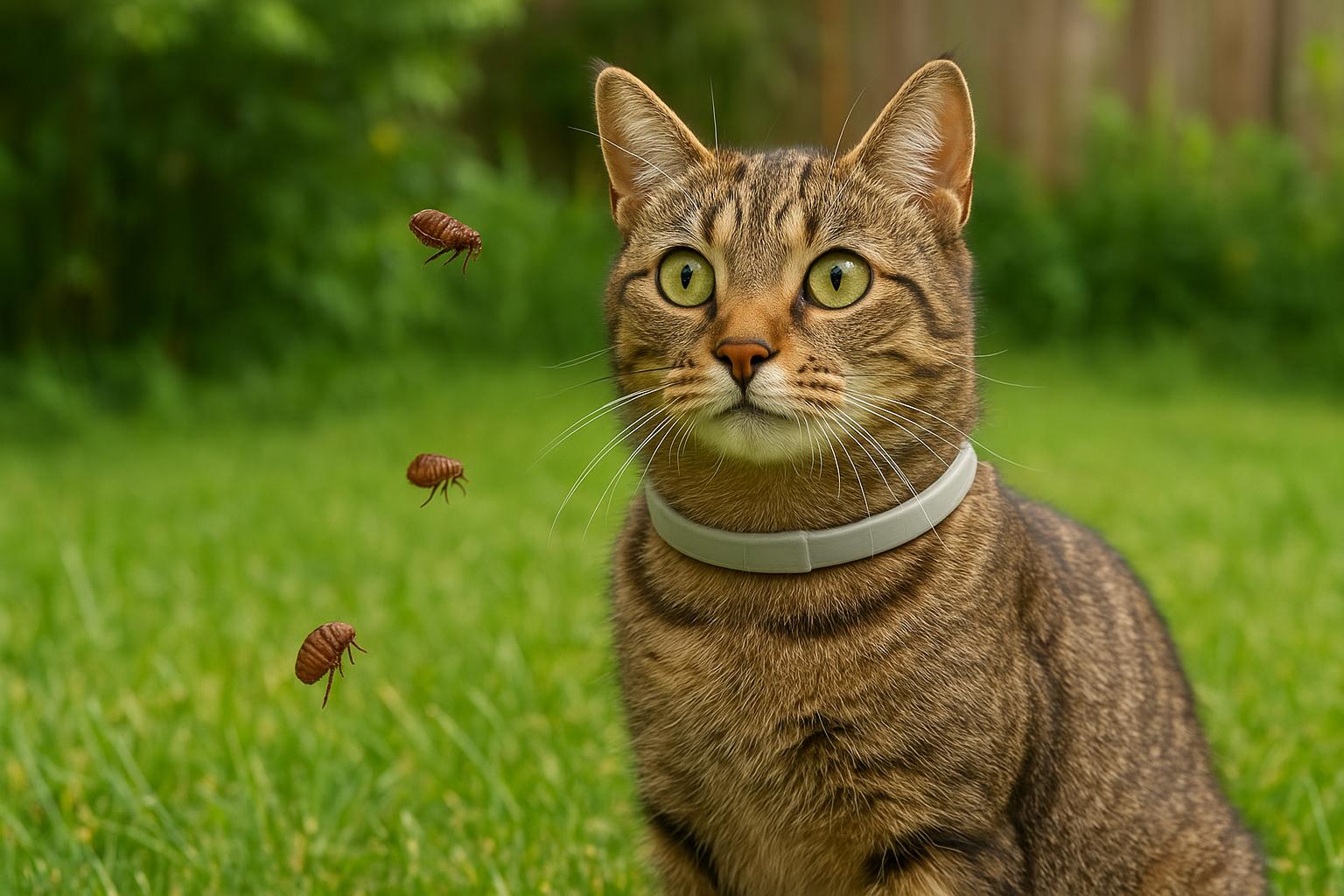
– Long-acting injections or collars for multi-pet households or outdoor access.
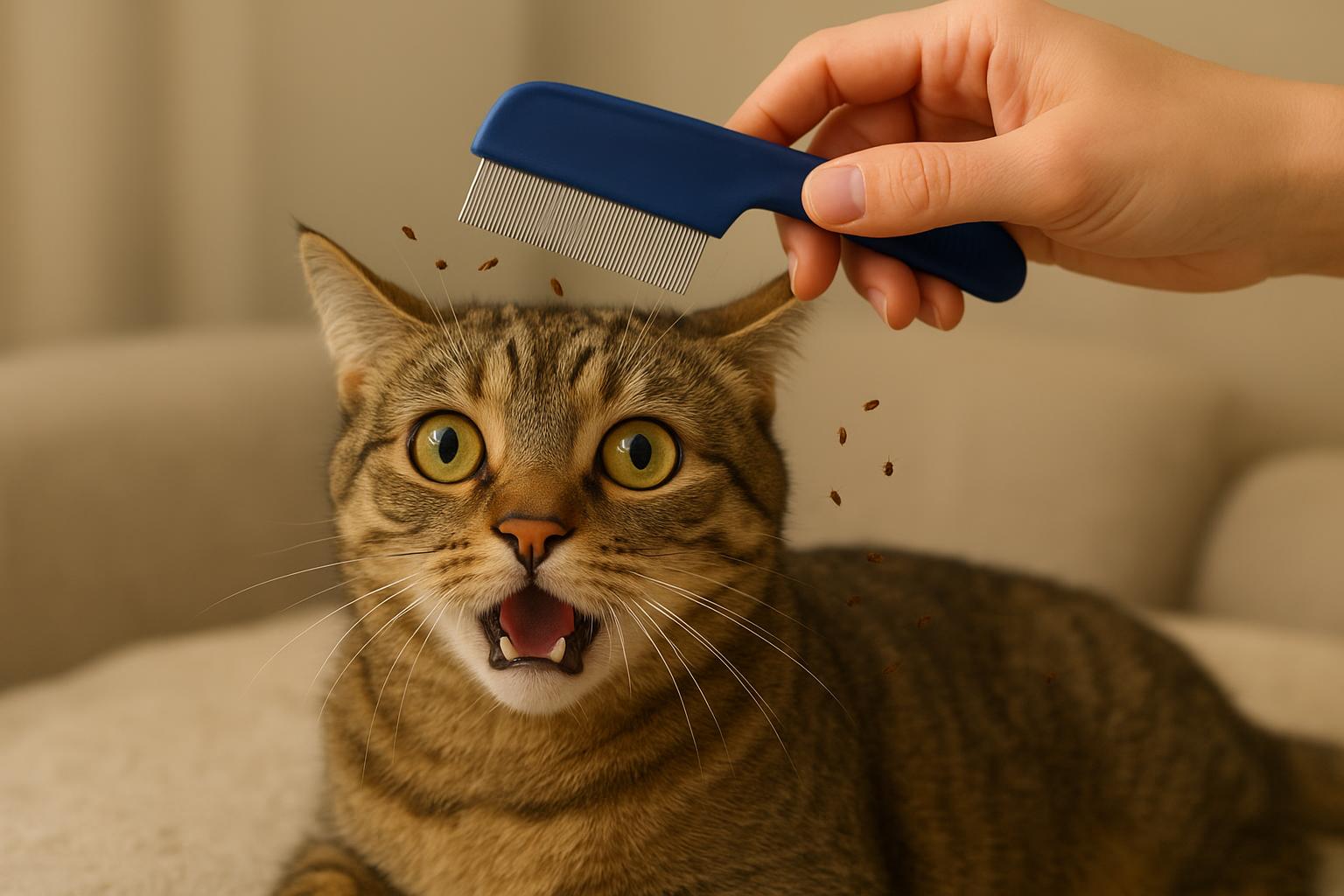
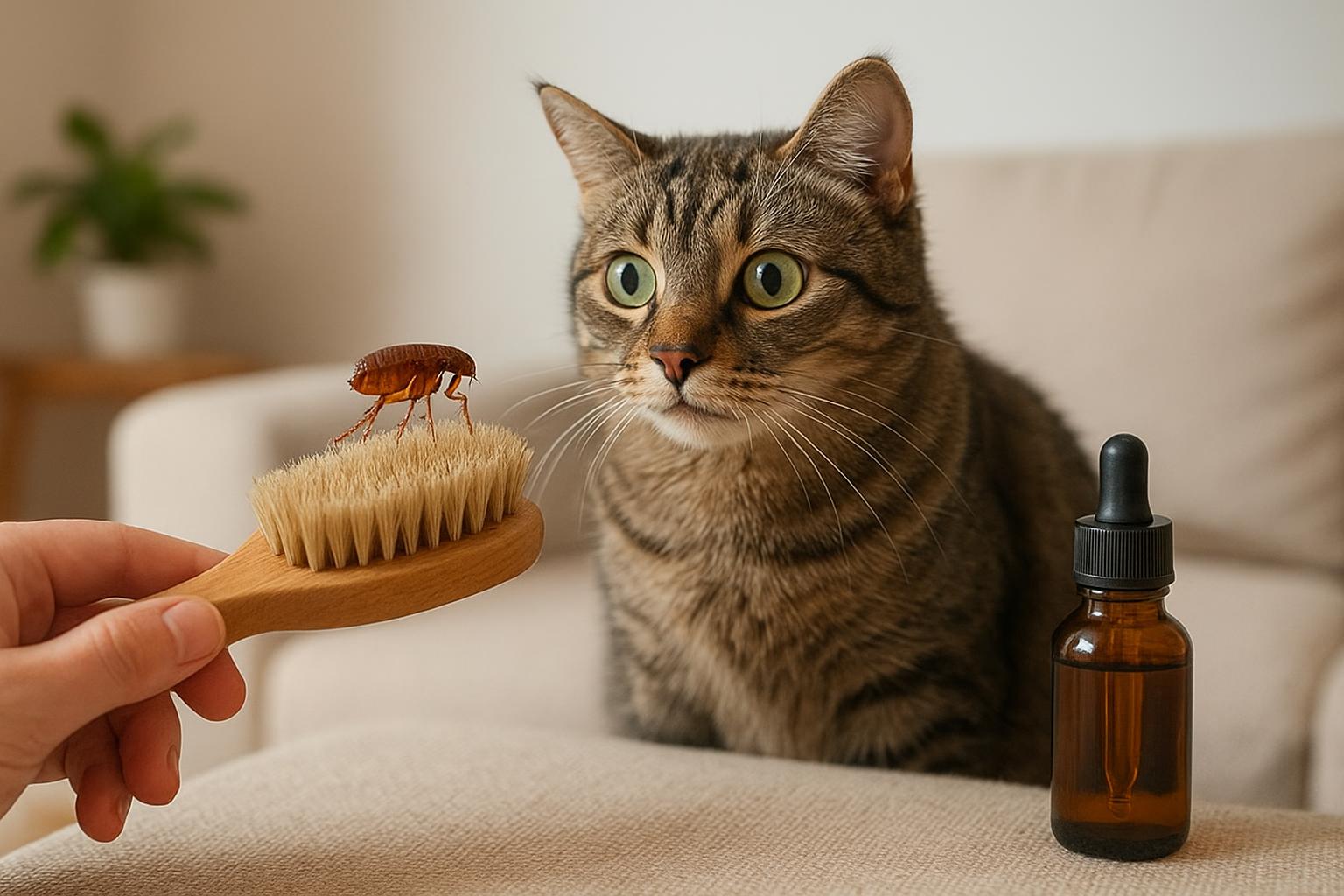
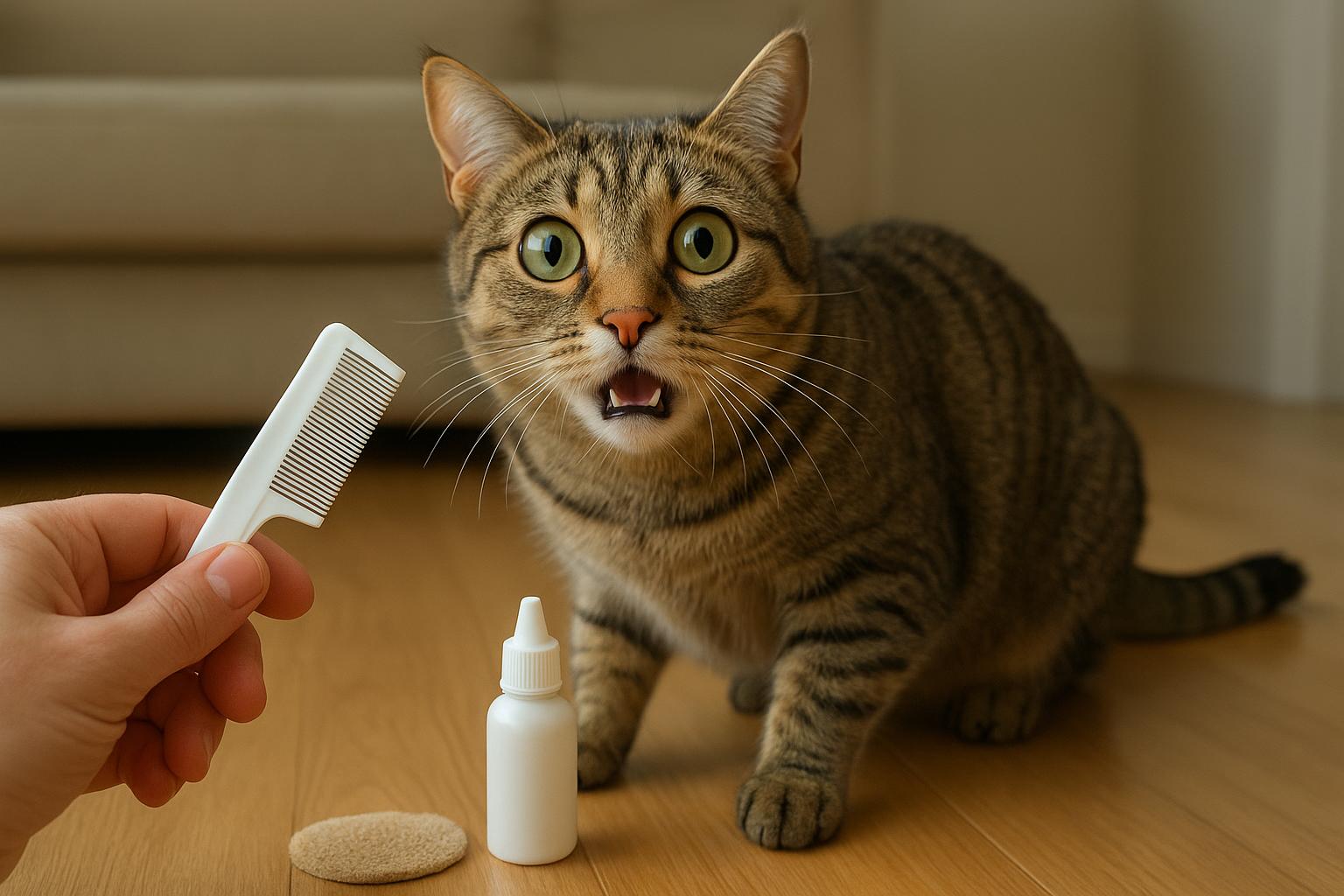
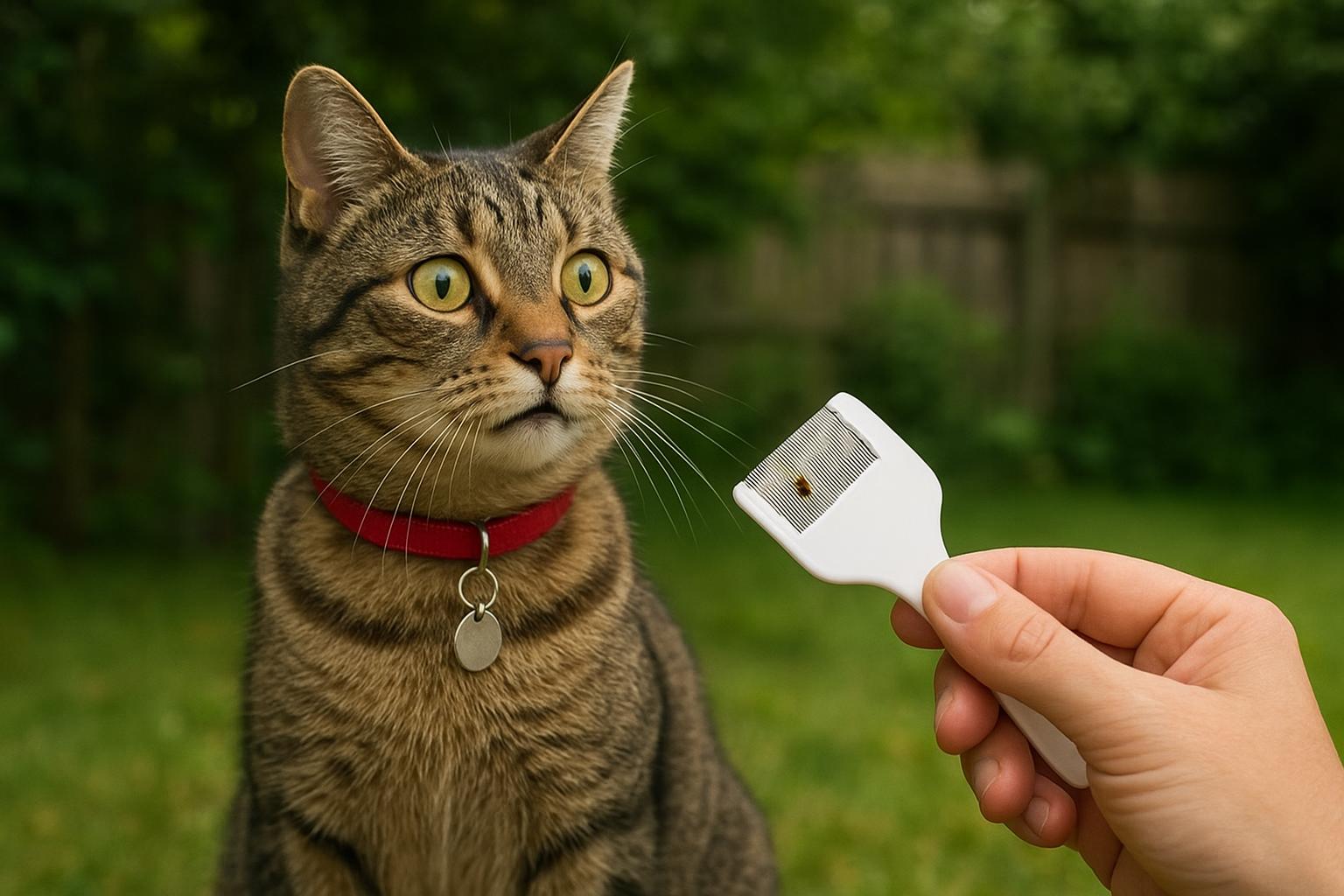
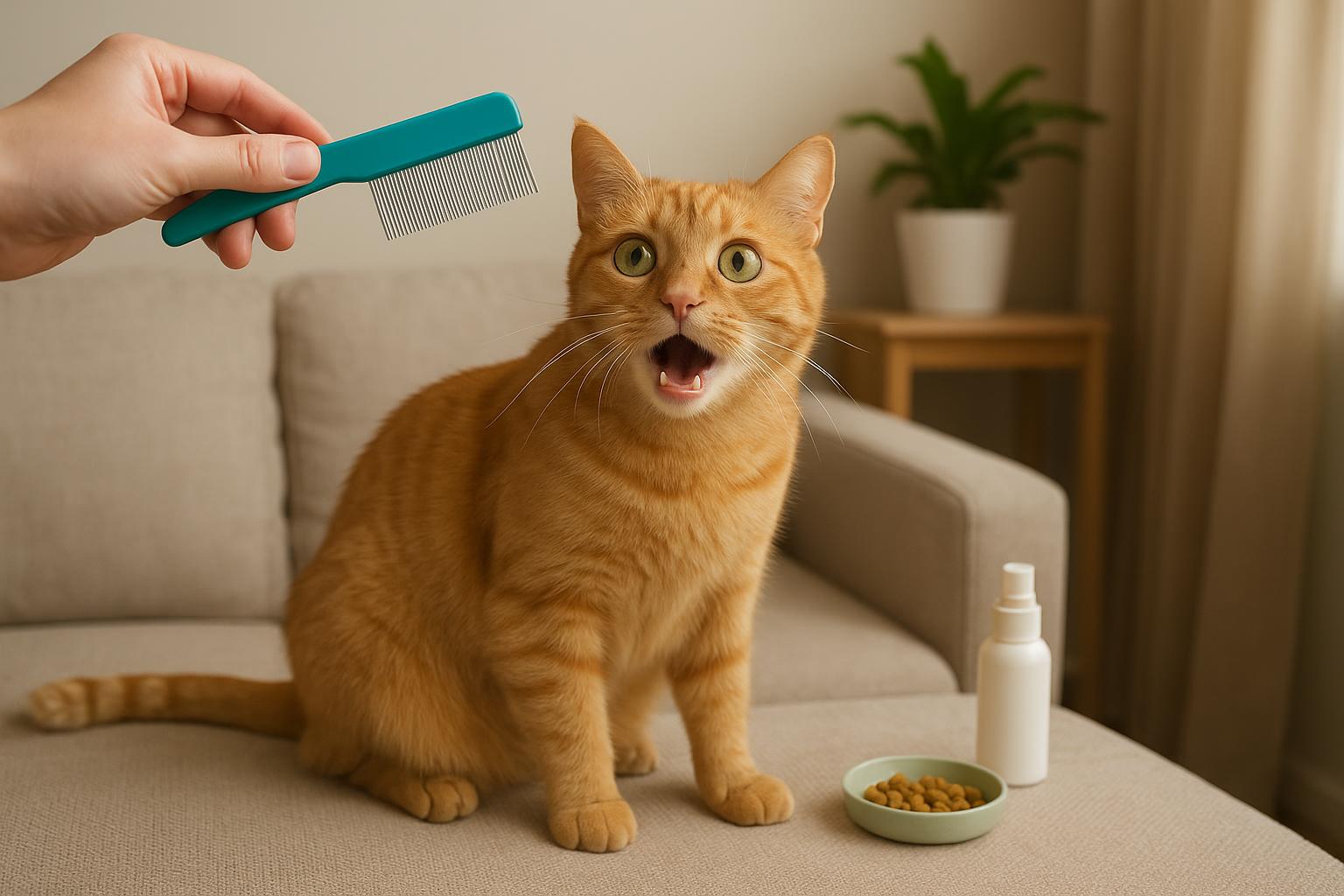
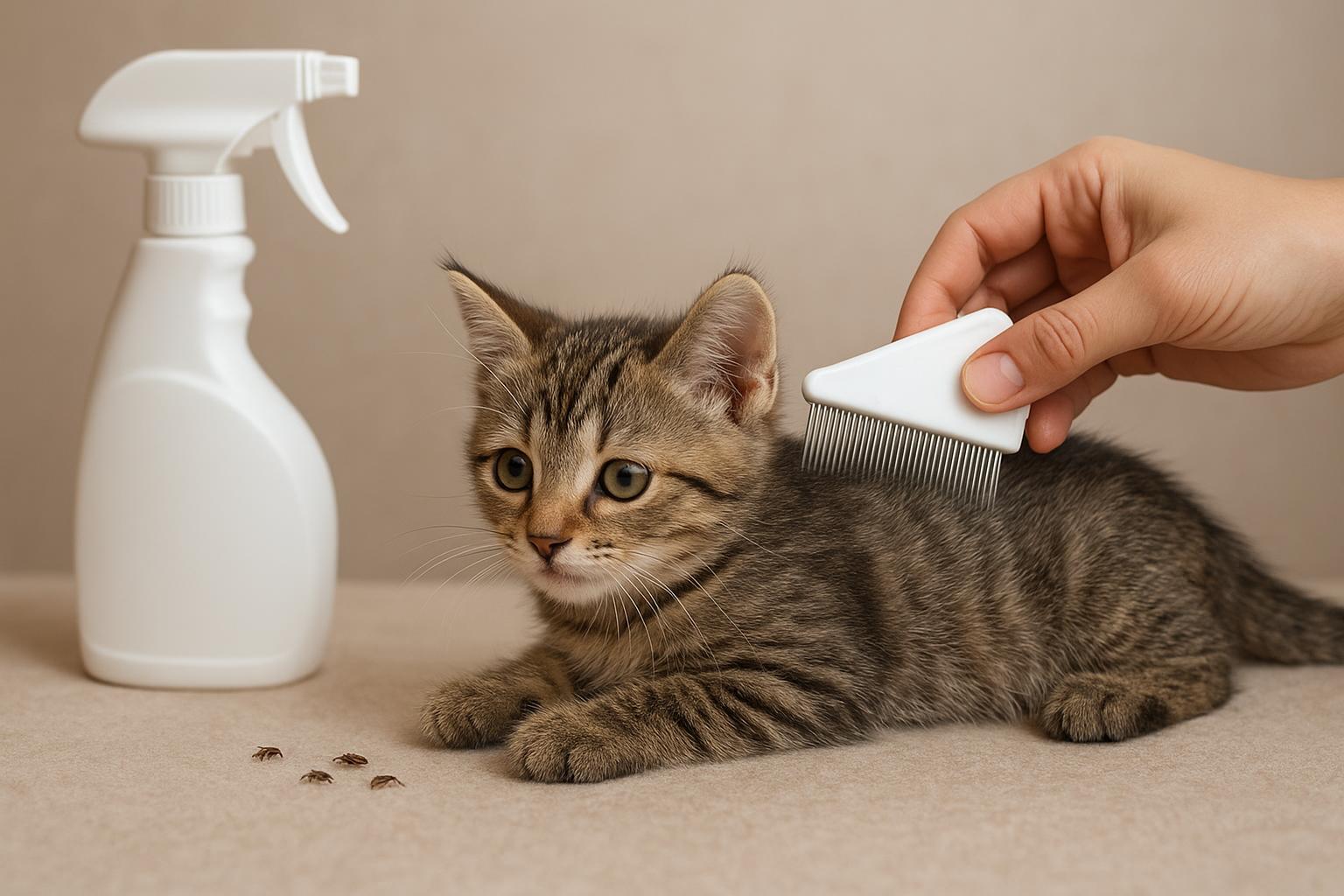
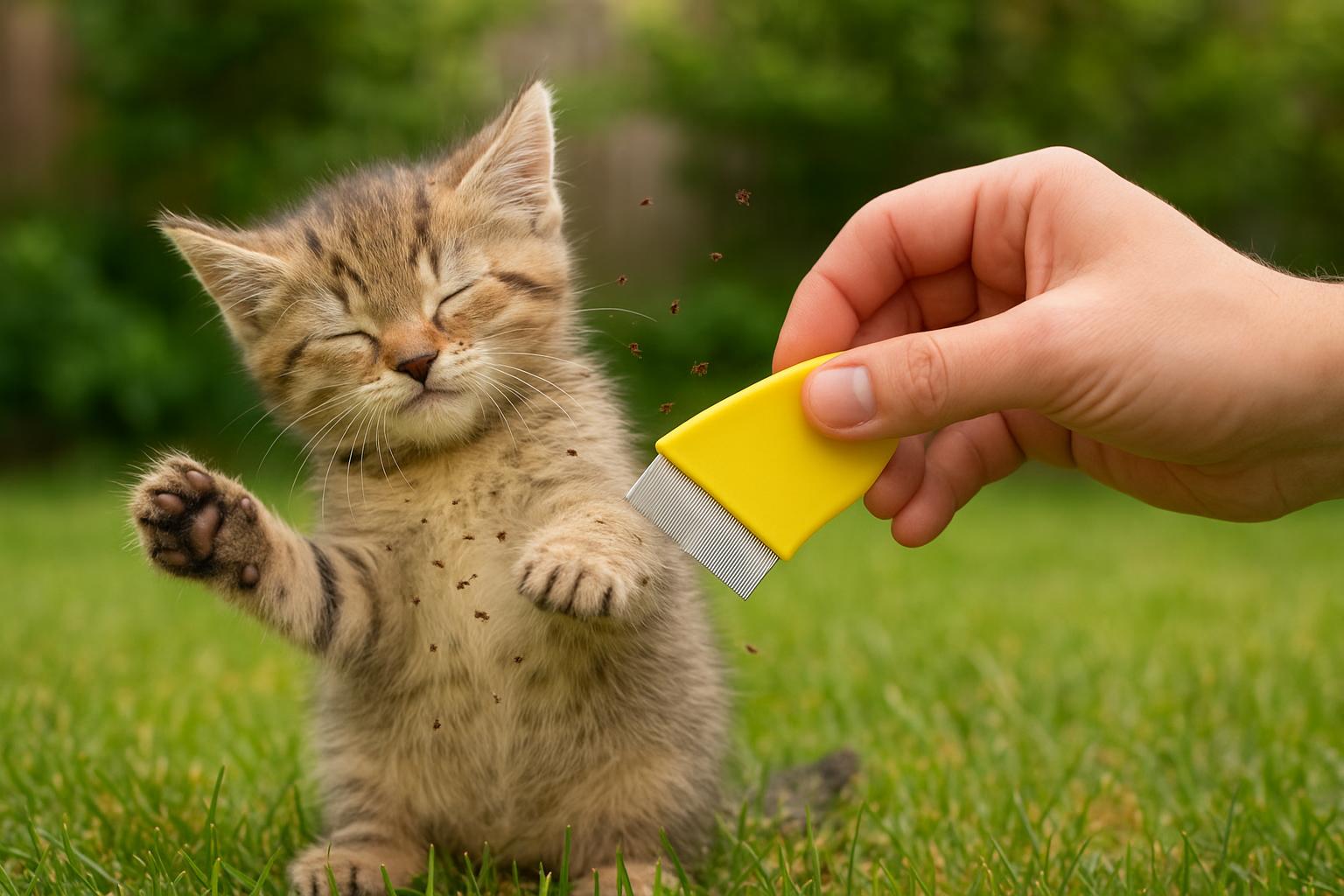
3. Use a flea comb daily to remove adult fleas and flea dirt; dunk comb contents into soapy water to drown fleas.
4. Treat all pets in the household simultaneously, even those without obvious signs.
5. Maintain follow-up treatments per product schedule (many products require monthly dosing for control).
## Remedy 3: Non-Chemical Home Remedies (Use With Caution)
Some owners want chemical-free options or interim measures while arranging vet care. These approaches can help reduce numbers but are rarely sufficient alone for moderate to heavy infestations.
### Required Materials
– Fine-toothed flea comb
– Washable pet bedding and laundry supplies
– Frequent grooming brushes
– Isolated carrier or room for heavily infested pets (if possible)
#### Step-By-Step Application
1. Comb daily: focus on the neck and back where fleas congregate. Remove adults and immerse comb debris in soapy water.
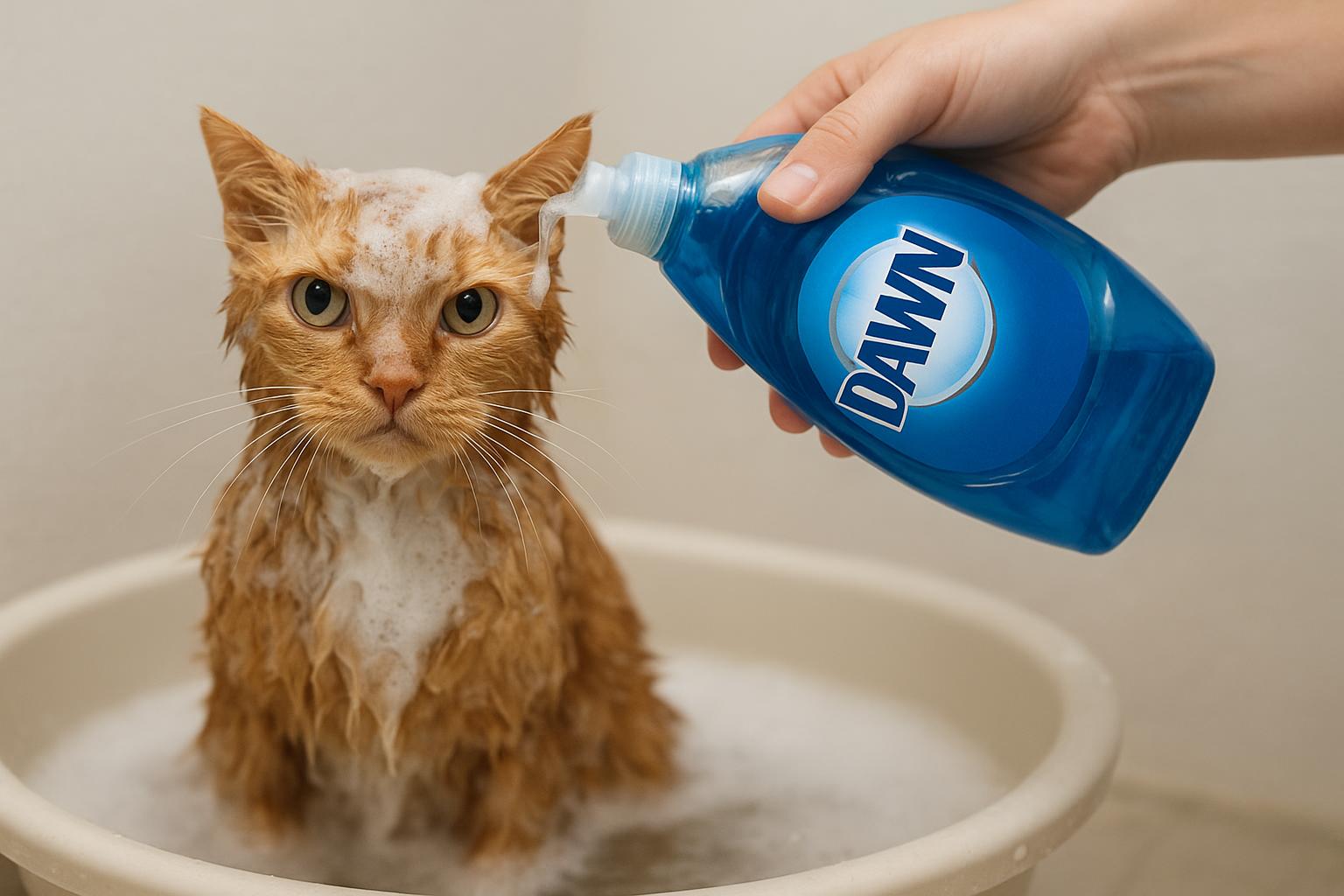
2. Bath carefully (if your cat tolerates it): use a cat-safe shampoo to remove fleas; repeat as recommended. Note: many adult fleas will jump off when bathed, reducing immediate numbers.
3. Isolate heavily infested animals to one room with easy-to-clean surfaces while you conduct cleaning and treatment in the rest of the home.
4. Launder bedding and soft toys frequently in hot water; dry on high heat.
5. Monitor and pair with environmental cleaning (see Remedy 1) to increase effectiveness.
### Important Safety Notes
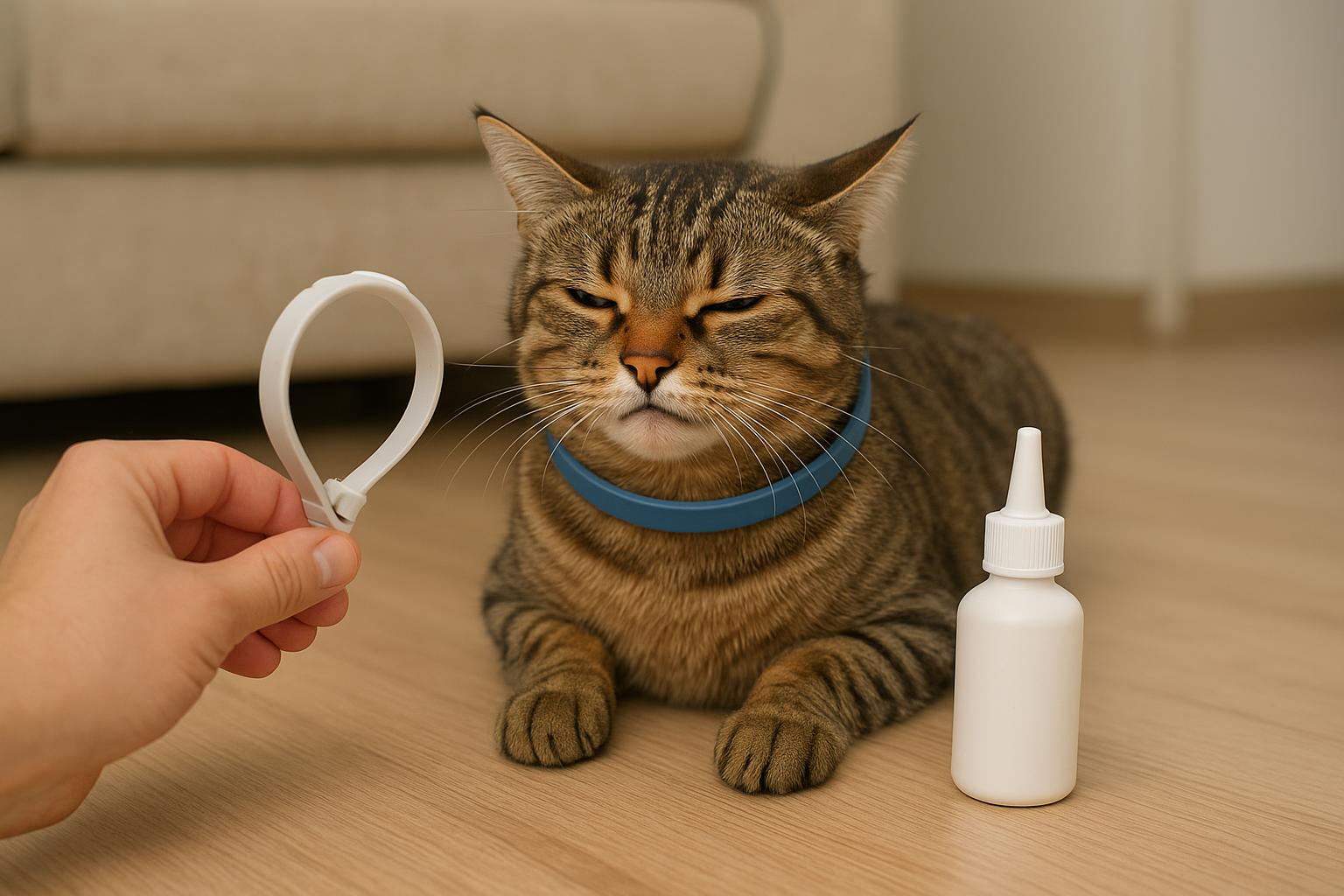
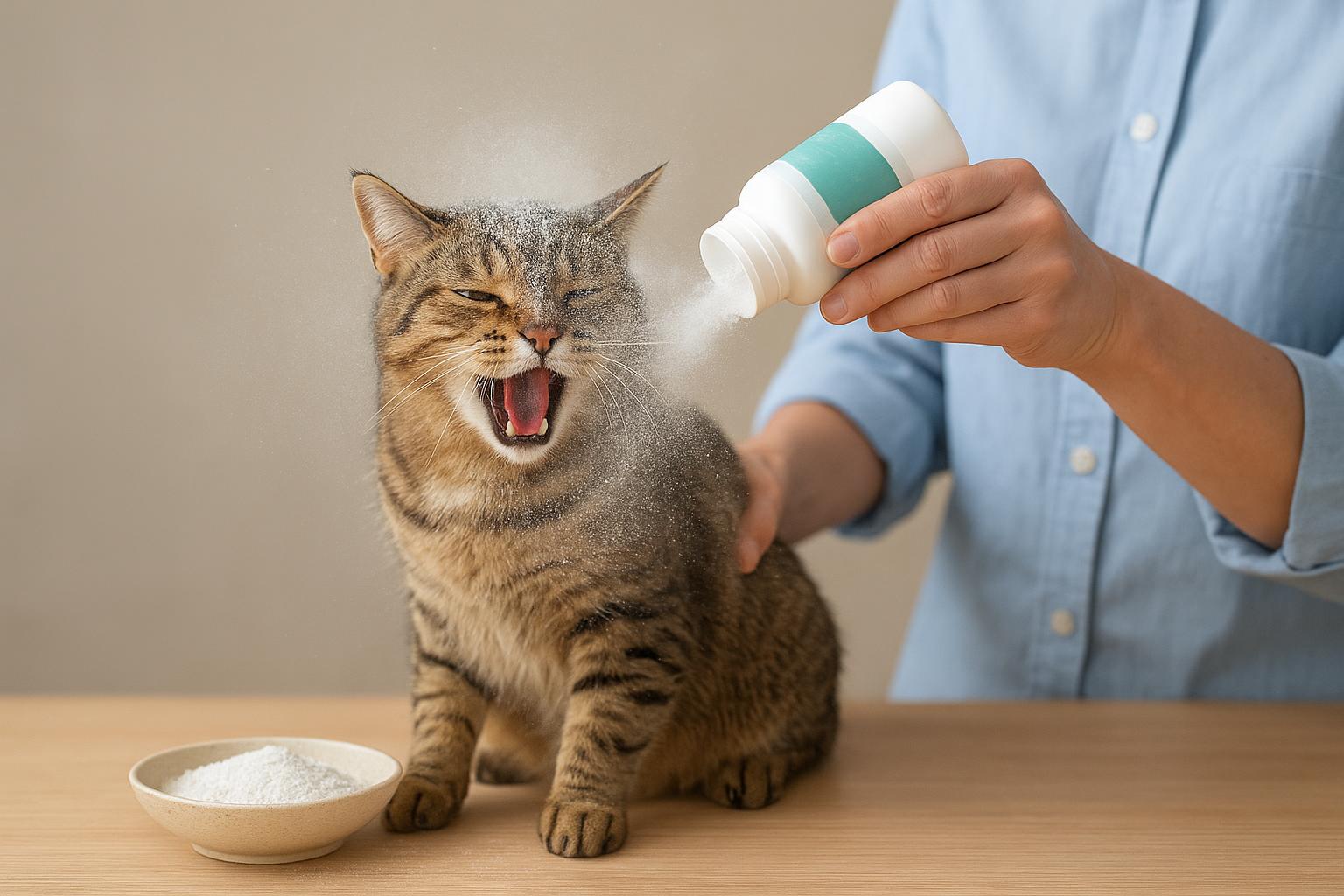
– Do not use dog-specific flea treatments on cats; ingredients like permethrin in dog products can be fatal to cats.
– Avoid home “folk” remedies that apply essential oils, citrus oils, or over-the-counter products not labeled for cats — these can cause skin irritation, seizures, or worse.
– If your cat shows signs of distress, tremors, drooling, vomiting, or neurologic symptoms after any treatment, contact your veterinarian or emergency clinic immediately.
### When To See A Vet
If you notice severe scratching, open sores from biting, sudden hair loss, pale gums, lethargy, or if a kitten is involved, seek veterinary care promptly. Flea-borne diseases and severe anemia are real risks, especially for small or compromised animals.
### Preventing Reinfestation
Once the immediate crisis is managed, prevention is the key to staying chill:
– Keep up with regular monthly flea prevention as recommended by your vet.
– Reduce clutter and vacuum regularly in pet areas.
– Check your cat and other pets regularly with a flea comb, especially after outdoor exposure or visits with other animals.
– Treat neighboring pets or feral cat issues if they are a likely source.
– Consider long-term environmental strategies (e.g., minimizing rodent or wildlife entry, cleaning secondhand items before bringing them indoors).
When cats get fleas indoors it can feel like an unwelcome mystery, but with coordinated pet treatment, diligent home cleaning, and sensible prevention you can take back your couch, your cat’s comfort, and your sleep. If in doubt, call your veterinarian; they’re the best partner for safe, effective flea control tailored to your household.






Leave a Reply