
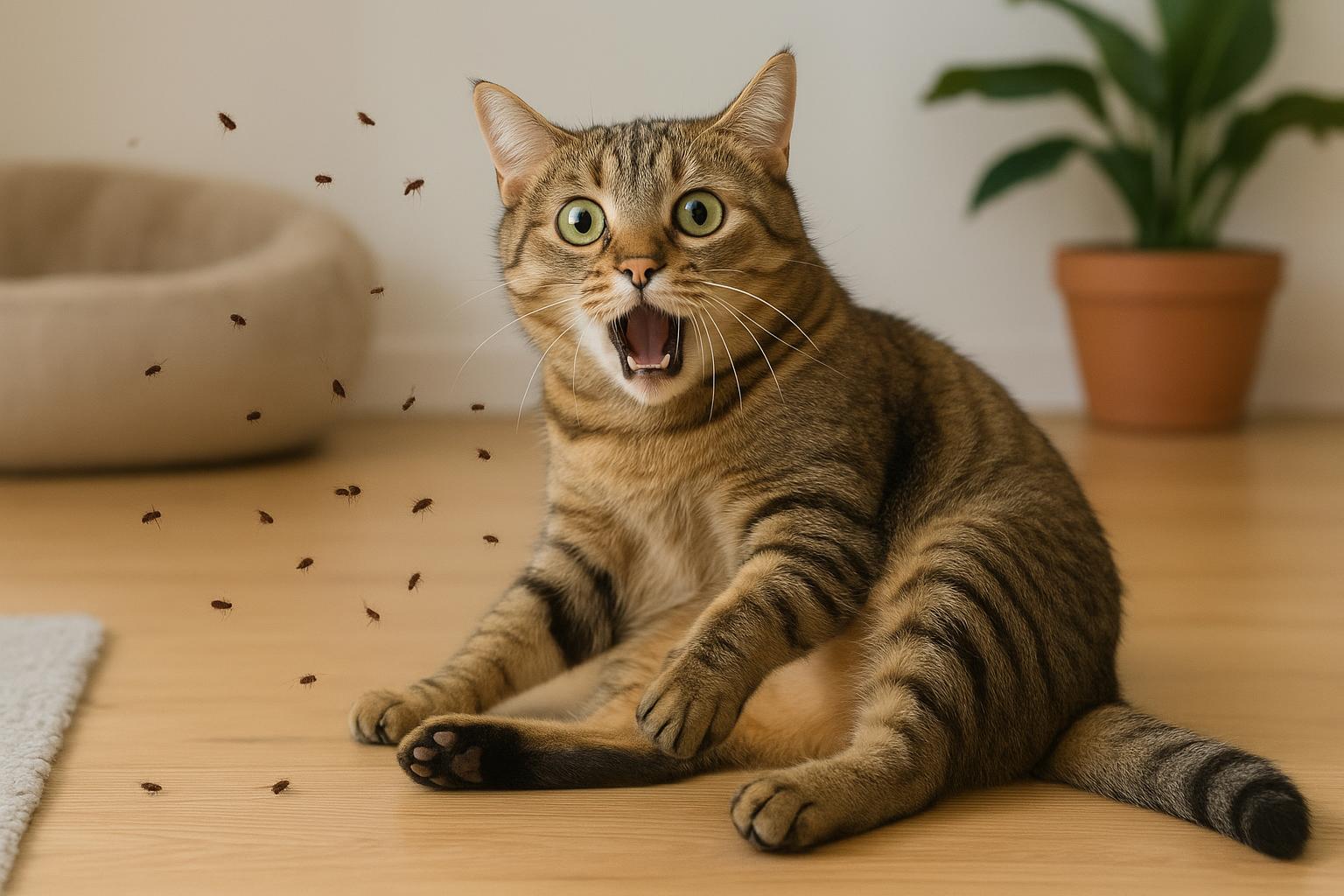
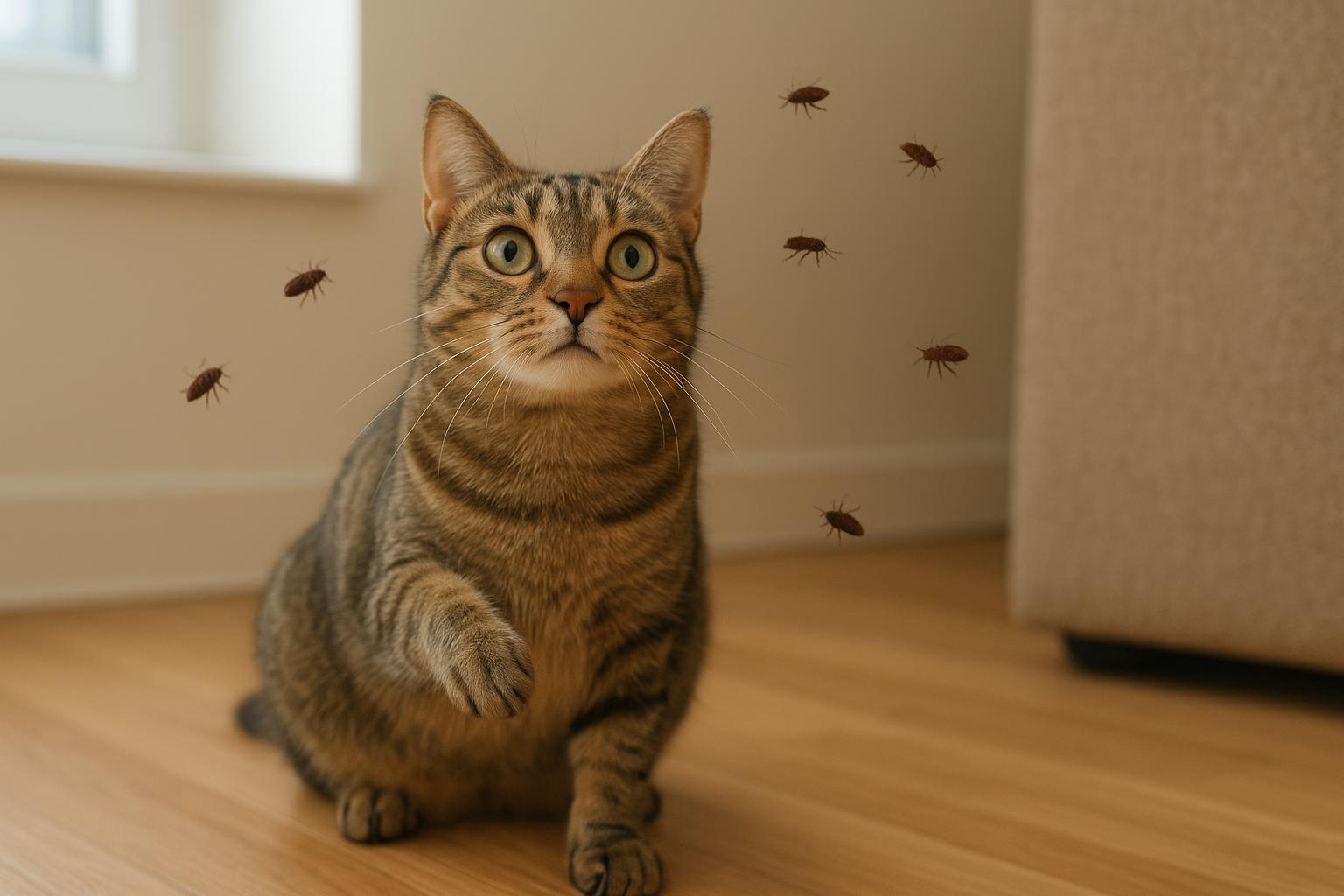
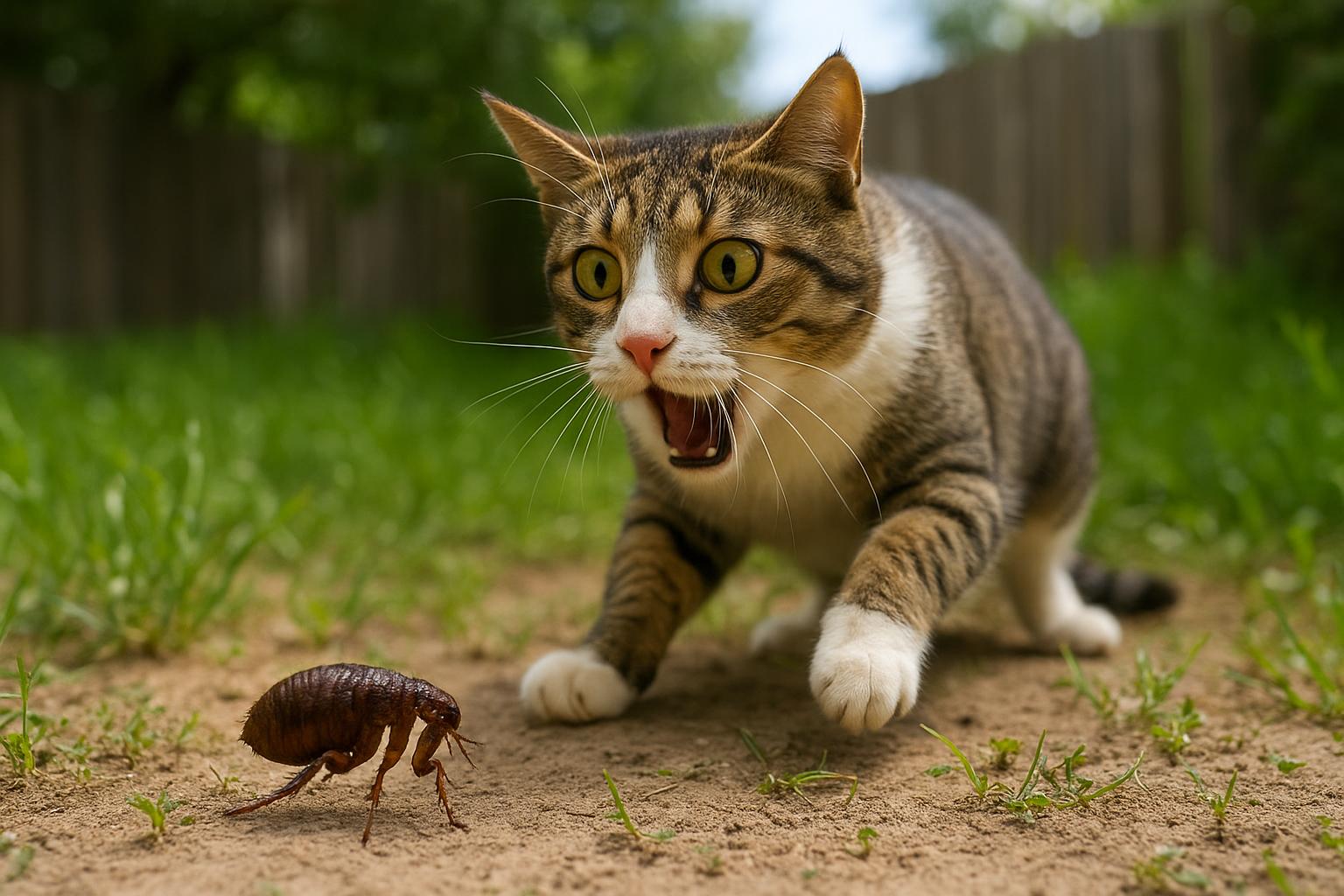
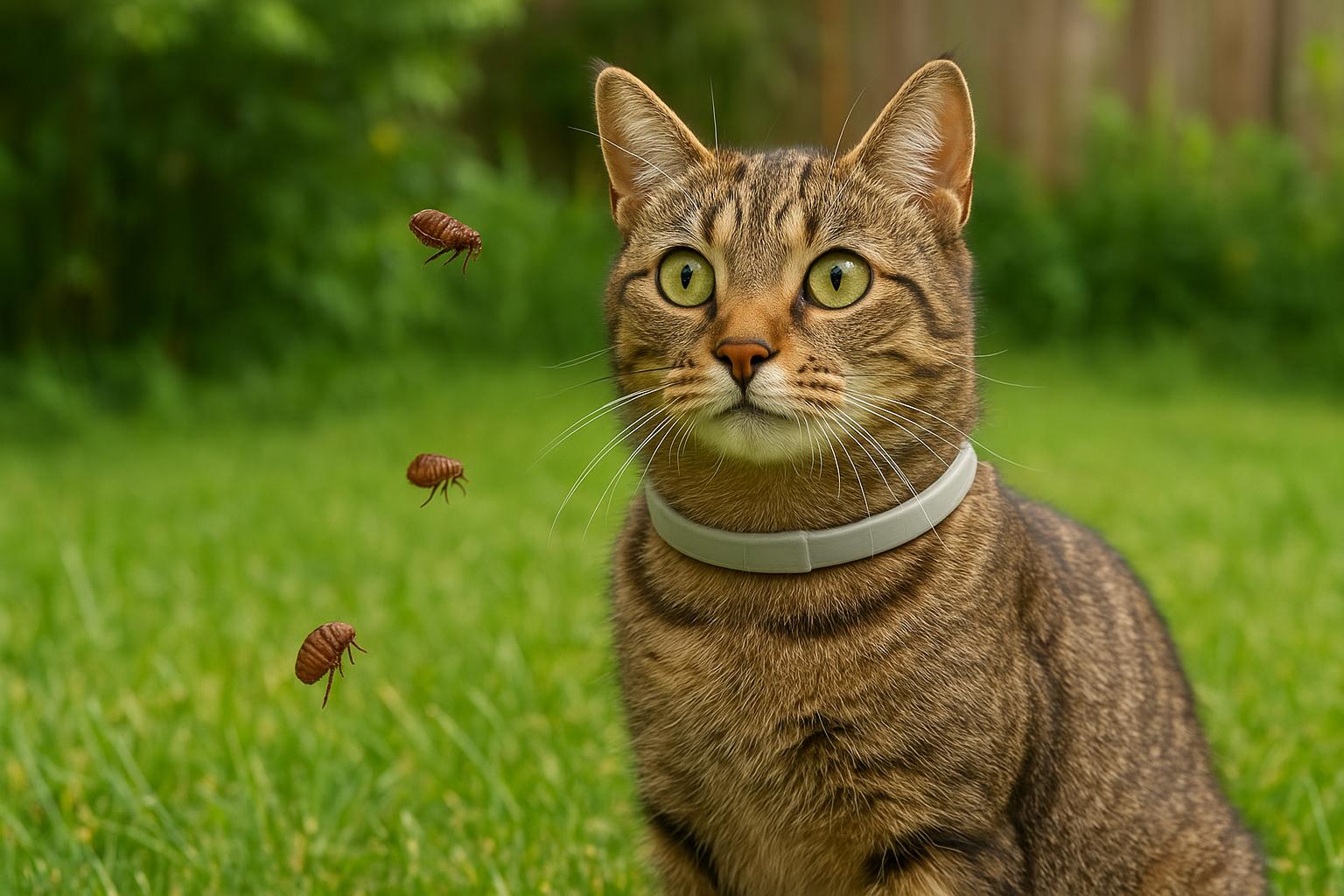
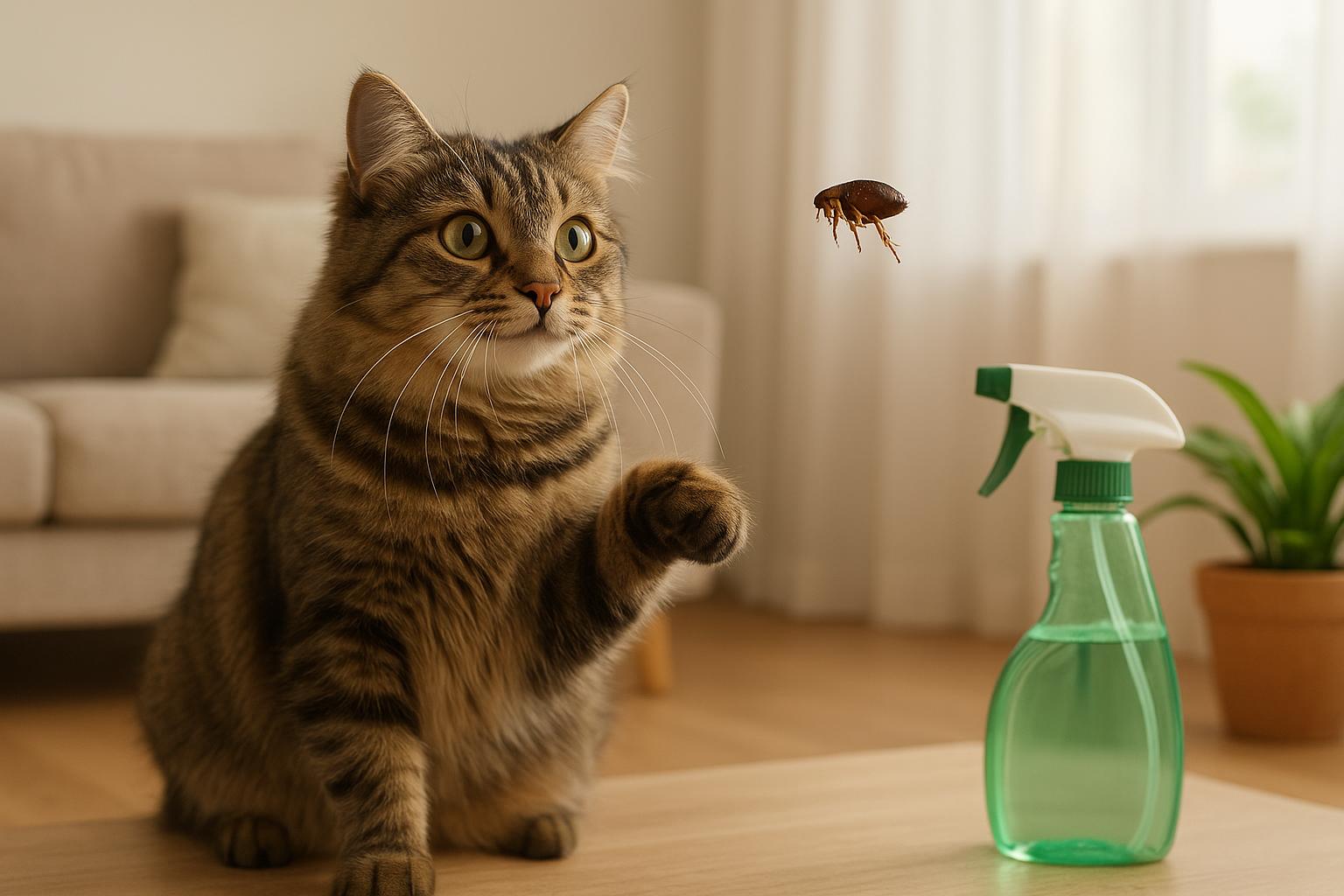
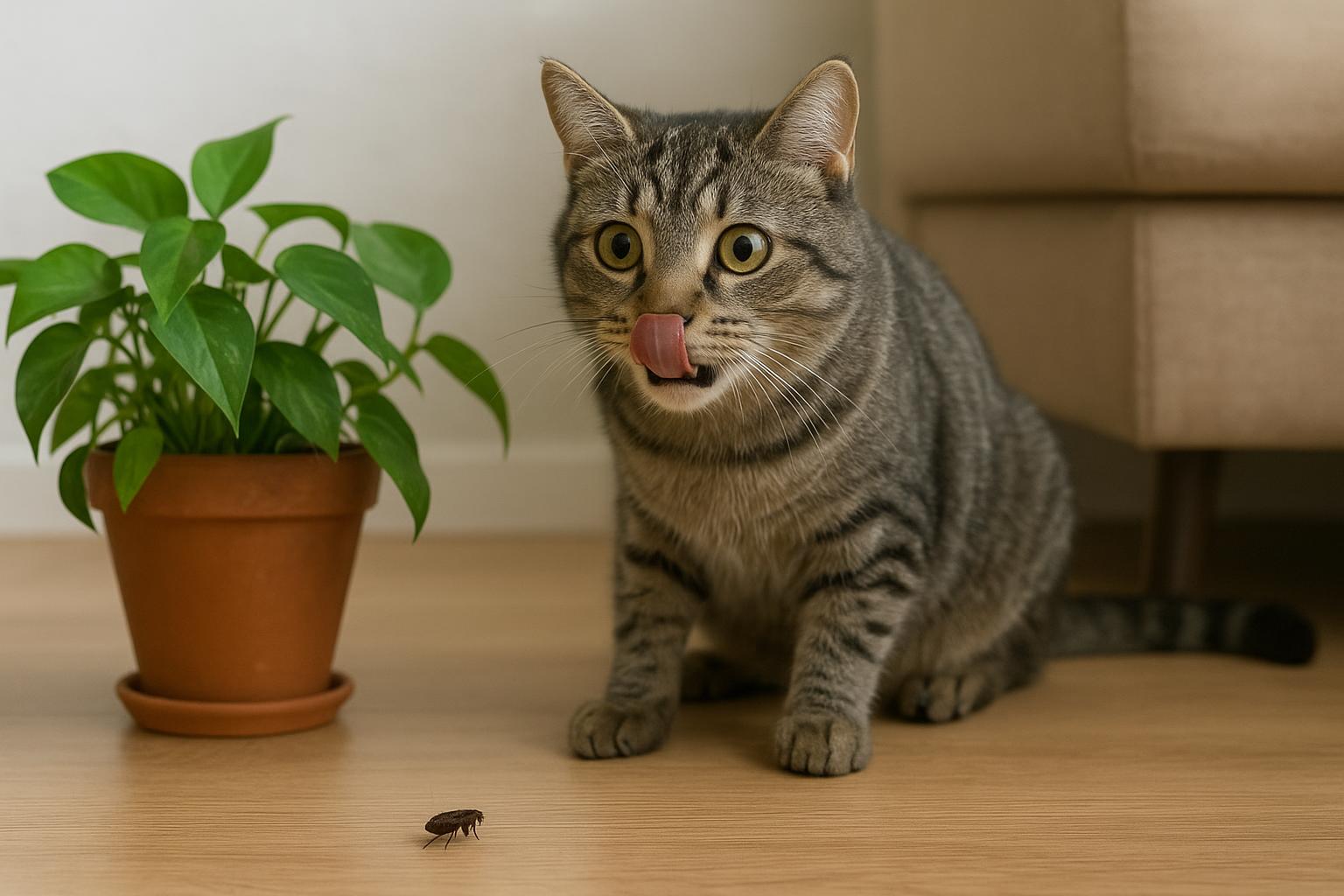
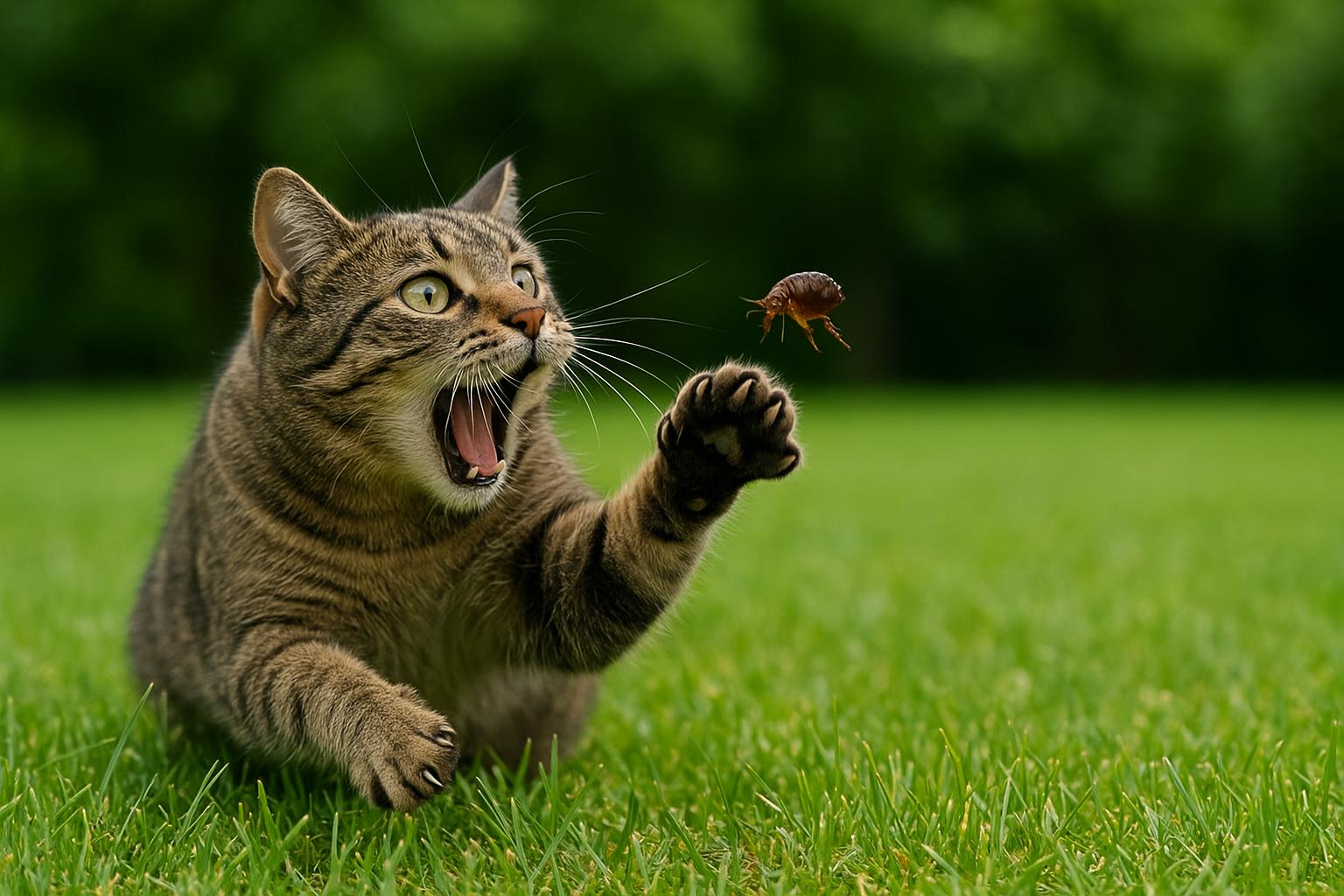
Having an indoor cat doesn’t guarantee a flea-free life. Fleas can hitch a ride on shoes, other pets, or cardboard left by the door, and suddenly you’re squinting at your sofa wondering when it became a flea nursery. If you’re reading this because you spotted a speck of movement on your cat, welcome—this article focuses on cat fleas indoors and what you can do about them with minimal panic and maximal efficacy.
## Cat Fleas Indoors: Why They Happen
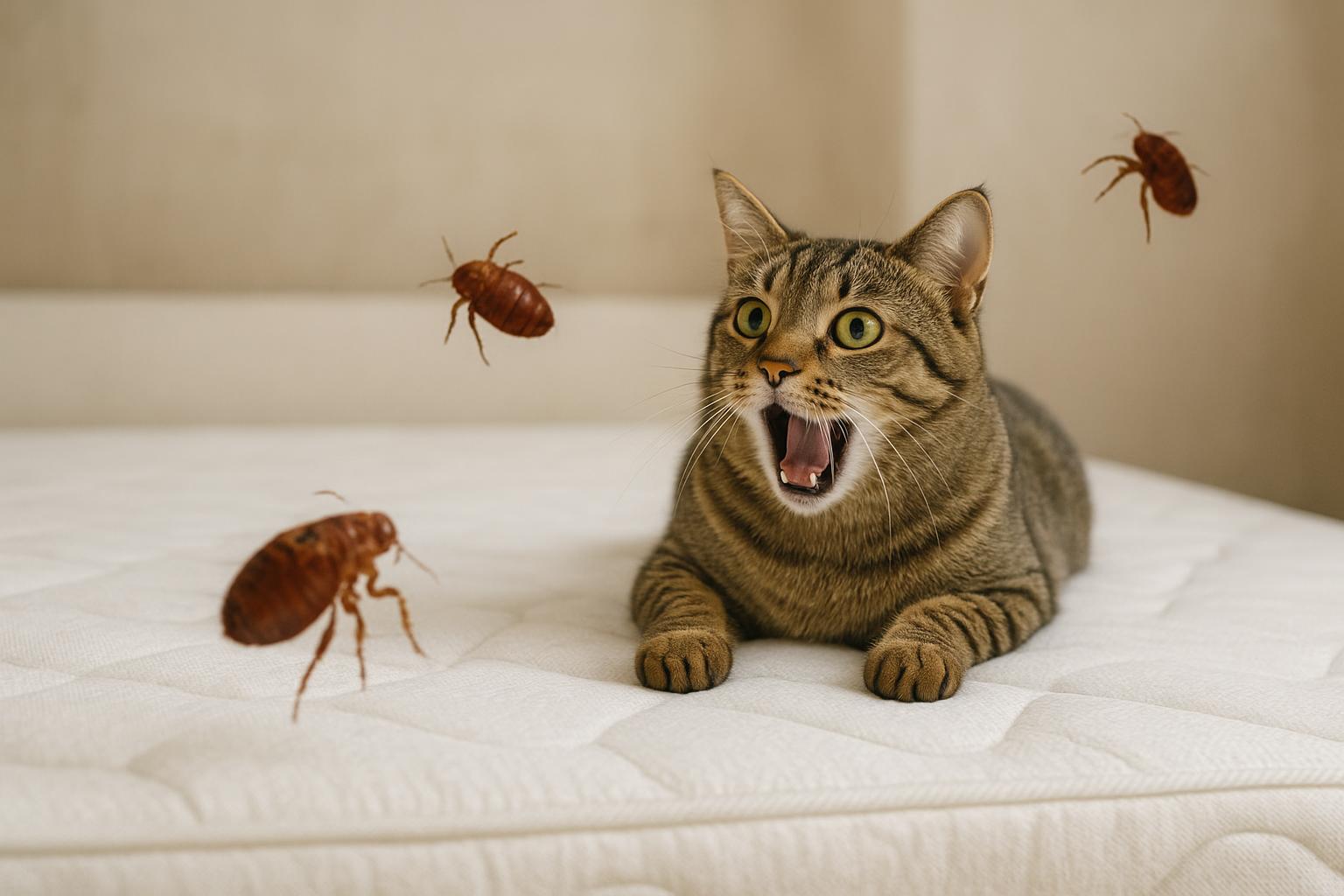
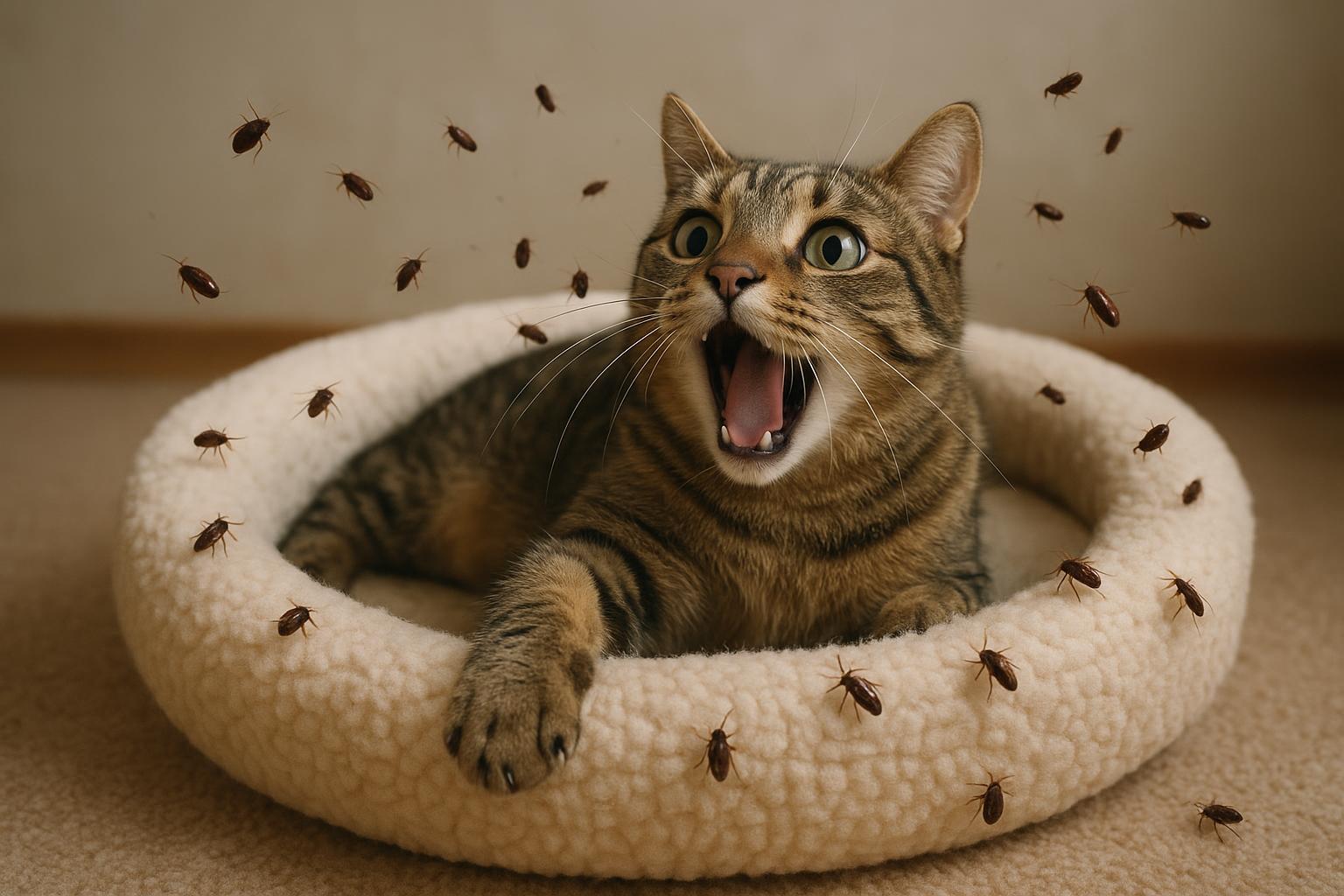
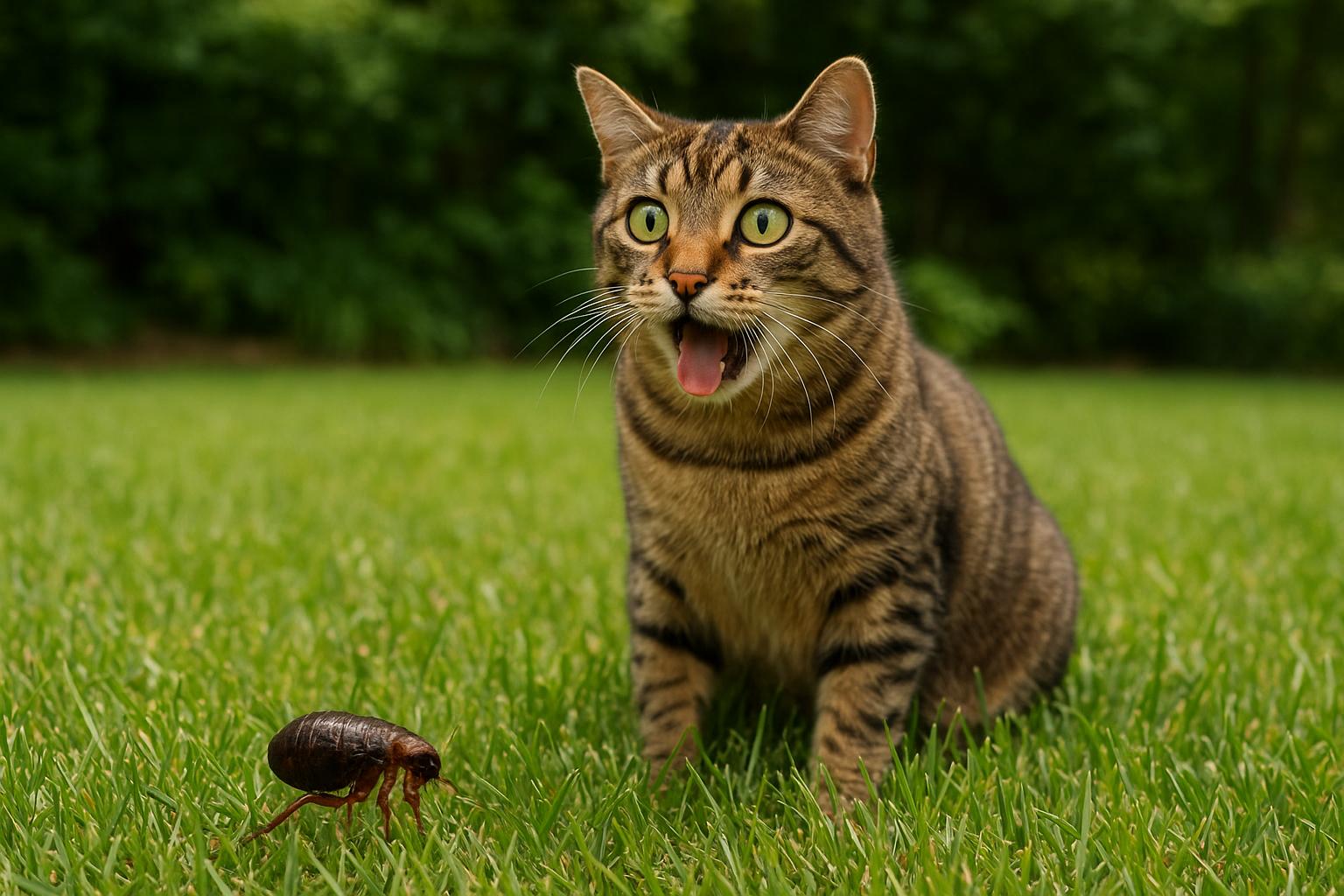
Even strictly indoor cats are at risk. Adult fleas live on the animal, but eggs, larvae and pupae fall into carpets, upholstery, and cracks in the floor. Your living room can provide the warmth and humidity that fleas need to thrive, and once egg-laying starts, a tiny problem can grow surprisingly quickly. The presence of other pets, visitors, or even packages can introduce fleas, and because of the resilient pupal stage, cat fleas indoors can persist long after an initial cleanup.
### Recognizing The Signs
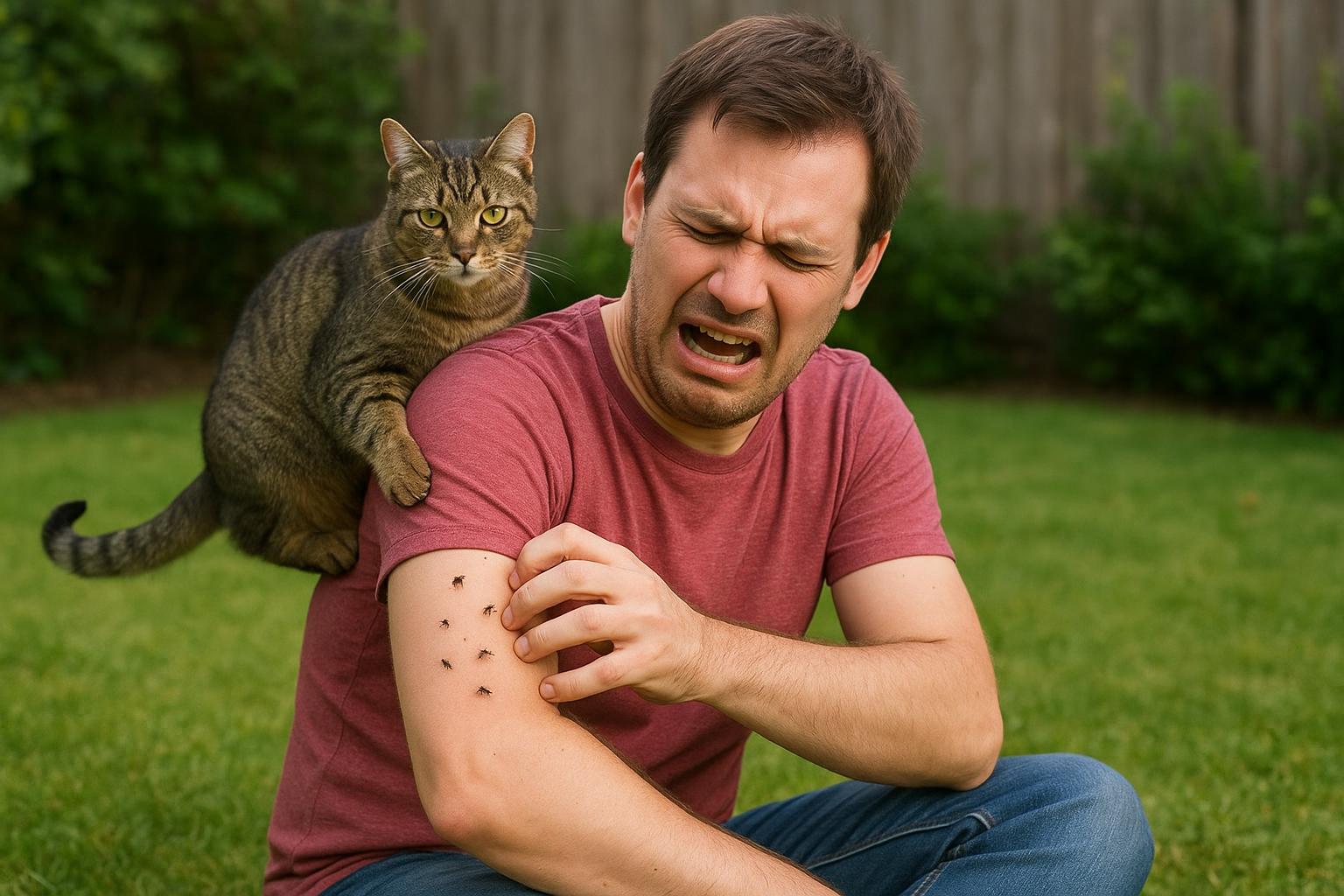
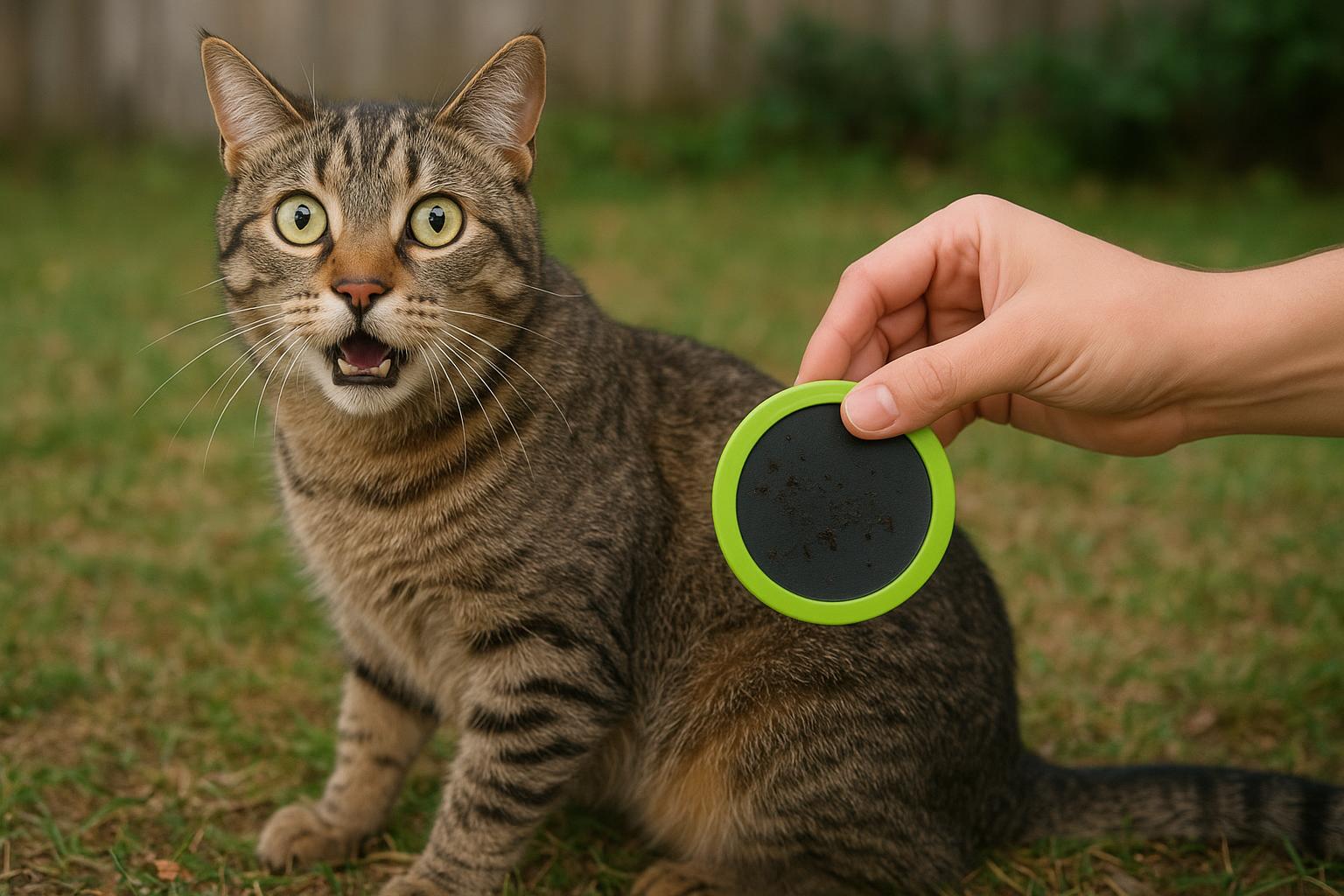
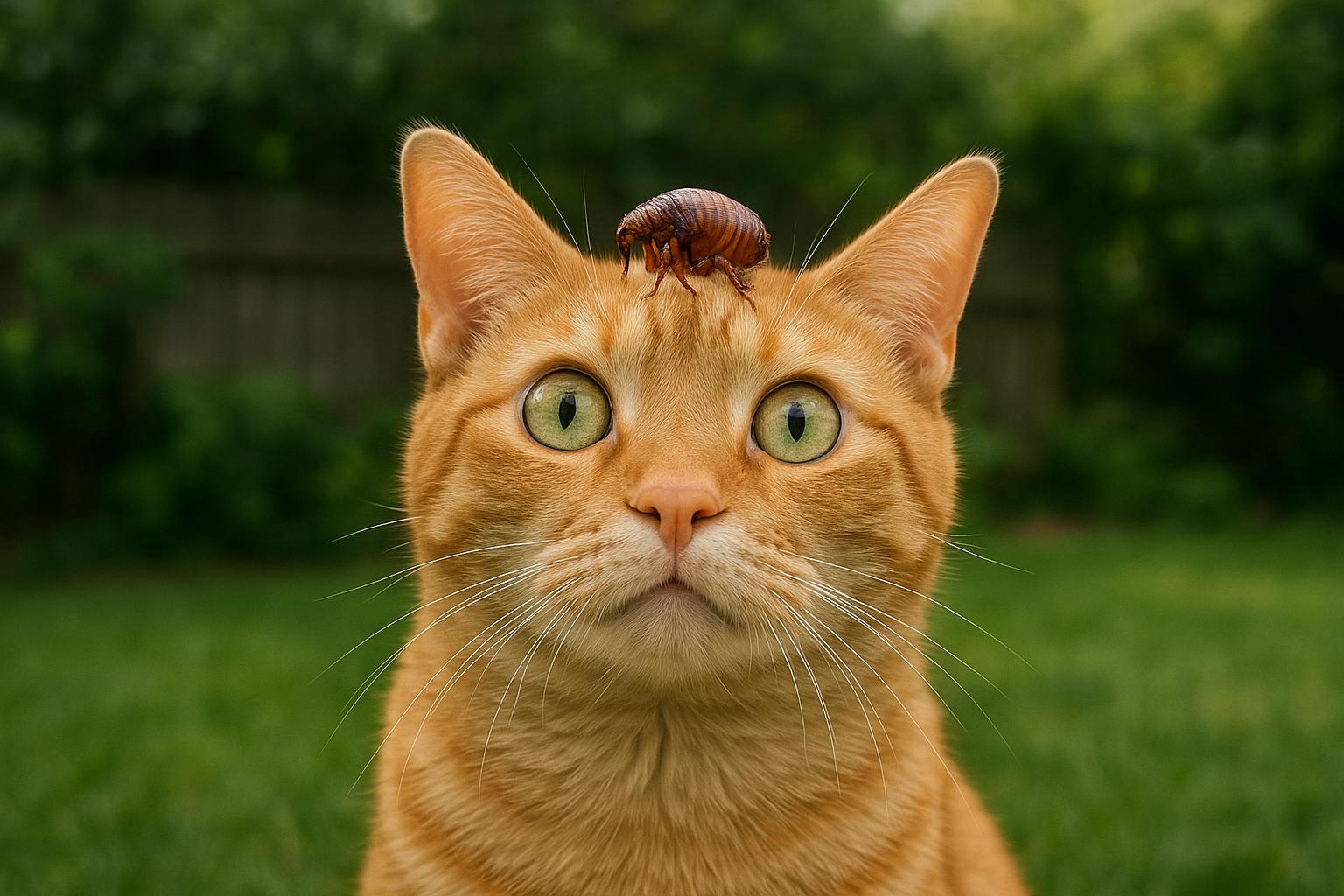
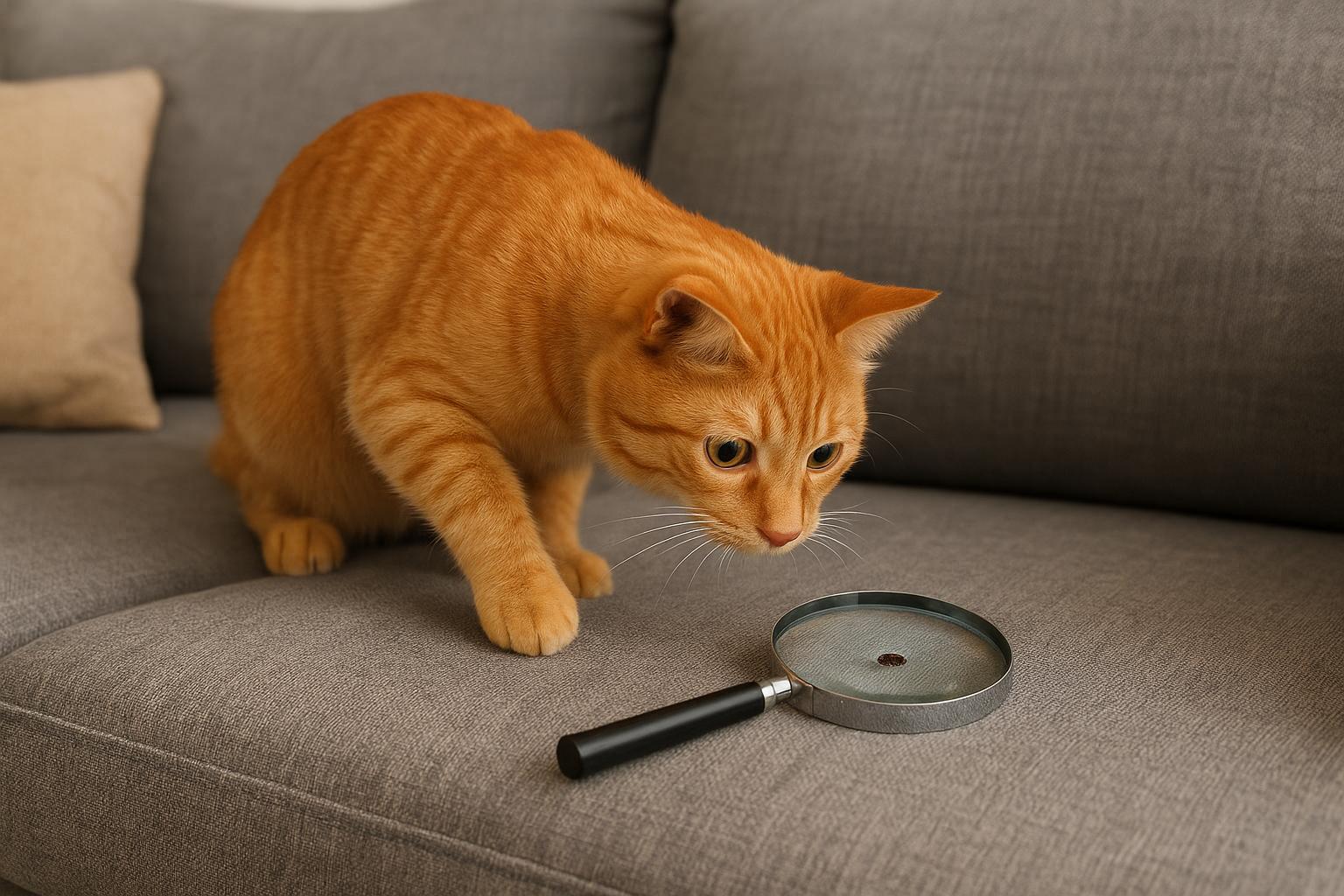
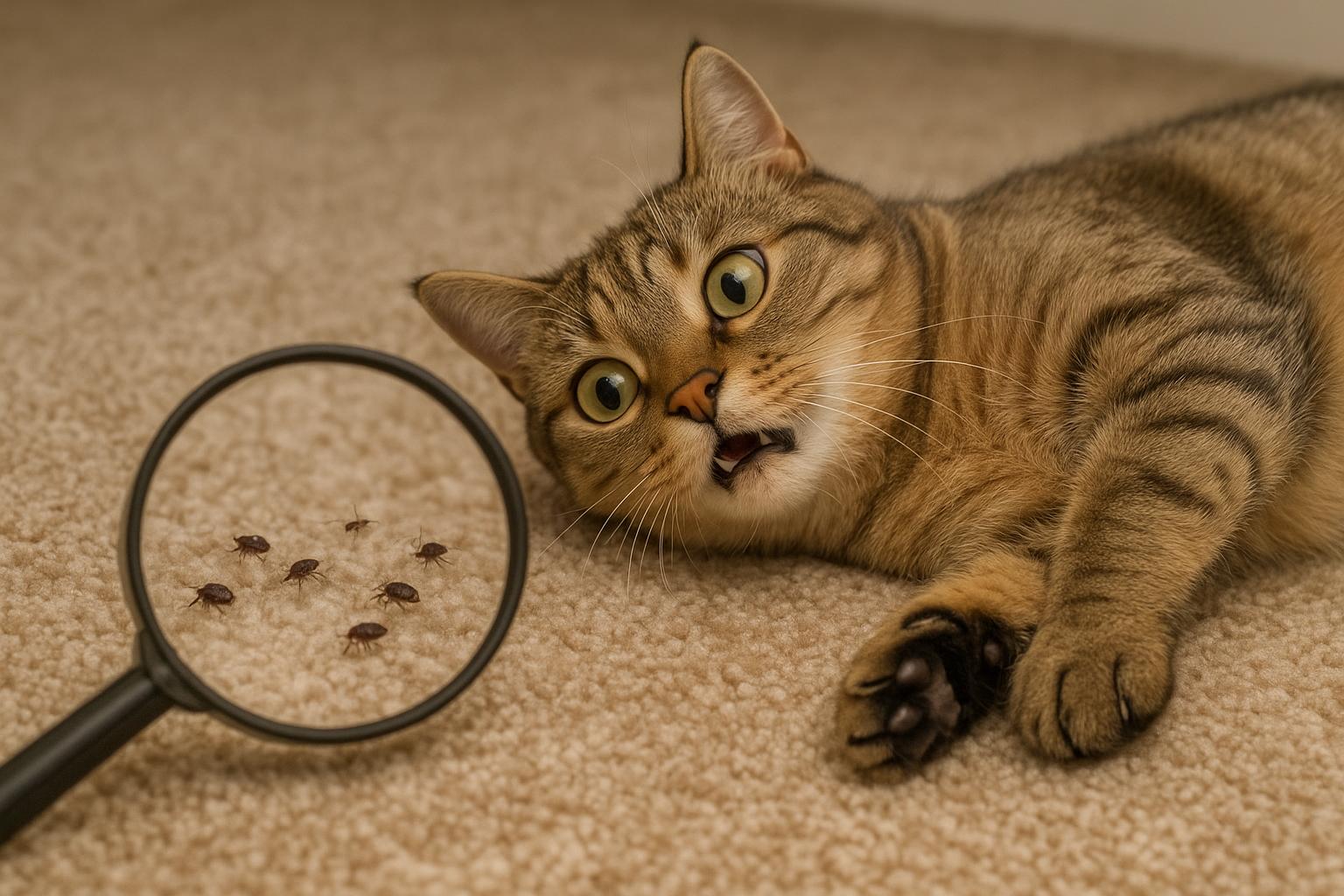
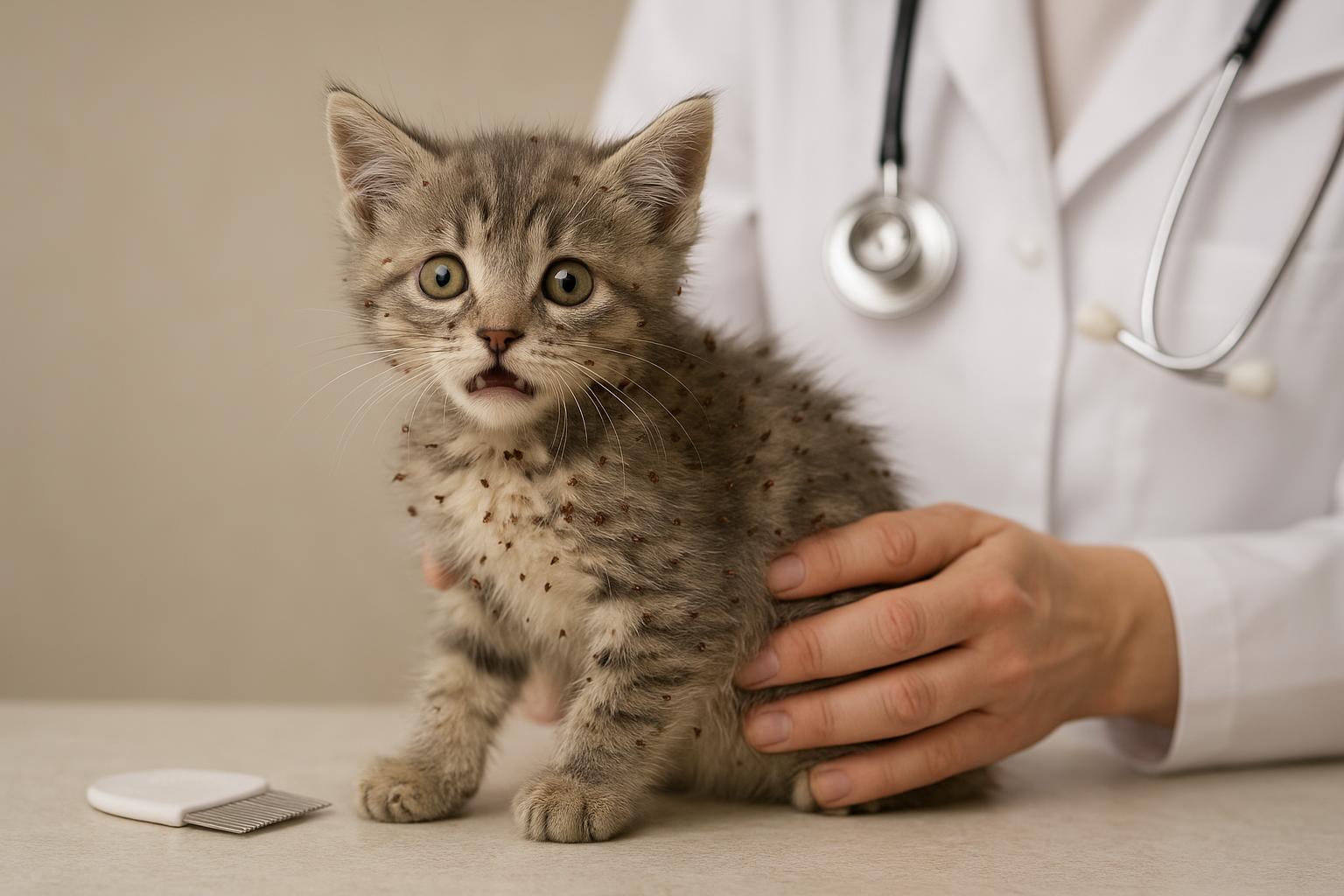
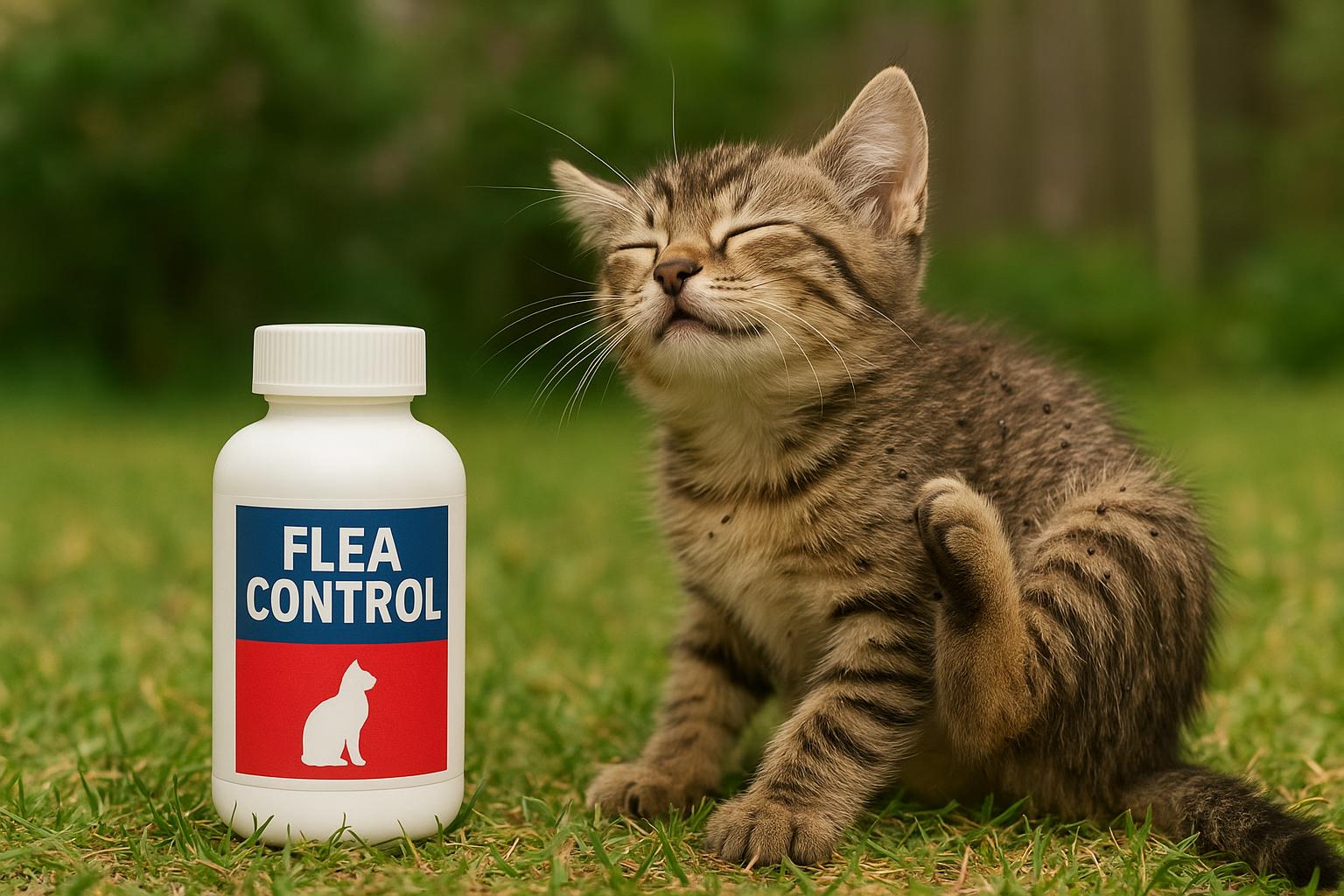
Cats with fleas will scratch, groom obsessively, or develop red, irritated skin. You might see tiny black specks—flea dirt—on your cat’s skin or on bedding. Flea bites on humans are often clustered on the ankles and lower legs. If you part the hair near the base of the tail and spot small, fast-moving insects, that’s a clear indicator. Pay attention to areas where your cat spends the most time: beds, couches, carpets, and under furniture are prime real estate for flea development.
### Flea Life Cycle Simplified
Understanding the flea life cycle explains why a single treatment rarely solves the problem. Eggs drop off the host and hatch into larvae in the environment. Larvae avoid light, feed on organic debris (including adult flea feces), then spin cocoons and enter the pupal stage. Pupae are protected and can remain dormant for months, only emerging when vibrations or carbon dioxide indicate a host is near. This is why cat fleas indoors can feel relentless—you may remove adults, and the next day, fresh adults emerge from pupae.
## Preventing Reinfestation
Preventing future invasions is about removing favorable habitat and keeping your cat protected. Regularly treat all pets on an appropriate flea prevention schedule, wash bedding in hot water, vacuum frequently (especially seams and edges), and reduce clutter and shaded, humid spots where larvae thrive. Inspect packages, plants, and other items brought inside. Environmental humidity control (lowering indoor humidity where possible) can also make your home less hospitable to immature flea stages. Remember, prevention is ongoing; with cat fleas indoors, a one-off deep clean is rarely enough.
## Remedy 1: Home And Environmental Treatment
Below is a structured, formal plan for treating your home environment. Follow product instructions carefully and consult a veterinarian or pest-control professional if you’re unsure about a product’s safety around cats. Do not use insecticides intended for dogs (e.g., permethrin-based treatments) on cats—these can be toxic.
### Materials Required
– Powerful vacuum cleaner with crevice tool and disposable bag or emptying method
– Laundry detergent and access to hot water and a hot dryer
– Steam cleaner (optional but effective)
– Pet-safe household flea spray labeled for indoor use and containing an IGR (e.g., pyriproxyfen or methoprene) and an adulticide appropriate for indoor pet homes (always read labels)
– Food-grade diatomaceous earth (optional; use sparingly and as directed) or a silica-based product labeled for indoor pest control
– Trash bags and gloves
– Door mats and shoe-removal routine materials (optional)
– Time and schedule for repeated actions
### Step-By-Step Application
1. Isolate Pet Areas: Remove your cat temporarily to a safe, treated room or with veterinary-approved flea medication before heavy treatment begins.
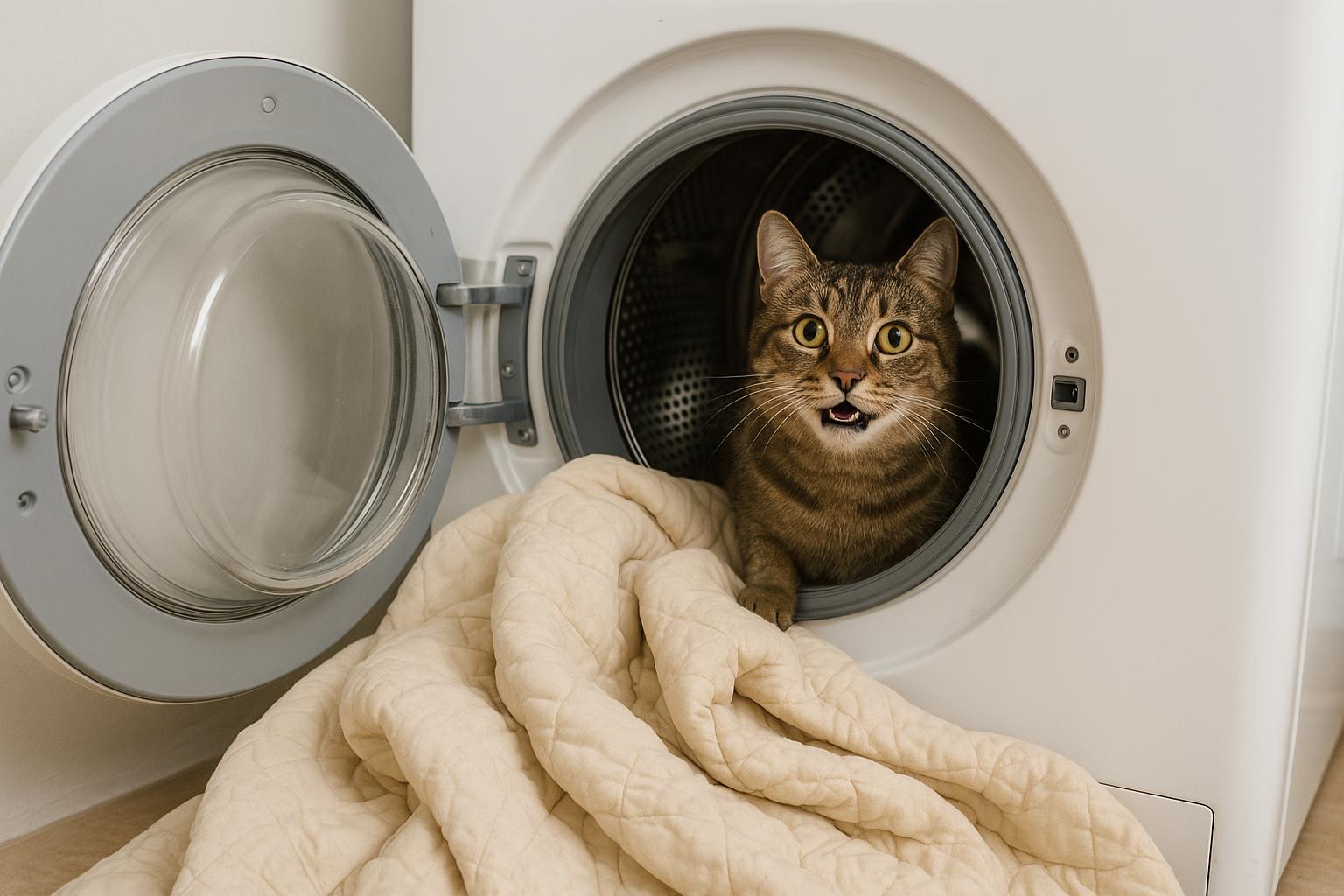
2. Wash Bedding: Wash all pet bedding, throw blankets, and removable covers in the hottest temperature safe for the fabric and dry on high for at least 30 minutes. This kills eggs and larvae.
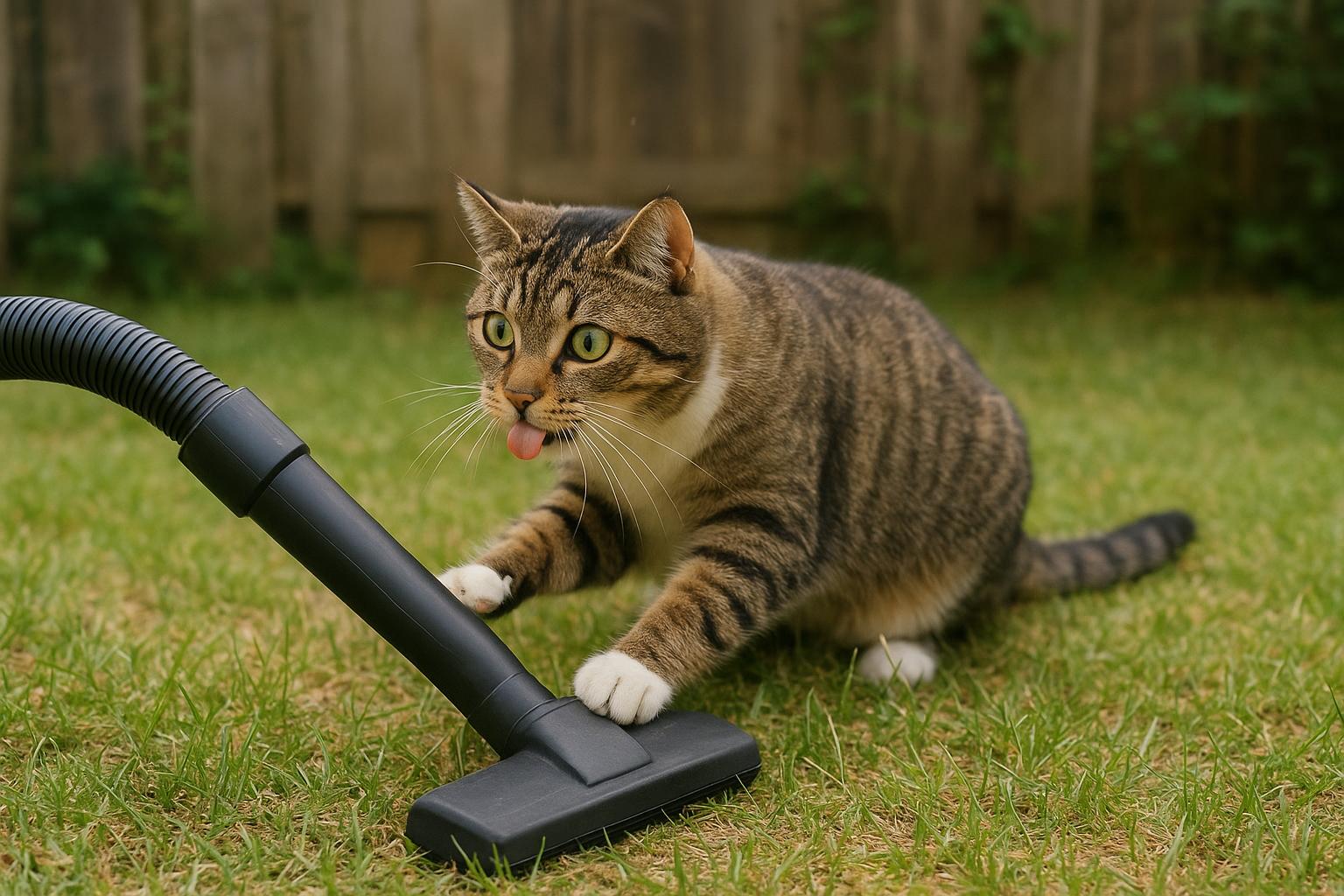
3. Vacuum Thoroughly: Vacuum carpets, rugs, upholstery, baseboards, and under furniture. Use the crevice tool for edges and seams. Pay special attention to the areas your cat frequents. Immediately remove and seal vacuum contents in a trash bag and discard outside to prevent re-infestation from eggs or larvae.
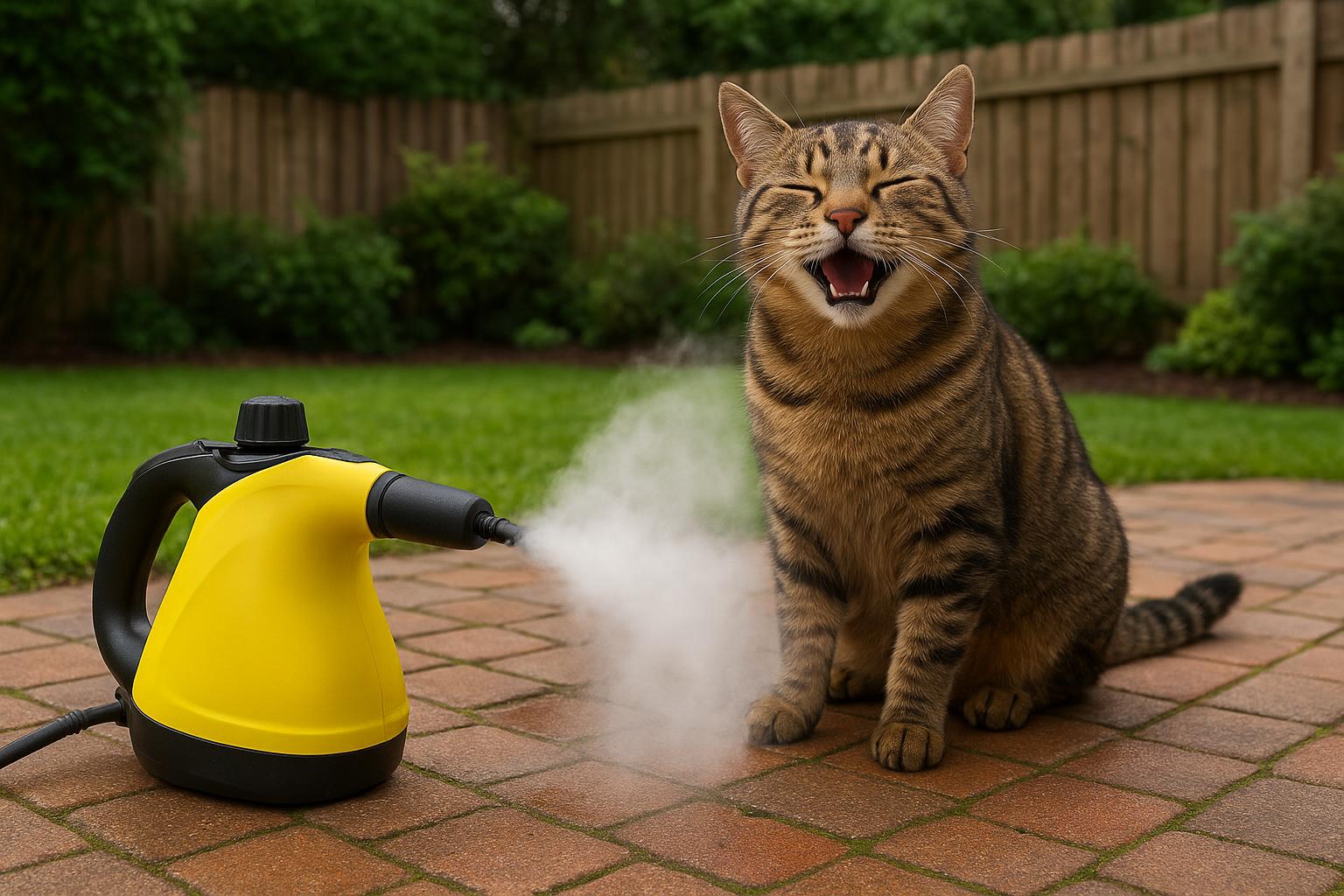
4. Steam Clean Where Practical: Steam cleaning carpets and upholstery adds heat to kill eggs and larvae in deep fabric layers. Follow the steam cleaner manufacturer’s safety instructions.
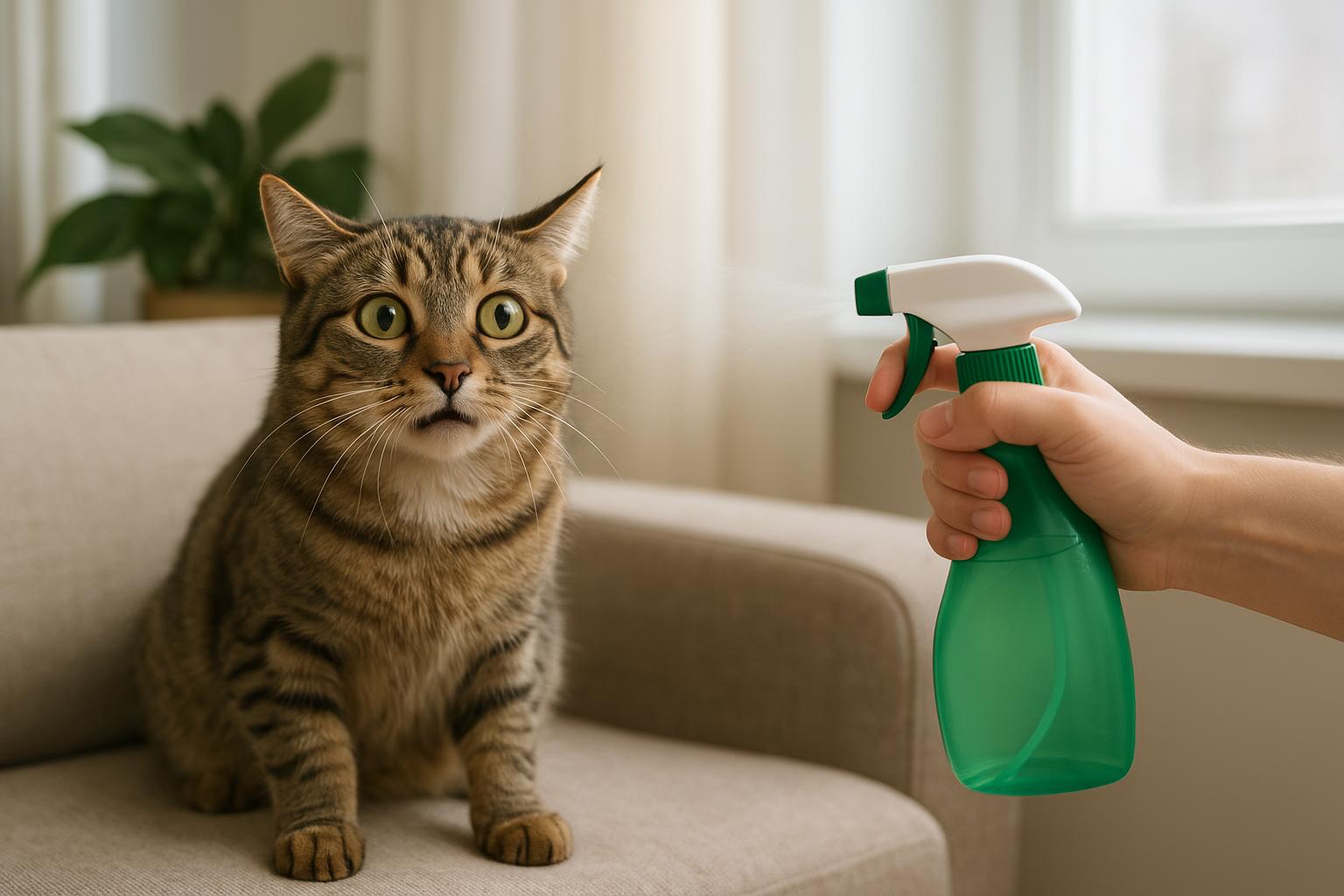
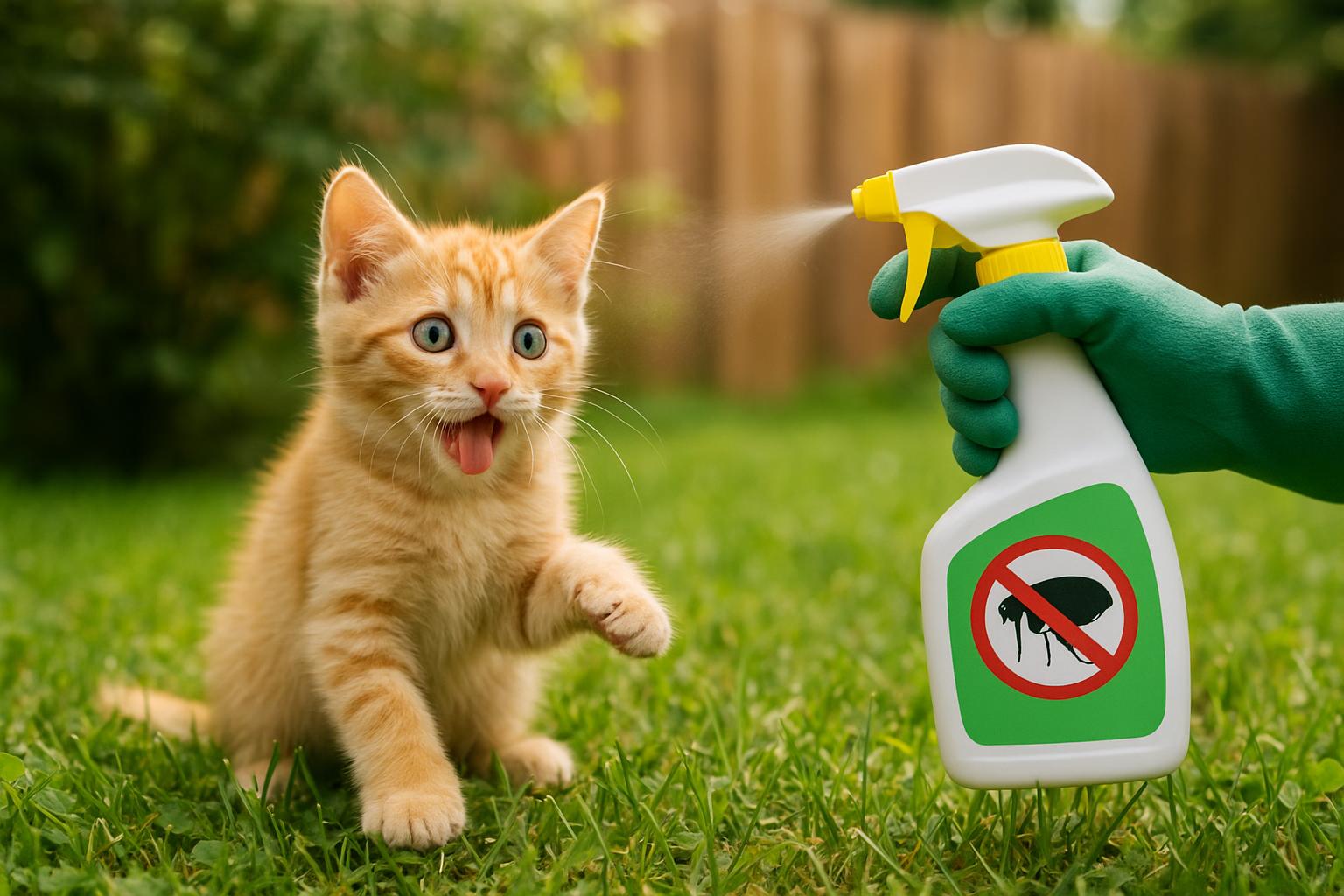
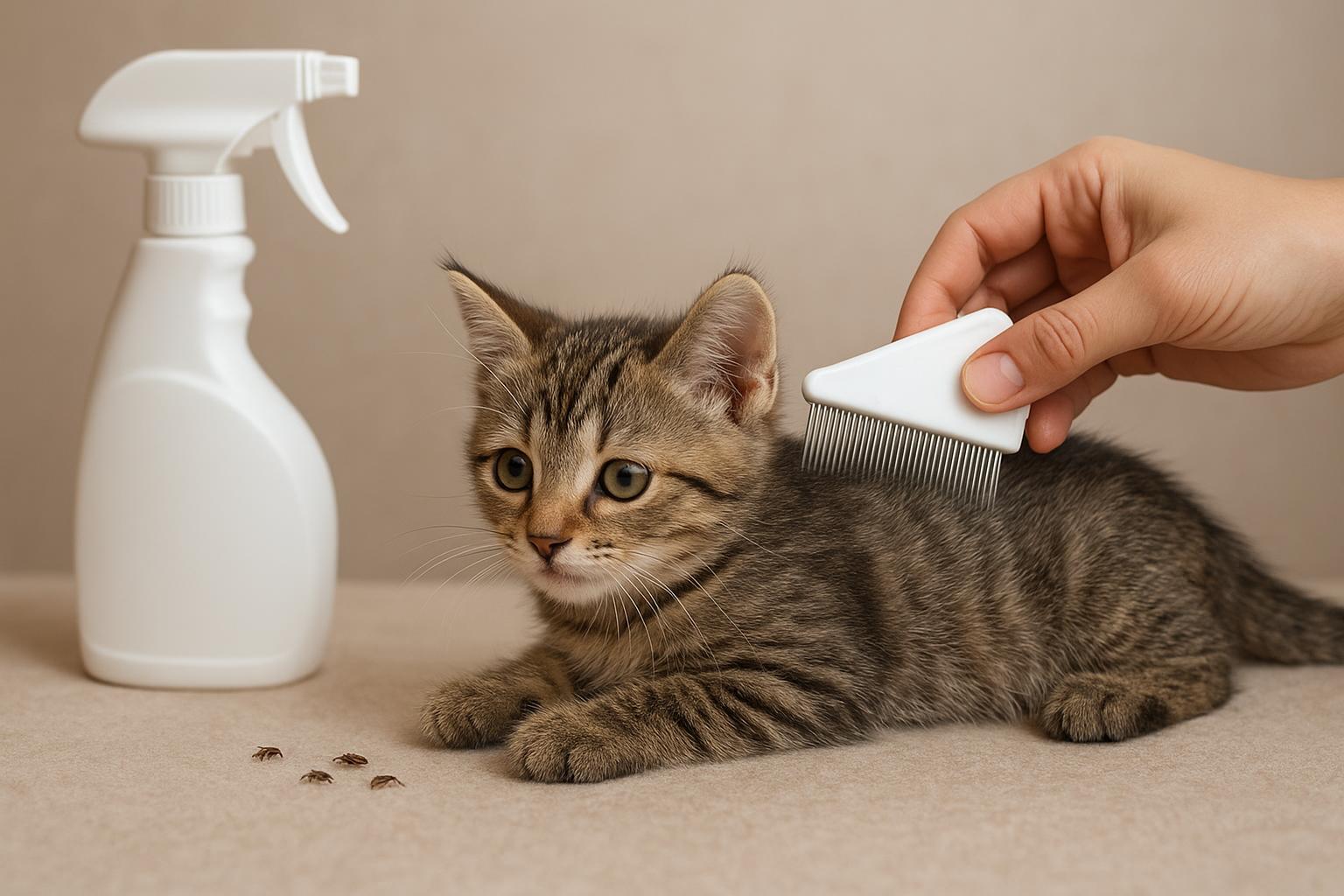
5. Apply Approved Indoor Spray: Use a household flea spray that contains both an adulticide and an IGR. Treat carpets, upholstery, and baseboards, focusing on hiding spots and under furniture. Avoid directly spraying your cat. Ensure adequate ventilation and keep pets and children away until surfaces dry as directed by the product label.
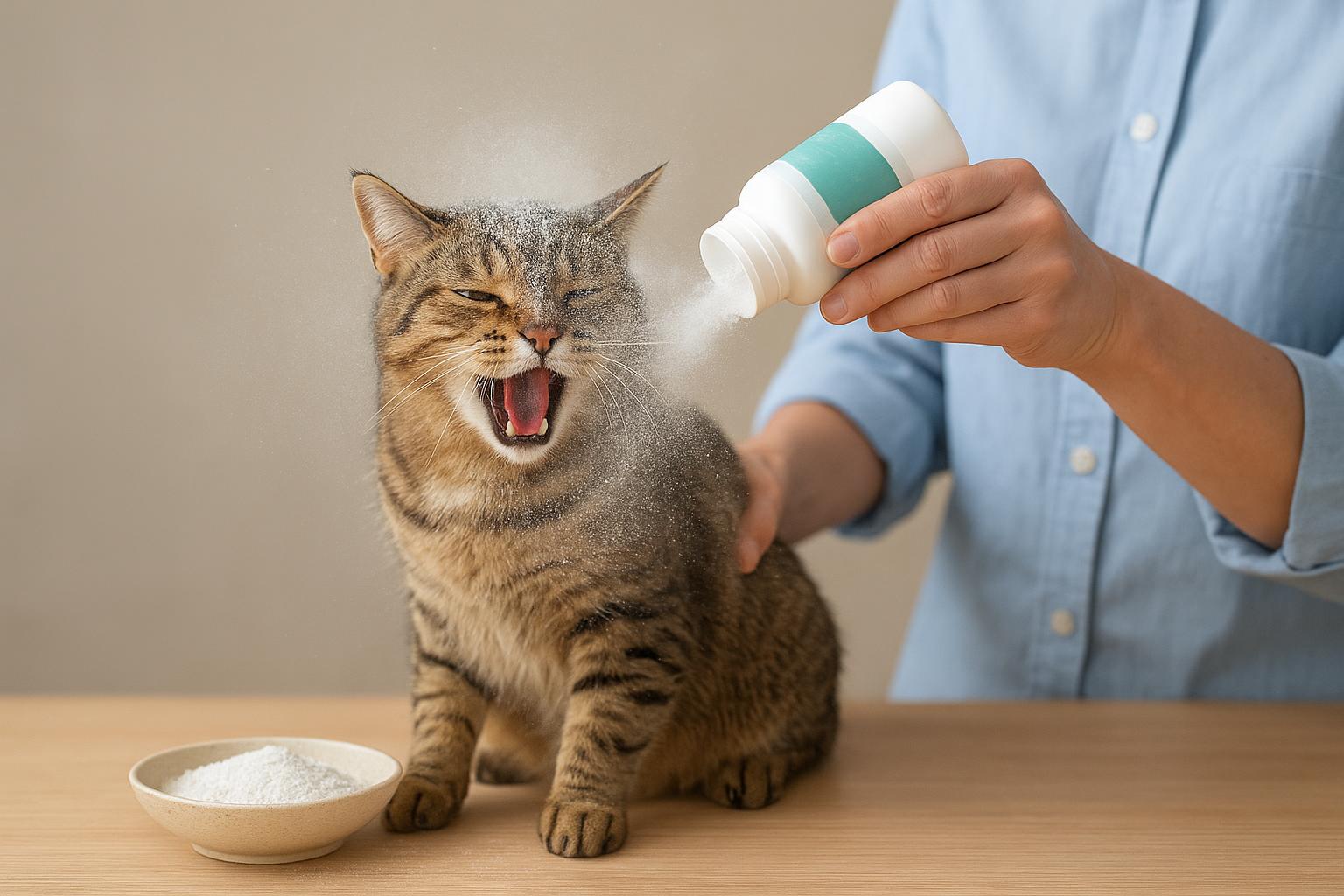
6. Treat Hard-To-Reach Areas: If using diatomaceous earth or a silica product, apply very lightly to cracks and crevices per product instructions. Wear a dust mask and avoid over-application—these are abrasive and can irritate airways.
7. Repeat Schedule: Because pupae can survive treatment, repeat vacuuming daily for 2 weeks, then several times a week for a month. Reapply sprays per label directions—often two applications 2–3 weeks apart are recommended to catch emerging adults.
8. Monitor: Use flea traps or sticky pads near floor-level to detect ongoing adult activity. If adult fleas persist beyond two months of diligent environmental control and pet treatment, consult a pest professional.
## Remedy 2: Veterinary Treatments
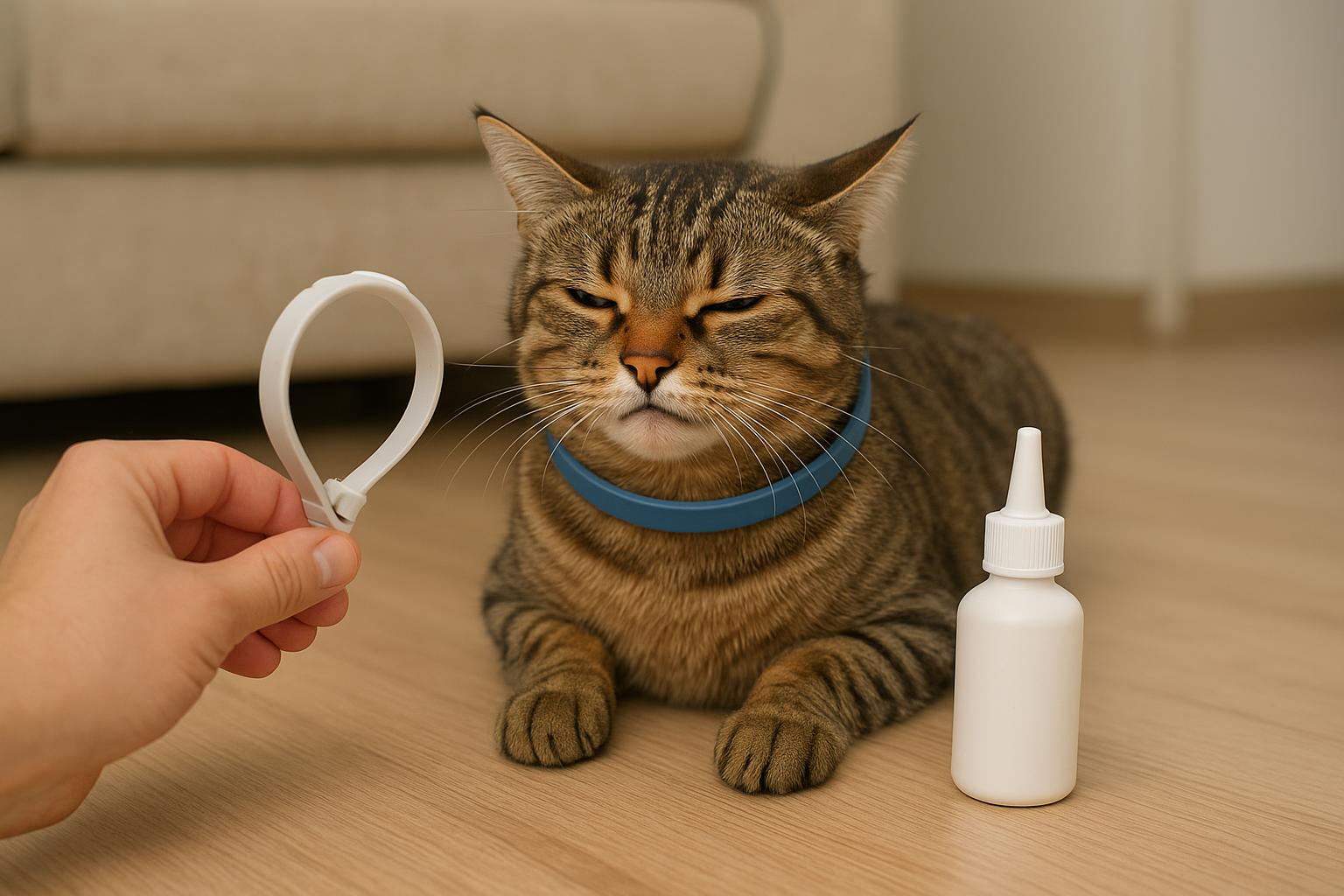
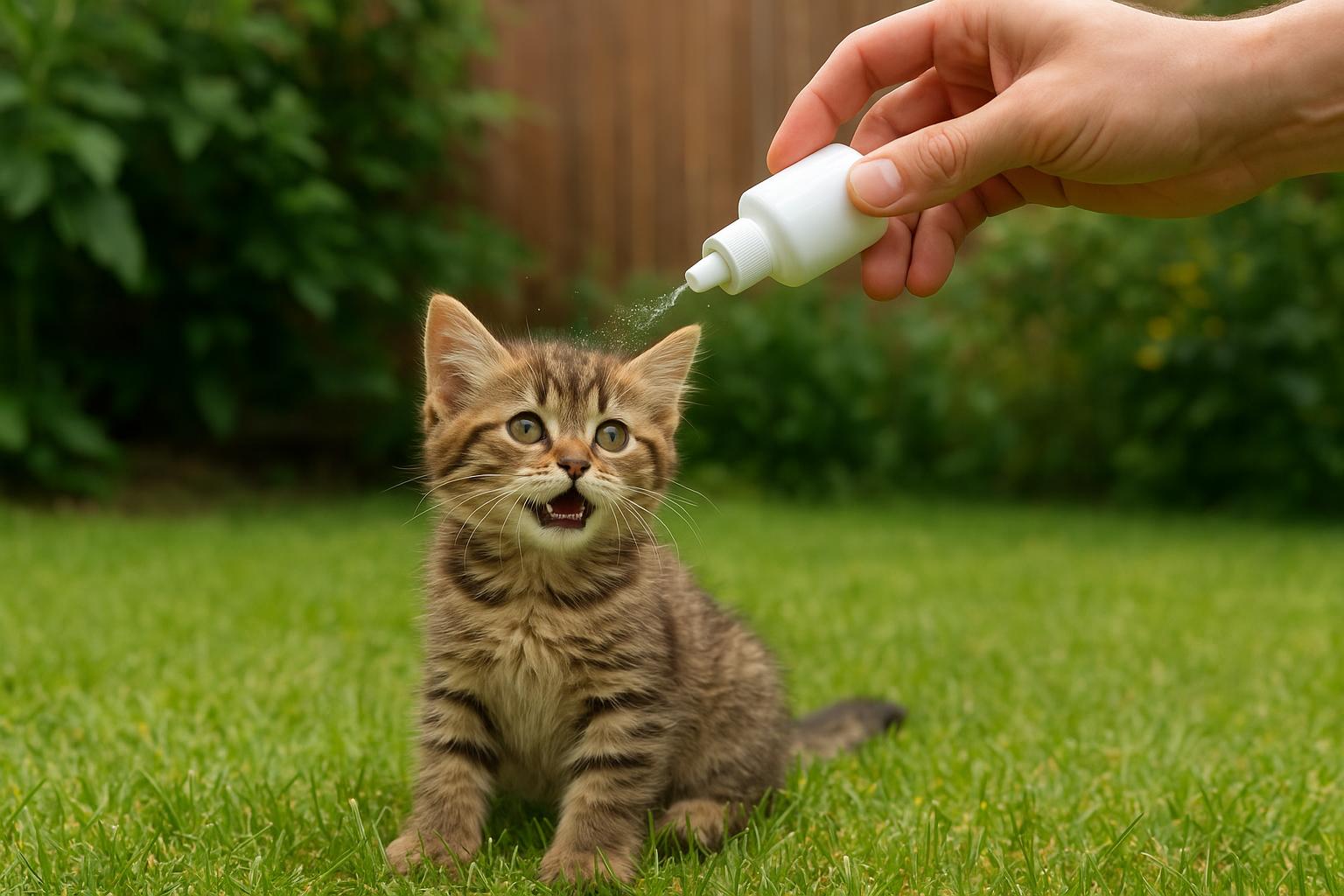
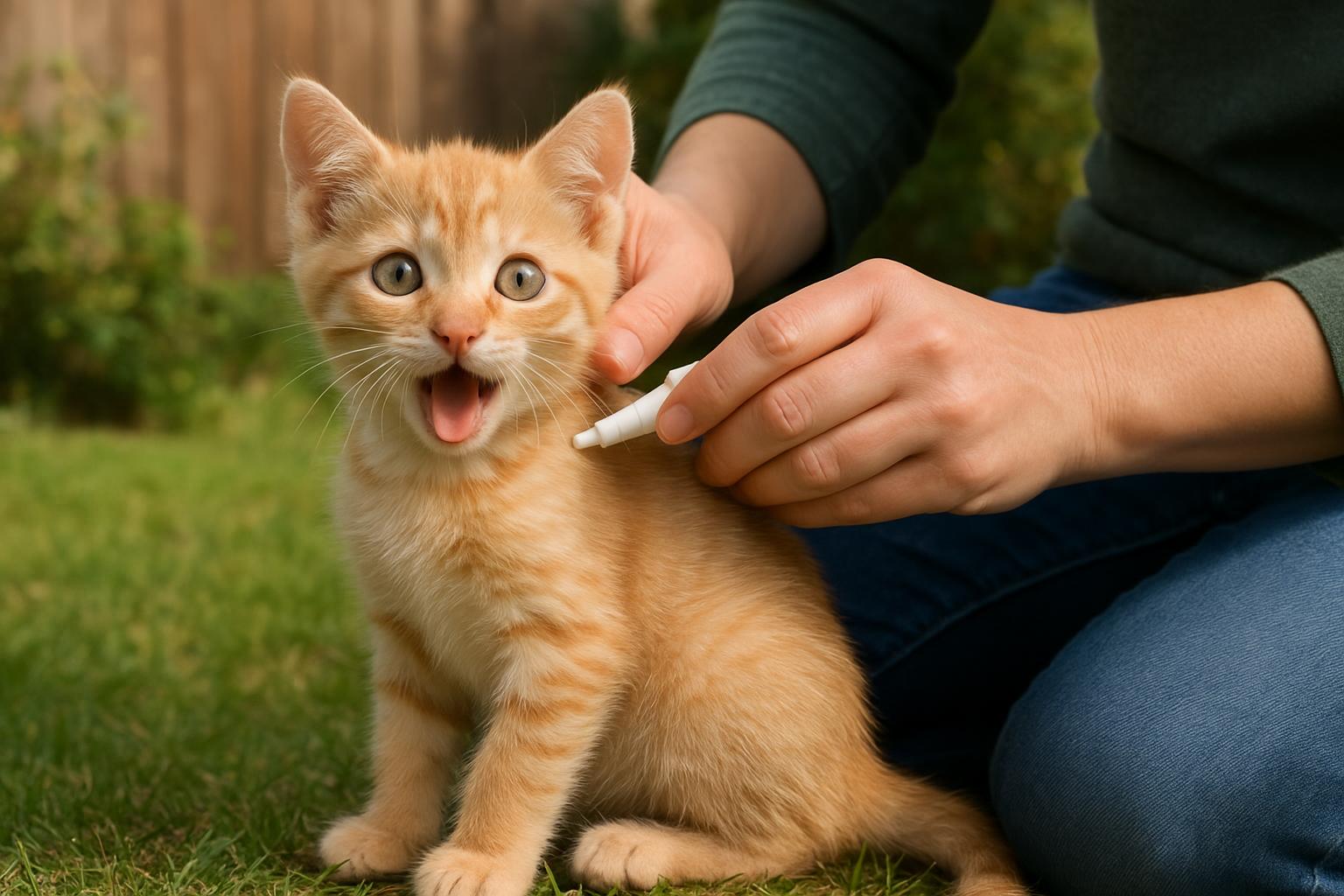
Professional flea control on the animal is the fastest and most reliable way to stop biting adults and break the life cycle. Veterinary products are formulated with safety and efficacy in mind; always consult your veterinarian for the best agent for your cat’s age, weight, and health status.
### Materials Required
– Veterinary appointment or telemedicine consult
– Prescribed flea control medication(s) such as:
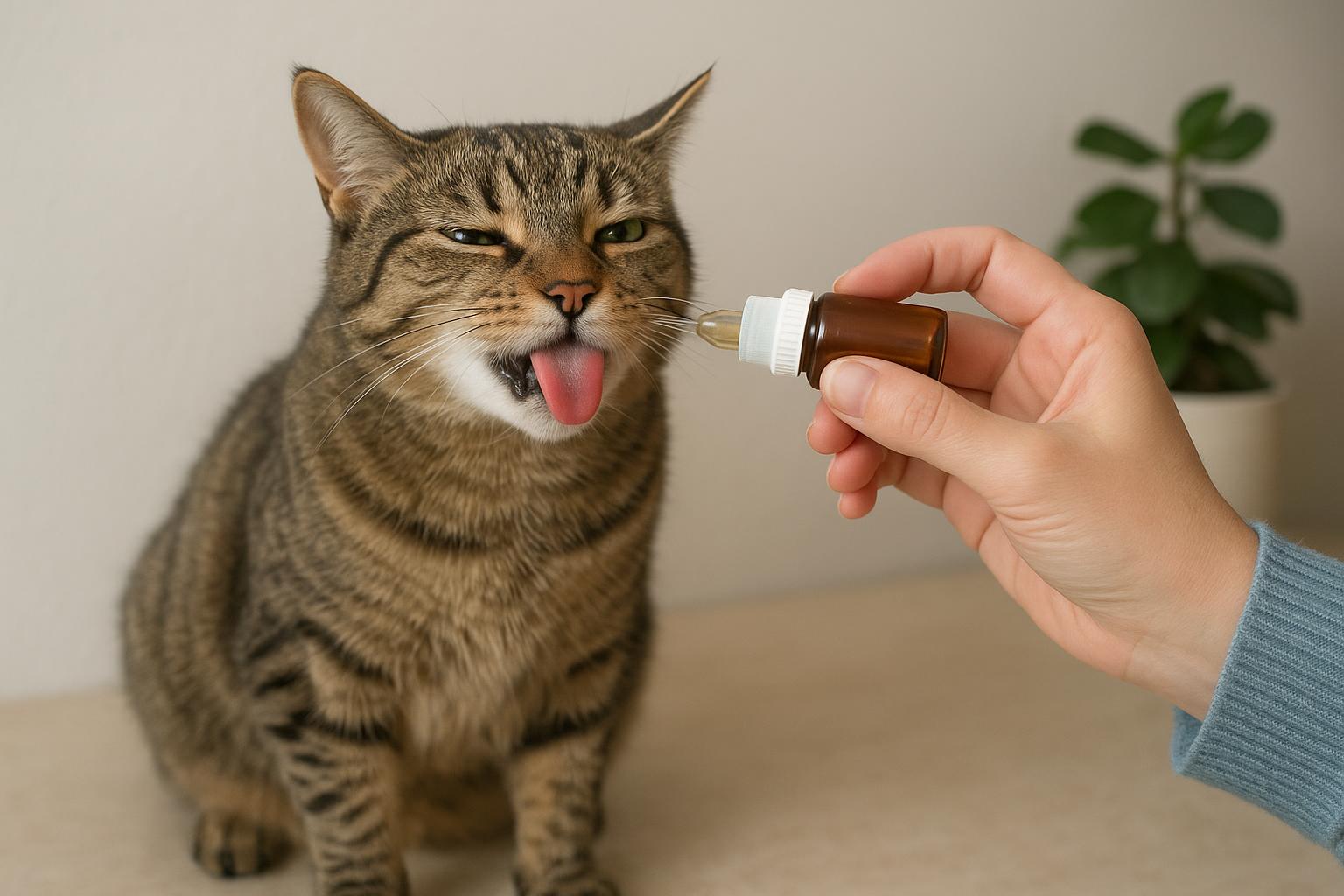
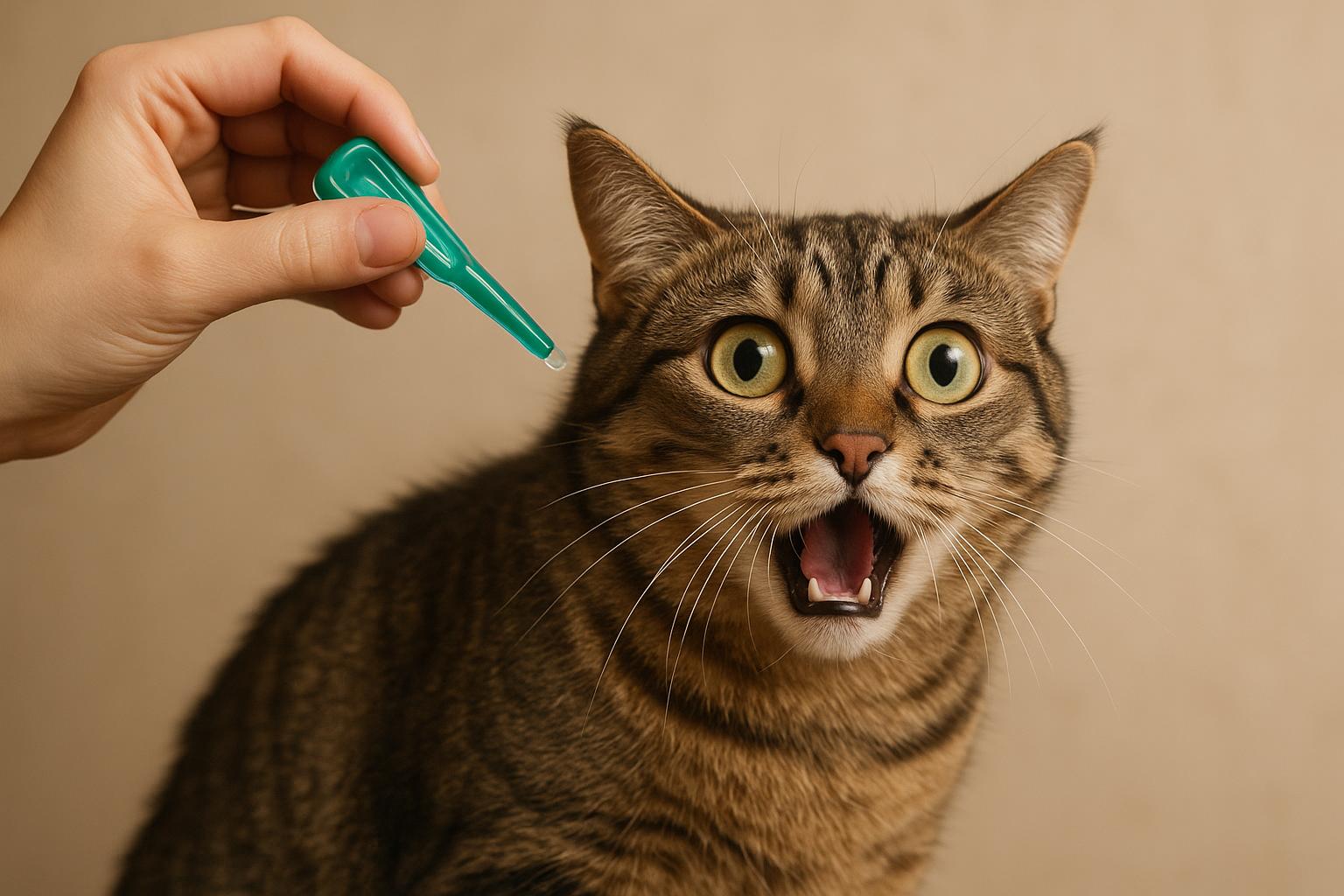
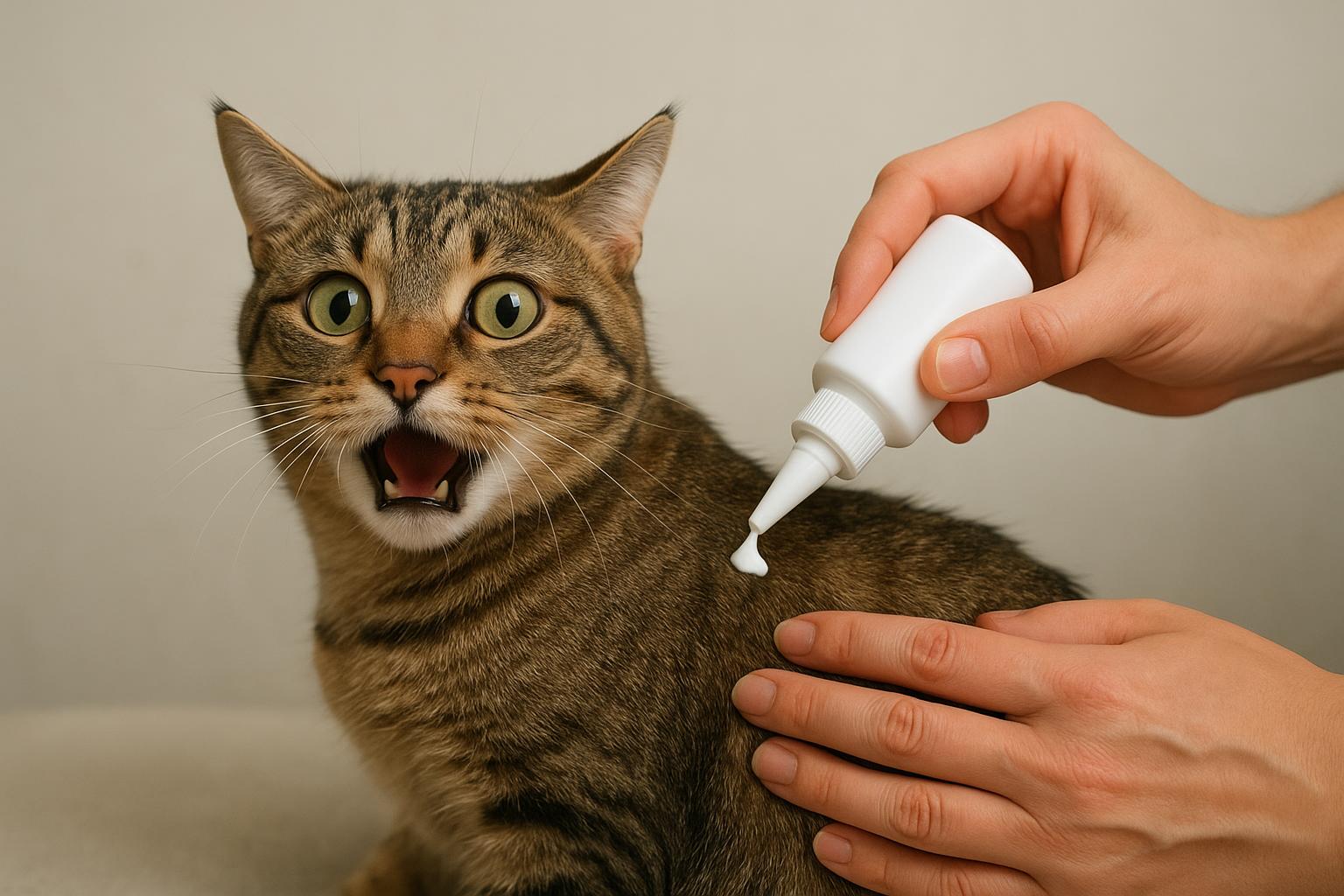
– Monthly topical agents (e.g., selamectin, imidacloprid combined formulas) or
– Oral systemic agents (e.g., fluralaner, sarolaner) for longer-duration protection
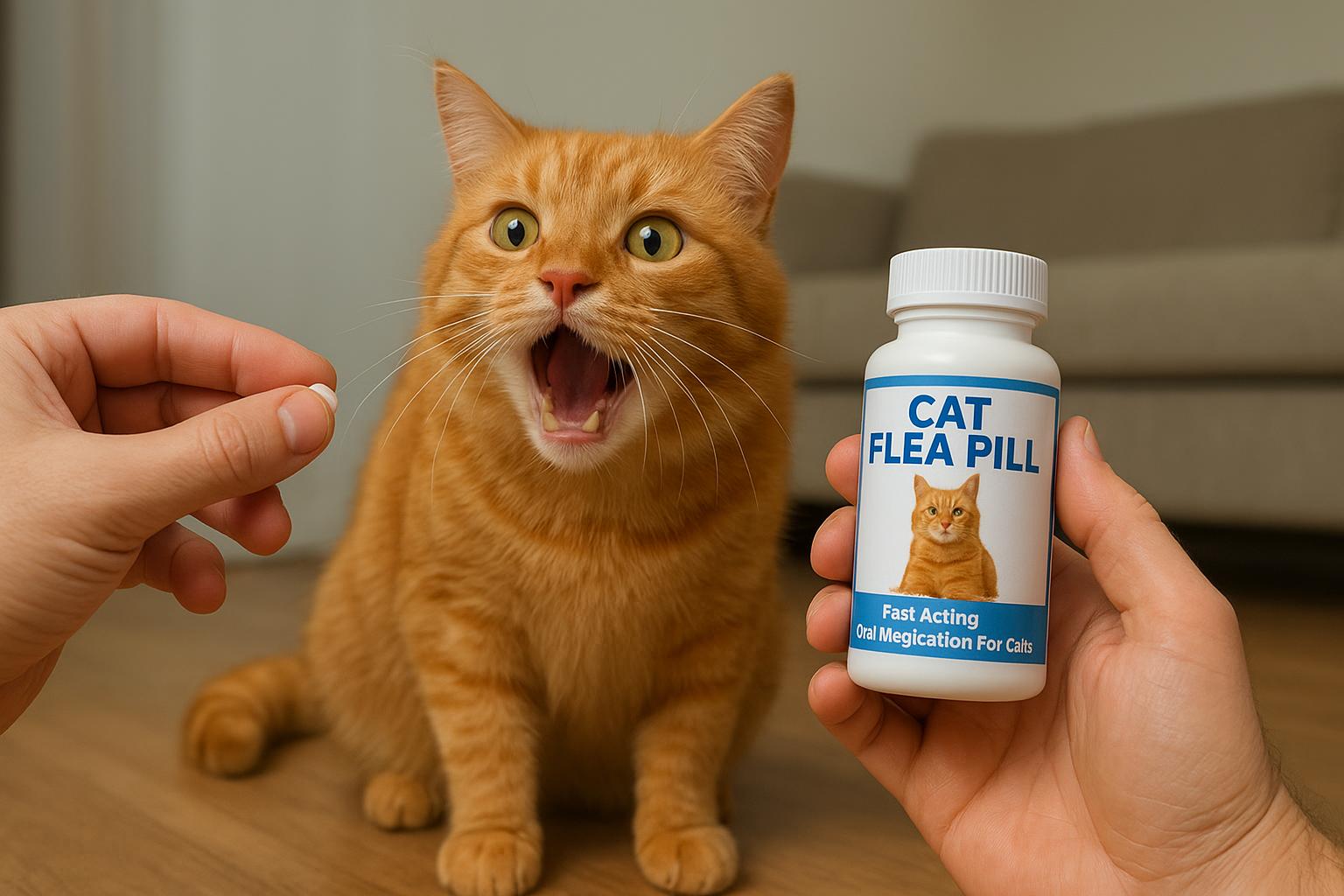
– Fast-acting oral tablets (e.g., nitenpyram) for immediate knock-down in severe cases
– A calendar or reminder system for scheduled doses
– Veterinary guidance for pregnant, nursing, or medical-compromised cats
### Step-By-Step Application And Follow-Up
1. Vet Assessment: Schedule a vet visit to confirm fleas and rule out flea allergy dermatitis or secondary skin infections. The vet will recommend specific products based on your cat’s health and household situation.
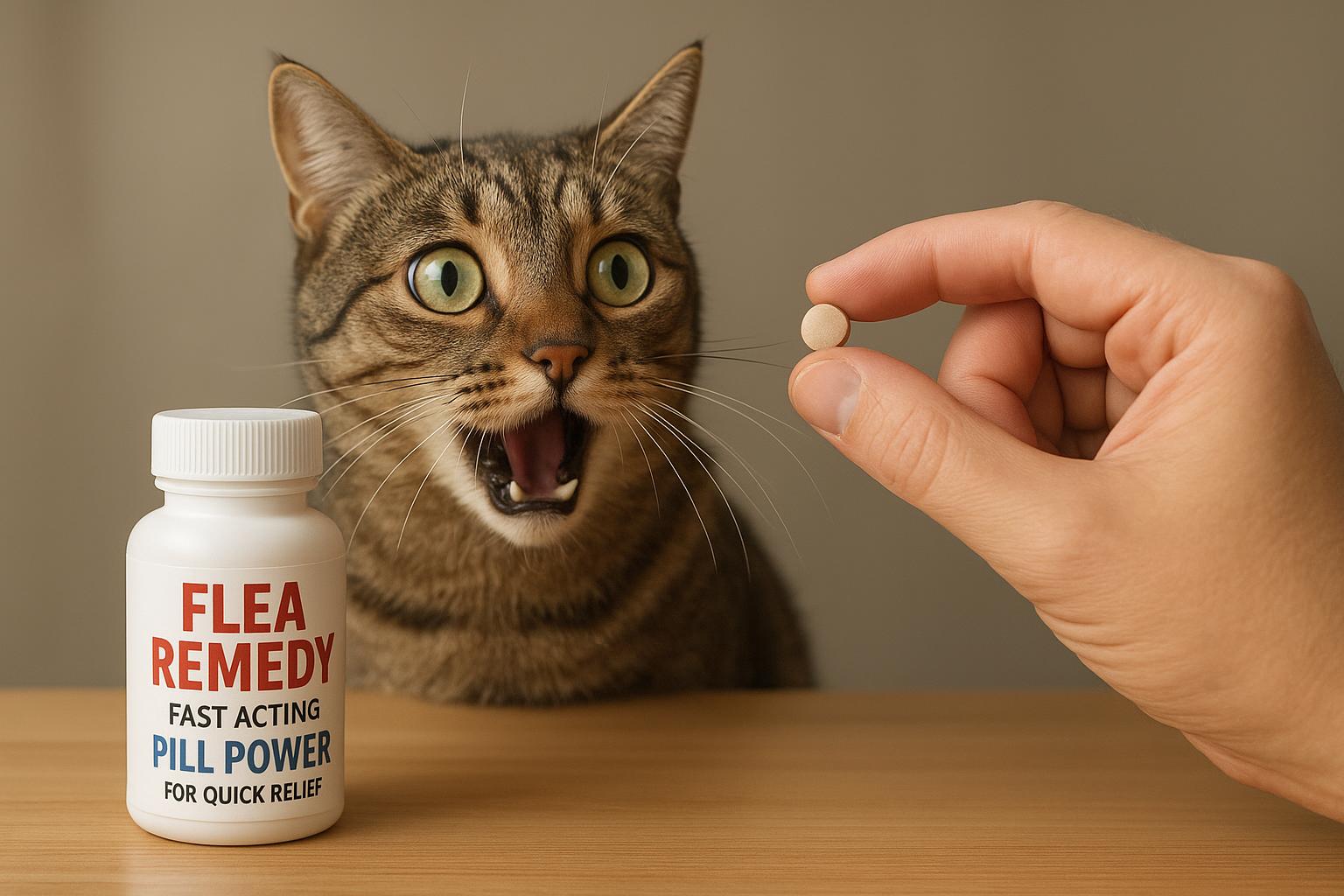
2. Immediate Adult Kill: If quick relief is needed, the vet may prescribe a fast-acting oral agent (nitenpyram) to kill adult fleas within hours. Note that this does not prevent re-infestation and must be followed by long-term prevention.
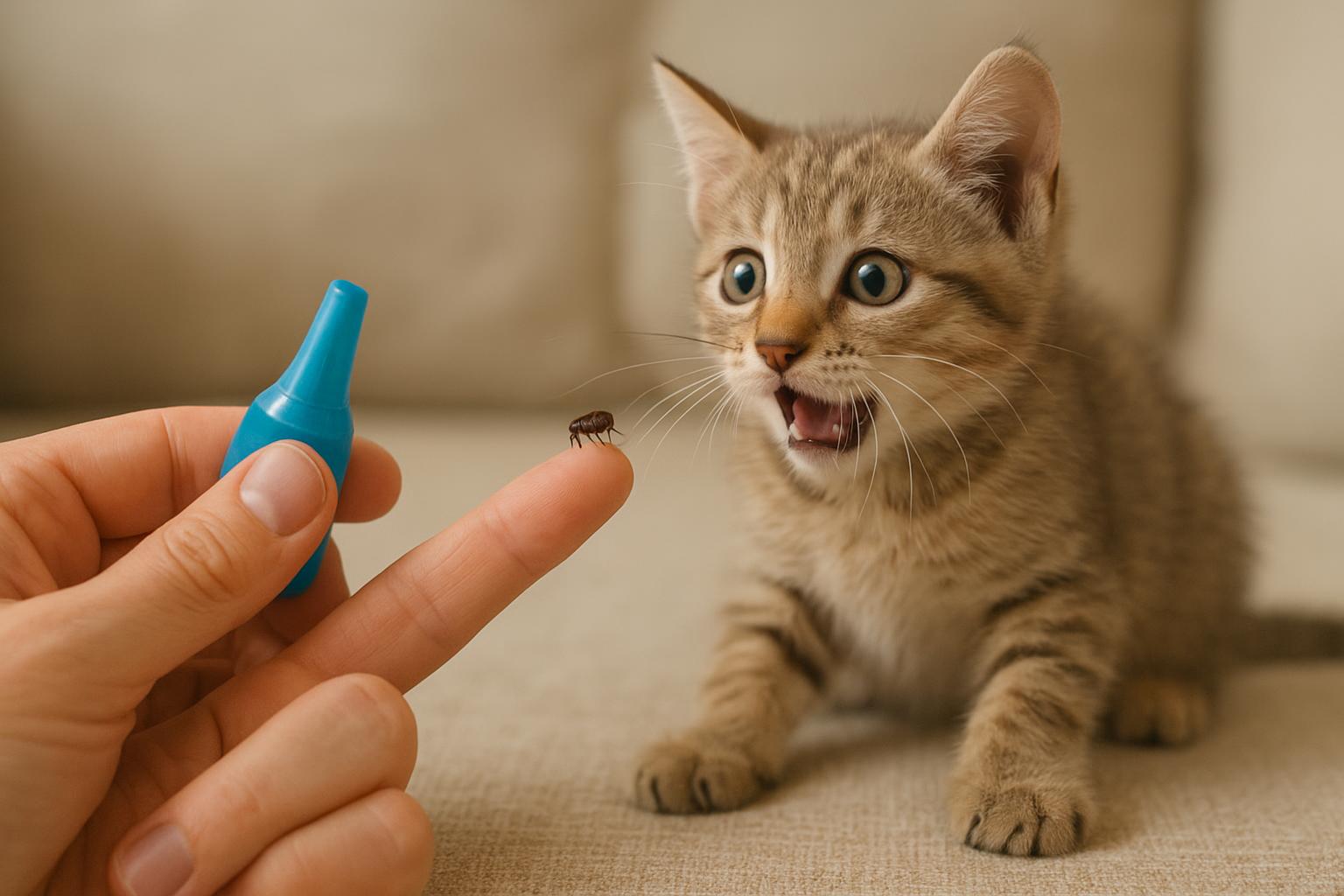
3. Initiate Monthly Prevention: Start a recommended monthly topical or oral systemic product. For indoor infestations, longer-acting oral products (e.g., fluralaner) may provide multi-month coverage and are convenient.
4. Treat All Household Pets: Any dog or other cat in the home must also be treated. Failure to treat all hosts undermines control efforts.
5. Monitor For Reactions: Observe your cat for any adverse effects after the first dose and report concerns to your vet immediately.
6. Maintain Schedule: Adherence is critical—the most effective control comes from uninterrupted prevention over several months to ensure all environmental stages are interrupted.
### When To Call A Professional
If you’ve done exhaustive home cleaning and used veterinary prevention and adults still appear, it’s time to call a licensed pest-control professional. They can apply targeted environmental treatments unavailable to consumers and identify chronic infestation sources (e.g., wildlife nesting near the house).
#### Red Flags That Warrant Professional Help
– Persistent fleas for more than two months despite correct pet treatment and diligent cleaning
– Multiple infested pets or wildlife access near your home
– Signs of flea allergy dermatitis or secondary infections on your cat
– Inability to safely apply household insecticides due to children, respiratory issues, or special pets
### Comfort Measures For Your Cat
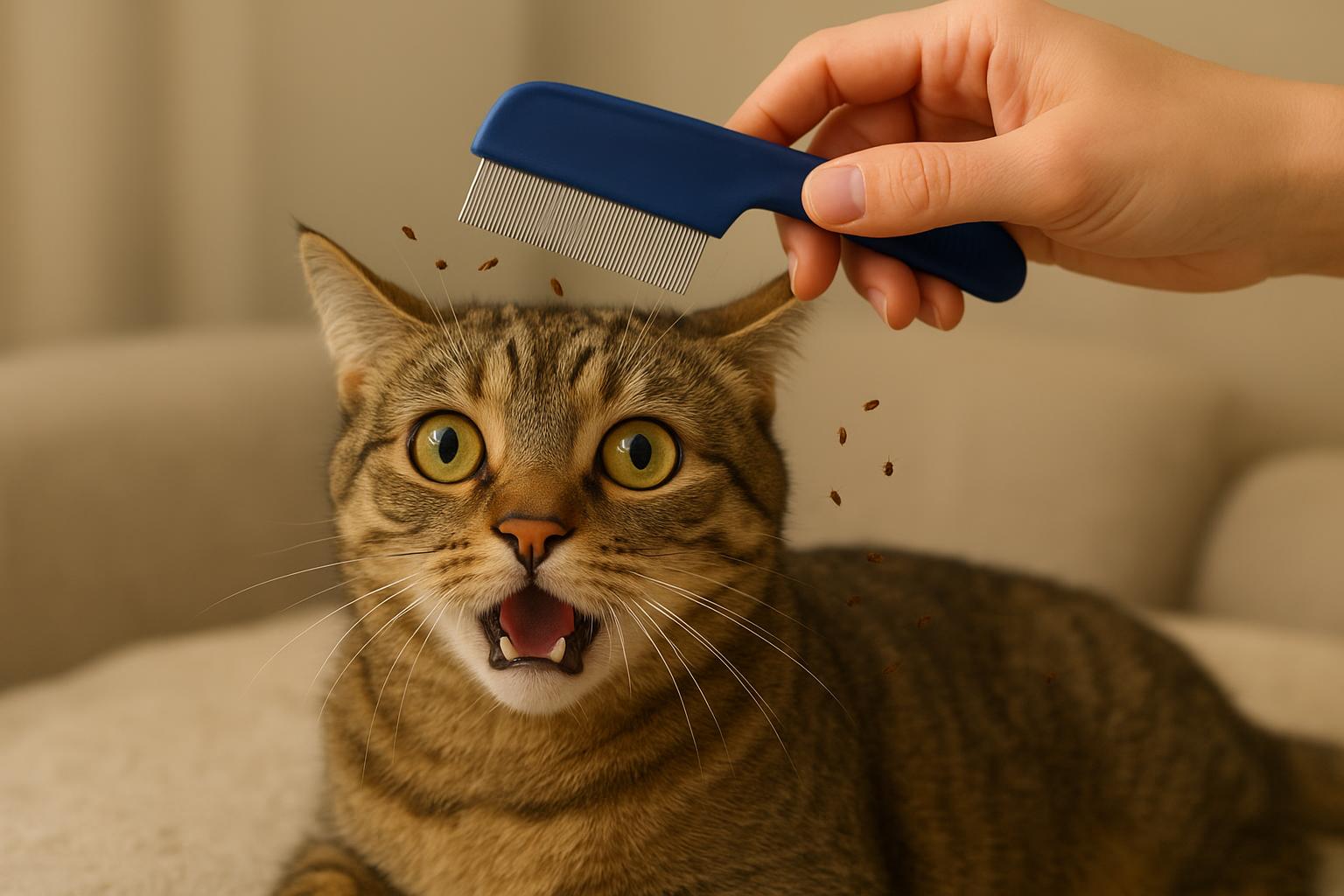
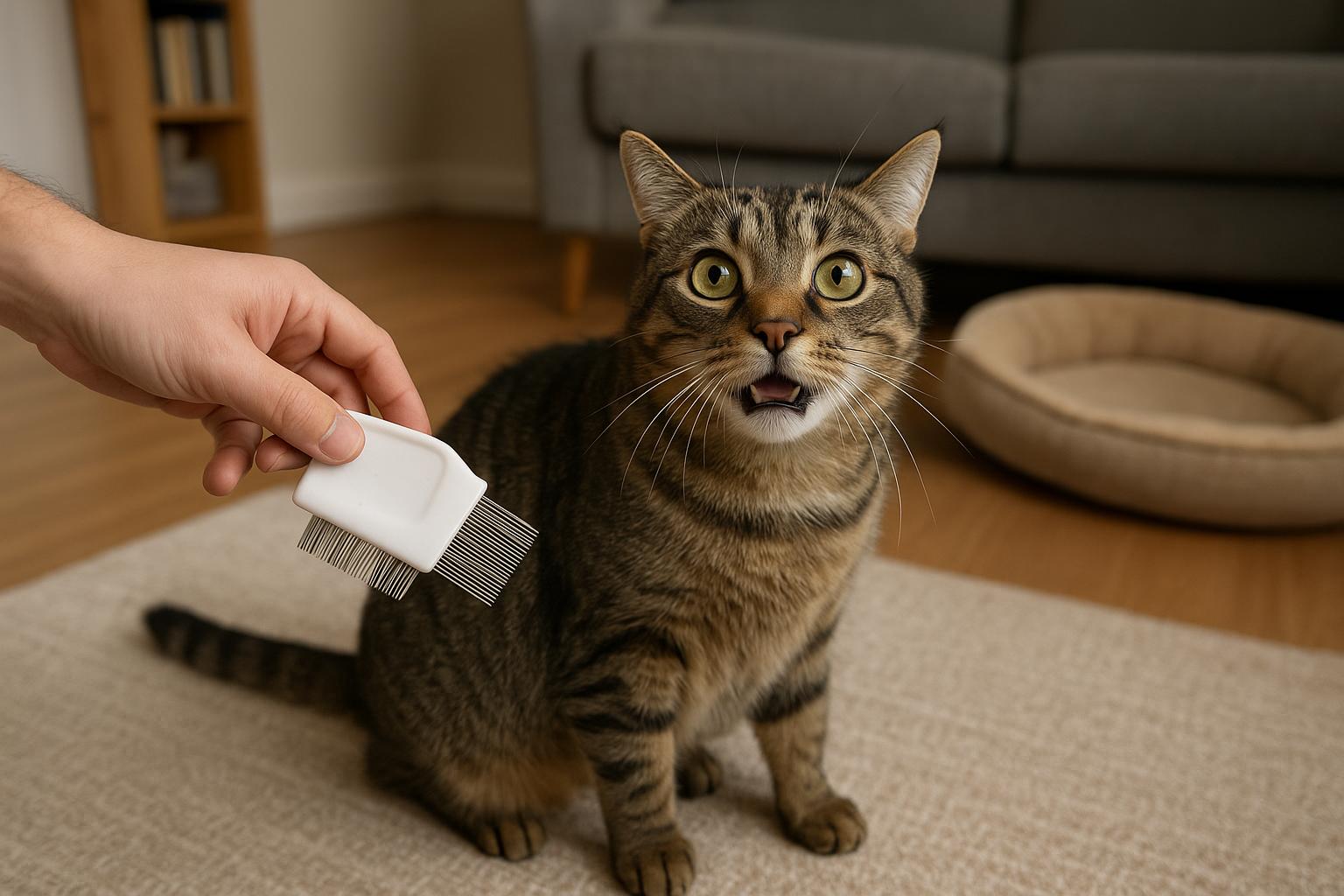
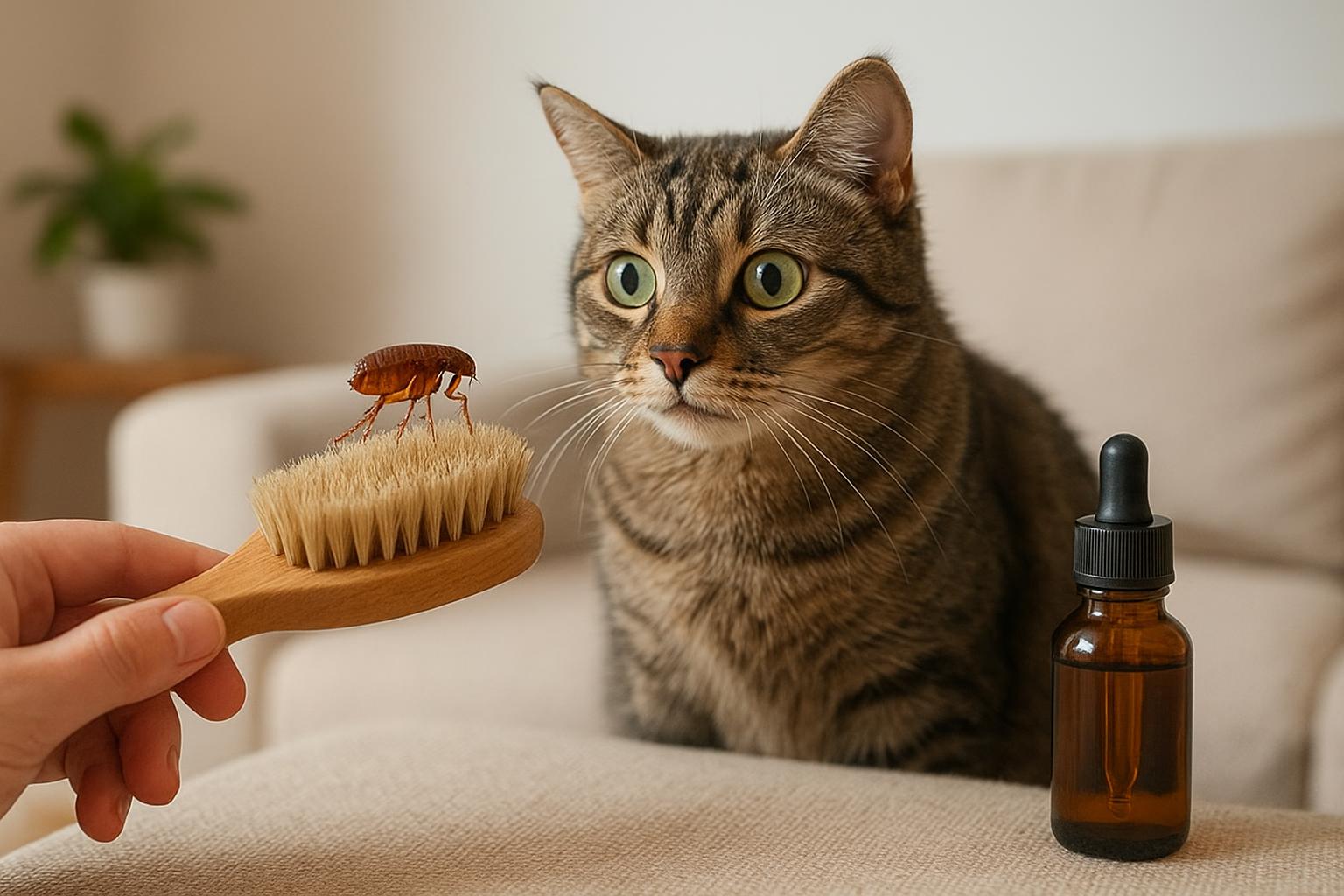
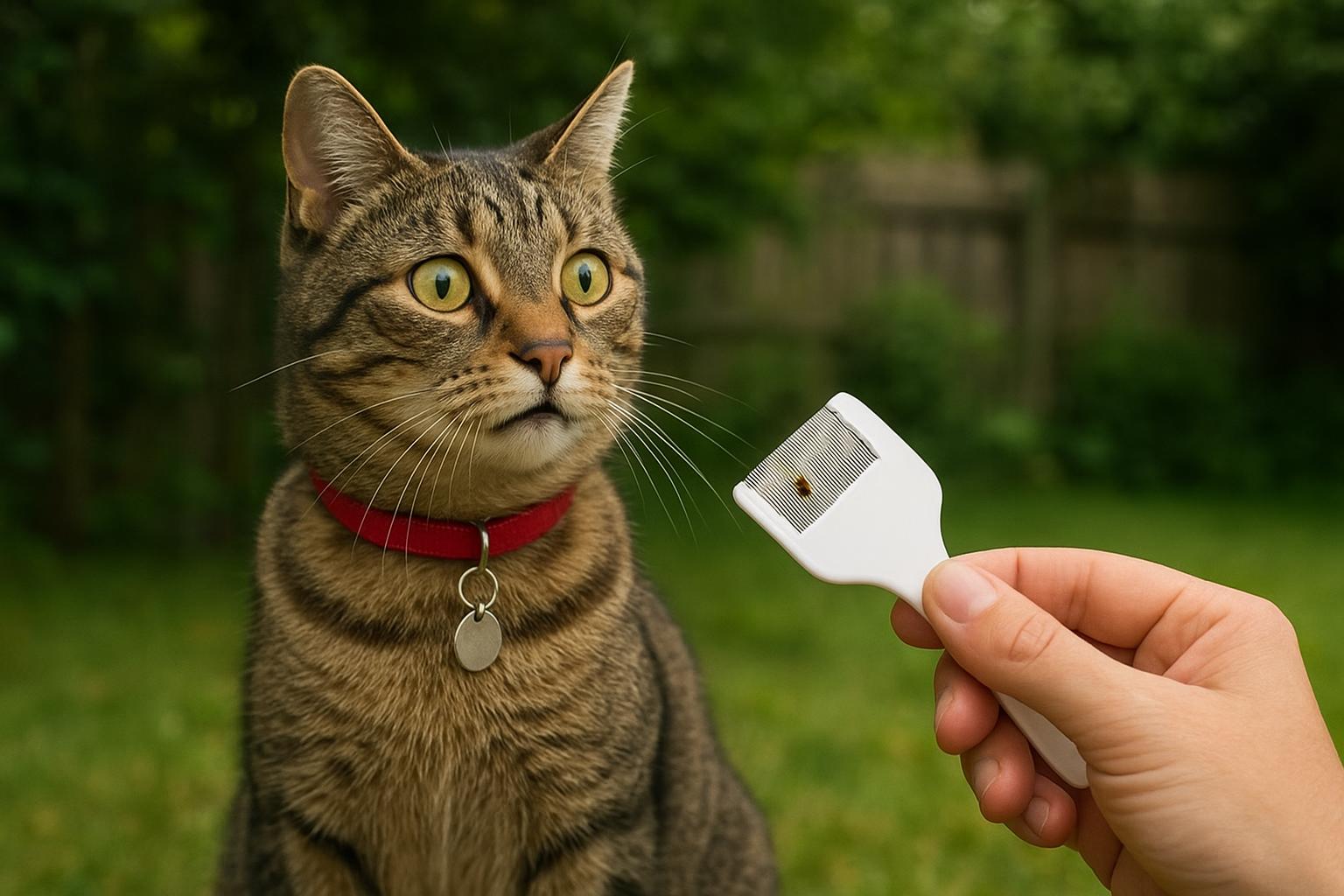
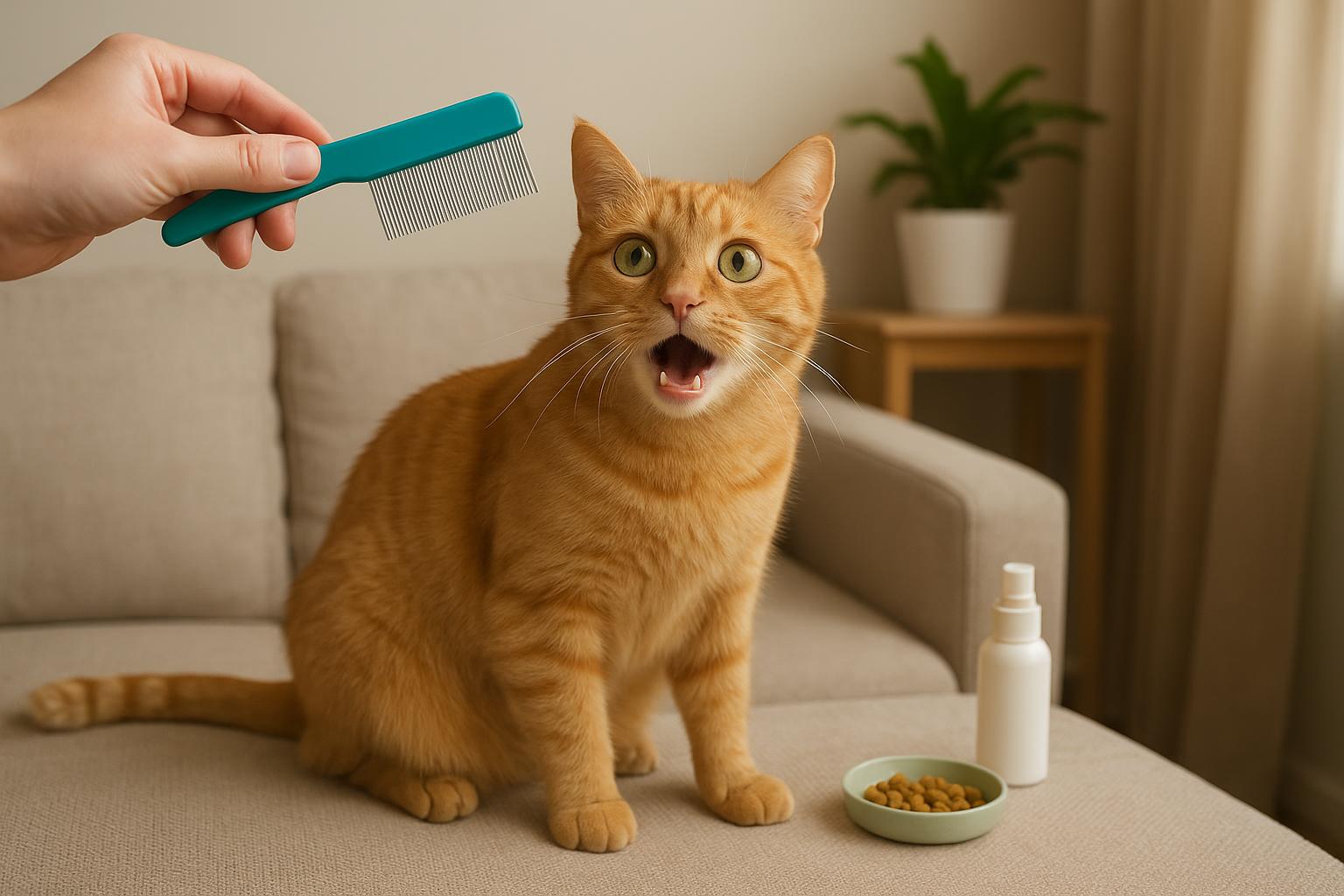
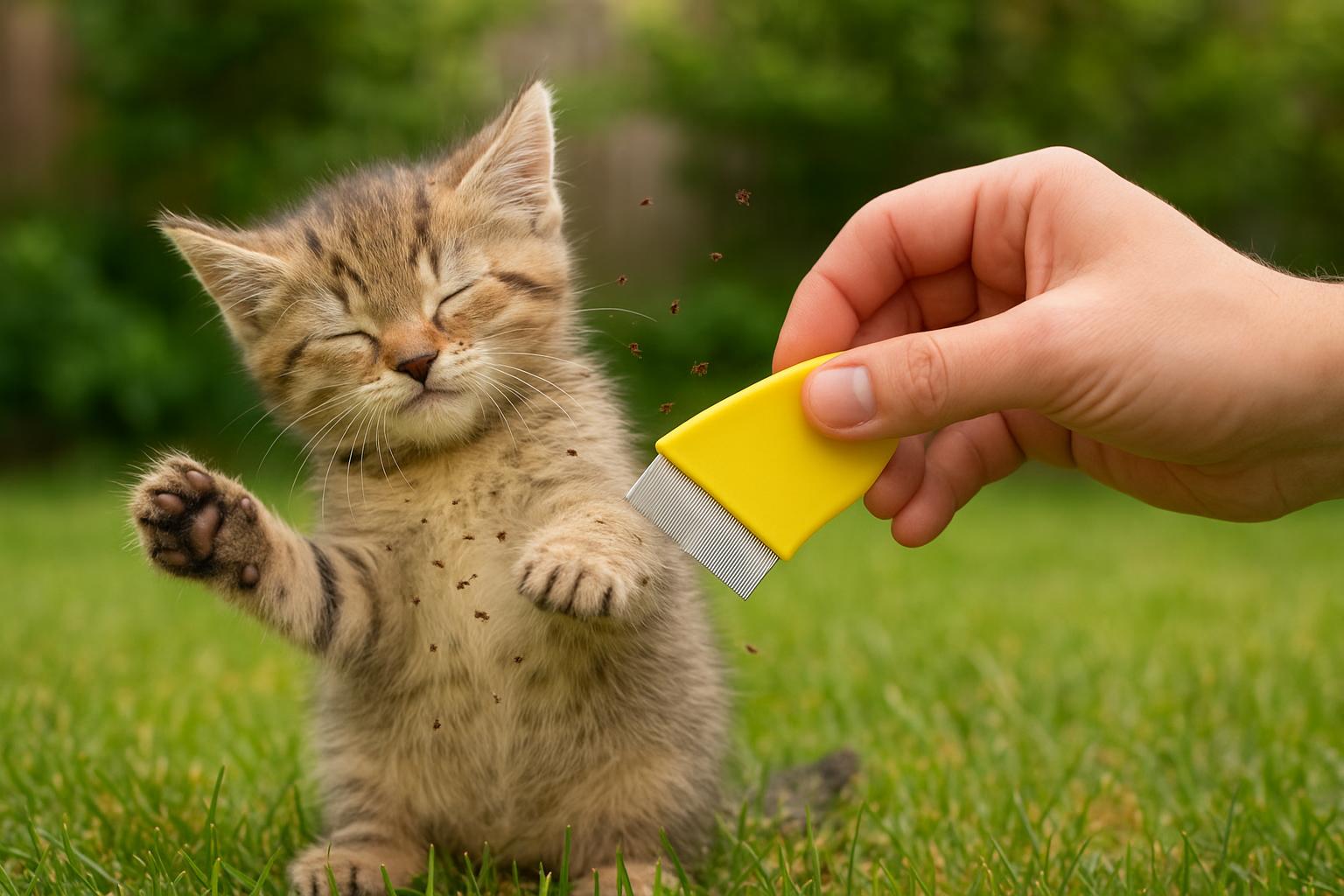
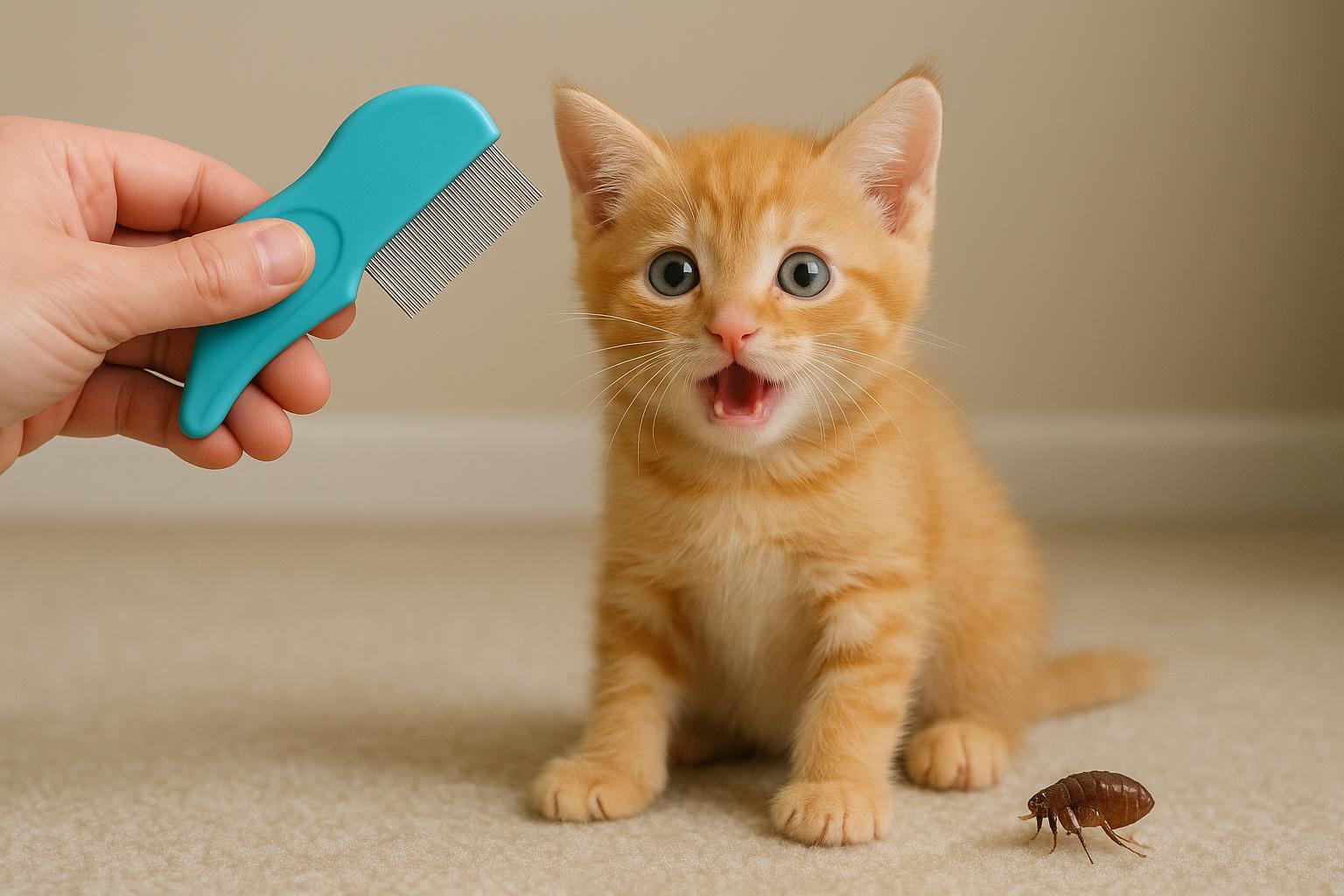
While formal treatments are underway, help your cat feel better by grooming with a flea comb (dip comb in soapy water to remove live fleas), offering calm spaces, and treating skin irritations under veterinary guidance. Keep treated pets separated from untreated animals until medications take effect. Reducing stress helps the immune response and speeds recovery; it’s a small but meaningful part of managing cat fleas indoors.
If you’re juggling treatment choices and safety concerns, remember that coordinated action—environmental cleanup paired with veterinary prevention—wins most battles against indoor flea populations.









Leave a Reply