
## Flea Identification Basics For Cat Owners
If you’re here, you’ve probably felt your cat’s sudden, frantic grooming session and thought, “Uh-oh.” That’s a solid first clue. Flea identification is mostly about knowing what to look and feel for—tiny dark movers, specks of “dirt,” and a cat acting like a tiny acrobat whenever something itchy appears. Let’s walk through what cat fleas look like and how you can tell they’re the real nuisance and not just a case of fluffed-up fur.
### What Cat Fleas Look Like Up Close
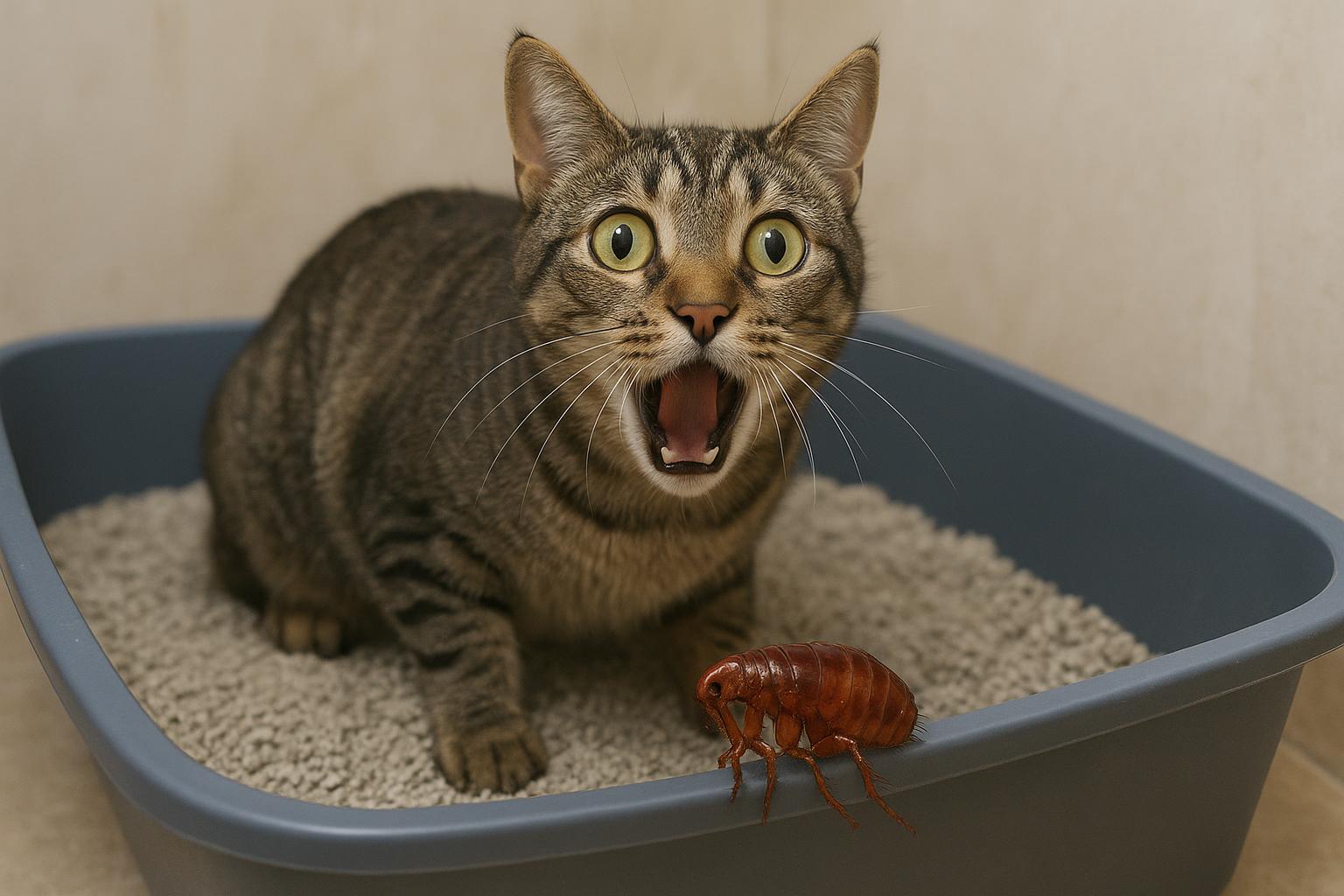
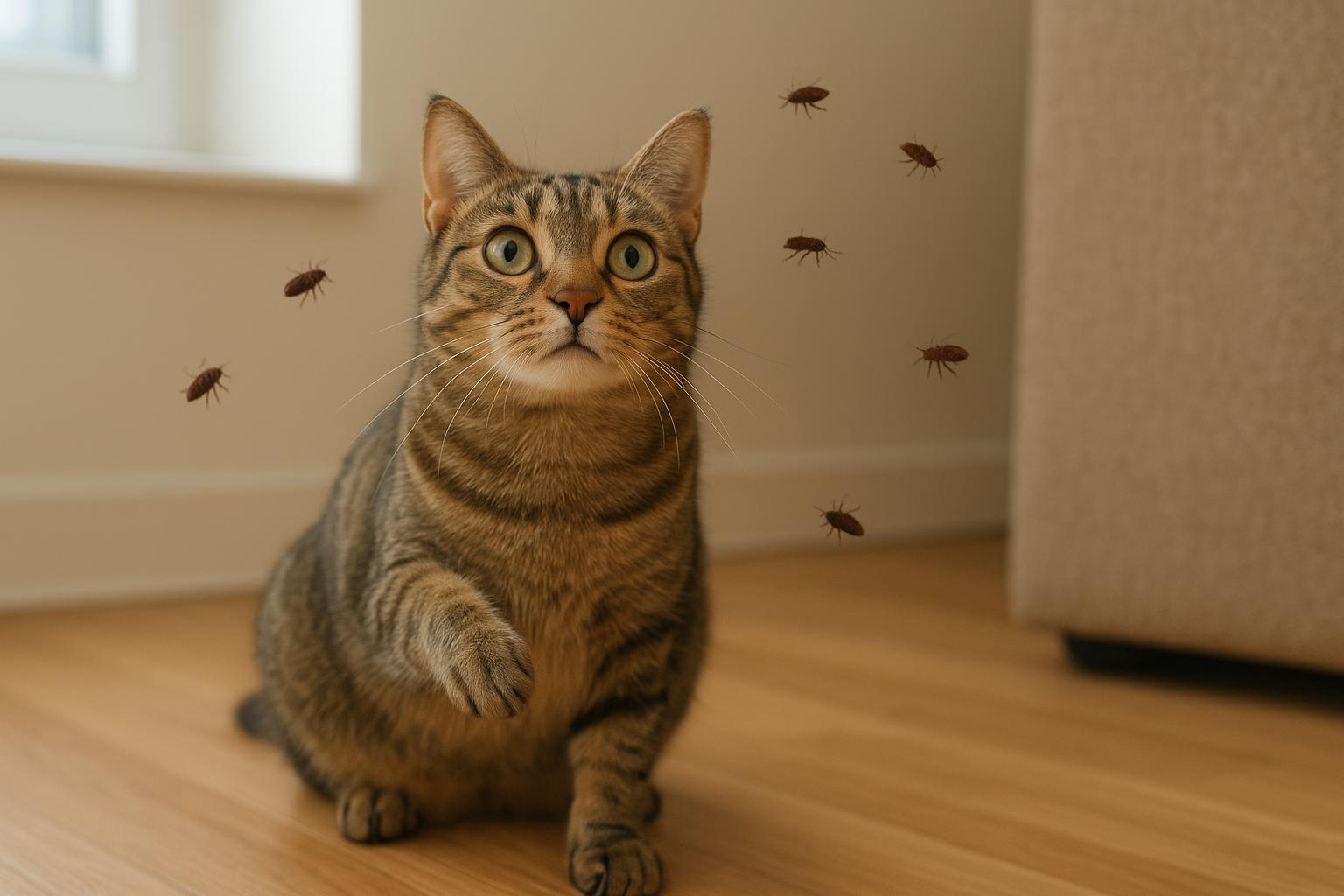
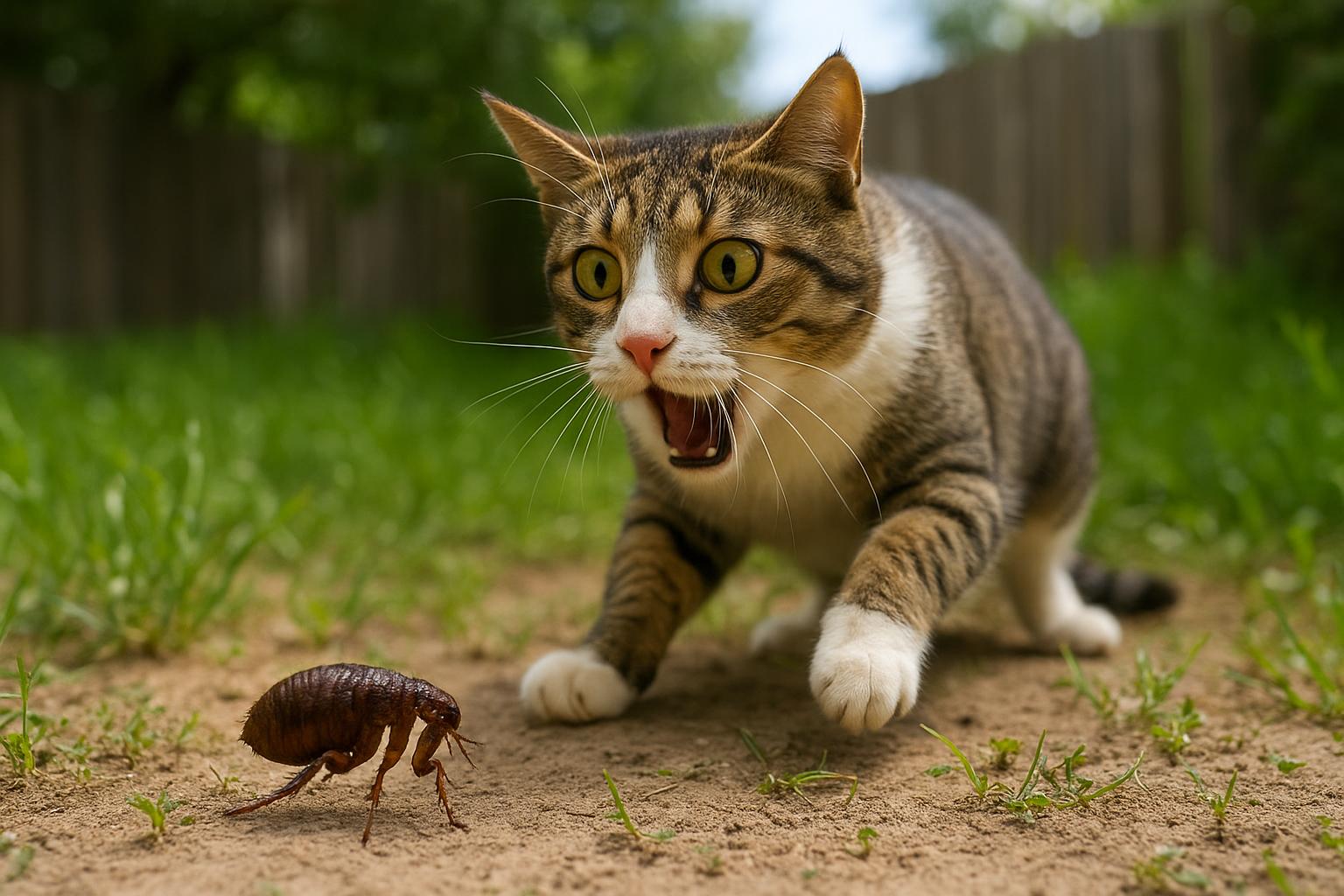
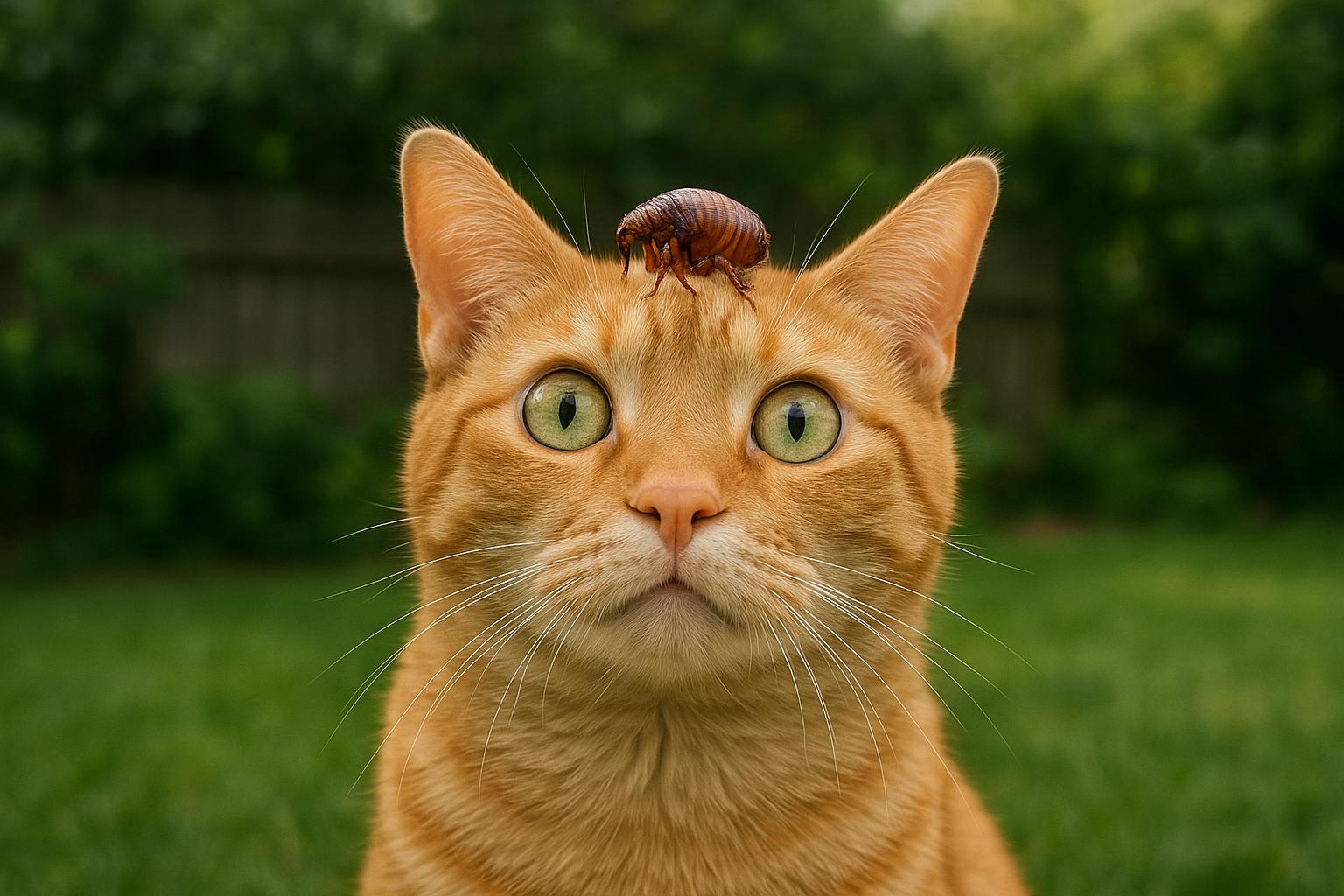
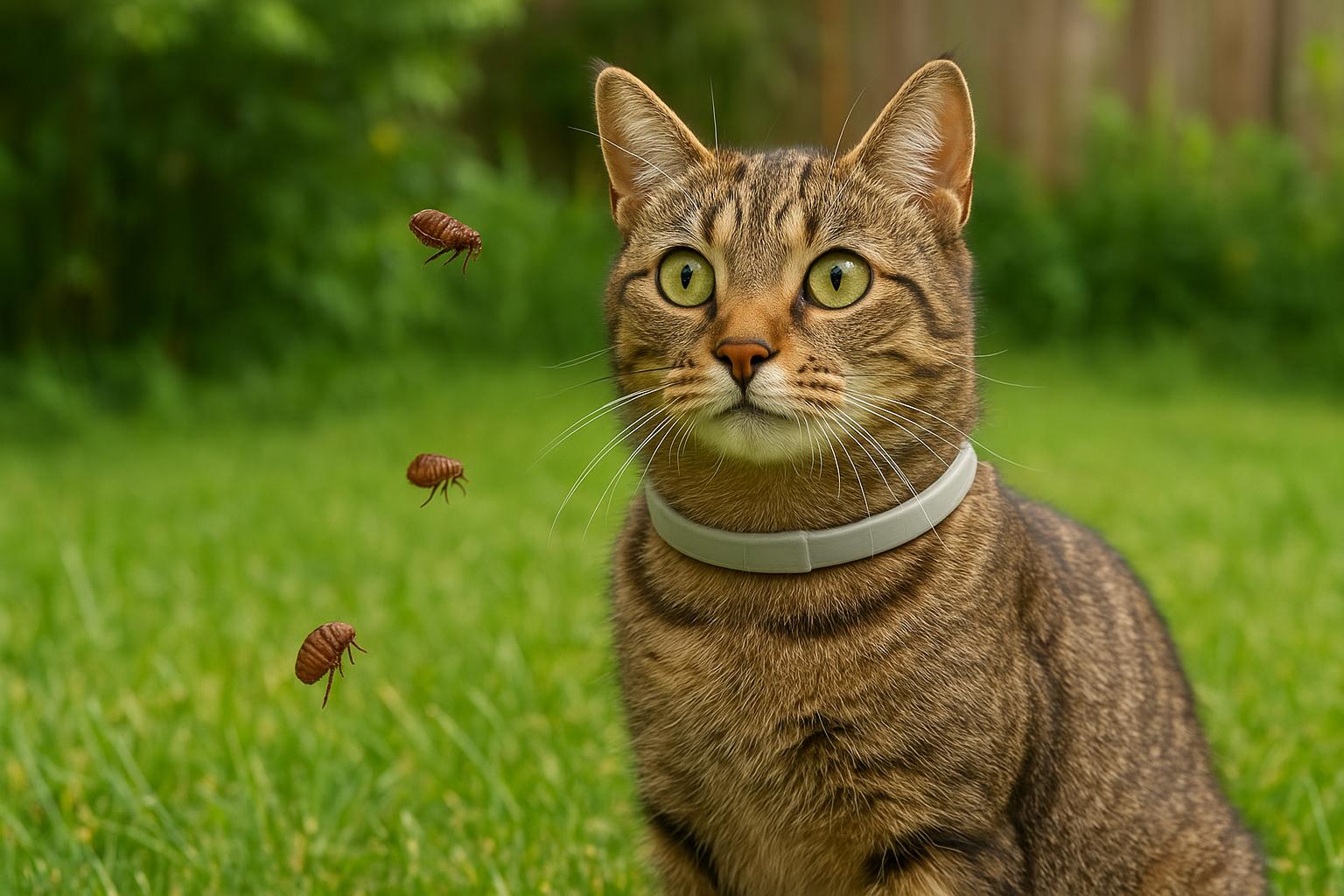
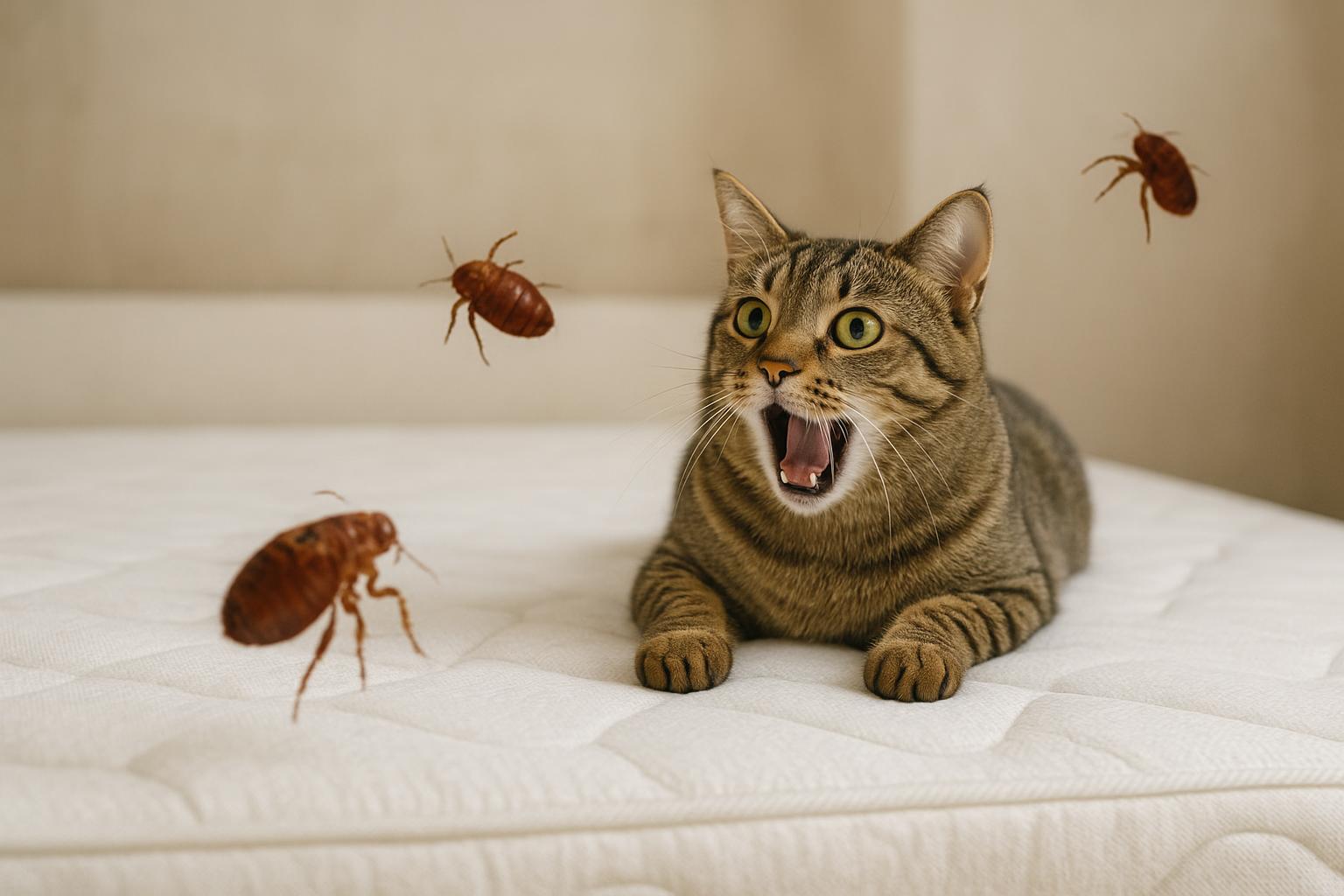
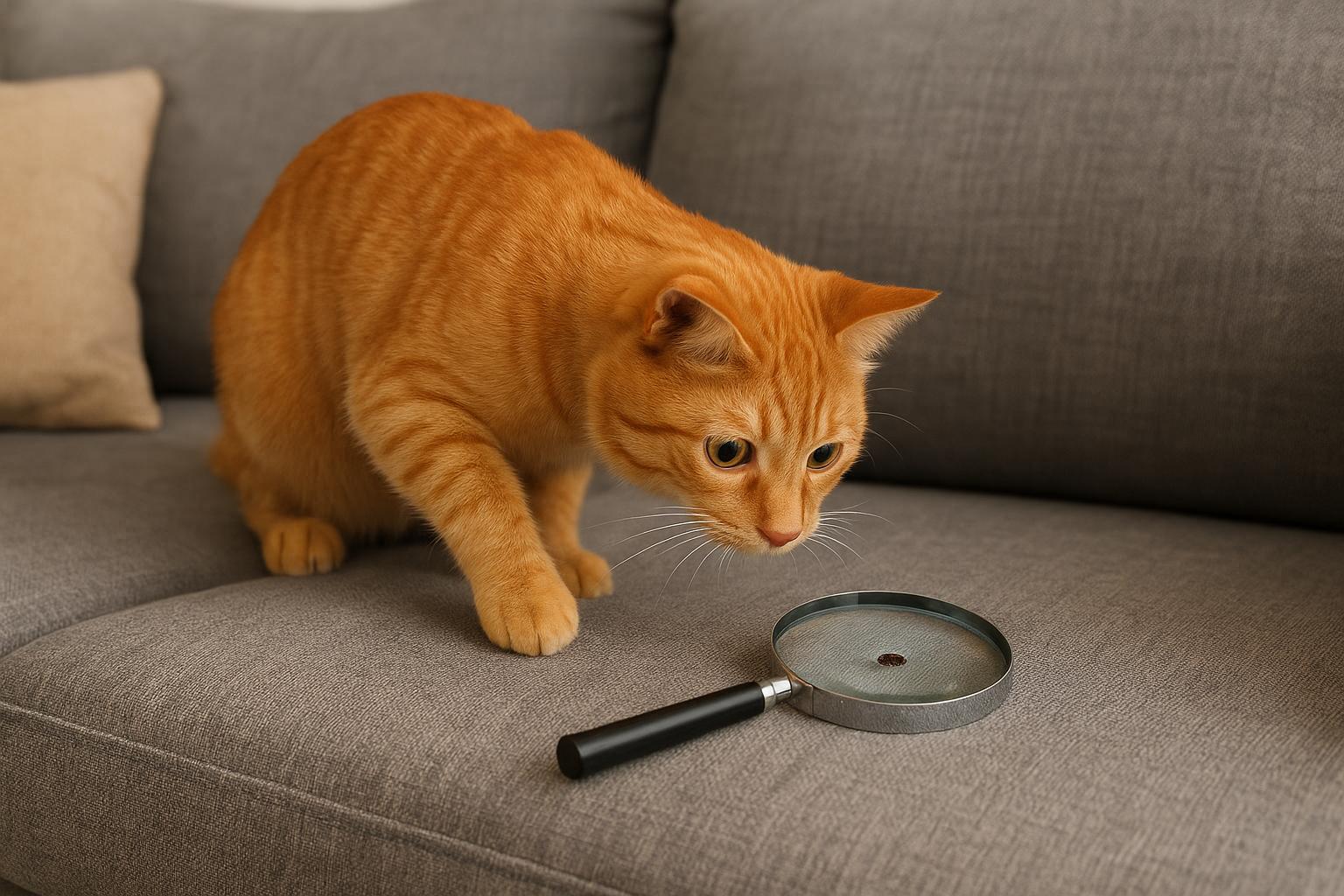
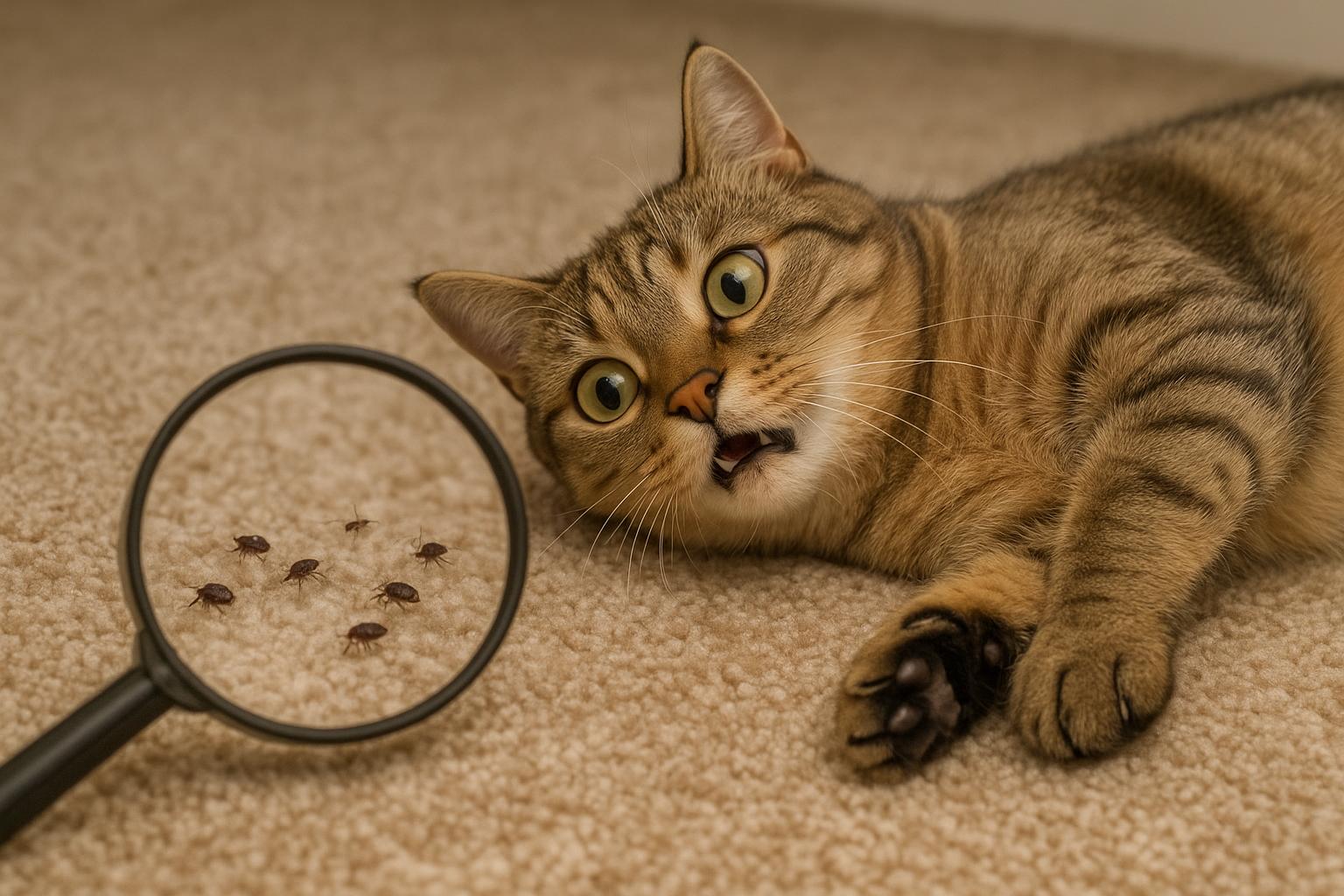
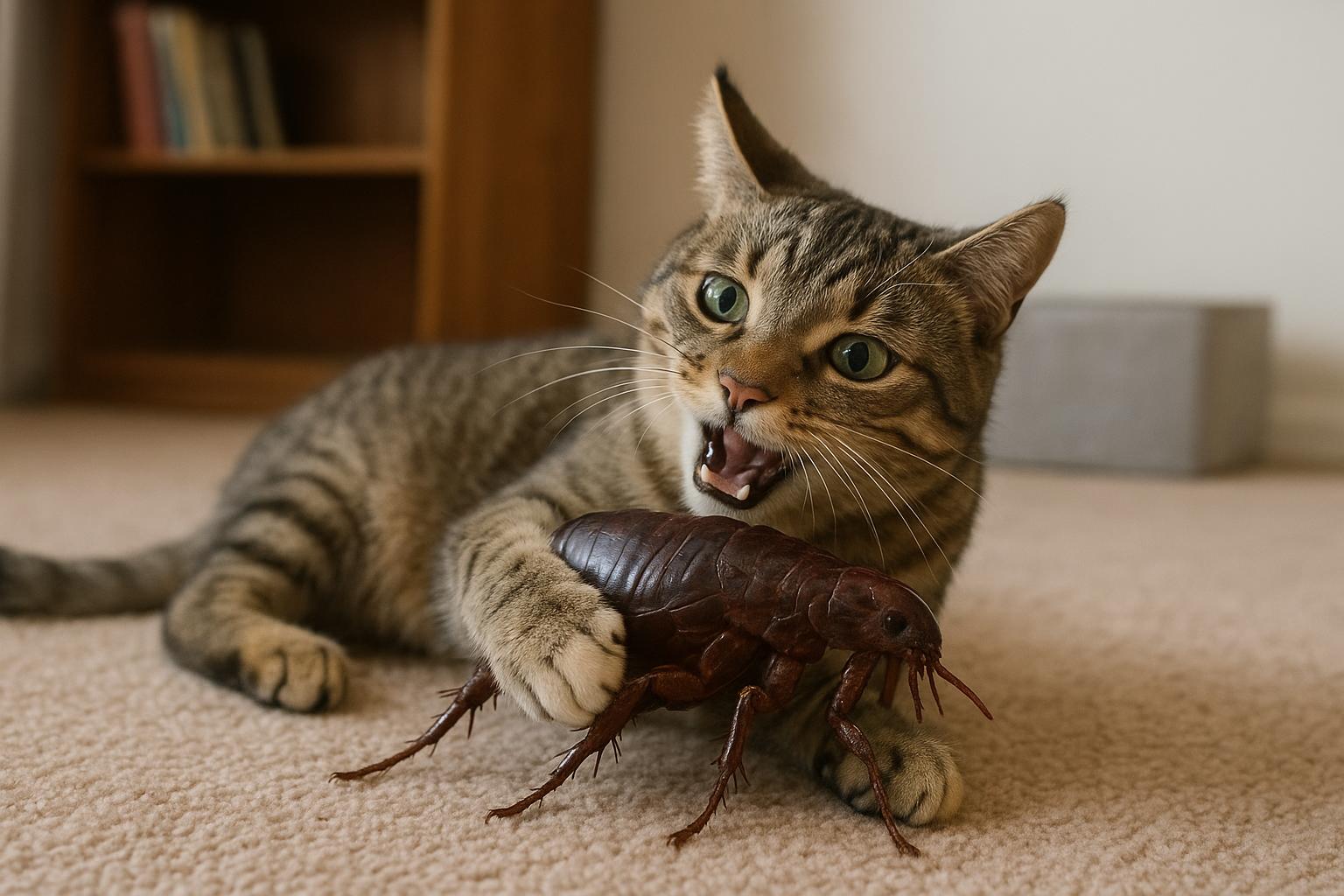
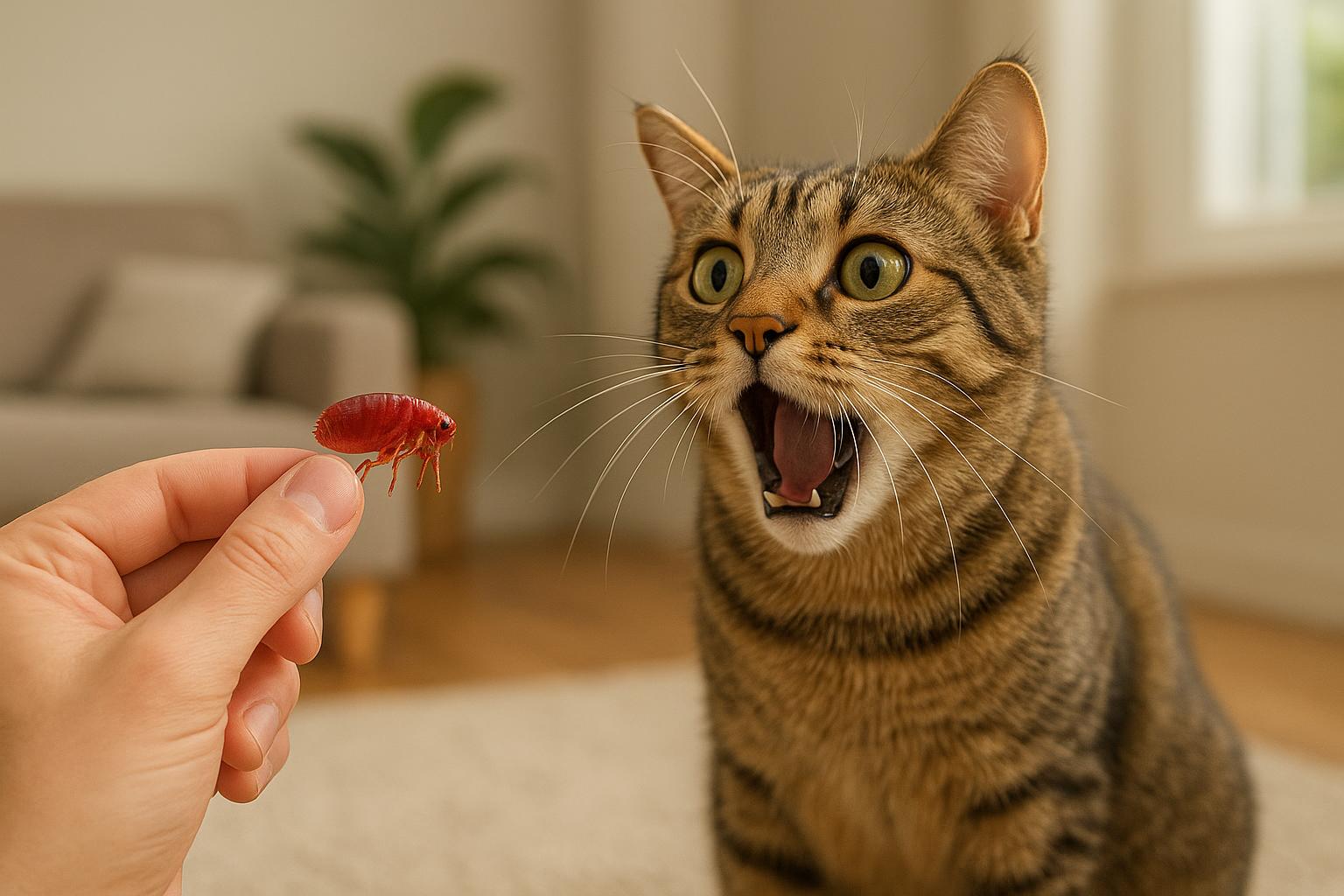
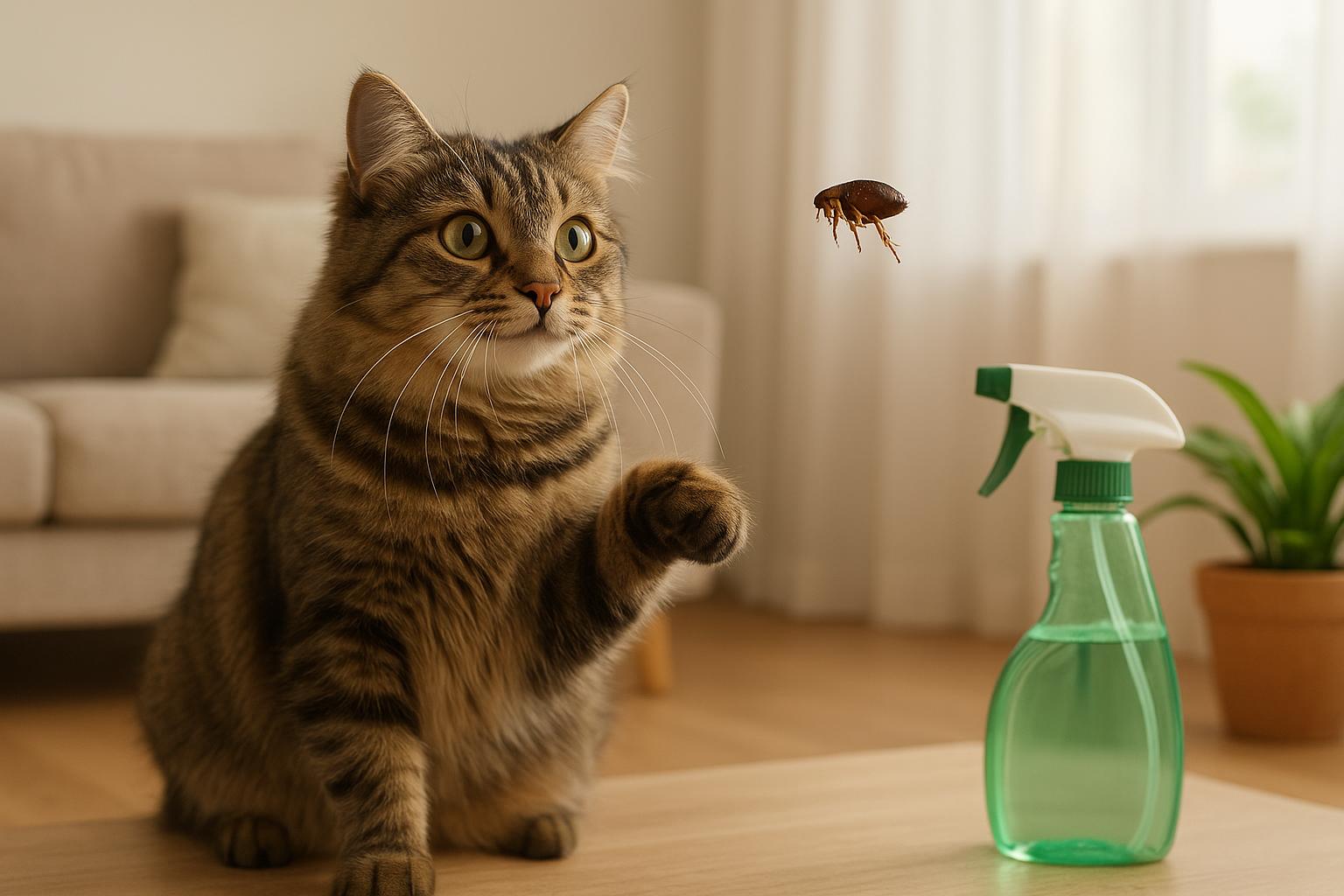
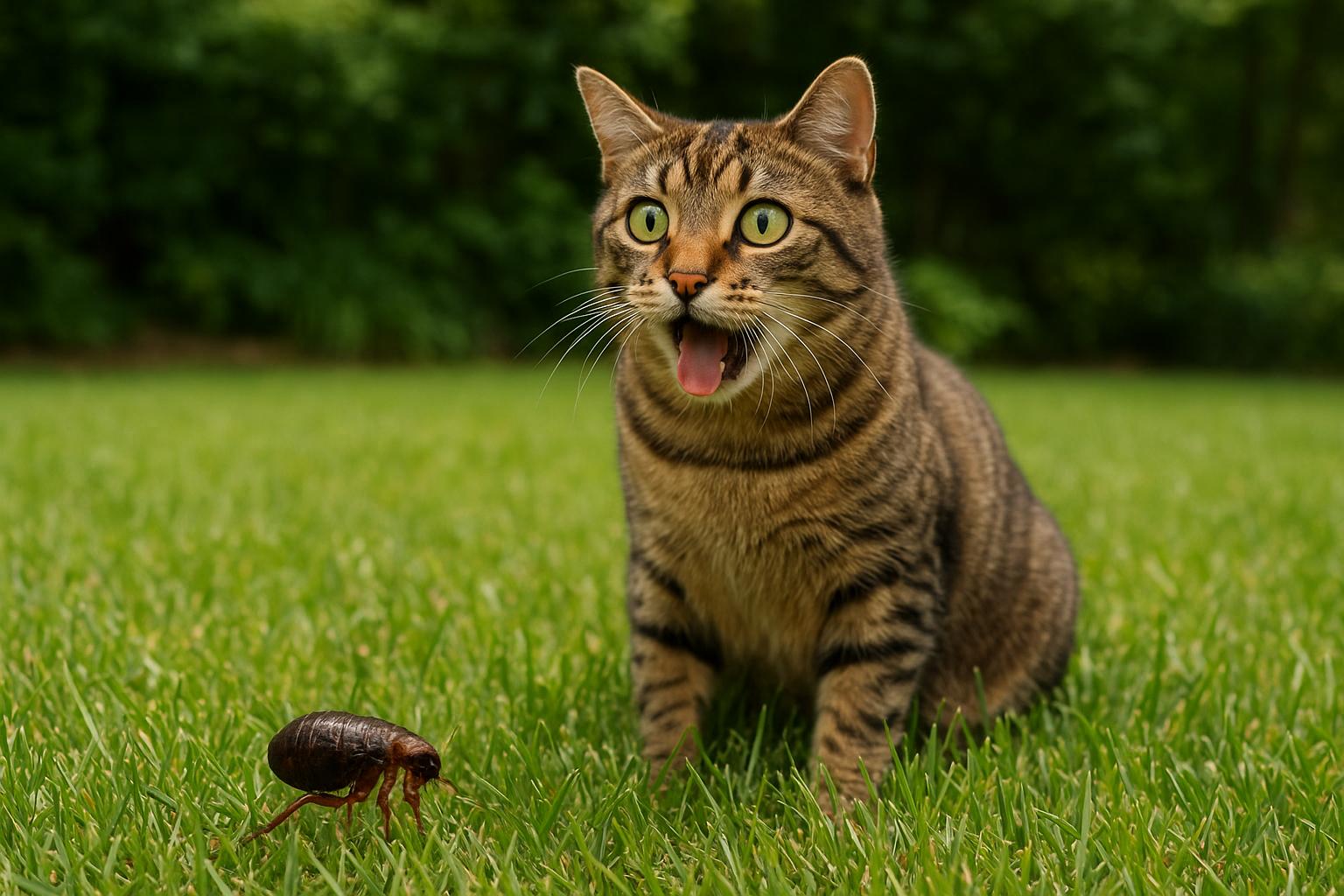
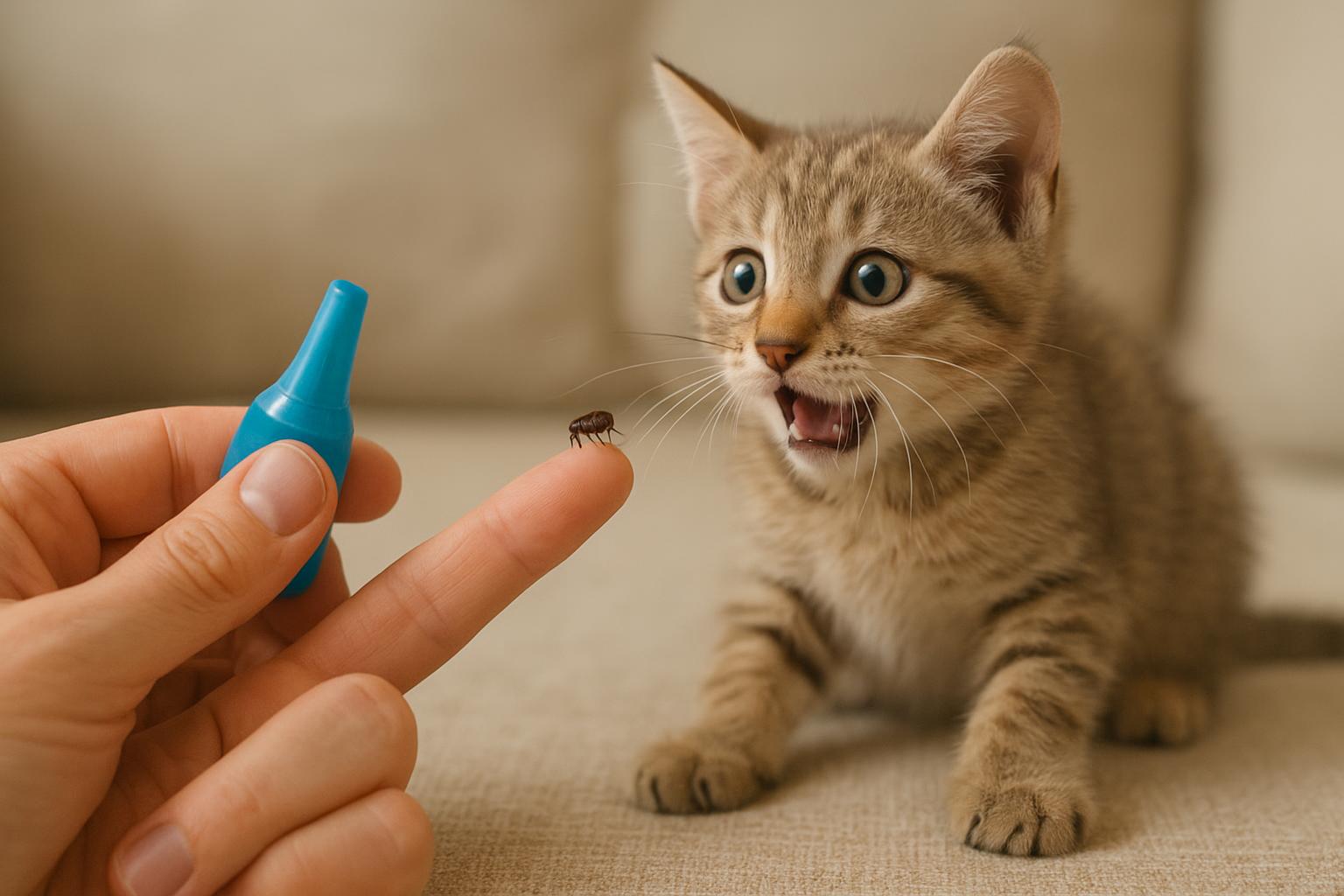
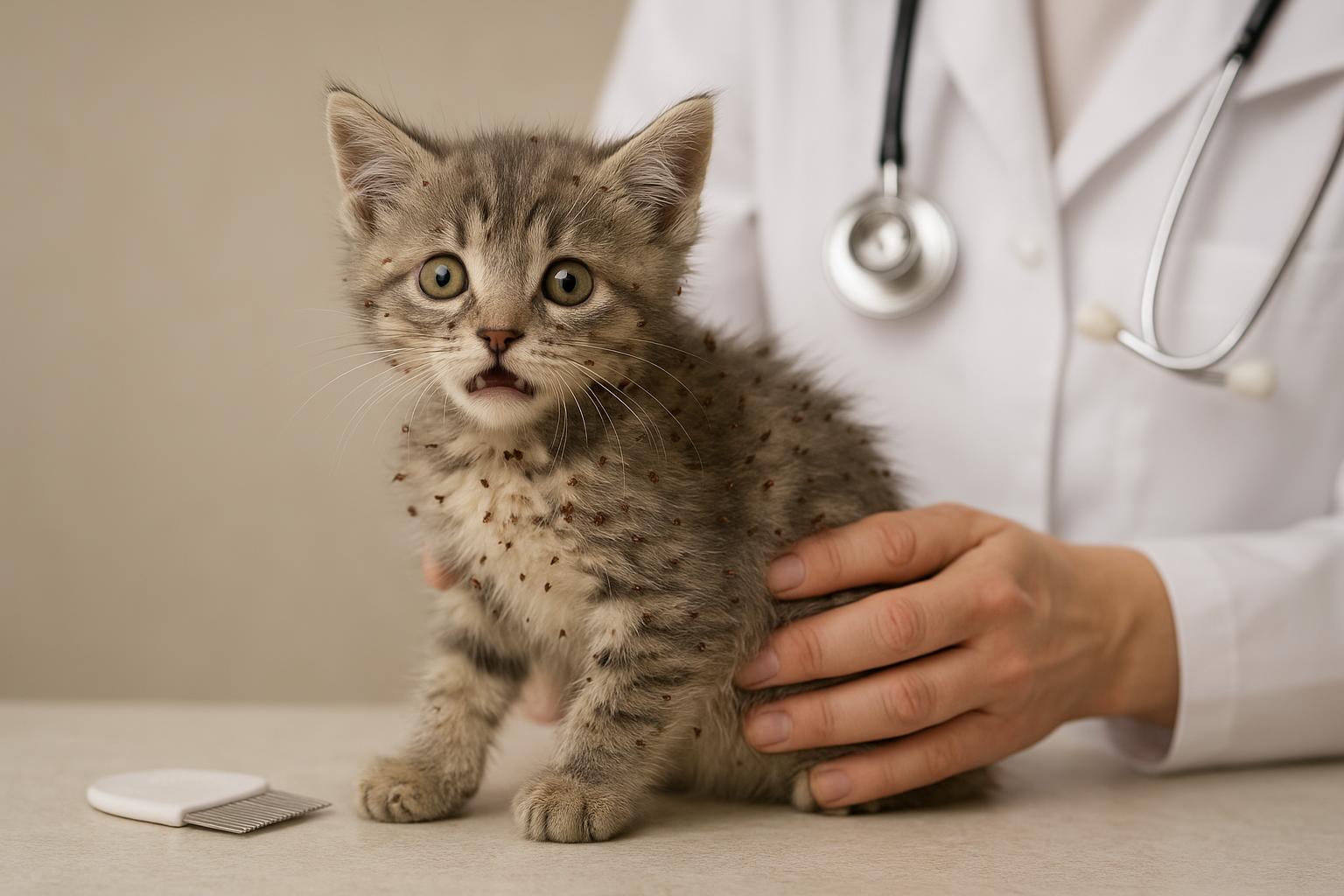
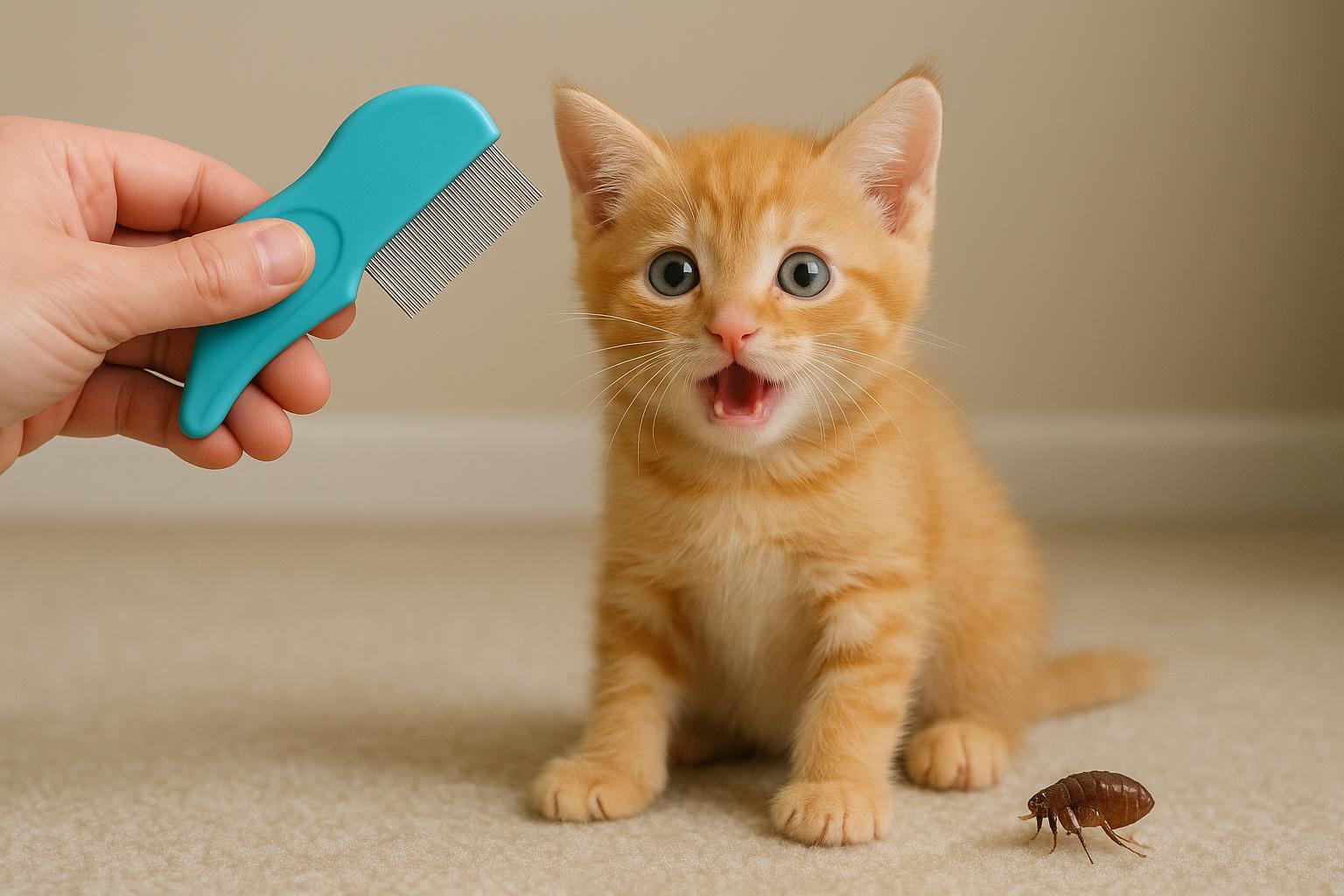
Cat fleas are small—about 1.5 to 3.3 millimeters long—so they’re visible to the naked eye if you get close. They’re wingless, laterally flattened (which helps them move through fur), and a dark reddish-brown color when mature. If they’ve just fed, they might look a bit engorged and darker; hungry ones can appear almost black. Under magnification you’d spot long back legs (built for jumping) and tiny bristles.
### Typical Flea Behavior On Cats
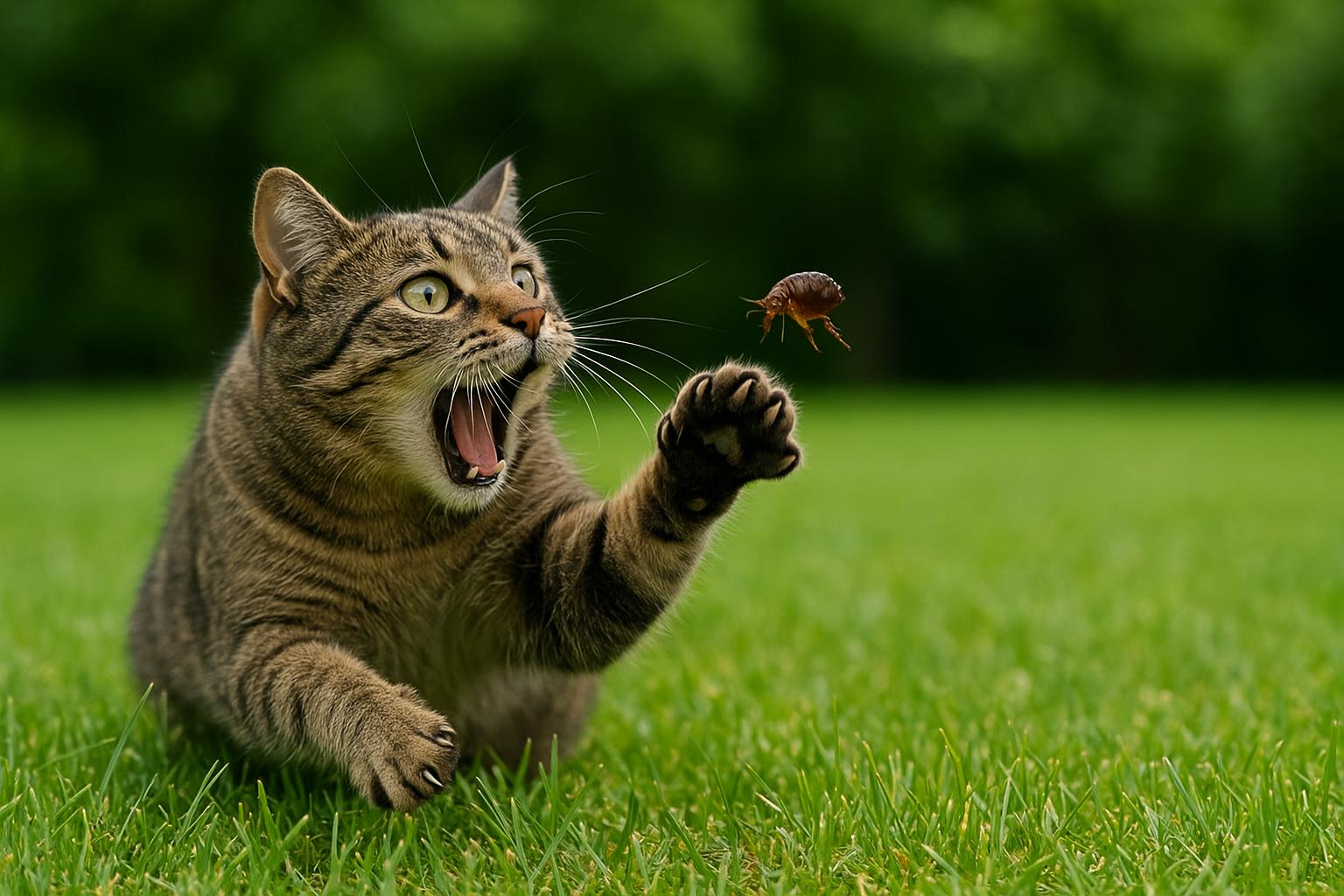
Fleas prefer warm, protected areas like the belly, groin, base of the tail, and behind the ears. They bite and feed on blood, which is what makes your cat scratch. They’re quick—much quicker than you—and they rarely stay on the surface where you can easily catch them. So seeing one scuttle across the back of a sofa or your cat’s fur? That’s a near-certain sign you’ve got a problem.
## Signs You Might Have Fleas
Flea identification isn’t just about spotting the insect itself. Often you’ll identify an infestation by secondary signs: the cat’s behavior, residues, and the environment.
### Flea Dirt, Bites, And Scratching
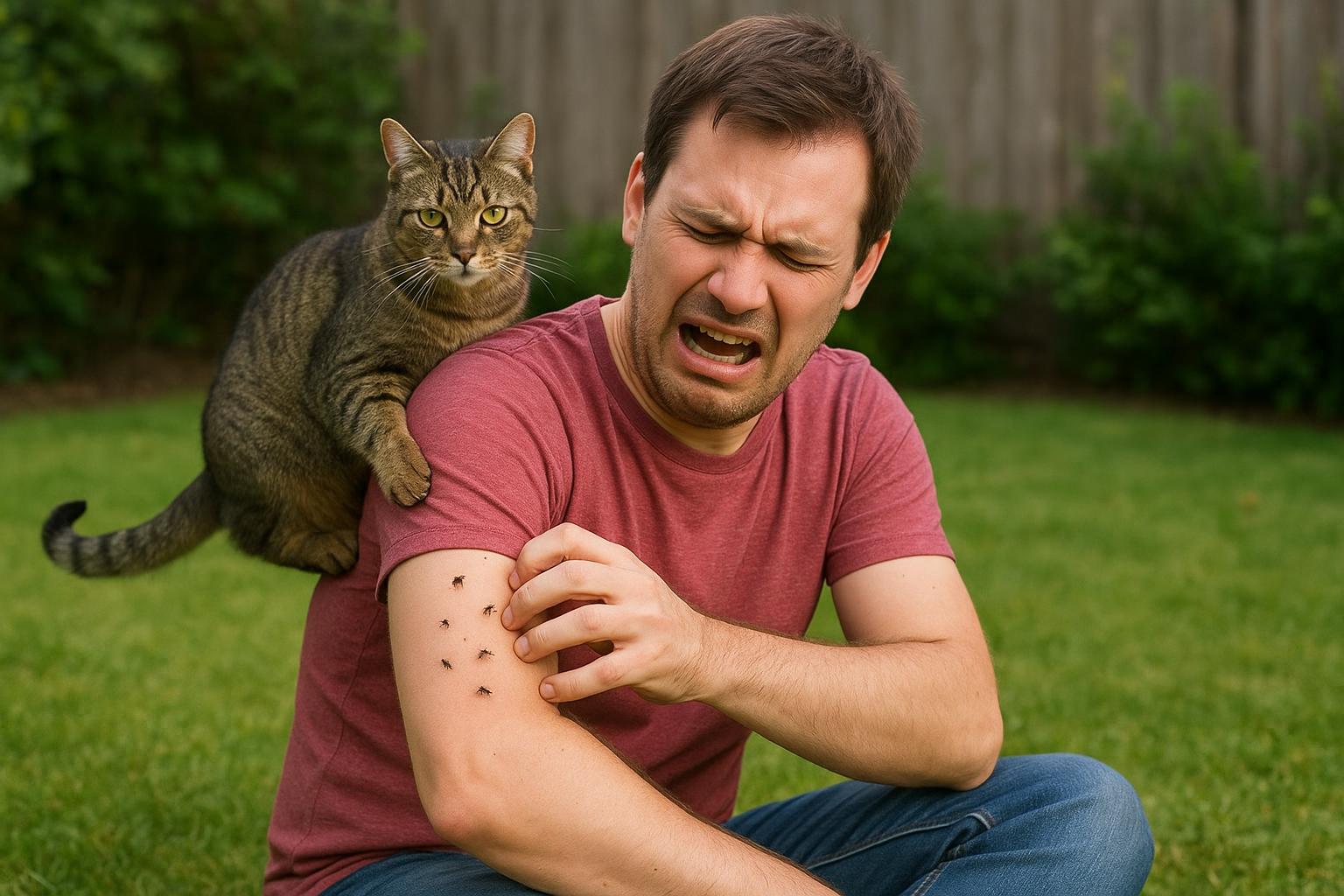
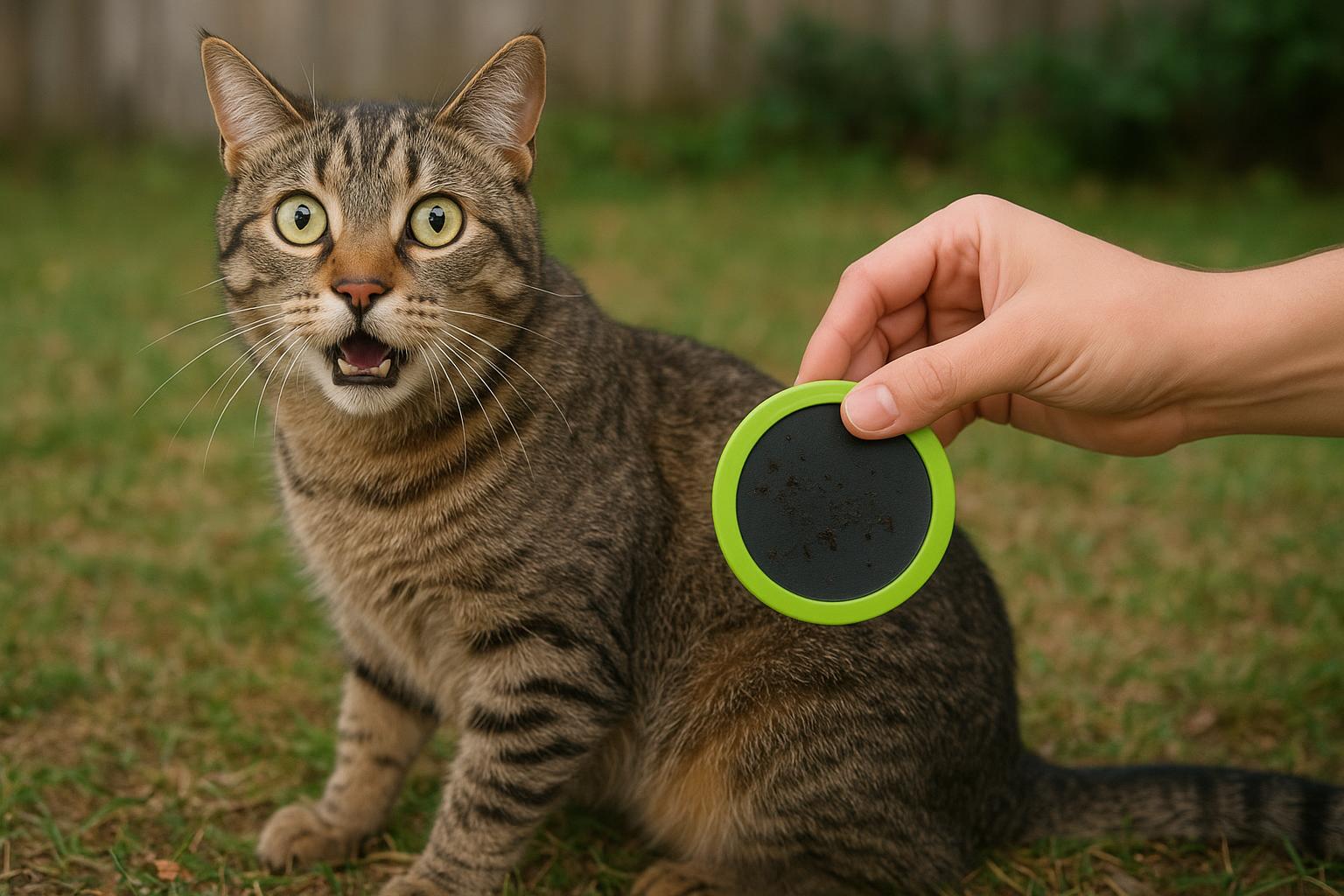
Flea dirt looks like tiny black pepper-like specks in the fur. To confirm it’s flea dirt and not soil, pick some up and place it on a wet paper towel—if it turns reddish-brown, that’s digested blood, proof positive. Cats with fleas can develop skin irritation, hair loss, and even flea allergy dermatitis—a hypersensitivity that causes intense itching even from a few bites. Humans may notice bites too, usually clusters around ankles or lower legs.
### Finding Fleas During Grooming
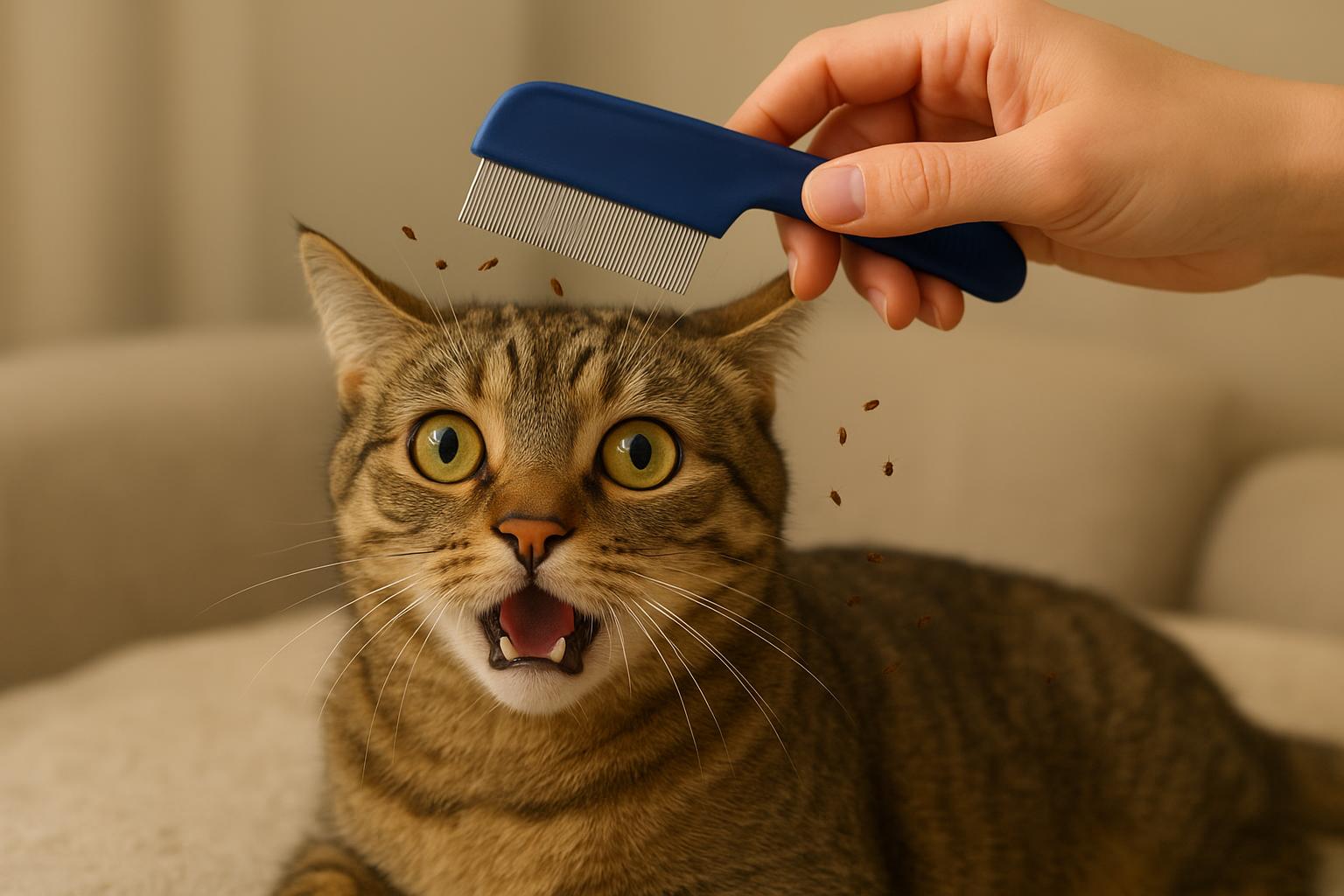
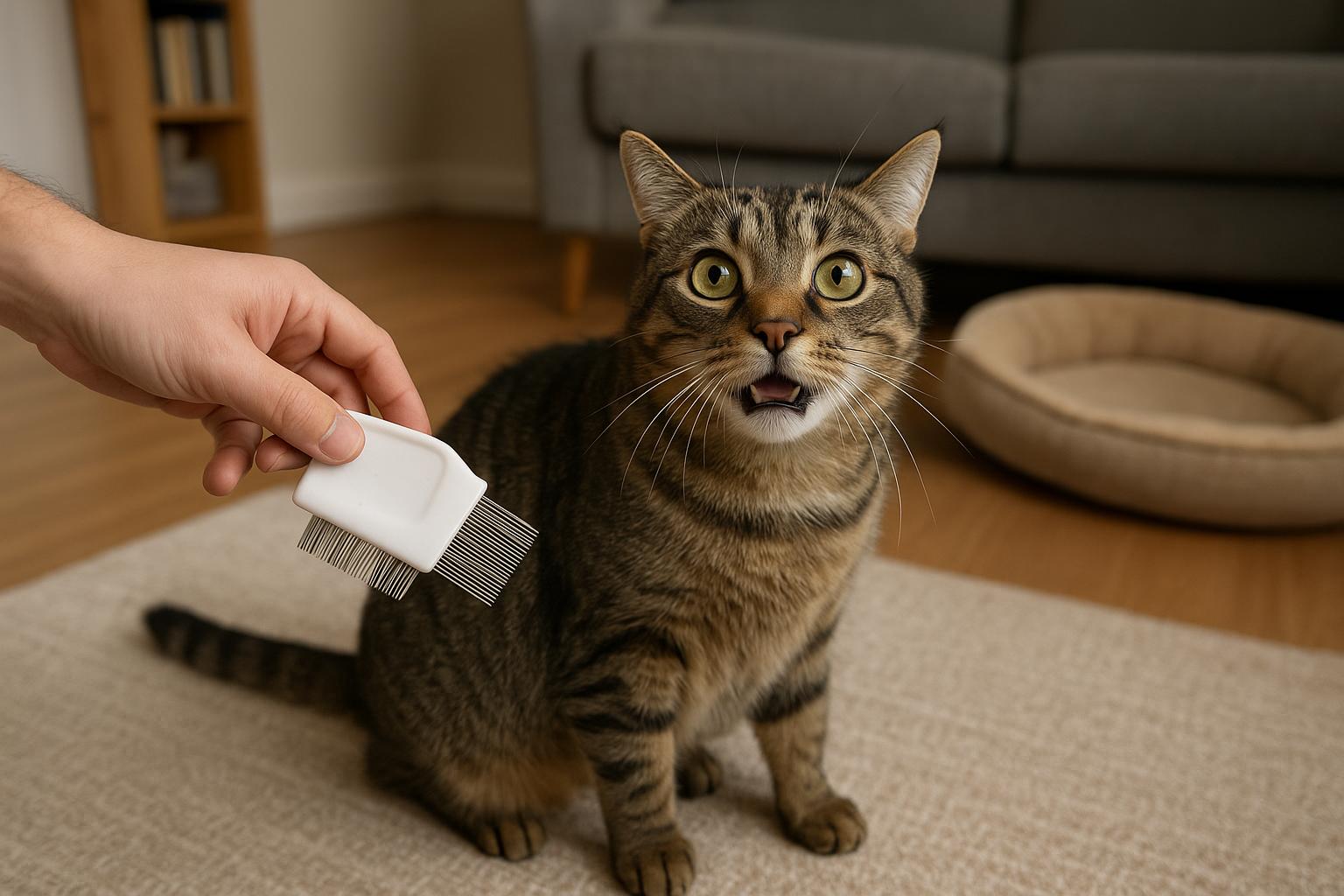
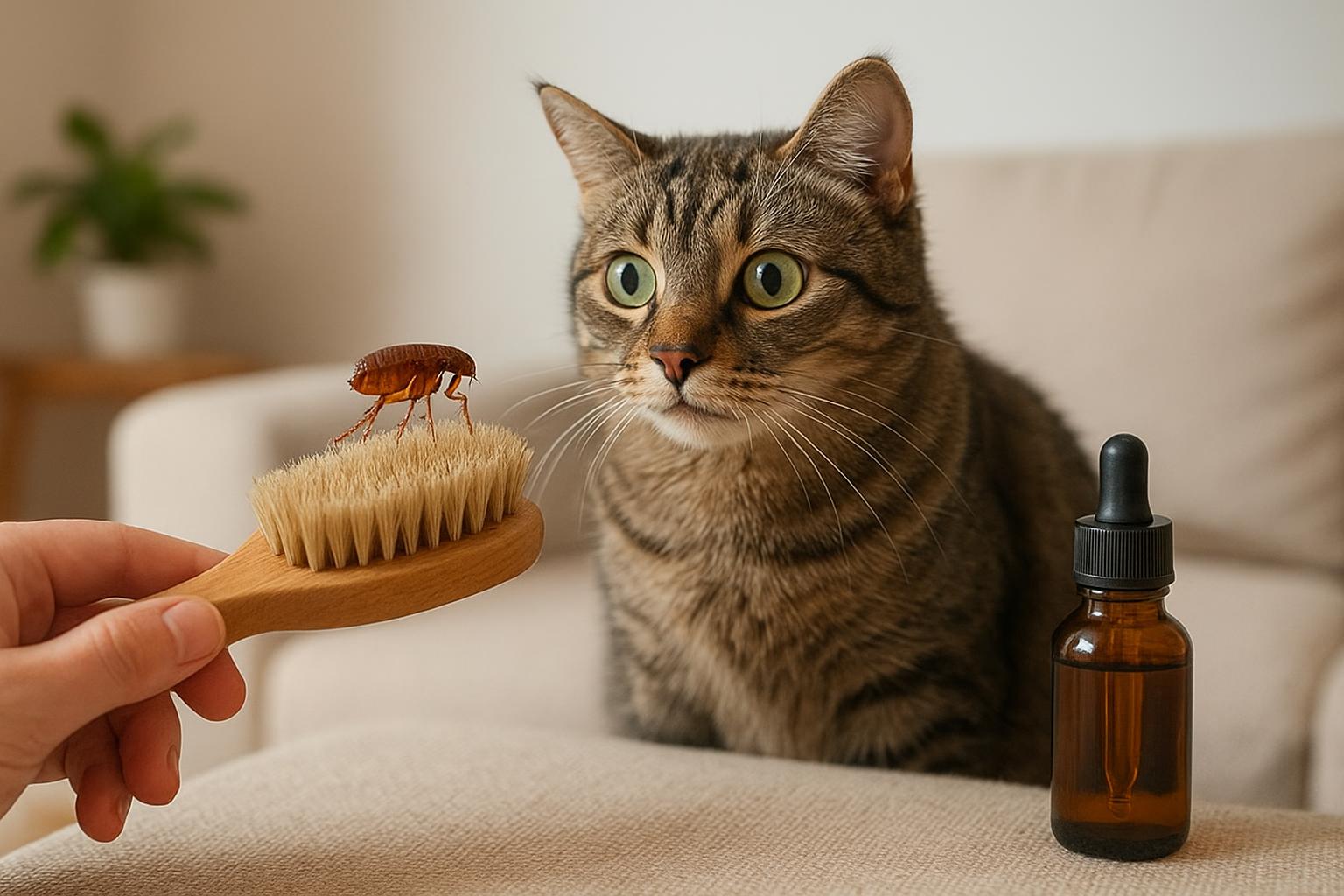
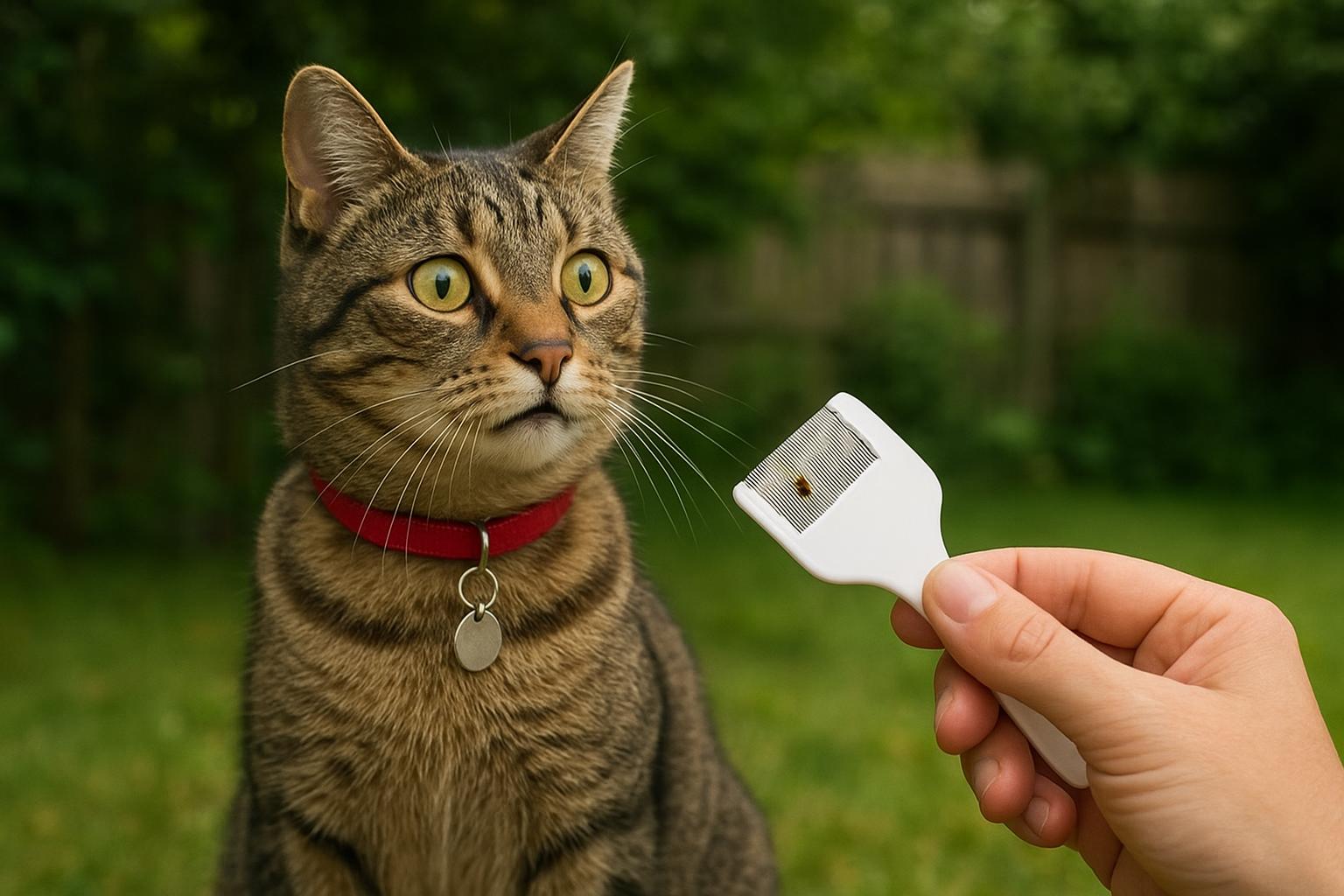
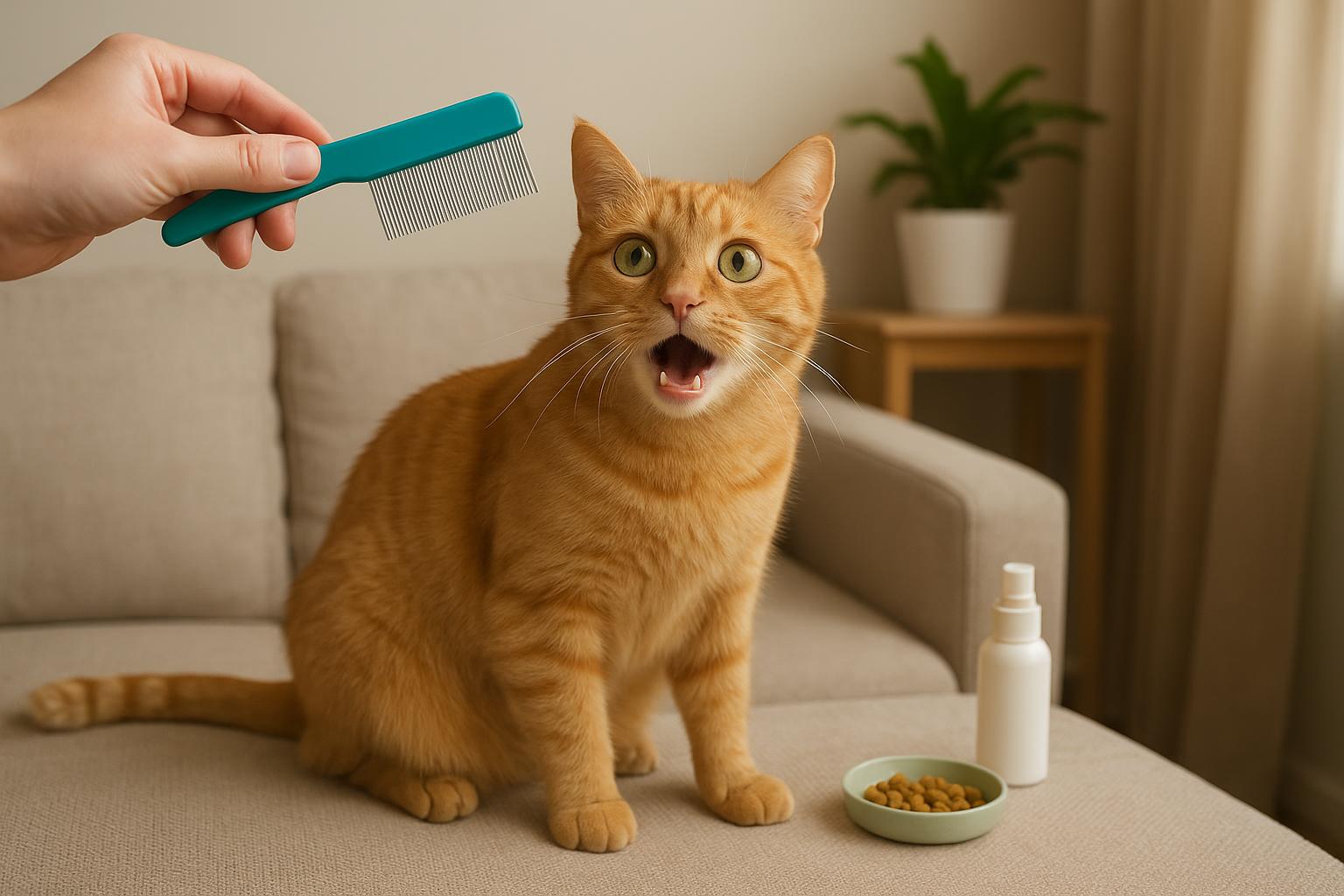
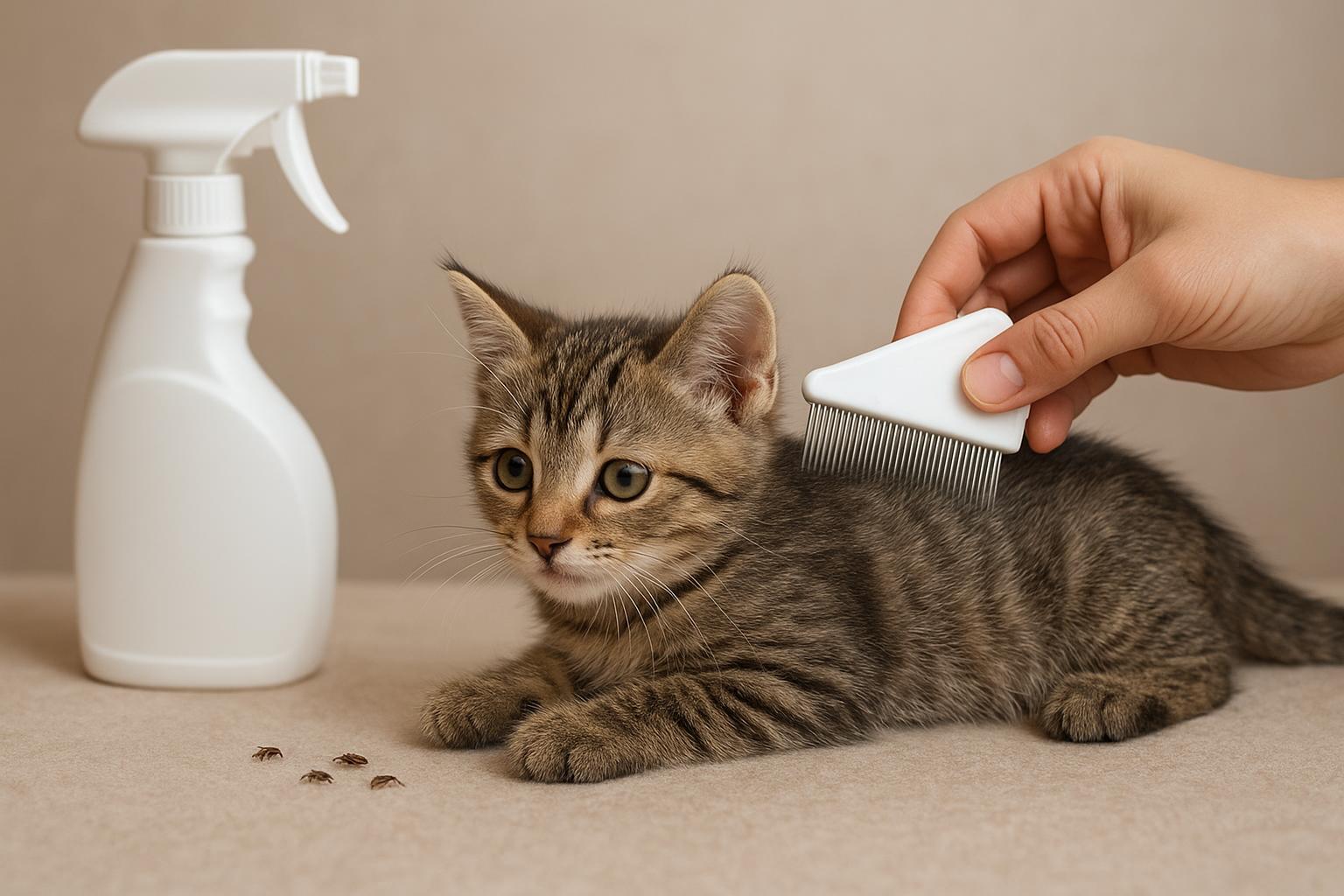
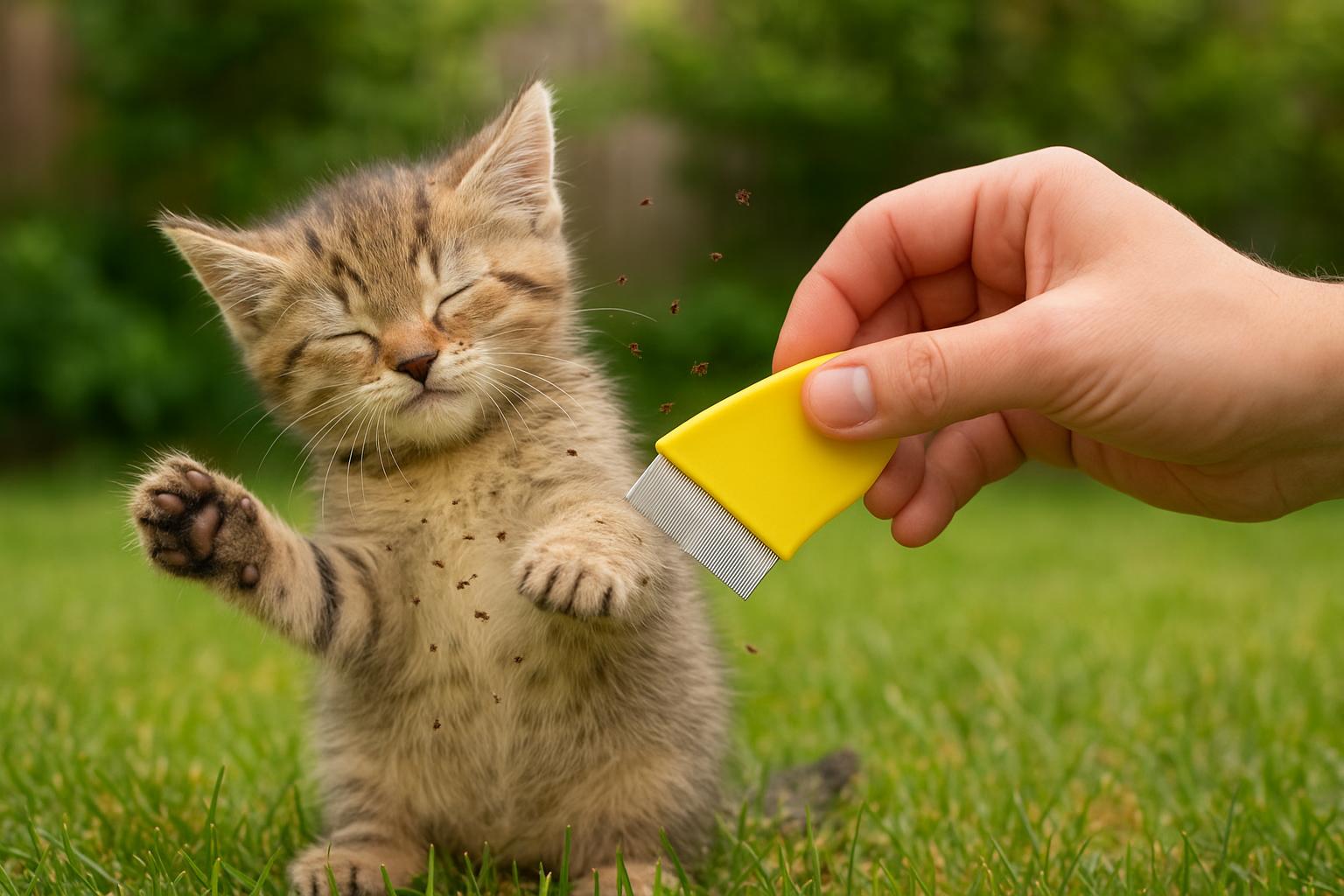
A fine-tooth flea comb is your best friend here. Comb in short strokes over a white paper towel or light surface so any fleas or flea dirt stand out. Fleas will jump off or wriggle; flea dirt will be left behind. If you find one or two, assume there are more—flea identification requires thinking in populations, not singles.
## Flea Identification In The Home And Yard
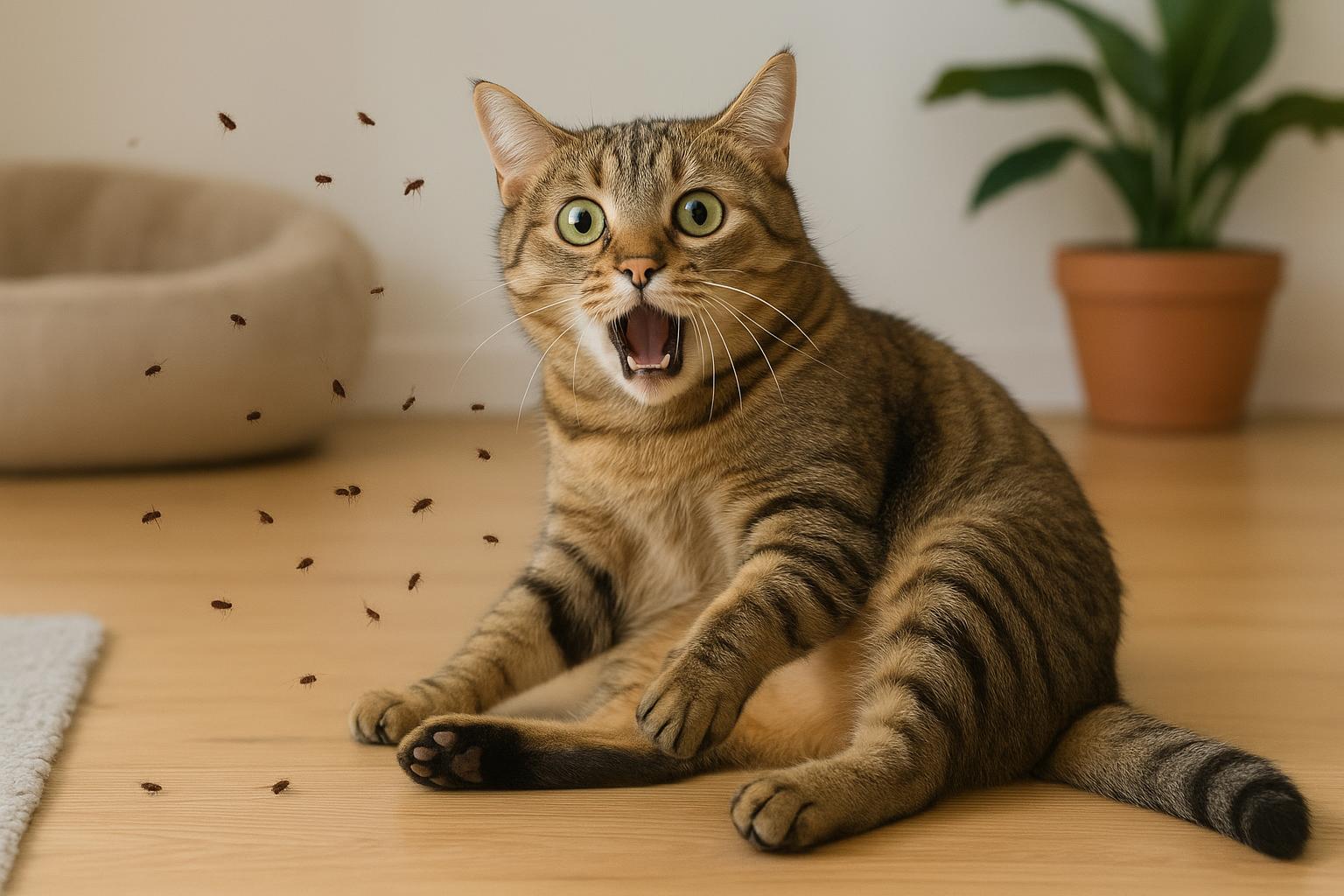
Fleas don’t live only on pets. Most of the flea life cycle occurs off-host in carpets, bedding, cracks in flooring, and shaded, moist areas outdoors. Adults may live on your cat and reproduce, but eggs, larvae, and pupae hide in the environment, waiting for a host.
### Where Fleas Hide
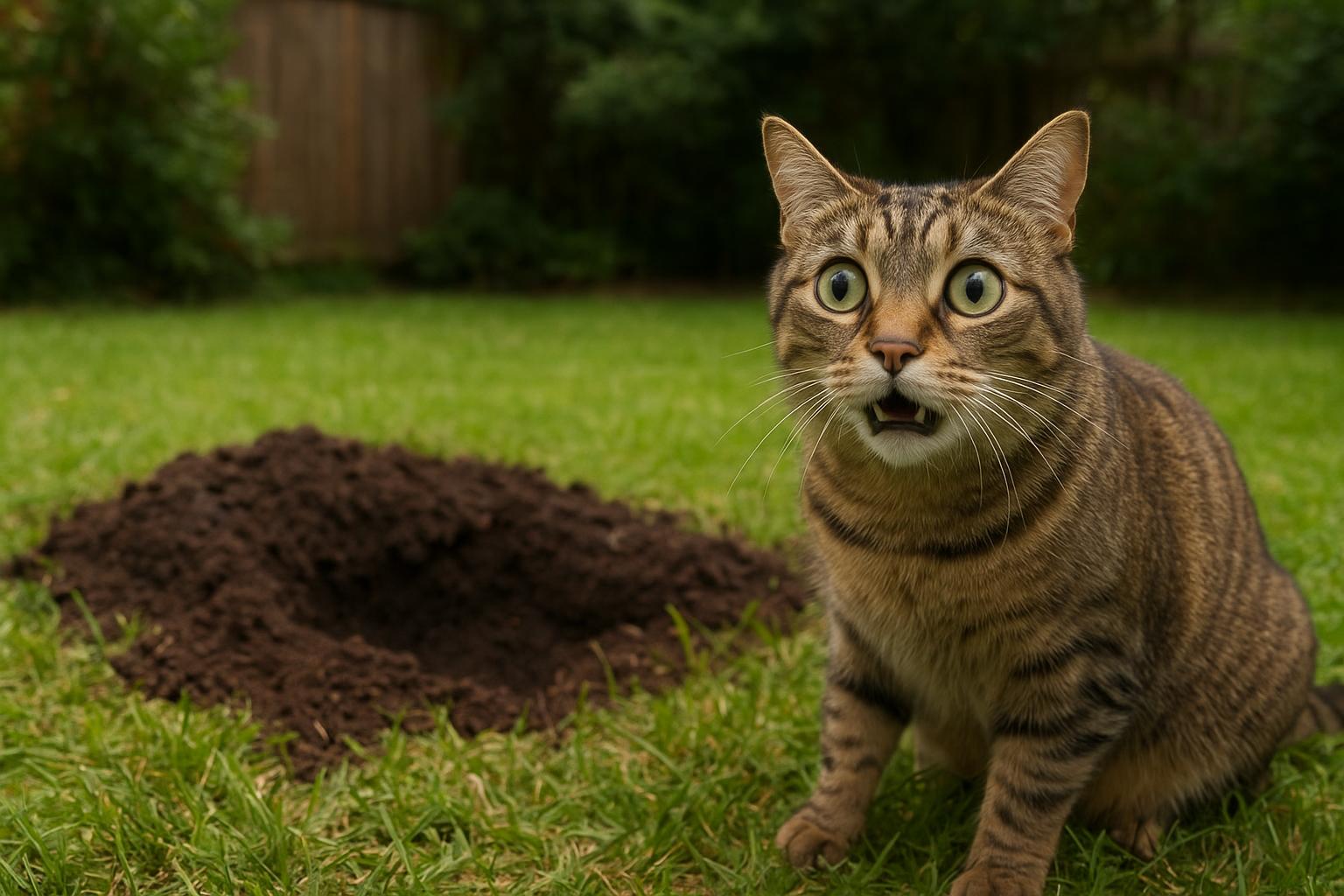
Indoors: carpets, rugs, upholstered furniture, pet bedding, baseboards, and under furniture. Outdoors: shaded grassy areas, leaf litter, the base of shrubs, and along fence lines. Flea eggs fall off the host and roll into these nooks; larvae feed on organic debris including adult feces (that pesky flea dirt).
#### Life Cycle Notes For Better Detection
Understanding the flea life cycle helps with identification and timing of treatment. Eggs hatch into larvae in 2–12 days under favorable conditions; larvae pupate and can remain in cocoons for weeks to months, ready to emerge when vibrations or elevated CO2 indicate a host is near. This is why you can think you cleared fleas, only to see them reappear—pupae are stubborn.
## Remedy 1: Veterinary Topical And Oral Treatments
When it comes to treating fleas on cats, be precise and evidence-based. Veterinary-approved products have documented safety and efficacy. Follow your veterinarian’s instructions exactly—dosages depend on weight and health status.
#### Materials And Ingredients
– Veterinary-prescribed topical spot-on or oral flea adulticide (e.g., selamectin, fluralaner, spinosad — brand and molecule as prescribed).
– Flea comb.
– Clean towels and pet-safe shampoo (if bathing is advised by vet).
– Gloves (disposable) to apply topical treatments if desired.
– Scale or accurate method to verify cat’s weight.
#### Step-By-Step Application
1. Schedule a veterinary consultation to confirm flea infestation and discuss appropriate medication. Provide accurate weight and health history.
2. Obtain the prescribed product and read the label and package insert thoroughly.
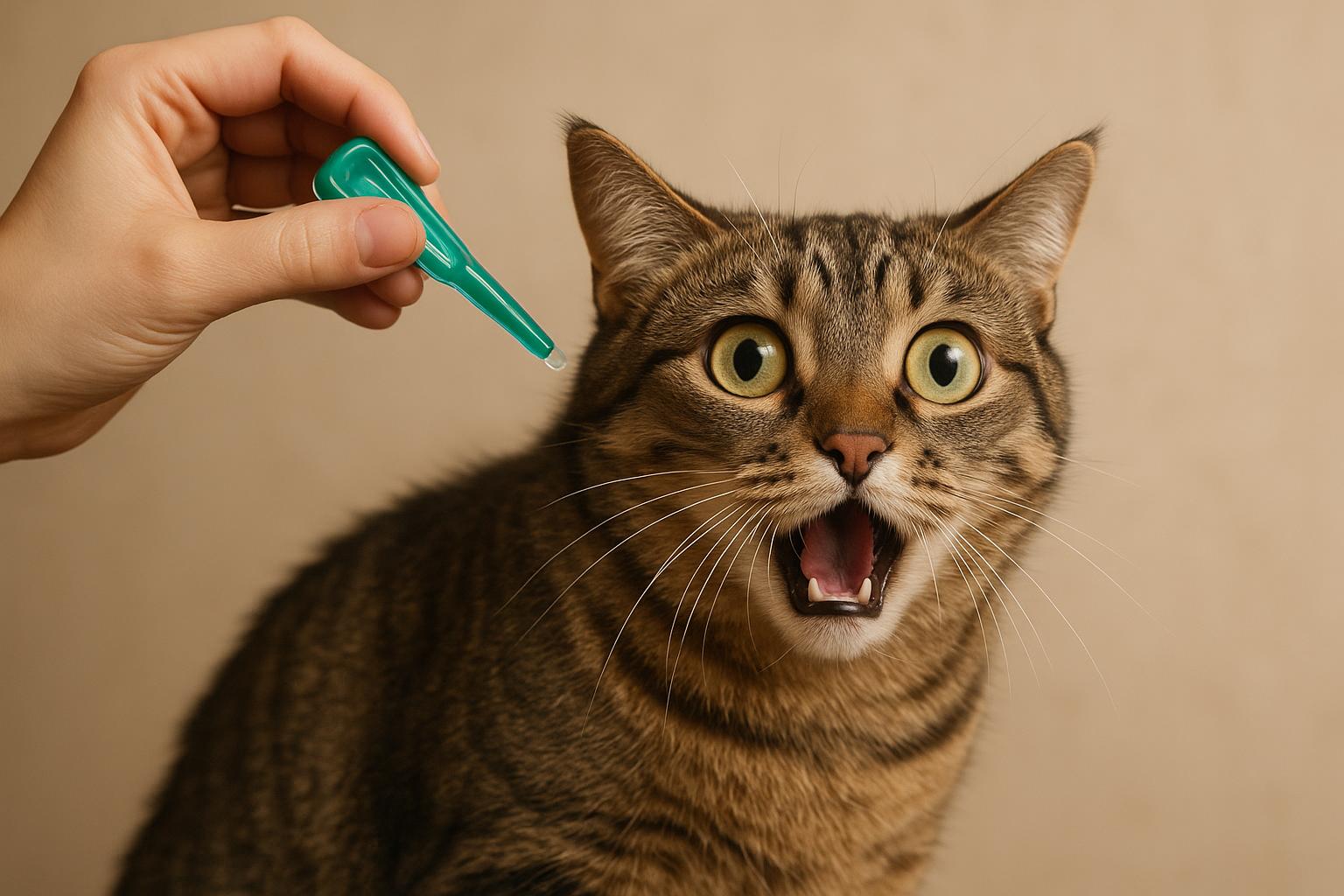
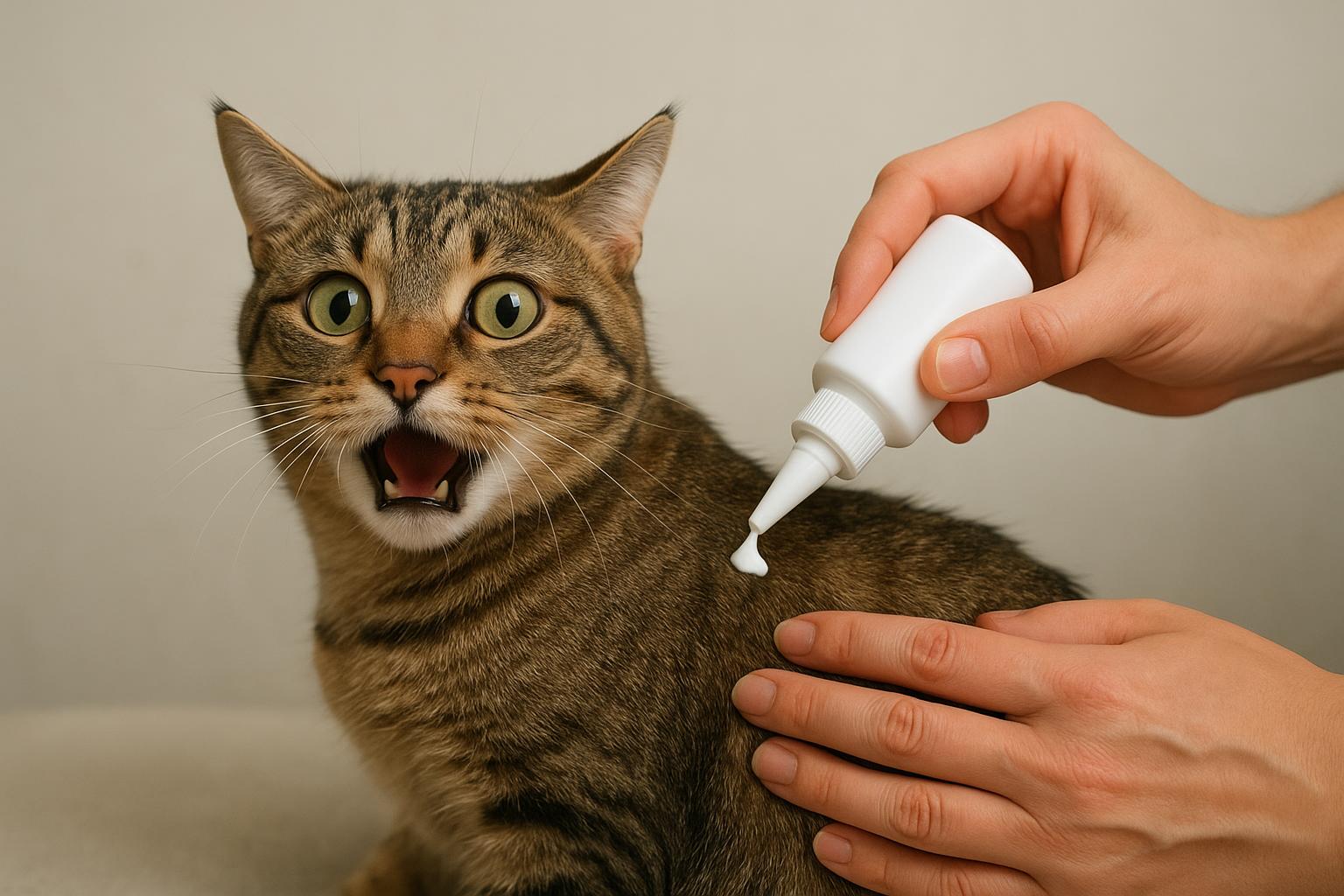
3. If using a topical spot-on:
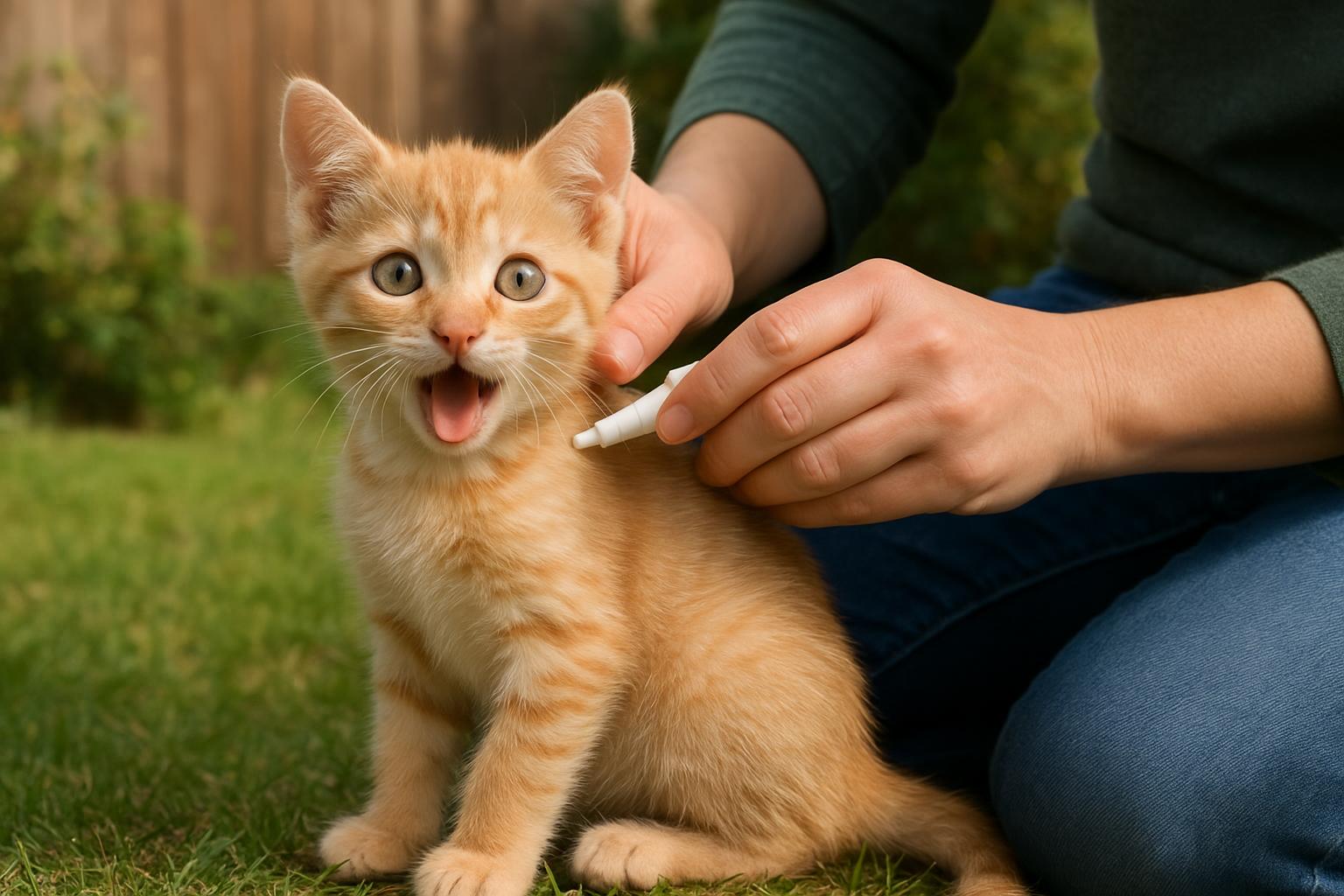
a. Part the fur at the base of the skull between the shoulder blades until skin is visible.
b. Place the applicator tip on the skin and apply the full contents directly to the skin in one spot—do not spread.
c. Dispose of applicator per label instructions; wash hands after application.
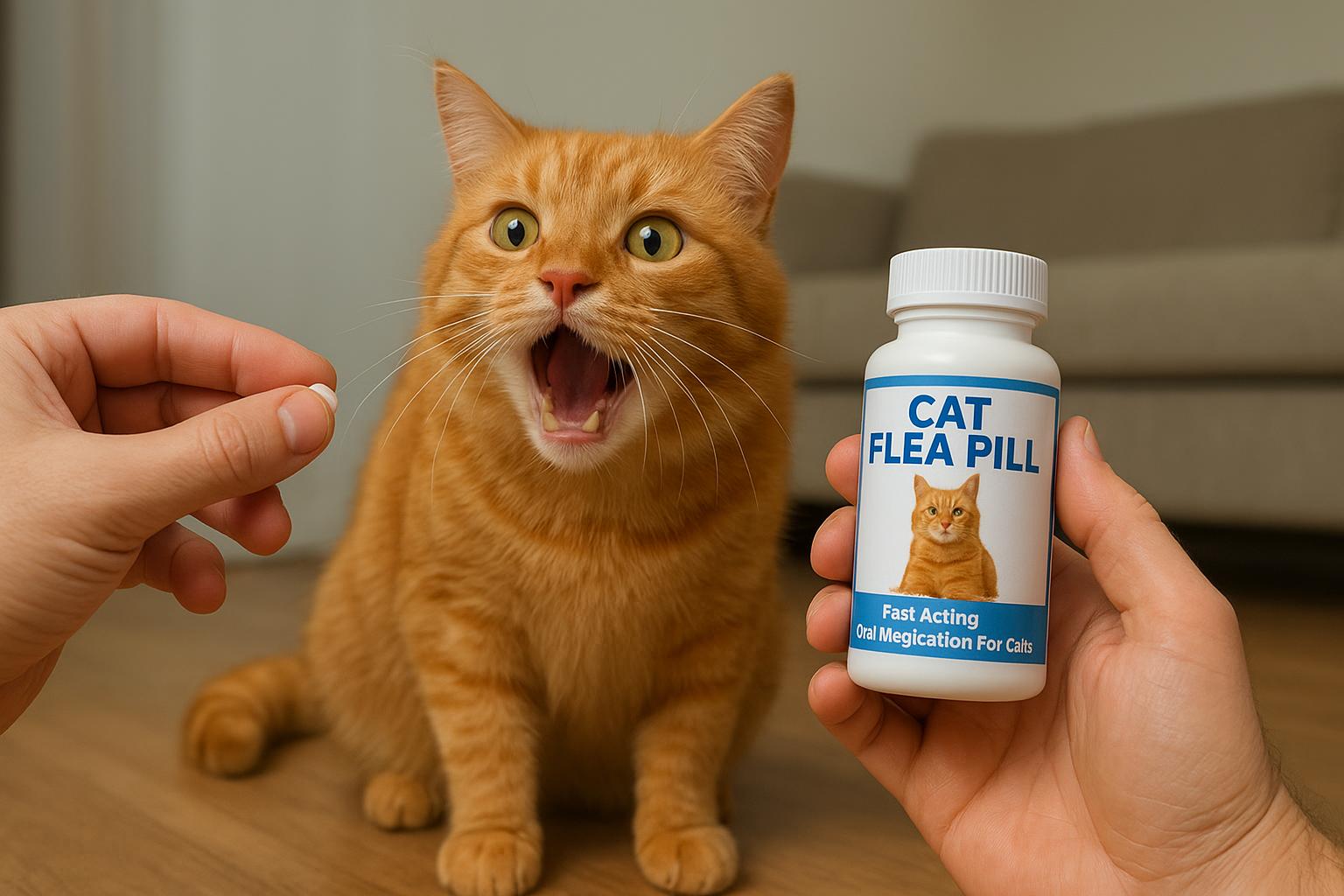
4. If using an oral product:
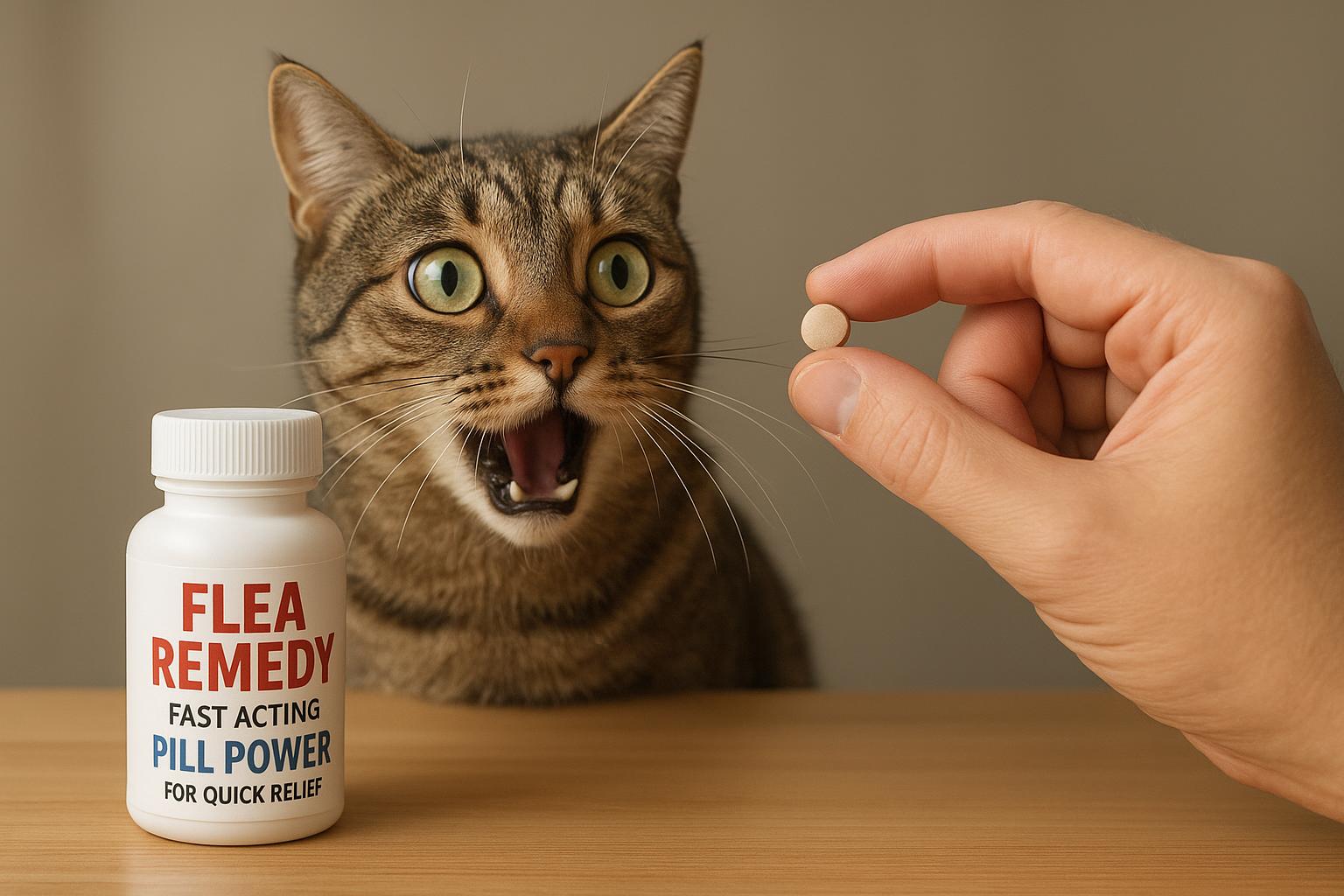
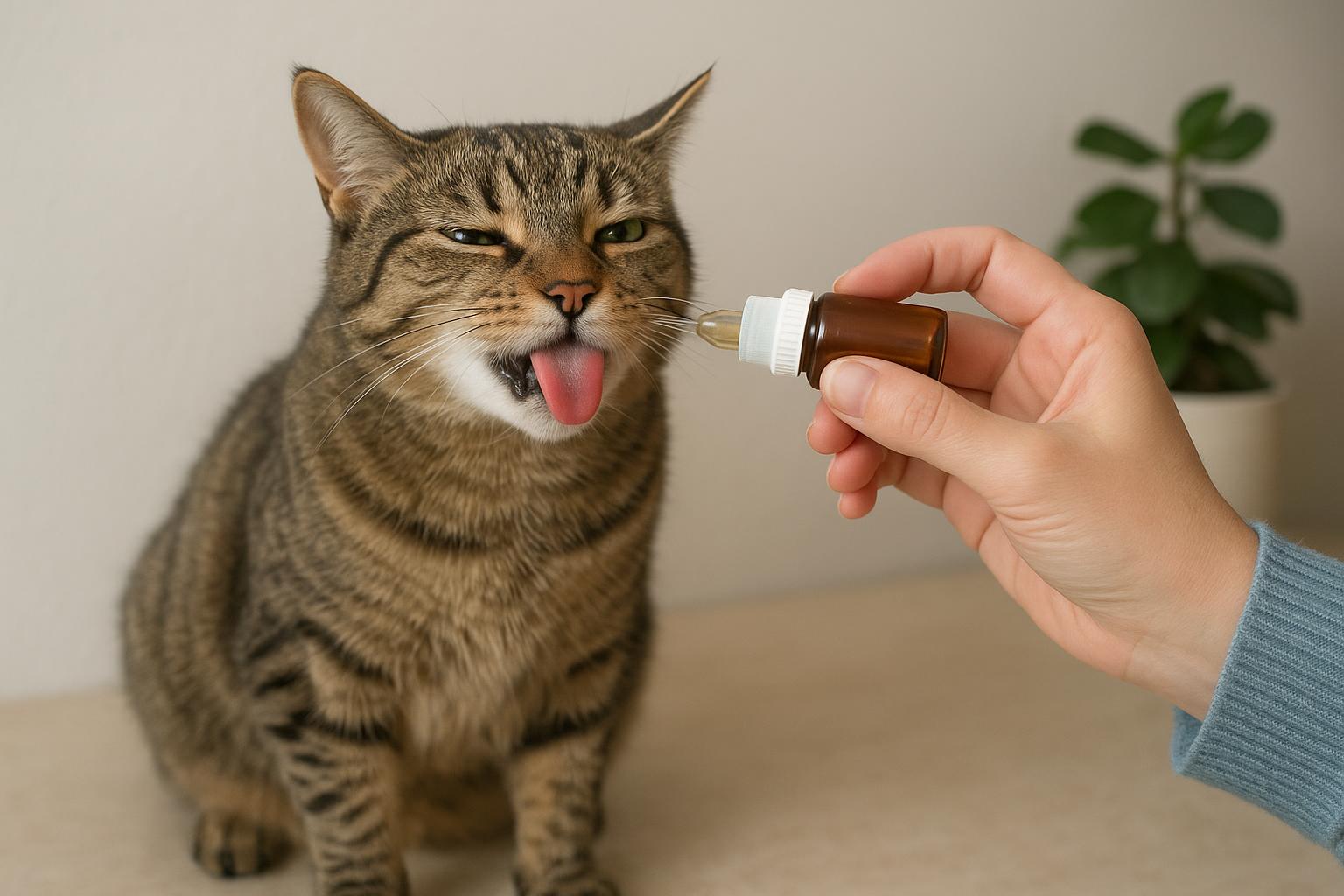
a. Administer exactly as directed by the veterinarian, ideally at the prescribed frequency.
b. Monitor the cat for the first 24–48 hours for any adverse reactions like vomiting or lethargy and report concerns to your vet immediately.
5. Use a flea comb daily for the first two weeks to remove any live fleas or flea dirt and to evaluate effectiveness.
6. Continue follow-up treatments as prescribed to cover the flea life cycle and prevent reinfestation.
Note: Do not use dog flea products on cats—some active ingredients safe for dogs are toxic to cats.
## Remedy 2: Home And Environmental Controls
Treating the pet alone is not enough. Environmental control targets eggs, larvae, and pupae to prevent reinfestation. This section describes an integrated home treatment that combines cleaning and insect growth regulators (IGRs).
#### Materials And Ingredients
– Vacuum cleaner with brush attachment.
– Laundry detergent and hot water (for washing bedding).
– Steam cleaner (optional but effective for carpets and upholstery).
– EPA-registered household flea spray with adulticide and an insect growth regulator (IGR) such as methoprene or pyriproxyfen.
– Personal protective equipment (gloves, safety glasses) per the product label.
– Trash bags to contain vacuum contents and bedding temporarily.
#### Step-By-Step Creation And Application
1. Preparation:
a. Remove pets and cover fish tanks; keep pets off treated areas until dry and safe according to product label.
b. Gather all pet bedding, throw rugs, and washable fabrics.
2. Washing:
a. Wash all pet bedding and fabric items in hot water (at least 130°F/54°C if fabric allows) and tumble dry on high for 30 minutes to kill eggs, larvae, and adults.
3. Vacuuming:
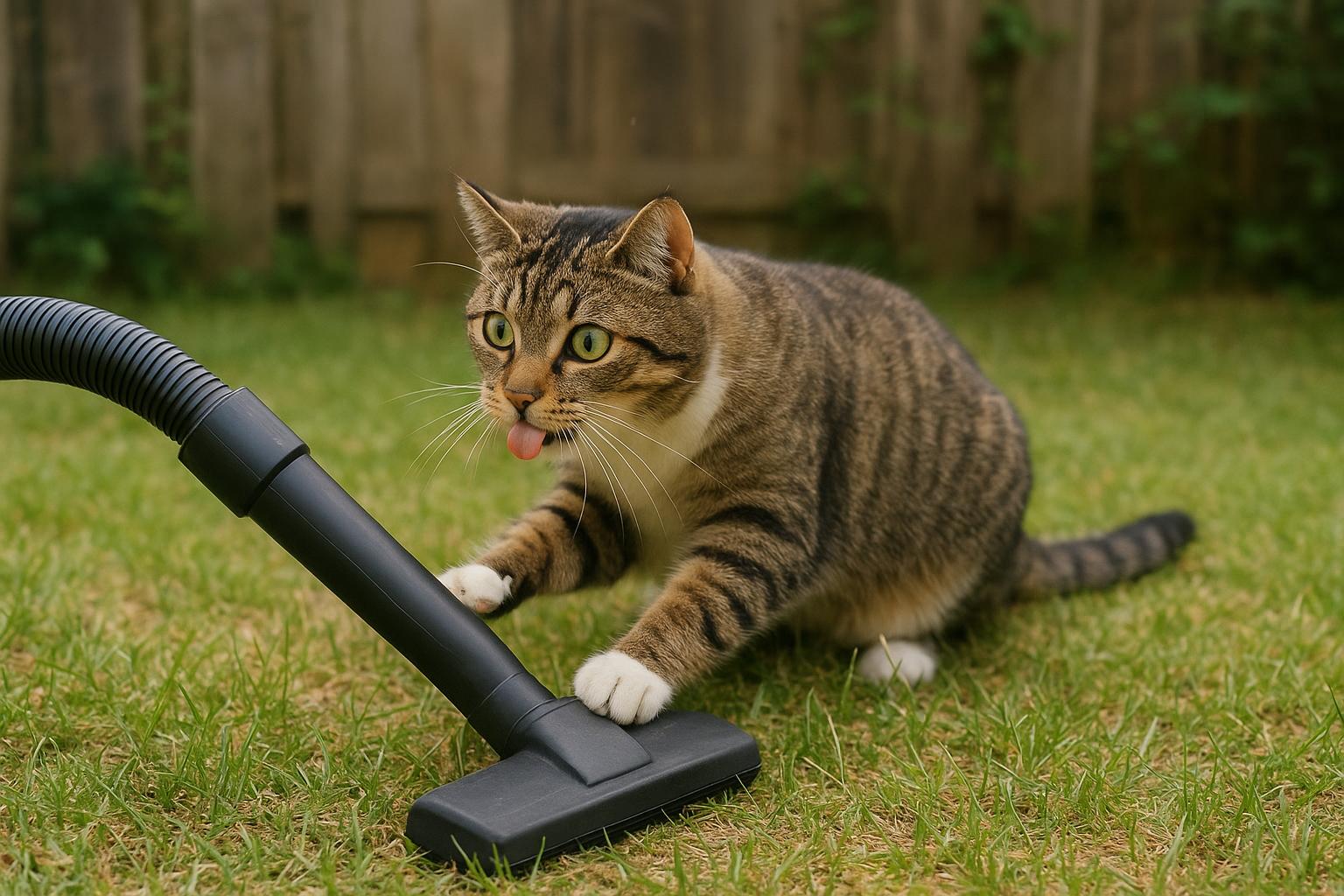
a. Vacuum carpets, rugs, upholstered furniture, baseboards, under cushions, and pet resting areas thoroughly.
b. Immediately seal vacuum bag or empty canister into a trash bag and remove from the home to prevent escape.
c. Repeat vacuuming every 2–3 days for at least two weeks to remove hatching larvae and pupae that emerge.
4. Steam Cleaning (Optional):
a. Steam clean carpeting and upholstery to kill all life stages; high heat is effective against eggs and larvae.
5. Chemical Treatment:
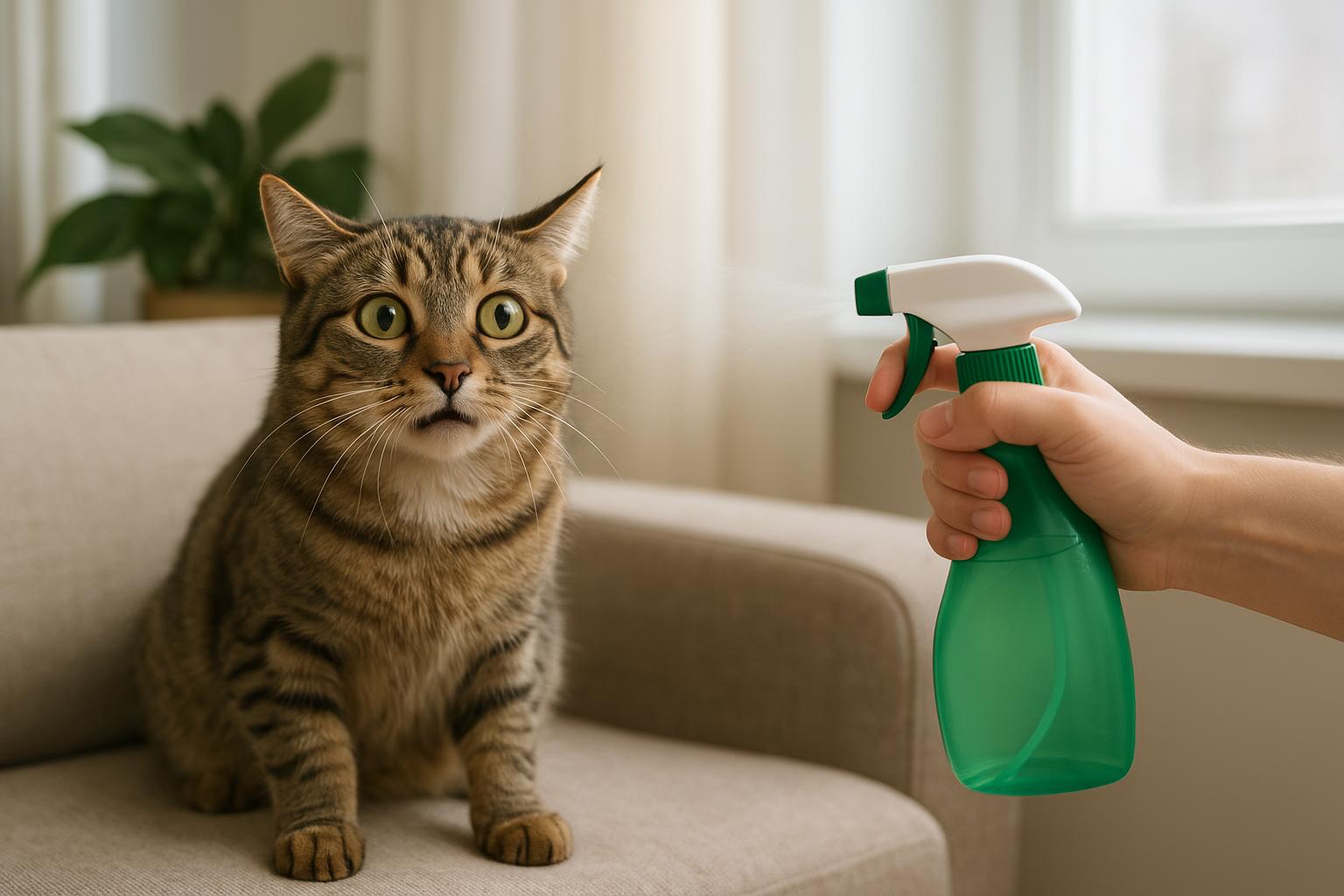
a. Choose an EPA-registered spray that combines a fast-acting adulticide for immediate reduction and an IGR for ongoing control.
b. Follow label directions regarding dosage, coverage area, and safety measures. Apply to carpets, baseboards, cracks, upholstered furniture, and pet resting spots.
c. Avoid over-application; do not treat areas where cats may lick treated surfaces until product is dry and safe per label.
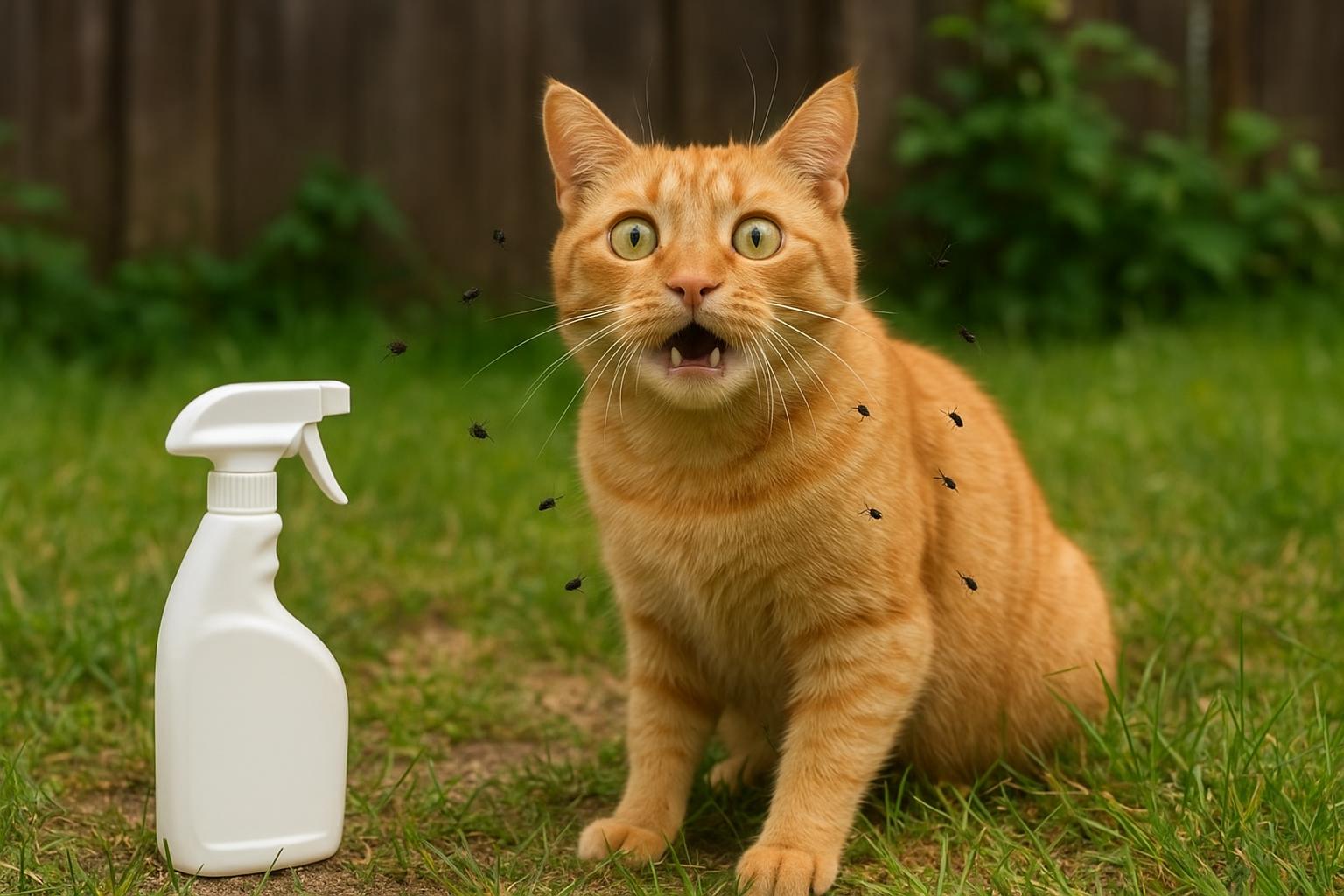
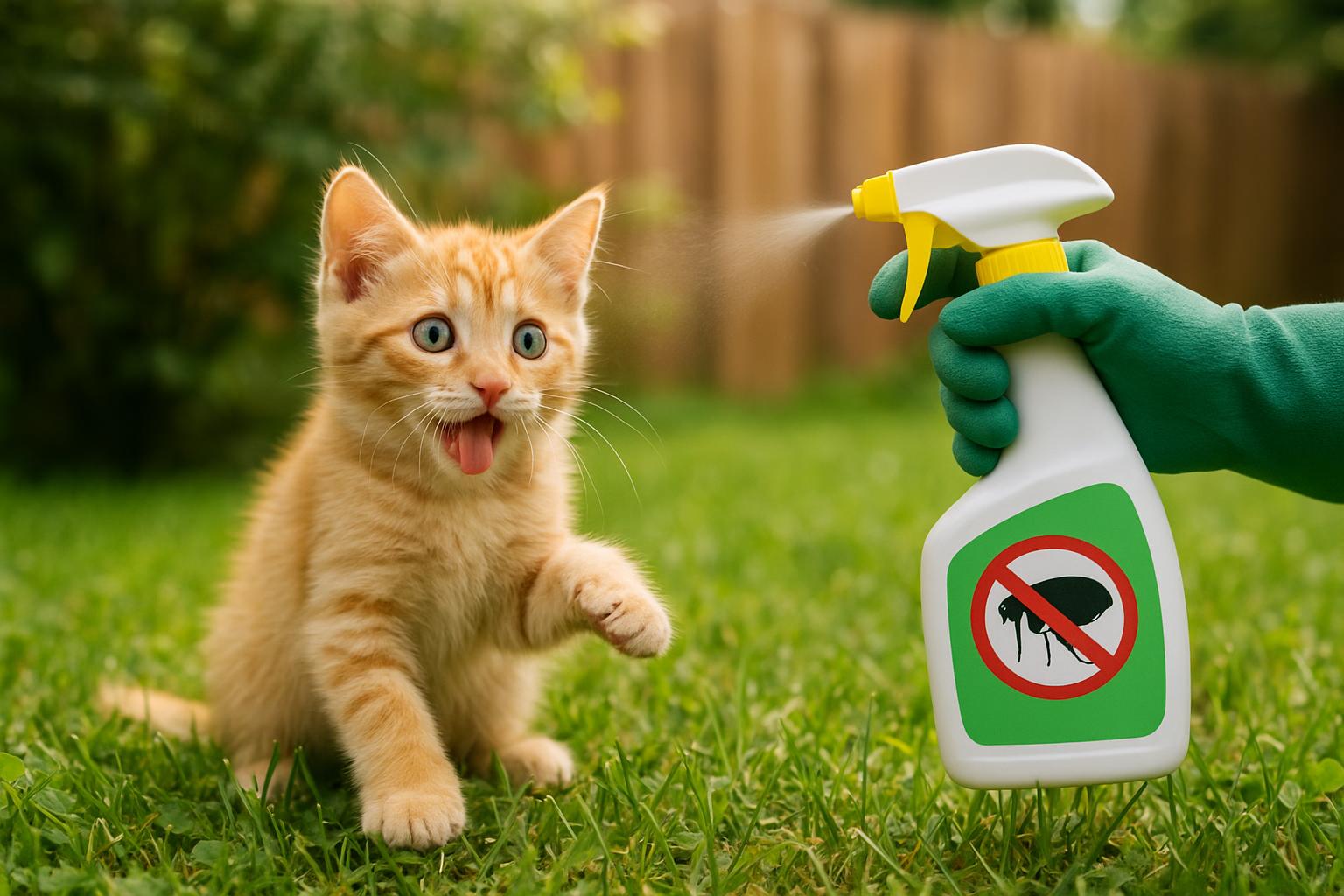
6. Outdoor Treatment:
a. Rake leaf litter and keep grass mowed; focus treatments in shaded, moist areas where pets frequent.
b. Use outdoor flea control products approved for yards if needed, following label guidance.
7. Monitoring:
a. Continue environmental cleaning and reapply IGR products according to label intervals until no fleas are detected for several weeks.
b. Keep using veterinary flea prevention on pets year-round if fleas are a frequent problem in your area.
### When To Call The Vet Or Pro Exterminator
If flea loads are heavy, pets are very young, elderly, or have health issues, or if household members show numerous bites or allergic reactions, contact a veterinarian immediately. For severe home infestations, consult a licensed pest management professional who uses targeted treatments and follows local regulations.
#### Preventive Notes
Prevention is often easier than eradication. Consistent, year-round flea prevention on pets, combined with periodic environmental checks, dramatically reduces infestations. Remember: flea identification is the first step—then comes the work. And yes, the work is less tedious when you get the right products and follow a plan (and you can still laugh at your cat’s dramatic “I am being tormented!” routine while you do it).












Leave a Reply